 Spanish
Medium · Hot
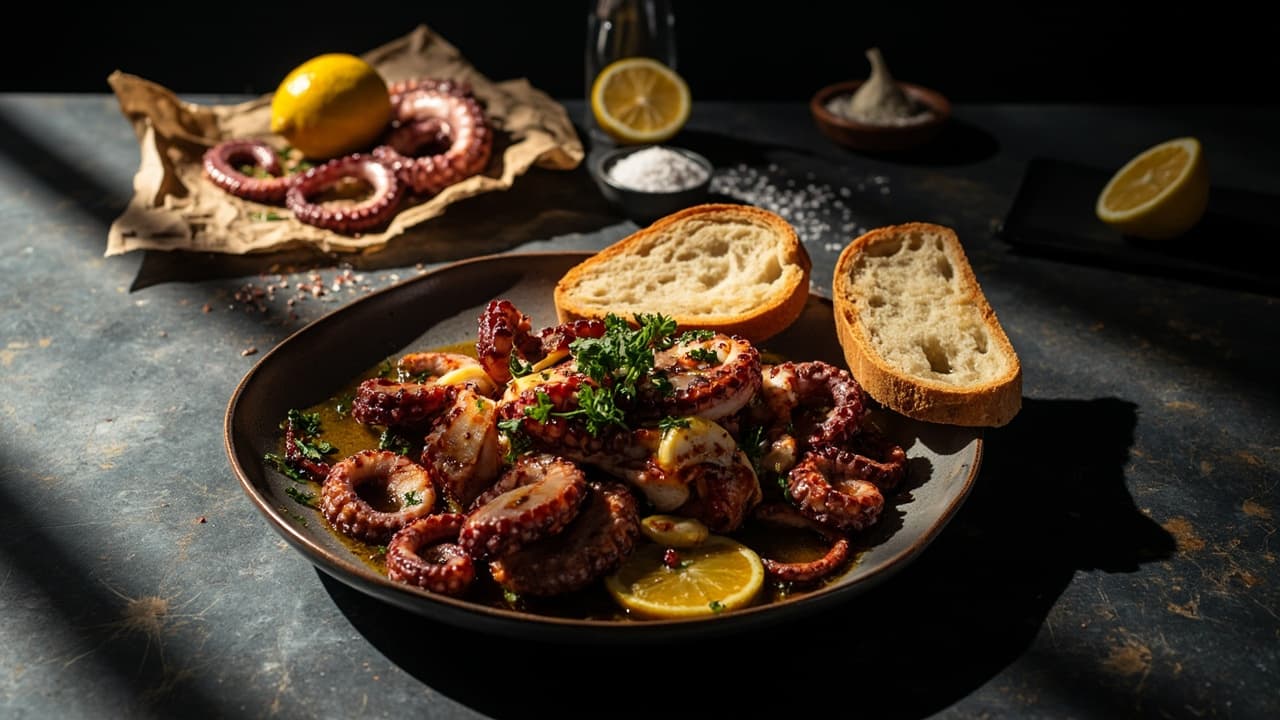
Octopus a la Plancha with Paprika, Lemon and Garlic
Charred Atlantic octopus finished on a hot plancha, dressed in a bold smear of smoked paprika, bright lemon and fragrant garlic. The proof that simplicity and fire are all a good product needs.
Prep
20 min
Cook
1h
Rest
15 min
Total
1h 35m
Method
Prepare the Octopus
1
Remove from heat and let rest in its cooking liquid for 15 minutes. Drain and pat dry thoroughly — moisture is the enemy of a good char.
Make the Paprika Garlic Marinade
Grill on the Plancha
3
Place tentacles on the hot plancha, pressing lightly with a spatula. Cook for 2-3 minutes per side until deeply charred with caramelized edges — do not move them too soon or you will lose the crust.
Finish and Plate
4
Serve at once, accompanied by good bread to soak up every drop of the char-scented oil.
C
Nutri-Score
Fair balance
A–E · lower is better · score 10
Calories
517
per serving
High in salt · 9102mgHigh in protein · 58gLow sugar · 4gLow saturated fat · 4g
Protein
58g
Carbs
15g
Fat
25g
Sat. fat
4g
Fiber
5g
Sugar
4g
Sodium
9102mg
Gluten FreeDairy FreePescatarianPaleoWhole30Heart HealthyLow CarbAnti InflammatoryHigh ProteinOmega 3 Rich
Nutri-Score is a general nutritional-balance guide, not medical or dietary advice.
Flavor Profile
7
Umami
3
Sweet
5
Salty
3
Sour
1
Bitter
3
Spicy
Textures
CrispyTenderChewy
Aromas
SmokyGarlickyCitrusOcean
Kitchen Equipment
Primary Tool
GrillCounter FootprintMedium
Techniques
Safety & Storage
Cross Contamination
Use separate cutting boards and utensils for raw octopus to prevent cross-contamination with other foods. Clean and sanitize all surfaces and tools after handling raw seafood.
Cooking Temperature
Ensure the plancha reaches high heat (400-450°F/200-230°C) before placing octopus. Cook for 2-3 minutes per side until deeply charred. Octopus should reach an internal temperature of 145°F/63°C.
Handling
Pat octopus thoroughly dry after cooking and resting — moisture prevents proper char formation. Handle octopus with tongs; avoid metal tools that can tear delicate tentacle tissue.
Storage
Store raw octopus at 40°F/4°C or below. Cooked octopus may be refrigerated for up to 3 days in an airtight container. Reheat only once and discard any leftovers that have been at room temperature for more than 2 hours.
High Risk Population
Pregnant women, young children, elderly individuals, and those with compromised immune systems should only consume octopus that has been cooked to proper internal temperature to eliminate potential pathogens.
Equipment Safety
Use heat-resistant gloves when handling the hot plancha. Ensure the cooking surface is stable and positioned away from flammable materials. Have a fire extinguisher accessible when cooking with open flame or high-heat surfaces.
Pro Tips
Technique
Do not move the octopus too soon on the hot plancha — patience is the price of a proper char. If it sticks, it is not ready. Let the crust form and release naturally before you flip, or you lose everything you are chasing.
Substitution
If smoked paprika is not available, a pinch of sweet paprika with a few drops of liquid smoke will hold the line. The ember depth is not negotiable for this dish.
From the chef
Atlantic octopus on a screaming-hot plancha is one of the purest things you can cook. You braise it first, then pat it completely dry — moisture is the enemy of the crust you need. Two minutes per side on the plancha and the edges caramelize, the skin blisters, and the tentacles develop that deep char that no oven can replicate. The smoked paprika, lemon, and garlic dressing goes on immediately after, while the heat is still there to pull the flavors in. This is how the coast eats — simple, fierce, nothing hidden.
TagsSeafoodGrilledPlancha CookedSmoked PaprikaGarlicLemonAtlanticSimpleCharring
AllergensMollusks
Source: generated · June 10, 2026