 Filipino
Medium · Hot
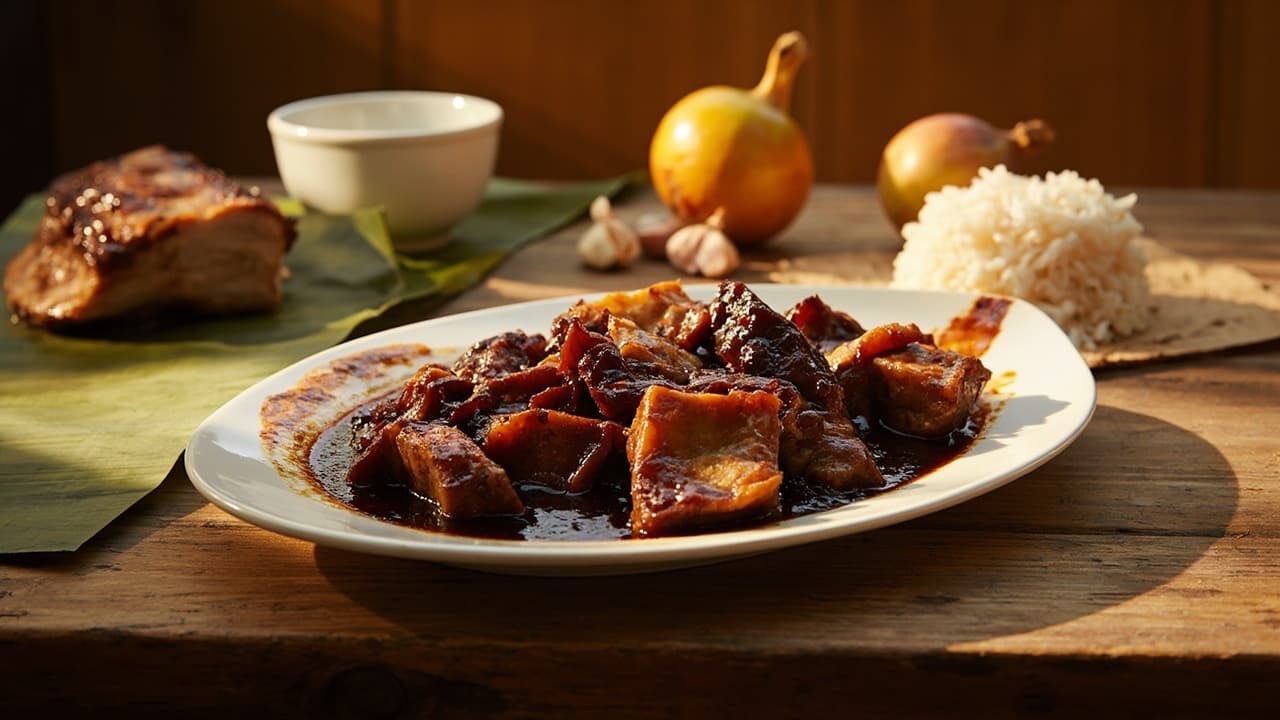
Maricel's Pork Belly Adobo (Slow-Braised)
Tender, melt-in-your-mouth pork belly braised in a classic Filipino adobo sauce of cane vinegar and soy sauce. Slow-braised until the meat is infused with garlicky, tangy, savory flavors. Perfect for a kamayan feast!

Prep
15 min
Cook
1h 30m
Rest
10 min
Total
1h 55m
Method
Prep the Pork
1
Cut the pork belly into 2-inch cubes, about 2 inches thick. Season lightly with salt and black pepper.
2
Peel and lightly crush the garlic cloves. Peel and quarter the yellow onion.
Sear the Pork
3
Heat the sunflower oil in a large Dutch oven over medium-high heat. When the oil shimmers, add the pork belly pieces in a single layer, being careful not to crowd the pot.
4
Sear the pork for 3-4 minutes per side until golden brown and caramelized on all sides. Remove and set aside.
Braise Low and Slow
6
Return the seared pork belly to the pot. Pour in the soy sauce and white vinegar. The liquid should almost cover the pork belly.
7
Bring the mixture to a boil over high heat, then reduce to the lowest setting. Cover the Dutch oven with a tight-fitting lid.
8
Braise slowly for 1 hour to 1 hour 15 minutes, stirring occasionally. The pork is ready when it is fork-tender and the sauce has reduced slightly.
Finish and Serve
9
Uncover the pot and increase heat to medium. Let the sauce simmer and reduce further for 5-10 minutes until it becomes glossy and coats the back of a spoon.
10
Taste and adjust seasoning with additional salt or black pepper if needed. The adobo should have a perfect balance of tangy, salty, and savory.
11
Serve the adobo family-style in a large bowl or platter. Spoon extra sauce over the top. Pair with steamed jasmine rice and enjoy the Filipino comfort! Hatid ko sa 'yo ang lahat ng pagmamahal sa bawat kutsara!
D
Nutri-Score
Needs balance
A–E · lower is better · score 18
Calories
956
per serving
High in saturated fat · 27gCalorie-dense · 956 kcalLow sugar · 2g
Protein
16g
Carbs
5g
Fat
96g
Sat. fat
27g
Fiber
1g
Sugar
2g
Sodium
895mg
KetogenicLow Carb DietHigh ProteinLow CarbKeto Friendly
Nutri-Score is a general nutritional-balance guide, not medical or dietary advice.
D
Environmental impact
High impact
A–E · lower is better · includes estimates
kg CO2e
2.1
per serving
DCarbonAEU all-round· carbon sets the grade
Water
0.4m³
Land
67Pt
Runoff
0.2g P
Pork Belly drives 96% of this recipe’s estimated footprint.
Carbon from Poore & Nemecek 2018; water, land & runoff from Agribalyse — modelled averages for comparing recipes, not a measurement of your groceries.
Flavor Profile
8
Umami
2
Sweet
7
Salty
8
Sour
2
Bitter
3
Spicy
Textures
TenderSucculentCrisp
Aromas
GarlickySavoryTangyUmami Rich
Kitchen Equipment
Safety & Storage
Cooking Temperature
Ensure pork belly reaches internal temperature of 145°F (63°C) for food safety. Bring adobo to boil when adding soy sauce and vinegar before reducing to low heat for braising.
Cross Contamination
Use separate cutting boards for raw pork and ready-to-eat foods like rice. Wash hands, utensils, and surfaces thoroughly after handling raw pork belly.
Storage
Refrigerate leftover adobo within 2 hours in airtight containers. Store in refrigerator for up to 4 days or freeze for up to 3 months. Reheat to 165°F (74°C) before consuming.
Handling
Pat pork belly dry before searing to achieve proper browning. Do not overcrowd the Dutch oven when searing to ensure even cooking and caramelization.
High Risk Population
For pregnant individuals, elderly, or immunocompromised persons, ensure pork is cooked to 145°F (63°C) and leftovers are reheated thoroughly before consumption.
Shelf Life
Adobo flavor develops over 2-3 days. For food safety, do not leave at room temperature for more than 2 hours during serving. Keep hot dishes at 140°F (60°C) or above.
Pro Tips
Technique
Huwag kang magmadali, kasi mahalaga ang patience. Don't skip the searing step—those golden bits at the bottom of the pot are where all the flavor lives, and they're what make the adobo sauce taste like home.
Substitution
If cane vinegar is hard to find, white vinegar works perfectly—just add a tiny bit of sugar to balance the tang the way my lola taught me.
Batch Cooking
This adobo tastes even better the next day, kasi ang sarap pa. Make a big batch and reheat portions for busy weeknights—masaya pa rin ang lasa.
From the chef
Real adobo patience means giving the pork belly time — sear those cubes until deeply golden, then braise them low and slow in vinegar and soy sauce with crushed garlic and quartered onion for a full hour until the meat is fork-tender and the sauce has turned glossy and concentrated. No shortcuts here, kasi the long braise is what drives the tangy-salty flavor all the way through each piece. Uncover the pot at the end and let it reduce until it coats the back of a spoon. Serve family-style over steamed jasmine rice with extra sauce over everything.
TagsSlow Cook
AllergensSoyGluten
Source: generated · June 10, 2026