 Portuguese
Medium · Hot
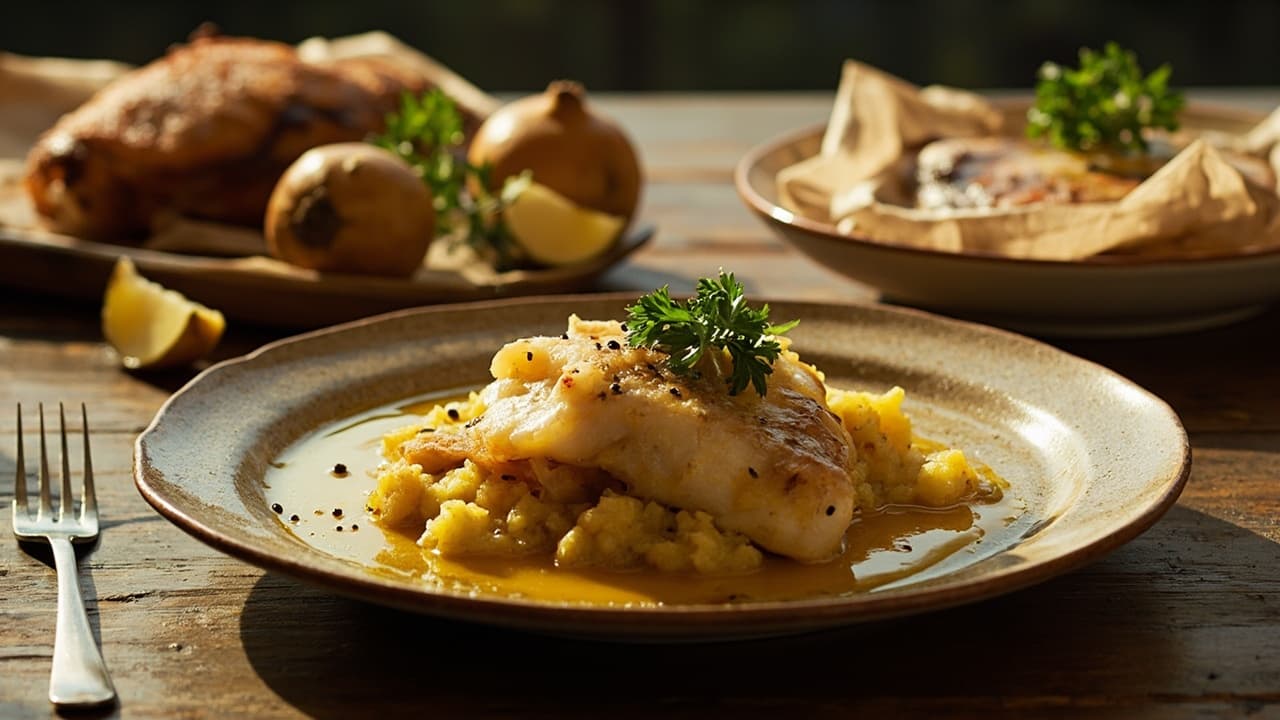
Bacalhau à Lagareiro, Olive Oil Smash
A devout Portuguese classic of boiled salt cod and potatoes finished under the broiler, then smashed and drenched in a torrent of sizzling garlic-infused olive oil until the skin blisters and the kitchen smells of the Atlantic.
Prep
24h
Cook
35 min
Total
24h 35m
Method
Soak the Cod
1
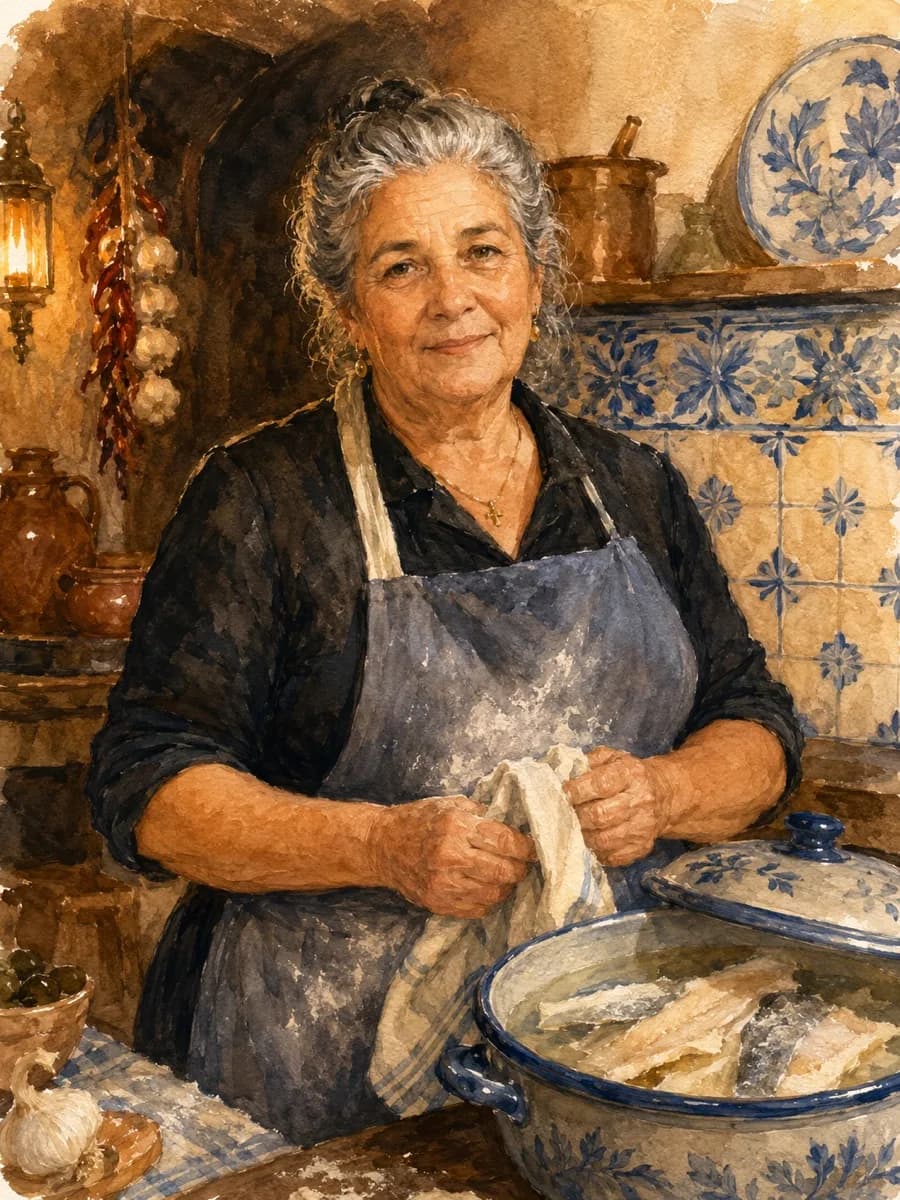
Place the salt cod in a large bowl of cold water. Refrigerate and soak for 24 hours, changing the water 3 times — morning, afternoon, and evening. This is not optional; it is devotion.
2
After soaking, drain the cod and rinse it well. Check for any remaining scales or bones and remove them. Pat the fillet dry with a clean kitchen towel.
Boil the Cod and Potatoes
3
4
5
Carefully lift the cod and potatoes out of the water. Set the cod aside on a plate. Peel the potatoes and halve them lengthwise. Keep the cooking water — you may need a ladleful for the baking dish.
Bake and Smash
6
Preheat your broiler to high. Place the cod in a baking dish and spoon 2 to 3 ladles of the reserved cooking water around it. Slide it under the broiler and bake for 8 to 10 minutes, until the skin begins to brown and blister slightly at the edges.
7
8
9
Remove the dish from under the broiler. Using the flat of a wooden spoon or a sturdy fork, gently press and crack the potatoes into rough, porous chunks around the cod. Pour the screaming-hot garlic lemon oil over everything in one bold, generous pour. It should hiss and smoke on contact.
Finish and Serve
10
Scatter the flat-leaf parsley over the top and crack black pepper generously across the dish. Serve immediately while the oil is still glistening and the fish is steaming beneath.
B
Nutri-Score
Good balance
A–E · lower is better · score 1
Calories
802
per serving
Low sugar · 3g
Protein
22g
Carbs
26g
Fat
69g
Sat. fat
10g
Fiber
4g
Sugar
3g
Sodium
659mg
Gluten FreeDairy FreePescatarianLow CarbHeart HealthyAnti InflammatoryWeight ManagementHigh Protein
Nutri-Score is a general nutritional-balance guide, not medical or dietary advice.
Grade pending
Environmental impact
Estimated footprint
Grade pending · 75% ingredient coverage
kg CO2e
≥0.5
per serving
Olive oil drives 76% of this recipe’s estimated footprint.
Carbon from Poore & Nemecek 2018; water, land & runoff from Agribalyse — modelled averages for comparing recipes, not a measurement of your groceries.
Flavor Profile
8
Umami
2
Sweet
9
Salty
4
Sour
1
Bitter
3
Spicy
Textures
CrispyTenderFlakyGlistening
Aromas
GarlickyHerbalCitrusOcean
Kitchen Equipment
Primary Tool
Dutch OvenDutch OvenBaking DishSmall SaucepanChef KnifeWooden SpoonLadleCutting BoardFine Mesh StrainerMixing BowlKitchen TowelTongs
Counter FootprintMedium
Safety & Storage
Cooking Temperature
Cod must be cooked to an internal temperature of at least 63°C (145°F) and should flake easily when done. Verify doneness before serving.
When infusing garlic in olive oil, monitor closely and remove from heat as soon as garlic turns golden. Do not allow oil to smoke or reach flash point.
Handling
Use caution when pouring screaming-hot garlic lemon oil over the dish. The oil will hiss, sizzle, and produce steam. Pour away from your face and hands to prevent severe burns from oil splatter.
Cross Contamination
Change soaking water 3 times during the 24-hour soaking period to reduce salt concentration and potential bacterial buildup. Keep cod refrigerated during soaking.
After handling raw salt cod, wash hands, utensils, cutting boards, and surfaces thoroughly with hot soapy water before contact with other foods.
Storage
If storing leftover cooked dish, refrigerate within 2 hours at 4°C (39°F) or below. Consume within 2-3 days and reheat thoroughly before eating.
High Risk Population
Elderly, pregnant, immunocompromised, or young children should ensure fish is cooked to proper temperature and avoid consuming dish that has been left in the danger zone temperature range (4-60°C / 40-140°F).
Pro Tips
Technique
Three water changes over twenty-four hours — morning, afternoon, evening. This is not optional; it is the devotion that separates proper bacalhau from sad, underseasoned fish that has not earned its place on your table.
Substitution
If finding proper salt cod proves impossible, look for sustainably sourced cod that has been dry-salted and slow-dried. Avoid anything with added preservatives or a suspiciously hard, board-like texture — you want flesh that yields to gentle pressure.
From the chef
My avó kept a slab of bacalhau in a covered pot on the back step and changed the water three times a day without ever being asked. She taught me that this dish is not about rushing — it is about respect, about giving the salt time to leave and the flesh time to open. When I pour that screaming-hot garlic oil over the cracked potatoes and watch it hiss against the fish, I am not just cooking. I am keeping a promise to the Atlantic and to her.
TagsBacalhauSalt CodPotatoesOlive OilGarlicBroiledTraditionalAtlanticOne DishGluten Free
AllergensFish
Source: generated · June 10, 2026