 Romanian
Medium · Hot
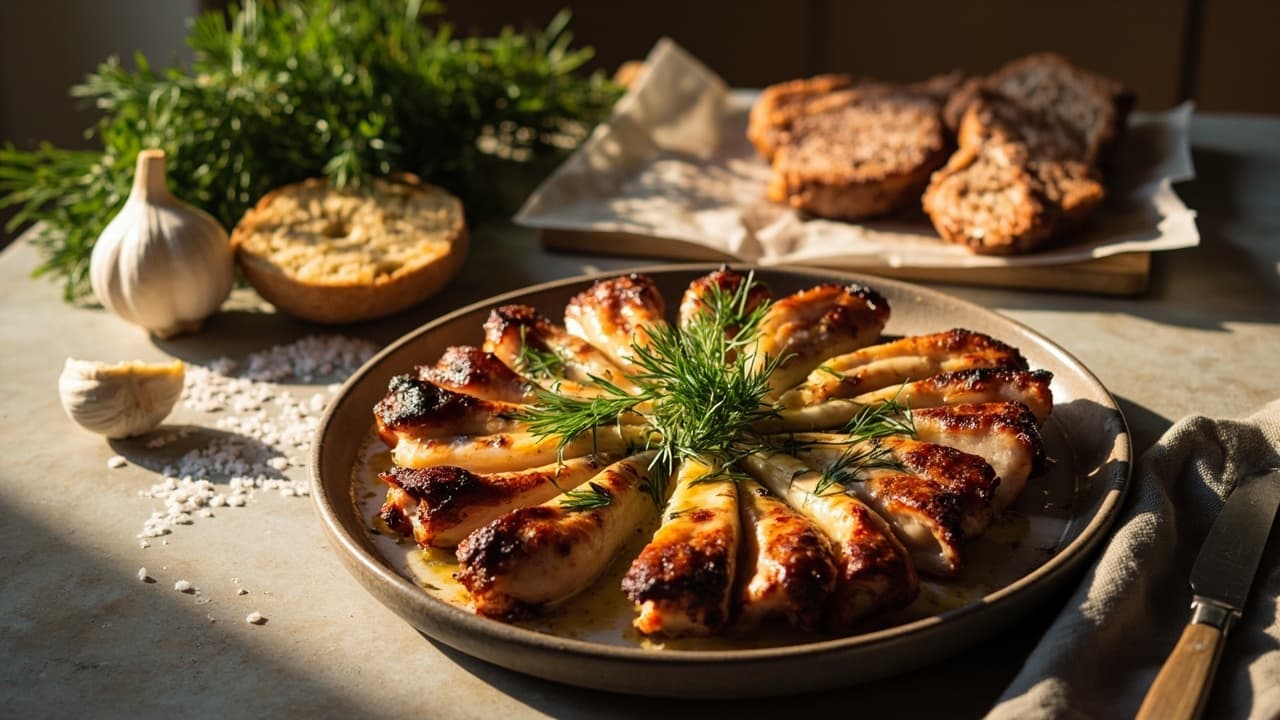
Crispy Pork Belly with Garlic and Dill
Thick-cut pork belly roasted until the skin blisters and cracks, basted with fragrant garlic butter and finished with a shower of fresh dill. The kind of humble, gutsy dish that fills a kitchen with warmth and makes everyone lean closer to the table.

Prep
15 min
Cook
45 min
Rest
5 min
Total
1h 5m
Method
Preparation
1
Rub salt and black pepper firmly into all sides of the pork belly, pressing the seasoning into the scores.
E
Nutri-Score
Least favorable
A–E · lower is better · score 25
Calories
1234
per serving
High in saturated fat · 40gHigh in salt · 2074mgCalorie-dense · 1234 kcalLow sugar · 1g
Protein
19g
Carbs
4g
Fat
127g
Sat. fat
40g
Fiber
1g
Sugar
1g
Sodium
2074mg
Gluten FreeDairyLow CarbPaleoKetoHigh Protein
Nutri-Score is a general nutritional-balance guide, not medical or dietary advice.
E
Environmental impact
Very high impact
A–E · lower is better · includes estimates
kg CO2e
2.6
per serving
ECarbonAEU all-round· carbon sets the grade
Water
0.7m³
Land
82Pt
Runoff
0.2g P
pork belly, skin-on drives 93% of this recipe’s estimated footprint.
Carbon from Poore & Nemecek 2018; water, land & runoff from Agribalyse — modelled averages for comparing recipes, not a measurement of your groceries.
Flavor Profile
7
Umami
4
Sweet
5
Salty
2
Sour
1
Bitter
1
Spicy
Textures
CrispyTenderSucculent
Aromas
HerbalGarlickyPorkyButtery
Kitchen Equipment
Primary Tool
OvenCounter FootprintMedium
Safety & Storage
Cooking Temperature
Roast pork belly at initial temperature for 25 minutes, then increase to 230°C (450°F) for 15-20 minutes until skin crackles. Ensure pork reaches safe internal temperature of 63°C (145°F) minimum before serving.
High Risk Population
Pork belly is a high-risk protein. Pregnant individuals, elderly, and immunocompromised persons should ensure pork is cooked to minimum internal temperature and consumed promptly after cooking.
Handling
Rubbing salt and pepper into scored pork belly creates direct contact with raw meat. Wash hands thoroughly with soap for 20 seconds after handling raw pork before touching other ingredients or surfaces.
Cross Contamination
Raw pork belly should be kept separate from ready-to-eat garnishes like fresh dill. Use separate cutting boards and utensils for raw meat preparation.
Storage
Refrigerate unused raw pork belly immediately. Leftover cooked pork belly must be cooled rapidly, covered, and refrigerated within 2 hours. Consume within 3-4 days or freeze for longer storage.
Equipment Safety
Hot fat and rendered pork oils at 230°C (450°F) pose severe burn and splatter risks. Use oven mitts, long tongs, and a sturdy roasting pan with sides. Allow equipment to cool before handling.
Shelf Life
Cooked pork belly is best consumed same day for optimal crispy skin texture. Refrigerated leftovers should be reheated thoroughly before consuming.
Pro Tips
Technique
Score the pork skin firmly with a sharp knife in a crosshatch pattern—this is where the crackling happens. And don't be shy with the salt, press it in like you're giving the pork belly a firm handshake.
Substitution
No fresh dill? Use a handful of fresh parsley with a tiny pinch of dried dill weed. No lemon to brighten the garlic butter? A splash of white wine vinegar works in a pinch—sour is sour.
From the chef
Good crackling is a matter of patience and dry heat. Score the skin of the pork belly, rub salt firmly into every surface, and roast uncovered until the fat begins to render, then blast it at 230°C for the last fifteen to twenty minutes until the skin blisters and cracks into something genuinely satisfying to bite through. While it rests, the garlic butter goes on — spoon it generously over the slices so it runs into the scored cuts. Fresh dill goes on last, a lot of it, green and bright against the caramelized fat. Serve with crusty bread to catch the juices from the board.
TagsPork BellyCrispy SkinGarlic ButterFresh DillRoastedHeartyCommunal
AllergensMilk
Source: generated · June 10, 2026