 Mediterranean
Medium · Hot
Salmon Baked in Lemon and Garlic Oil
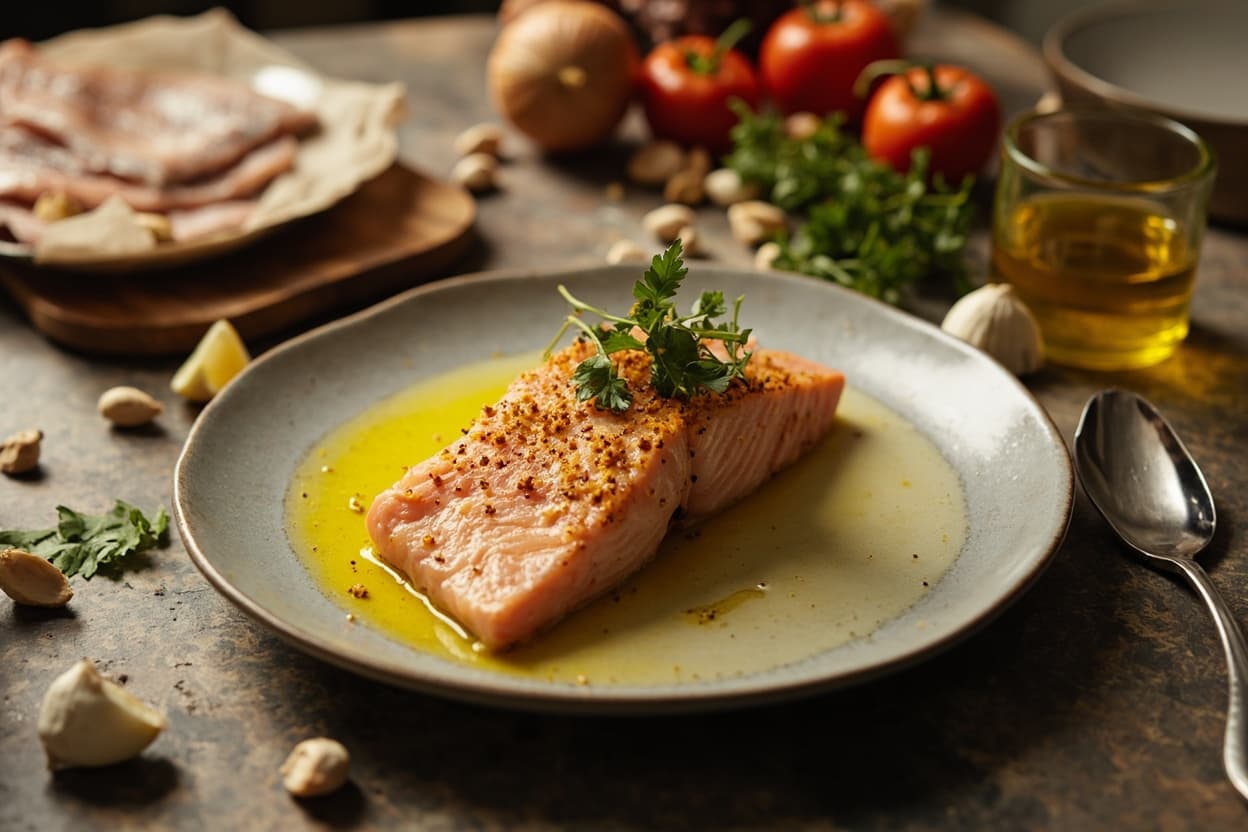
Salmon roasted slowly in olive oil that has been sitting with garlic long enough to turn mellow and fragrant — not harsh, not sharp, just deep. Lemon goes in at the start and again at the end, one for the flesh to drink in the oven, one squeezed over before the plate reaches the table. Parsley, scattered. The fish should still be just barely set at its thickest point.

Prep
10 min
Cook
22 min
Rest
3 min
Total
35 min
Method
Prepare the Lemon and Garlic Oil
1
Thinly slice 4 of the garlic cloves and place them in a small cold pan with the olive oil. Set the pan over low heat and let the garlic gently sizzle and turn pale gold, about 5 minutes. Remove from heat the moment they stop sizzling — they will continue to cook in the residual oil. Do not let them brown or they turn bitter.
2
Slice one lemon into thin rounds and set aside. Juice the remaining lemon for finishing and set that aside too.
Assemble and Bake
3
Preheat the oven to 190°C (375°F). Pour the warm garlic oil into a shallow baking dish, making sure it coats the bottom generously.
4
5
Pat the salmon fillets dry with paper towel and place them skin-side down over the lemon and garlic. Season generously with salt and black-pepper, pressing the seasoning into the flesh.
6
Slide the dish into the oven and bake for 18 to 22 minutes, until the salmon is just opaque at the thickest part and flakes when you press it gently. The oil should be shimmering at the edges but not bubbling fiercely.
Finish and Serve
7
Remove from the oven and let the salmon rest in the dish for 3 minutes — it will continue to cook in the oil and that is good.
B
Nutri-Score
Good balance
A–E · lower is better · score 2
Calories
593
per serving
High in protein · 32gLow sugar · 3g
Protein
32g
Carbs
11g
Fat
47g
Sat. fat
7g
Fiber
3g
Sugar
3g
Sodium
1191mg
PescatarianGluten FreeDairy FreeGrain FreeHeart HealthyAnti InflammatoryLow CarbHigh ProteinOmega 3 RichClean Eating
Nutri-Score is a general nutritional-balance guide, not medical or dietary advice.
D
Environmental impact
High impact
A–E · lower is better · includes estimates
kg CO2e
2.5
per serving
DCarbonAEU all-round· carbon sets the grade
Water
1.8m³
Land
60Pt
Runoff
0.3g P
salmon fillets drives 92% of this recipe’s estimated footprint.
Carbon from Poore & Nemecek 2018; water, land & runoff from Agribalyse — modelled averages for comparing recipes, not a measurement of your groceries.
Flavor Profile
6
Umami
3
Sweet
5
Salty
4
Sour
1
Bitter
2
Spicy
Textures
TenderSilkyButteryMoist
Aromas
GarlicCitrusHerbalCoastal
Kitchen Equipment
Primary Tool
Shallow Baking DishCounter FootprintMedium
Techniques
Safety & Storage
Cooking Temperature
Bake salmon at 190°C (375°F) for 18-22 minutes until opaque at thickest part and flakes when pressed gently. Use a calibrated oven thermometer to ensure accurate temperature. For food safety, salmon should reach an internal temperature of at least 63°C (145°F). The oil should shimmer at edges but not bubble fiercely, indicating proper heat without overcooking.
Handling
Pat salmon fillets dry thoroughly before seasoning and baking. Ensure raw salmon does not contact ready-to-eat foods or clean surfaces. Use separate cutting boards and utensils for raw fish. Wash hands thoroughly with soap and water before and after handling raw salmon.
Cross Contamination
The recipe instructs serving directly from the baking dish. If serving to vulnerable populations, transfer portions to clean plates to avoid double-dipping and cross-contamination from used utensils. Clean the dish thoroughly between uses if repurposing for other foods.
Storage
Refrigerate leftover salmon within 2 hours of cooking. Store in an airtight container, submerged in the garlic oil to prevent drying. The oil may solidify in refrigeration—this is normal. Reheat gently to no lower than 74°C (165°F). Consume leftovers within 2-3 days for optimal quality and safety.
Shelf Life
Fresh salmon should be used within 1-2 days of purchase when refrigerated. If previously frozen, do not refreeze after thawing. Cooked salmon dishes are best consumed within 48-72 hours when properly refrigerated.
High Risk Population
Pregnant women, young children, elderly individuals, and immunocompromised persons should ensure salmon is cooked to proper internal temperature throughout. These populations are more susceptible to foodborne illness from improperly handled fish.
Pro Tips
Technique
Watch the garlic like it owes you money — the moment it stops sizzling and turns pale gold, pull it from the heat. Bitter garlic ruins everything it touches.
Substitution
Fresh cod fillets work beautifully here alongside the salmon, or substitute cod for a more bacalhau-devotee approach.
From the chef
Salmon roasted low and slow in olive oil that has had time to sit with garlic — pale gold, mellow, nothing sharp left in it — is a different thing entirely from fish thrown into a hot pan. Lemon goes in twice: sliced rounds under the fillets while the oven does its work, fresh juice squeezed over just before serving. The fish drinks the oil as it cooks, stays just barely set at the thickest point, and comes to the table with scattered parsley and the kind of depth that coastal patience earns. Good olive oil is not a luxury here. It is the dish.
TagsBakedFishOlive OilGarlicLemonWeeknight DinnerSimple
AllergensFish
Source: generated · May 30, 2026