 Filipino
Medium · Hot
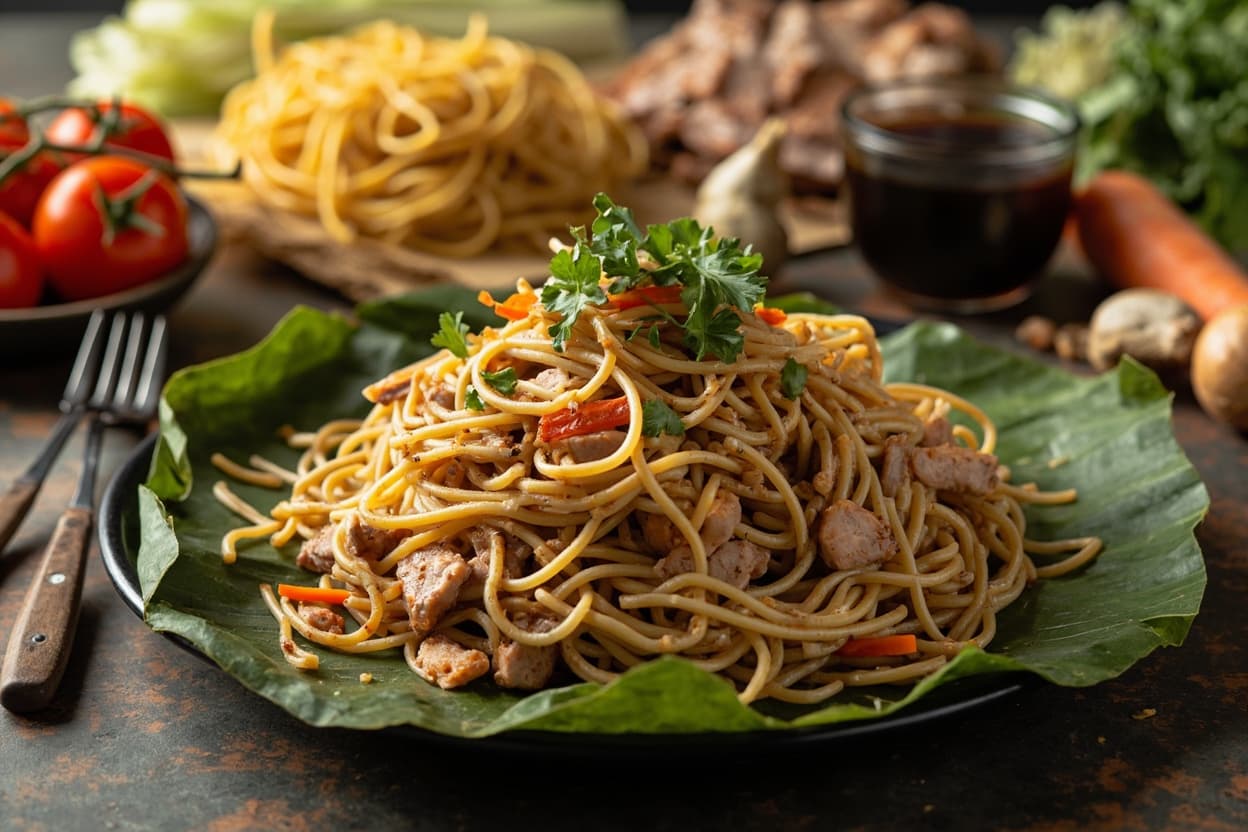
Filipino Garlic Pork Stir-Fry Pancit
Pork loin hits the wok with garlic and yellow onion until fragrant, then shredded cabbage and carrot go in and soften quickly in that savory, soy-kissed heat before spaghetti noodles are tossed through and glossed to a beautiful, sticky finish. It's pancit the way households actually make it — generous, fast, and every strand carrying that deep garlic-soy soul. Handa na — it's ready.

Prep
20 min
Cook
25 min
Total
45 min
Method
Prepare Everything
1
Cook noodles according to package directions until just al dente. Drain and set aside.
Build the Dish
2
Heat oil in wok over medium-high heat. Add sliced pork belly and cook for 6-8 minutes, stirring occasionally, until edges are lightly browned and internal temperature reaches 145°F (63°C). Add diced onion and cook for 2 minutes until softened. Push pork and onion to one side of wok.
Finish and Combine
3
Serve immediately in big bowls. Masarap to enjoy hot! Ganahan kaayo!
B
Nutri-Score
Good balance
A–E · lower is better · score 0
Calories
1077
per serving
Low sugar · 12g
Protein
26g
Carbs
96g
Fat
66g
Sat. fat
18g
Fiber
10g
Sugar
12g
Sodium
636mg
High ProteinLow CarbDairy FreeGeneral WellnessMuscle MaintenanceIron DeficiencyBalanced MealSustained EnergyFiber Intake
Nutri-Score is a general nutritional-balance guide, not medical or dietary advice.
C
Environmental impact
Moderate impact
A–E · lower is better · includes estimates
kg CO2e
1.6
per serving
CCarbonAEU all-round· carbon sets the grade
Water
0.5m³
Land
66Pt
Runoff
0.2g P
Pork Belly drives 79% of this recipe’s estimated footprint.
Carbon from Poore & Nemecek 2018; water, land & runoff from Agribalyse — modelled averages for comparing recipes, not a measurement of your groceries.
Flavor Profile
7
Umami
2
Sweet
6
Salty
4
Sour
1
Bitter
2
Spicy
Textures
TenderChewyCrisp Tender
Aromas
PungentSavoryUmami
Kitchen Equipment
Primary Tool
WokCounter FootprintMedium
Techniques
Safety & Storage
Cooking Temperature
Cook pork belly to a minimum internal temperature of 145°F to eliminate pathogens.
Maintain noodles and stir-fry above 140°F while held for service to prevent bacterial growth.
Storage
Refrigerate leftovers within 2 hours of cooking. Reheat to 165°F before consuming.
Cross Contamination
Use separate cutting boards and utensils for raw pork and vegetables to prevent cross-contact.
Allergen Warning
Soy sauce contains soy. Verify all packaged ingredients (noodles, oil) are free from soy cross-contact if cooking for severe soy allergies.
Pasta noodles typically contain wheat/gluten. Use gluten-free noodles as a substitute if cooking for individuals with celiac disease or gluten intolerance.
High Risk Population
Ensure pork is fully cooked when serving to young children, elderly, pregnant individuals, or immunocompromised guests.
Handling
Drain noodles immediately after cooking to prevent clumping and reduce moisture that can promote bacterial growth during cooling.
Pro Tips
Technique
Don't rush the pork belly! Let it cook until it releases its beautiful fat and gets slightly crispy on the edges. That caramelized porky goodness is what makes this pancit sing — patience, anak, patience!
Substitution
If you can't find fresh noodles, dried pancit canton works beautifully too. Just soak for 5 minutes instead of full cooking, and follow the same stir-fry method. Still delicious, still brings the family running!
From the chef
Pancit depends on what happens in the wok before the noodles arrive — pork belly crisped until it renders properly, garlic and onion coaxed into fragrance, cabbage and carrot tossed in just long enough to soften while keeping some texture. Then the noodles go in and absorb everything: the soy, the garlic oil, the fat from the pork. Every strand ends up coated and glossy. It comes together fast once the prep is done, and it feeds a crowd without fuss. Handa na — pile it high, serve it hot, and put out extra vinegar on the side for those who like it punchy.
TagsStir FryPorkGarlicNoodlesFamily MealFilipino Classic
AllergensWheatSoy
Source: generated · May 30, 2026