 Peruvian
Medium · Cold
Tuna Tiradito, Avocado and Cayenne
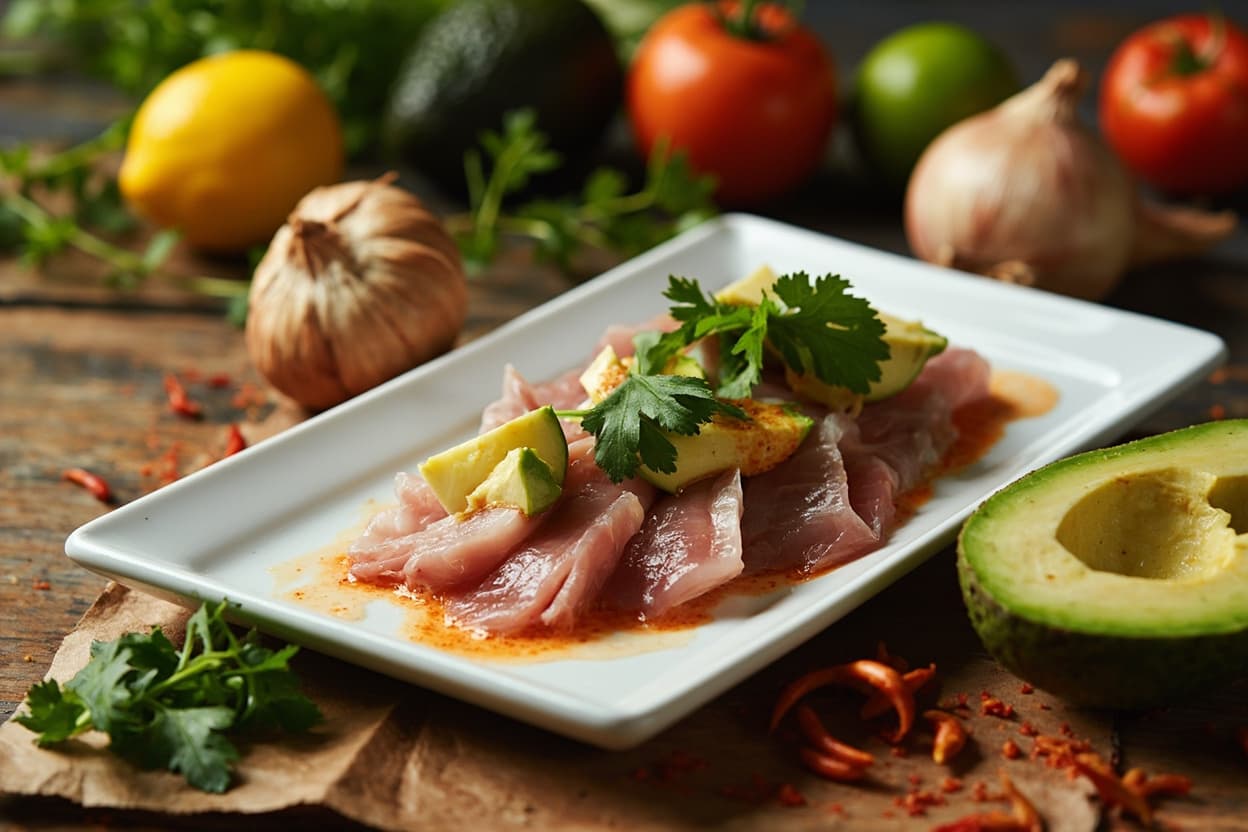
Thin slices of tuna, cut against the grain and fanned flat, receive their lime cure individually so every piece is touched equally. A thread of cayenne heat runs across the surface, avocado offers its cool weight at the side, and the onion and cilantro are applied sparingly — enough to frame the fish, not crowd it.

Prep
15 min
Rest
4 min
Total
19 min
Method
Prepare the Leche de Tigre
1
Combine fresh lime juice, salt, and cayenne in a bowl. Finely dice the yellow onion and add it to the lime mixture. Let this sit for 3 minutes to bloom the flavors.
Cure the Tuna
2
3
Let the tuna cure in the leche de tigre for exactly 4 minutes — no more. The edges should turn opaque while the center remains bright and raw.
Prepare the Avocado
4
Halve the avocados and remove the pits. Slice each half into thin fans or half-moons, keeping the structure intact.
Plate and Finish
5
Arrange the cured tuna slices on chilled plates, letting them pool in the vibrant leche de tigre.
7
Finish with a pinch of cayenne, fresh cilantro leaves, and serve immediately before the acid overpowers the fish.
A
Nutri-Score
Excellent balance
A–E · lower is better · score -3
Calories
254
per serving
High in protein · 25gLow sugar · 3g
Protein
25g
Carbs
14g
Fat
13g
Sat. fat
3g
Fiber
6g
Sugar
3g
Sodium
973mg
Gluten FreeDairy FreePescatarianRawLow CarbKeto FriendlyWhole30Heart HealthyAnti InflammatoryBlood Pressure ConsciousLow Sodium OptionHigh ProteinOmega 3 RichClean EatingWeight Management
Nutri-Score is a general nutritional-balance guide, not medical or dietary advice.
Grade pending
Environmental impact
Estimated footprint
Grade pending · 64% ingredient coverage
kg CO2e
≥0.1
per serving
Ripe Avocado drives 61% of this recipe’s estimated footprint.
Carbon from Poore & Nemecek 2018; water, land & runoff from Agribalyse — modelled averages for comparing recipes, not a measurement of your groceries.
Flavor Profile
7
Umami
3
Sweet
4
Salty
6
Sour
1
Bitter
5
Spicy
Textures
SilkyCreamyTender
Aromas
CitrusHerbalPungent
Kitchen Equipment
Primary Tool
Mixing BowlCounter FootprintSmall
Safety & Storage
High Risk Population
This dish contains raw tuna and is not safe for pregnant individuals, young children, elderly, or immunocompromised persons due to risk of parasitic and bacterial contamination.
Shelf Life
Raw tuna must be served immediately after preparation. Do not hold at room temperature. Consume within 15-20 minutes of plating.
Cross Contamination
Use dedicated cutting boards and utensils for raw tuna. Never allow raw fish to contact ready-to-eat foods or previously prepared items.
Handling
Tuna must be sliced sashimi-style (5mm thick) uniformly to ensure consistent cure. Cure time of exactly 4 minutes in lime-cayenne mixture is critical for food safety.
Storage
Fresh tuna must be stored at or below 40°F (4°C) until preparation. If fish has been previously frozen for parasite destruction, clearly label and track thaw status.
Cooking Temperature
This dish contains NO cooked elements. If parasite destruction is required, fresh tuna must be frozen at -4°F (-20°C) or below for 7 days or -31°F (-35°C) until solid for 15 hours before serving raw.
Pro Tips
Technique
Four minutes exactly in the cure. Set a timer if you must — the edges should turn opaque while the center stays bright ruby. That's the moment to plate, not a second later.
Slice your tuna at a 45-degree angle against the grain into 5mm strips — this isn't sashimi, you're creating texture that catches the leche de tigre like tiny pools of citrus lightning.
Substitution
Sea bass or mahi-mahi work beautifully if sushi-grade tuna isn't available — just ensure excellent quality and speak with your fishmonger about sustainability.
Presentation
Chill your plates before serving. Cold porcelain keeps the cure active longer and makes the vivid pink of the tuna and the pooling leche de tigre look like art.
From the chef
Tiradito is not ceviche — the slices are thinner, fanned flat so the lime cure reaches every surface equally, and there is no tossing, no marinating time to speak of. Four minutes in the leche de tigre is the window: edges turn opaque, center stays bright and raw, and that contrast is the whole texture of the dish. Cayenne runs across the surface as a finish, a thread of warmth that makes the lime taste sharper without competing with it. Avocado goes alongside for its cool weight. Serve the moment the cure is done — the acid keeps working and past that window the fish loses what makes it worth eating.
TagsRaw FishCitrus CuredSpicyAvocado
AllergensFish
Source: generated · May 30, 2026