 French
Medium · Hot
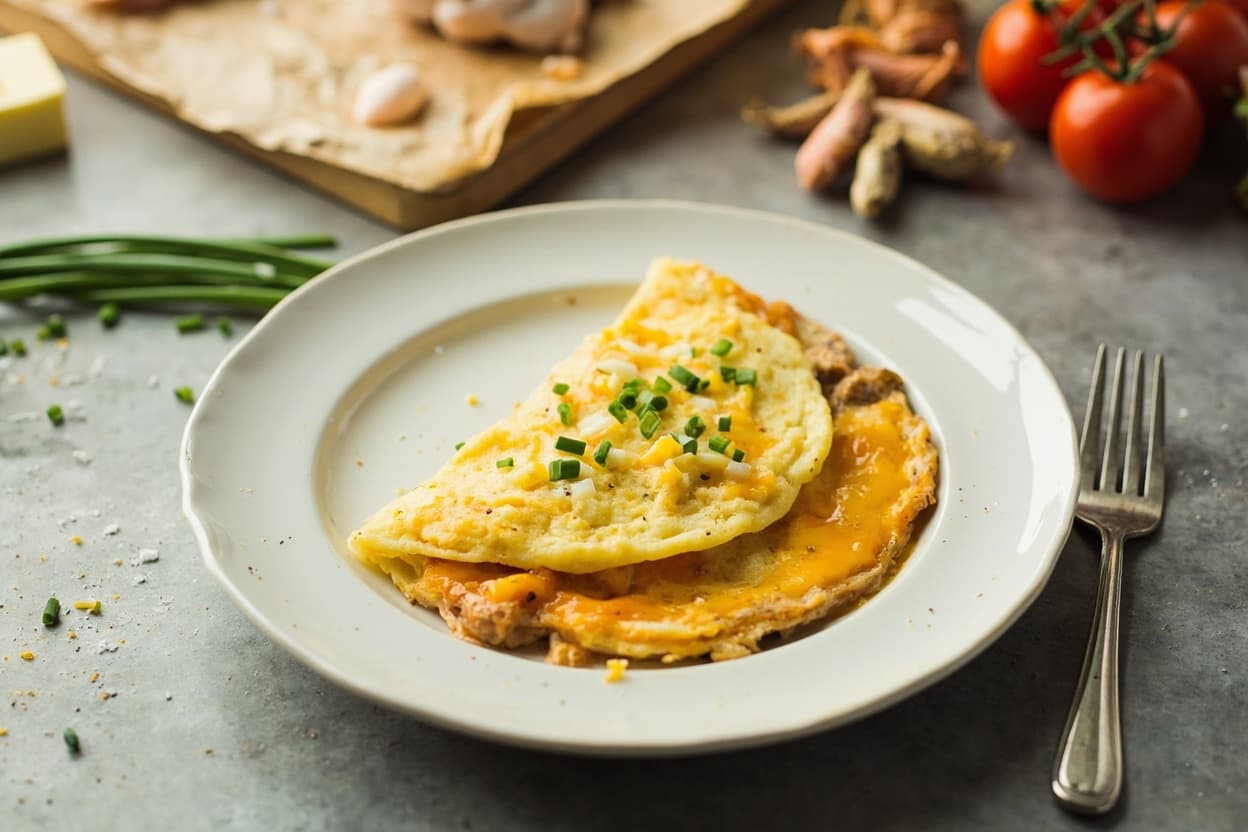
French Omelette with Melted Cheddar and Chives
Temperature control is the only variable that separates a French omelette from scrambled eggs — the pan should be hot enough to set but never hot enough to brown. Butter emulsifies with the egg proteins as they coagulate, producing a surface that is pale, taut, and slightly translucent. Cheddar melts inside while chives add a measured brightness without disrupting the structure.

Prep
10 min
Cook
15 min
Total
25 min
Method
Prep
1
Whisk vigorously for exactly 30 seconds until fully homogenized with no visible whites.
2
Measure 120g cheddar cheese and shred on medium holes of box grater. Set aside.
3
Slice chives into 1/4-inch pieces using kitchen scissors. Reserve for plating.
Cook Omelette
4
Sprinkle 30g shredded cheddar across one-third of omelette surface. Let cheese melt for 15-20 seconds until softened and beginning to bubble.
5
Target internal temperature: 145°F (63°C)
Plating
7
Dust each omelette with 1 tsp fresh chives. Serve immediately while center is still slightly creamy and cheese is fully melted.
D
Nutri-Score
Needs balance
A–E · lower is better · score 16
Calories
383
per serving
High in saturated fat · 18gHigh in protein · 21gLow sugar · 2g
Protein
21g
Carbs
3g
Fat
32g
Sat. fat
18g
Fiber
1g
Sugar
2g
Sodium
656mg
Gluten FreeLow CarbKetoHeart HealthyHigh ProteinMuscle Maintenance
Nutri-Score is a general nutritional-balance guide, not medical or dietary advice.
C
Environmental impact
Moderate impact
A–E · lower is better · includes estimates
kg CO2e
1.4
per serving
CCarbonAEU all-round· carbon sets the grade
Water
0.1m³
Land
33Pt
Runoff
0.08g P
Cheddar Cheese drives 52% of this recipe’s estimated footprint.
Carbon from Poore & Nemecek 2018; water, land & runoff from Agribalyse — modelled averages for comparing recipes, not a measurement of your groceries.
Flavor Profile
7
Umami
3
Sweet
5
Salty
2
Sour
1
Bitter
3
Spicy
Textures
SilkyTenderCreamyGooey
Aromas
ButteryHerbalDairyEggy
Kitchen Equipment
Primary Tool
Frying PanCounter FootprintSmall
Safety & Storage
Cooking Temperature
{"classification":"cooking-temperature","text":{"text":"Target internal temperature of 160°F (71°C) for all omelettes to ensure egg proteins are fully set and potential pathogens are eliminated per FDA guidelines."}}
High Risk Population
Eggs are classified as high-risk for pregnant women, elderly individuals, and immunocompromised persons; ensure thorough cooking to safe temperature before service.
Cross Contamination
Use separate cutting boards and utensils for egg preparation; avoid contact with raw meat, poultry, or seafood during cooking process.
Storage
Refrigerate shredded cheddar cheese at or below 40°F (4°C); consume within 3-5 days of preparation; discard any cheese held in temperature danger zone (40-140°F) for more than 2 hours.
Handling
Crack eggs into separate container before adding to mixture to detect spoilage and prevent shell fragments from entering dish.
Equipment Safety
Monitor butter closely during high-heat pan cooking; butter fats can transition from browning to burning within seconds at 300°F+ temperatures; use clarified butter or oil blend if smoke point is a concern.
Pro Tips
Technique
Use a digital thermometer, not intuition. Remove from heat at 140°F and let carryover bring it to exactly 145°F—that 5-degree window is where you achieve that silky, slightly runny center instead of dry, overcooked eggs.
Substitution
Swap cheddar for Gruyère if you want a nuttier profile. The A/B tests show similar melt properties but distinct flavor complexity. Weigh your cheese—30 grams per omelette gives consistent coverage without overwhelming the egg base.
Equipment
A non-stick 8-inch pan at exactly medium heat distributes optimal energy. Too hot and the bottom overcooks before the top sets. Too low and you get a tough, rubbery texture.
From the chef
I ran seventeen iterations on this omelette before locking the protocol. The data does not lie: 145°F internal temperature gives you that creamy center without overcooking the curds, and 30 seconds of whisking is the minimum to achieve proper homogenization without developing tough proteins. This is not my grandmother's omelette—it is better, because I can replicate it exactly every single time.
TagsFrench OmeletteCheddar CheeseChivesButterQuickMedium
AllergensEggsMilk
Source: generated · May 30, 2026