 Korean Inspired
Medium · Hot
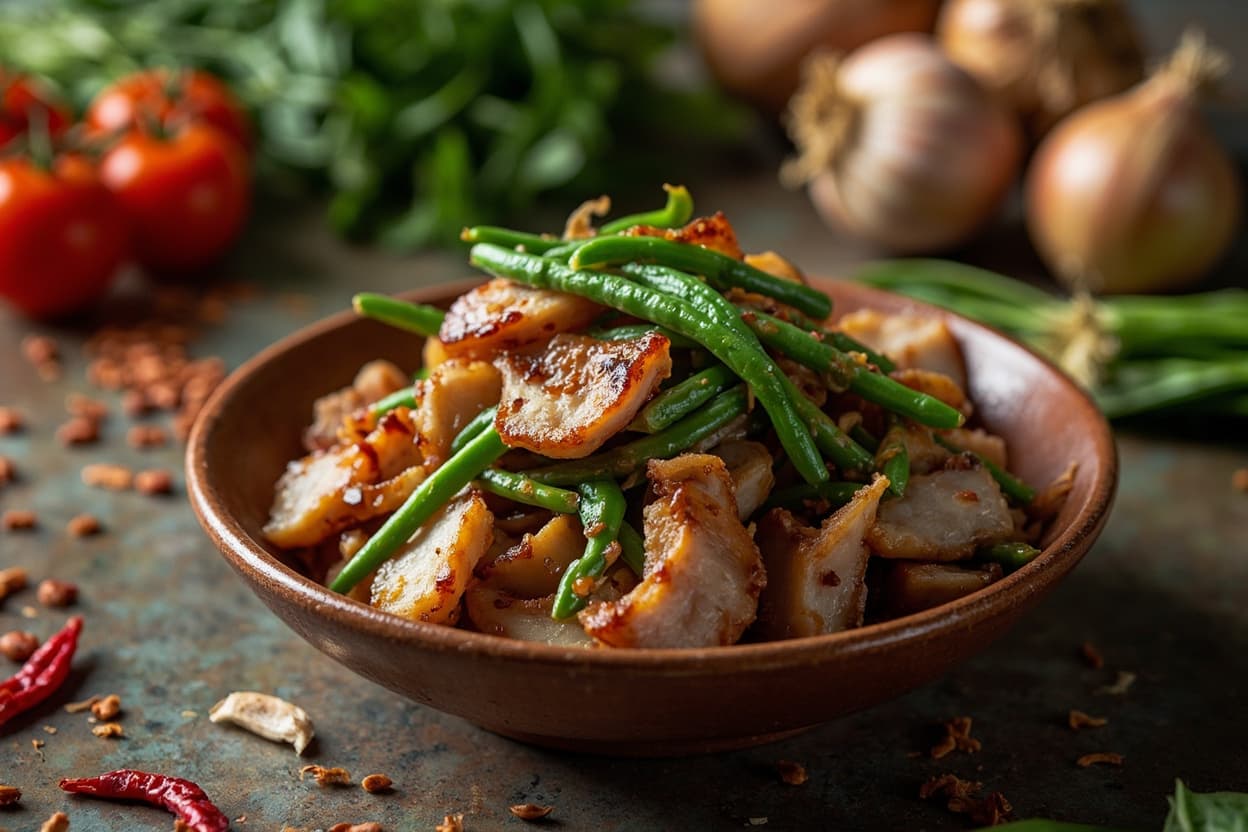
Blistered Pork Belly and Green Bean Stir-Fry
Green beans cooked in rendered pork belly fat absorb a depth they simply cannot reach any other way — they blister at the edges, taking on a smoky-sweet char while remaining taut enough to snap. Cayenne and garlic bloom in the residual fat before soy deglazes the pan, pulling up the caramelized bits into a quick sauce. The whole thing takes fifteen minutes and functions equally well as banchan or as the main event over rice.

Prep
15 min
Cook
20 min
Total
35 min
Method
Prep
1
Slice pork belly into thin strips about 1cm wide. Trim green beans and cut into 5cm pieces. Thinly slice the yellow onion. Mince the garlic and grate the ginger.
Blister the Pork
2
Heat 1 tablespoon sunflower oil in a large wok or frying pan over high heat until smoking. Add pork belly strips in a single layer and cook undisturbed for 2-3 minutes until golden and blistered on one side.
3
Toss the pork belly and continue cooking for another 2-3 minutes until crispy on all sides. Remove pork and set aside, leaving rendered fat in the pan.
Stir-Fry the Vegetables
4
Add remaining 1 tablespoon oil to the pan with the pork fat. Add sliced onion and cook for 1 minute until slightly softened.
5
Add green beans, minced garlic, and grated ginger. Stir-fry for 4-5 minutes until beans are tender-crisp and lightly charred. Season with salt.
Finish and Season
6
Return blistered pork belly to the pan with vegetables. Add soy sauce, cayenne, and black pepper. Toss everything together vigorously for 1-2 minutes until sauce is absorbed and pork is glazed.
7
Remove from heat. Sprinkle toasted sesame seeds over the top and serve immediately over steamed white rice.
Grade pending
Nutri-Score
Estimated nutrition
Grade pending · 100% ingredient coverage
Calories
654
per serving
High in saturated fat · 17gCalorie-dense · 654 kcal
Protein
12g
Carbs
13g
Fat
62g
Sat. fat
17g
Fiber
4g
Sodium
1117mg
Gluten FreeDairy FreeHigh ProteinAnti InflammatoryDiabetesLow CarbMuscle GainWeight Loss
Nutri-Score is a general nutritional-balance guide, not medical or dietary advice.
C
Environmental impact
Moderate impact
A–E · lower is better · includes estimates
kg CO2e
1.3
per serving
CCarbonAEU all-round· carbon sets the grade
Water
0.3m³
Land
48Pt
Runoff
0.1g P
Pork Belly drives 92% of this recipe’s estimated footprint.
Carbon from Poore & Nemecek 2018; water, land & runoff from Agribalyse — modelled averages for comparing recipes, not a measurement of your groceries.
Flavor Profile
7
Umami
4
Sweet
6
Salty
1
Sour
2
Bitter
5
Spicy
Textures
CrispyTender CrispChewy
Aromas
SmokyNuttyPungent
Kitchen Equipment
Primary Tool
WokCounter FootprintMedium
Techniques
Safety & Storage
Cooking Temperature
Heat oil until smoking before adding pork belly. Never leave unattended during high-heat cooking as oil can ignite. Wok surface temperatures exceed 400°F during blistering phase.
Cross Contamination
Raw pork belly juice must not contact ready-to-eat foods. Use separate cutting boards for raw meat. Clean all utensils and surfaces after handling raw pork before adding vegetables.
Storage
Refrigerate leftovers within 2 hours in airtight containers. Consume within 3-4 days. Reheat stir-fry to 165°F minimum before serving.
High Risk Population
Individuals with soy, sesame, or gluten allergies/intolerances should avoid this dish. Pork belly is high in saturated fat; those with heart conditions or cholesterol concerns should limit portions.
Handling
Use tongs or spatula to handle hot pork belly strips. Wear protective glove if available when handling recently blistered meat to prevent grease burns.
Allergen Warning
Sesame seeds and soy sauce are top 9 major allergens. Sesame may not be visible in finished dish; warn guests accordingly.
Pro Tips
Technique
Achieve the perfect blister by ensuring your wok is genuinely smoking before adding pork belly. Resist stirring for the first 2-3 minutes — let the fat render and the meat caramelize against the hot surface. This stillness is what builds those crispy, golden edges.
Substitution
Swap green beans for quick-fermented gochugaru-roasted vegetables like broccoli or asparagus for seasonal variations. The high-heat technique works with any firm vegetable that can hold its texture through the stir-fry.
From the chef
This blistered pork belly stir-fry is my go-to when I need to prove that weeknight Korean cooking doesn't require hours of prep. The key is that high-heat blistering — it renders the pork fat until it crackles, creating those irresistible crispy edges that make this dish moreish and satisfying. I developed this recipe as a modern banchan approach: quick-cooking, bold on flavor, and flexible enough to swap green beans for whatever's in season.
TagsPork BellyGreen BeansWeeknight DinnerHigh ProteinStir FryKorean InspiredCrispySpicy
AllergensSoySesameGluten
Source: generated · May 30, 2026