 American
Medium · Hot
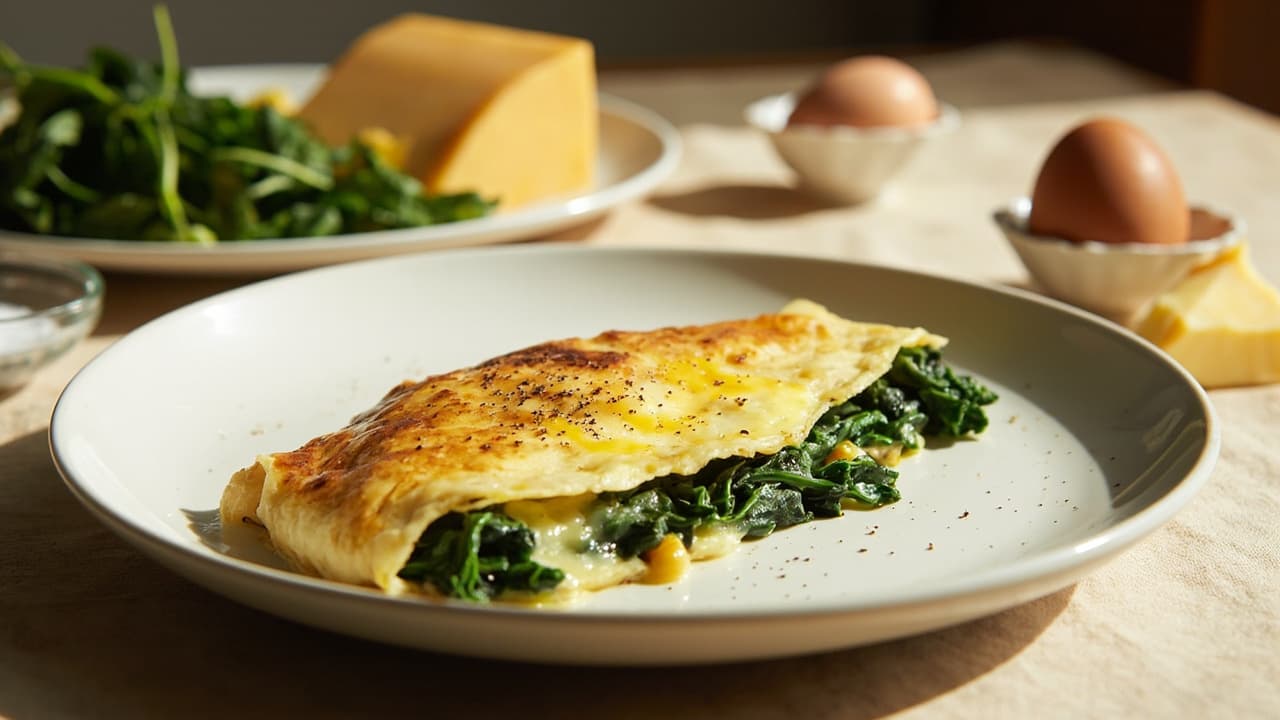
Spinach and Cheddar Stuffed Omelet
A proper stuffed omelet with wilted spinach and sharp cheddar folded into a buttery, just-set egg. Served immediately, as eggs should be.

Prep
10 min
Cook
8 min
Total
18 min
Method
Prepare the Filling
2
Add spinach and stir until just wilted, about 2 minutes. Do not overcook.
3
Remove from heat, fold in cheddar-cheese, and set aside.
Make the Omelet Base
4
5
Heat remaining butter in an 8-inch frying pan over medium-low heat until just beginning to brown.
6
Pour in egg mixture and let it sit undisturbed for 30 seconds until edges begin to set.
Fill and Fold
9
Using a spatula, fold one side of the omelet over the filling, then slide onto a plate.
10
Finish with a pinch of black-pepper and serve immediately, before it loses its dignity.
B
Nutri-Score
Good balance
A–E · lower is better · score 0
Calories
548
per serving
High in saturated fat · 24gHigh in protein · 35gLow sugar · 2g
Protein
35g
Carbs
11g
Fat
42g
Sat. fat
24g
Fiber
6g
Sugar
2g
Sodium
684mg
High ProteinGluten FreeLow CarbModerate FatLow SugarHeart HealthyBalanced DietBalanced Macro
Nutri-Score is a general nutritional-balance guide, not medical or dietary advice.
C
Environmental impact
Moderate impact
A–E · lower is better · complete match
kg CO2e
1.3
per serving
CCarbonAEU all-round· carbon sets the grade
Water
0.2m³
Runoff
0.09g P
cheddar-cheese drives 44% of this recipe’s estimated footprint.
Carbon from Poore & Nemecek 2018; water, land & runoff from Agribalyse — modelled averages for comparing recipes, not a measurement of your groceries.
Flavor Profile
7
Umami
2
Sweet
5
Salty
1
Sour
2
Bitter
3
Spicy
Textures
TenderCreamySmoothSoft
Aromas
HerbalButteryCheesySavory
Kitchen Equipment
Techniques
Safety & Storage
Cooking Temperature
Cook eggs until center reaches at least 160°F (71°C) to eliminate salmonella risk. The recipe's medium-low heat should achieve this, but verify no runny egg white remains in the center.
High Risk Population
Pregnant women, young children, elderly, and immunocompromised individuals face heightened risk from undercooked eggs. Ensure thorough cooking for these populations.
Cross Contamination
Raw eggs used in whisking can contaminate surfaces, utensils, and other foods. Use separate bowls and sanitize tools after handling raw eggs before touching ready-to-eat items.
Handling
Crack eggs into a separate bowl before adding to the pan to detect spoilage and avoid shell fragments. Wash hands thoroughly with soap after handling raw eggs.
Storage
Leftover omelet must be refrigerated within 2 hours of cooking. Store in airtight container and consume within 3-4 days. Reheat to 165°F before eating.
Shelf Life
This dish is best consumed immediately after cooking. Textural quality degrades significantly after refrigeration and reheating; the buttery, just-set texture will be lost.
Pro Tips
Technique
Stop whisking your eggs like you're punishing them. Thirty seconds of gentle work is all you need—enough to blend the whites and yolks, not enough to turn them nervous. Overworked eggs make a tough omelet, and a tough omelet has clearly given up on life.
Substitution
Sharp cheddar is my preference because it has opinions, but if you've got gruyère or aged gouda lurking in your fridge, those work beautifully. Just don't reach for the pre-shredded bags—those anti-caking agents are social climbers.
From the chef
I refuse to call this a 'brunch item' because it deserves better than a two-hour wait and a reservation app. This is a stuffed omelet: eggs barely set, sharp cheddar giving it backbone, spinach wilted just enough to hold its shape without becoming a cliché. You make it, you eat it. That's the entire concept. No velvet ropes, no QR codes, no one asking if you'd like to start with a 'sharing plate.' Just a proper omelet on a plain plate, served while it's still proud of itself.
TagsStuffed OmeletSpinachCheddarEggsQuickButtery
AllergensEggsMilk
Source: generated · June 10, 2026