Heat & Fire
Asado (Slow Charcoal Grilling)
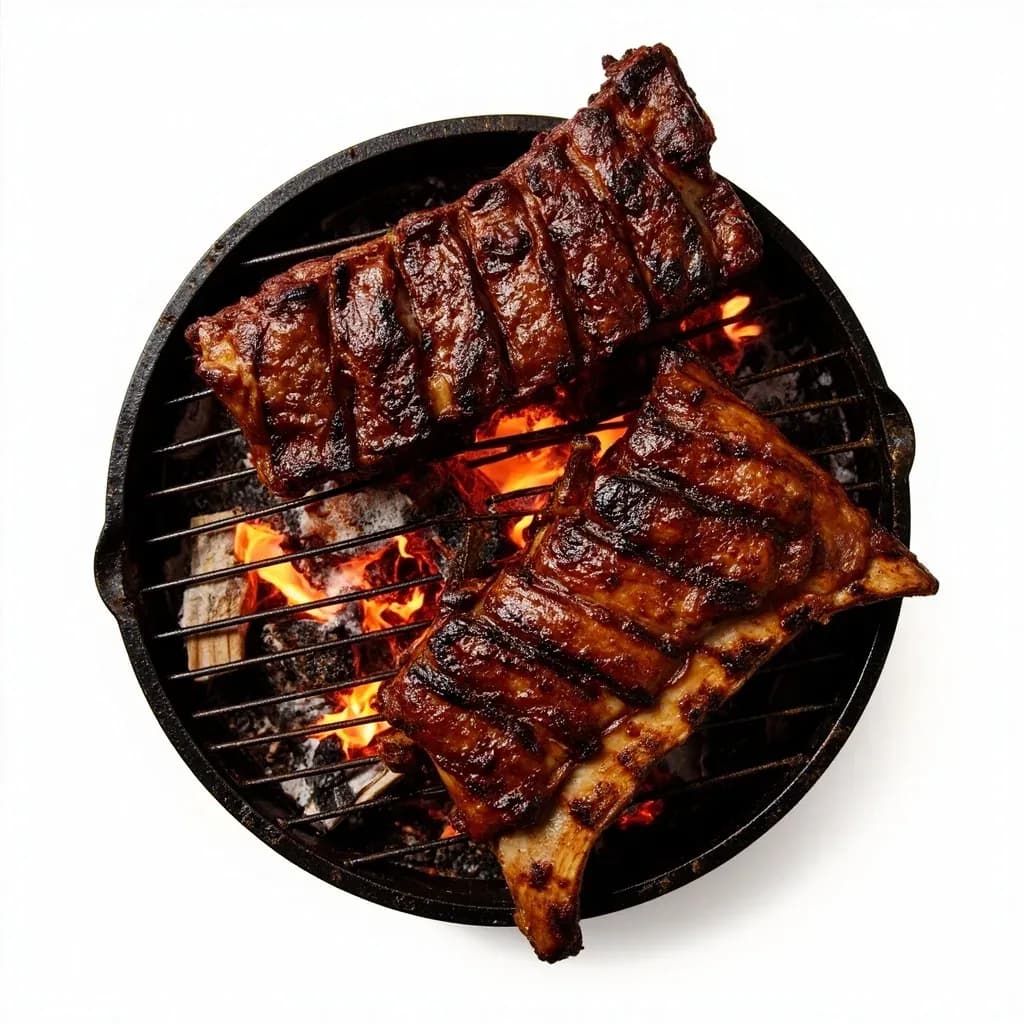
Grilling large cuts slowly over wood or charcoal embers, the centerpiece of South American barbecue.
Asado cooks large cuts of beef, ribs, and sausages slowly over a bed of glowing wood or charcoal embers, often on an iron grill or staked open near the fire. The Argentine and Uruguayan tradition relies on indirect, gentle heat and patience rather than high flames, letting the meat take on smoke and render evenly. The asador manages the fire and embers throughout, salting simply rather than marinating.
Asado is the South American art of cooking large cuts of beef — and often whole animals — slowly over a deep bed of hardwood embers on an open-air grill called a parilla. More than a recipe, it is a system: the cook builds a fire, lets it collapse into glowing coals, then grates the meat at a measured distance from the heat, adjusting height rather than fuel to control temperature. Active flames are avoided once the meat goes on; everything happens in radiant heat and drifting wood smoke.
The method is most closely associated with Argentina and Uruguay, where a Sunday asado is treated as a domestic ritual on par with any family holiday. The asador — the grill master — orchestrates the cook, sequencing tough, fatty cuts early and tender steaks last so that everything comes off the parilla over a span of three to five hours and is eaten at once. Seasoning is famously austere: coarse salt, sometimes nothing else, with chimichurri served on the side rather than brushed on.
What distinguishes a true asado from ordinary grilling is the flavor of meat cooked for hours in clean hardwood smoke at a gentle 150–200°C (300–400°F). Fat renders without burning, collagen softens into gelatin, and the surface picks up a deep, brick-red crust that conventional grilling rarely achieves. The skill is patience, fire management, and the discipline to leave the meat alone.
- Difficulty
- Medium
Types & varieties
Beef short ribs cut thinly across the bone (flanken-style); the most iconic Argentine cut on the parilla.
Thin flank steak with the membrane left on; cooked whole and sliced against the grain so a fork can stand in the slices.
Stuffed and rolled flank or belly, typically with spinach, hard-boiled egg, and herbs, tied and grilled slowly.
A full beef rib rack or thick-cut ribs, slow-grilled bone-in for two hours or more.
Striploin/sirloin strip, seared hot and fast at the end of the cook over mellow coals.
Mixed grill platter combining several cuts and sausages, brought to the table on one tray.
Grilled beef or pork chorizo served in a crusty roll — the asado's signature sandwich.
Offal grilled first while the fire is hottest: chinchulines (small intestines), riñón (kidney), mollejas (sweetbreads), morcilla (blood sausage).
Patagonian-style lamb cooked whole on a cross-shaped stake (asador de cruz) angled over the coals.
Whole lamb or pig roasted vertically beside a fire pit, common in Patagonia and the Argentine northwest.
Whole animal or large cuts cooked on a horizontal spit or buried in embers under a salt crust.
How to do it
- 1
Choose and prepare the meat
Select large, well-marbled cuts: short ribs (asado de tira), vacío, matambre, chorizos, and at least one prime steak such as bife de chorizo. Pat the meat dry and let it sit at room temperature for 30–45 minutes. Have a small bowl of coarse sea salt and a long pair of tongs at hand.
- 2
Build the fire
Stack dry, seasoned hardwood — quebracho, algarrobo, or oak — loosely in the fire pit. Light it and let it burn freely for 45–60 minutes, until the wood has collapsed into a deep, even bed of glowing gray-white embers about 5–8 cm thick. There should be no visible flame by the time you begin cooking.
- 3
Set the parilla height
Position the grill grate high above the embers for the first phase, then lower it as the embers settle. The asador adjusts height throughout the cook rather than adding fuel: grate up for gentler cooking, grate down for hotter searing.
- 4
Start with achuras and sausages
Lay offal — chinchulines, mollejas, riñón — and chorizos on the parilla while the embers are hottest. Achuras need only 5–10 minutes to crisp on the outside; chorizos take 15–20 minutes, turned often to render fat evenly without bursting the casing.
- 5
Move to large, fatty cuts
Lay the short ribs, vacío, and any bone-in pieces on the parilla. Salt generously with coarse salt. Cook slowly, turning every 15–20 minutes, for 1.5–2.5 hours depending on thickness. The fat should render fully and the meat should pull back from the bone.
- 6
Finish with premium cuts
In the last 20–30 minutes, lower the parilla closer to the embers and sear the steaks — bife de chorizo, ojo de bife, lomo — for 3–5 minutes per side. Salt the steaks just before they go on so the surface sears rather than steams.
- 7
Rest and carve
Transfer all the meat to a wooden board or warm platter and tent loosely with foil. Rest 5–10 minutes. Carve short ribs between the bones, slice vacío against the grain in thick slabs, and cut steaks in substantial pieces.
- 8
Serve with chimichurri and bread
Bring the board to the table with chimichurri, salsa criolla, and crusty country bread. Diners serve themselves; in the traditional asado, plates are optional.
The Fire: The Heart of the Asado
The single biggest difference between an asado and ordinary grilling is the fire. Wood is stacked and burned until it collapses into a thick, even bed of gray-white embers — typically 5–8 cm deep — with no visible flame. Cooking begins only after this transition. From that point, the asador controls heat entirely by moving the parilla up or down; the embers themselves are not disturbed, never sprayed with water, never fanned. This produces a steady, radiant heat that sears without blackening and lets fat render slowly into the meat rather than dripping into open flame.
Wood choice matters more than grill design. Dense hardwoods — quebracho, algarrobo, oak — give a clean, long-lasting bed of coals and a mild, savory smoke. Softwoods, pine, and any treated lumber are rejected because they give acrid smoke and bitter tars that cling to the meat.
- Build the fire 45–60 minutes before the first cut goes on; rushing the embers is the most common beginner mistake.
- Aim for embers, not flame — the asador cooks by radiant heat, with no licking fire reaching the meat.
- Hardwood only; fruit woods like apple or peach are a permissible aromatic accent, not the main fuel.
- Plan for more wood than you think you'll need; an asado always burns through fuel faster than expected, especially in cold weather.
The Order of Service
An asado is sequenced backward from what most home grillers do: the toughest, fattiest cuts go on first, and the most expensive steaks go on last. The fire starts at its hottest, then gradually cools through the afternoon. Achuras and chorizos take the opening heat; short ribs, vacío, and matambre take the middle hours over gentler coals; bife de chorizo, ojo de bife, and lomo get a quick sear at the end, when the embers have settled into a mellow glow.
Everything arrives at the table together. A wooden board is laid down, thick slices are carved in front of the diners, and people serve themselves. Plates are technically optional; bread, chimichurri, and a sharp knife are not.
Common uses
Tips & pitfalls
- Burn the wood down to a thick bed of gray-white embers before any meat goes on — never cook over active flames, which blacken the fat and leave a bitter crust.
- Control heat by raising or lowering the parilla, not by spraying water on the embers or fanning the fire.
- Plan the cook in reverse: tough, fatty cuts and sausages go on first; tender, expensive steaks go on last over mellow coals.
- Salt large cuts (ribs, vacío) generously 30–60 minutes ahead; salt steaks only just before grilling so the surface sears instead of steaming.
- Rest the meat 5–10 minutes under loose foil — asado is served warm, not piping hot, so the juices stay in the muscle.
- Slice across the grain, and not too thin; a fork should be able to stand upright in a slice of vacío.
- Skip the marinade — traditional asado relies on the quality of the beef and the smoke from the wood; heavy sauces mask the flavor you worked all afternoon to build.
- Move meat to a cooler edge of the parilla if fat is flaring; flare-ups are the main cause of a charred, bitter exterior on an otherwise good asado.
Good to know
- Origin
- Argentina and Uruguay, with deep traditions across Chile, Paraguay, and southern Brazil; the word 'asado' names both the method and the social gathering around it.
- Heat source
- Wood and/or charcoal reduced to a bed of glowing embers; active flames are avoided once cooking begins.
- Traditional equipment
- A parilla — a wrought-iron grill with a V-shaped or flat grating, height-adjustable over a built-in brick or iron fire pit.
- Preferred woods
- Hardwoods that burn long and clean: quebracho and algarrobo in Argentina; dry seasoned oak and fruit woods elsewhere. Softwoods and resinous woods are avoided.
- Cooking temperature
- Low to moderate, roughly 150–200°C (300–400°F) at the grate, controlled by raising or lowering the parilla.
- Total cook time
- 1.5–2.5 hours for short ribs alone; 3–5 hours for a full asado with multiple cuts.
- Seasoning
- Coarse salt only, applied before or partway through cooking; chimichurri is served alongside, never as a marinade.
- Difficulty
- Moderate to high — fire management and the timing of multiple cuts is the real skill; the actual grilling is mostly hands-off.
Also called
asado-slow-grilling · Argentine Barbecue · Asado
Related

Sear
Blast the surface hot for a deep-browned, savory crust

Sauté
Cook quickly in a little fat over lively heat, tossing as you go

Stir-Fry
Toss bite-sized pieces over roaring heat for fast, smoky cooking

Pan-Fry
Crisp food in a shallow layer of hot fat, turning once or twice

Deep-Fry
Submerge in hot oil for an all-over crackling crust

Roast
Cook uncovered in dry oven heat for browned edges and tender centers

Bake
Cook with steady, surrounding oven heat — the soul of bread and pastry

Broil
Hit food from directly above with fierce overhead heat