Prep & Assembly
Batch Mixing
Combining ingredients in large, consistent lots so every portion matches.
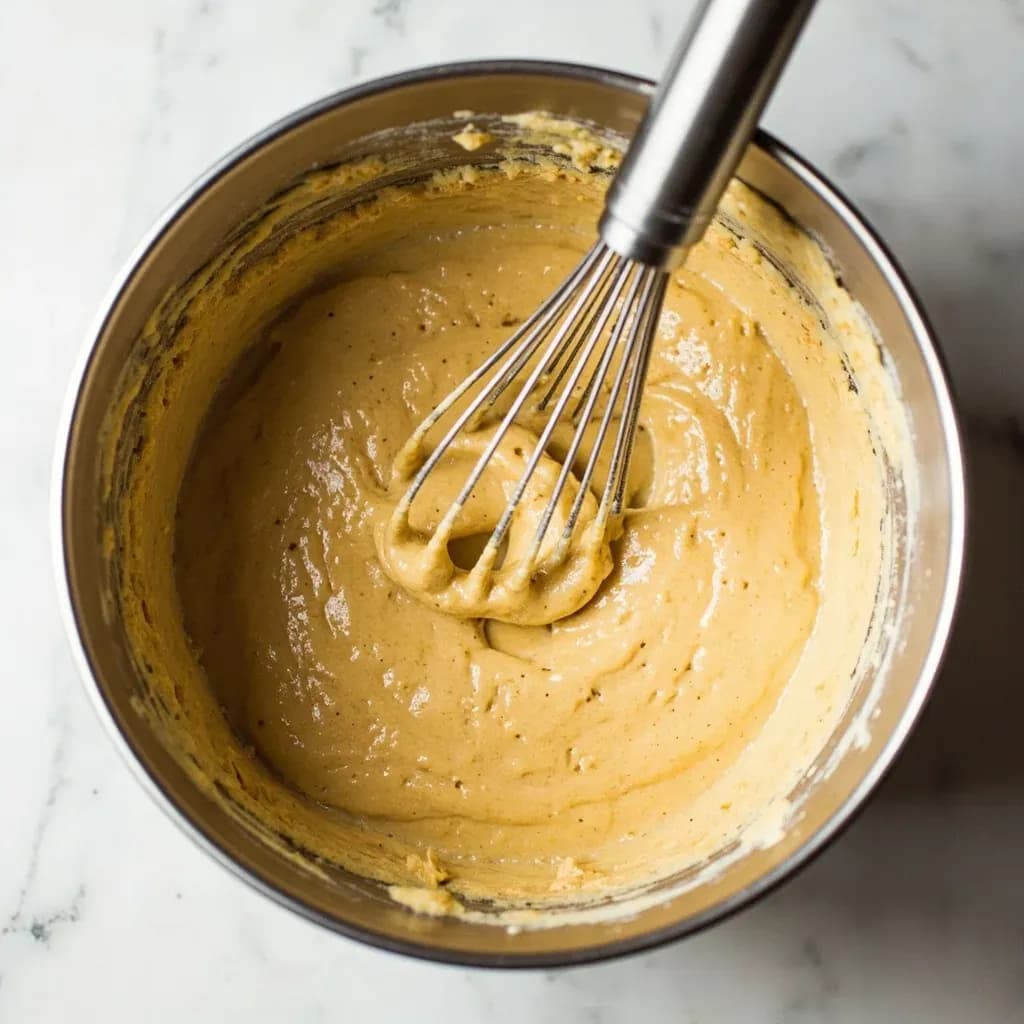
Batch mixing blends ingredients in bulk to one uniform standard, then portions out from that lot. Scaling and mixing together ensures consistency across many servings, from spice blends and batters to doughs and dressings. The challenge is even distribution and accurate scaling so each unit drawn from the batch tastes the same.
Batch mixing is the discipline of combining ingredients in predetermined, repeatable volumes so that every portion of a finished dish tastes and behaves the same way. More than a single motion, it is a system: a written recipe is scaled to a target yield, ingredients are measured by weight, and the mix is built in a specific order under controlled conditions. The result is a uniform base — a sauce, dough, batter, brine, or seasoning blend — that can be portioned, stored, and finished to order during service.
The technique matters most where consistency is non-negotiable: restaurant lines, hotels, catering, institutional kitchens, and bakeries that turn out hundreds of covers a day. Front-loading mixing into quieter prep hours compresses ticket times during service and reduces error, because the cook at the pass is finishing from a known product rather than improvising from scratch. It also dovetails with food safety programs, since each batch is a documented quantity with a known ingredient list, allergen profile, and shelf life.
Batch mixing behaves differently from home cooking in two important ways. First, geometry changes: a doubled recipe in a snug bowl does not behave like the original in a roomy one, and mixing tools interact with mass differently at scale. Second, some ingredients — leavening agents, thickeners, alcohol, delicate herbs, egg foams — do not scale linearly, so a naive multiplication can produce collapsed cakes, broken sauces, or bitter over-leavened batters. Smart batch mixing anticipates these limits and adjusts the formula, the order of addition, or the sub-batch size rather than blindly multiplying.
- Difficulty
- Easy
Types & varieties
Combining liquid-heavy mixtures such as batters, brines, sauces, and dressings in volume.
Blending dry components like spice rubs, flour mixes, seasoning blends, or coating mixtures for uniform distribution.
Building and holding stable emulsions (mayonnaise, hollandaise, vinaigrettes) at scale, often with temperature control.
Producing large batches of bread, pastry, or cookie dough, typically with commercial planetary or spiral mixers.
Pre-mixing large volumes of marinade or brine so protein can be submerged consistently.
Creating signature spice or salt blends in advance for repeatable seasoning across service.
How to do it
- 1
Choose and verify a base recipe
Start with a tested, written recipe expressed in weight (grams or ounces), not only volume. Calculate the desired yield and write out every ingredient at the new quantity before you begin. Identify ingredients that do not scale linearly — leavening, thickeners, alcohol, delicate herbs — and adjust them deliberately rather than multiplying straight through.
- 2
Assemble equipment and measure ingredients
Select mixing vessels and tools large enough to handle the final volume with headroom; bowls should never be filled above about 70% capacity. Use a calibrated kitchen scale for every ingredient, pre-weigh or measure each into its own container, and arrange them in the order they will be added. Confirm mixer capacity, attachment type, and speed range are appropriate for the batch size and the product.
- 3
Combine ingredients in the correct order
Whisk or paddle dry components together first to distribute leavening, salt, and spices evenly throughout the mass. Add liquids to dry in stages rather than all at once, scraping the bowl and paddle between additions so no pockets of dry or unincorporated material remain. For doughs, batters, and emulsions, follow the recipe's stated order precisely — the order of incorporation controls hydration, gluten development, and emulsion stability.
- 4
Mix to the proper end-point
Stop at the visual and physical cues the recipe specifies — smooth, ribboned, shaggy, just-combined, or holding soft peaks. Lift the paddle or whisk and check the bottom and sides of the bowl for unmixed streaks. Avoid overmixing: in doughs it over-develops gluten and toughens the crumb, in emulsions it breaks the sauce, and in whipped mixtures it deflates the air you worked to incorporate.
- 5
Taste, adjust, and document
Taste the finished batch and adjust seasoning (salt, acid, sweetness, heat) if needed; perception of these elements can shift at volume. Record the final recipe, including any scale-up adjustments, so the same result can be reproduced next service. Note the total yield and the intended portion size so the batch can be divided and stored predictably.
- 6
Portion and store appropriately
Transfer the finished mix into clean, food-safe containers sized for service — quart pans, squeeze bottles, deli containers, or hotel pans. Label each container with product name, date, time, and any allergens. Cool or chill to the correct holding temperature quickly under HACCP guidelines, and use within the established shelf life or freeze for longer storage.
Scaling limits: when not to multiply
Not every recipe survives being multiplied. Understand which ingredients behave non-linearly before you scale, and reformulate rather than multiply when the base recipe was designed for a small yield.
- Leavening agents (baking soda, baking powder, yeast) do not scale linearly with volume; larger masses retain more gas and heat, so reduce leavening modestly and test rather than multiplying straight through.
- Thickeners like cornstarch, gelatin, and xanthan often need slight reduction at scale because longer cook times and larger surface interactions concentrate their effect.
- Alcohol and delicate fresh herbs (basil, chervil, tarragon) intensify at volume and can dominate the finished dish; add them last and taste as you go.
- Foam bases, soufflé bases, and most custards perform poorly past 2x and are usually prepared in smaller sub-batches within a batch-mixing workflow.
- Spice blends that worked at 500 g may read as harsh at 5 kg; re-toast and re-grind spices when stepping into true production scale.
Documentation and food safety
Batch mixing only earns its consistency if it is reproducible. Treat every batch as a record, not a one-off, and align it with your kitchen's food safety system.
- Record the final scaled recipe, including any adjustments to non-linear ingredients, on a standardized batch sheet.
- Label every container with product name, batch size, date, time prepared, and allergens.
- Cool mixed batches from 140°F to 70°F (60°C to 21°C) within 2 hours, then to 40°F (4°C) within 4 hours, following HACCP guidelines.
- Establish and enforce a clear shelf life for each batch — a vinaigrette may hold roughly a week refrigerated, a bread dough at room temperature a day or less (longer in the cold), a stock several weeks frozen.
Common uses
Tips & pitfalls
- Always scale from a tested, written recipe — do not freestyle at volume; small errors compound quickly when multiplied.
- Use a kitchen scale rather than volume measures when scaling up; cup and spoon conversions drift at scale.
- Do not over-multiply leavening agents (baking soda, baking powder, yeast) — they do not scale linearly and can cause off-flavors, collapse, or bitter notes.
- Mix in stages: combine dry ingredients thoroughly first, then add wet ingredients in portions to avoid lumps and pockets of unmixed material.
- Fill mixing bowls only 60–70% full; overfilled bowls cannot incorporate air or distribute ingredients evenly, and they spill under power.
- Adjust mixing time at scale — larger masses usually need slightly longer to incorporate, but overmixing develops gluten or breaks emulsions, so stop and check rather than running on a timer.
- Re-taste and re-season after scaling; salt and acid perception can shift with volume, especially in spice-heavy or acidic mixtures.
- Build a small test batch when tripling or more — custards, soufflés, foam bases, and delicate emulsions often do not scale well and may need reformulation or sub-batching.
- Do not double a recipe that was not designed to be doubled; reformulate for volume when truly stepping into production scale.
- Label every batch with contents, date, time, and allergen information so the line can identify and use it safely during service.
Good to know
- Type
- Prep & assembly technique
- Common contexts
- Commercial kitchens, bakeries, catering operations, institutional food service
- Key equipment
- Large-capacity mixing bowls, commercial stand mixers, planetary and spiral mixers, paddle attachments, large whisks, rubber spatulas, kitchen scales, portioning scoops
- Related systems
- Standardized recipes, mise en place, HACCP, batch cooking, portion control
- Typical scale-up factor
- 2x to 10x for most recipes; higher in dedicated production kitchens
- Vessel capacity
- Fill mixing bowls to no more than 60–70% to allow proper incorporation and prevent spillage
- Holding temperature
- Mixed batches held under refrigeration below 40°F (4°C) or frozen, depending on the product
- Difficulty
- Low to moderate; primarily requires discipline, accurate measurement, and an understanding of scaling limits
Also called
Bulk Mixing
Related

Whisk
Beat ingredients smooth and aerated with a looping wire motion

Sift
Pass dry ingredients through mesh to aerate and remove lumps

Strain
Pour through mesh to separate solids from liquid for a smooth result

Filter
Pass liquid through fine material to clarify out the smallest particles

Rice
Press cooked potatoes through small holes for fluffy, lump-free texture

Mash
Crush soft cooked food into a rustic, creamy purée

Grind
Crush food into a coarse to fine texture, from spices to meat

Grate
Shred food into fine bits against a sharp-toothed surface