Heat & Fire
Blackening
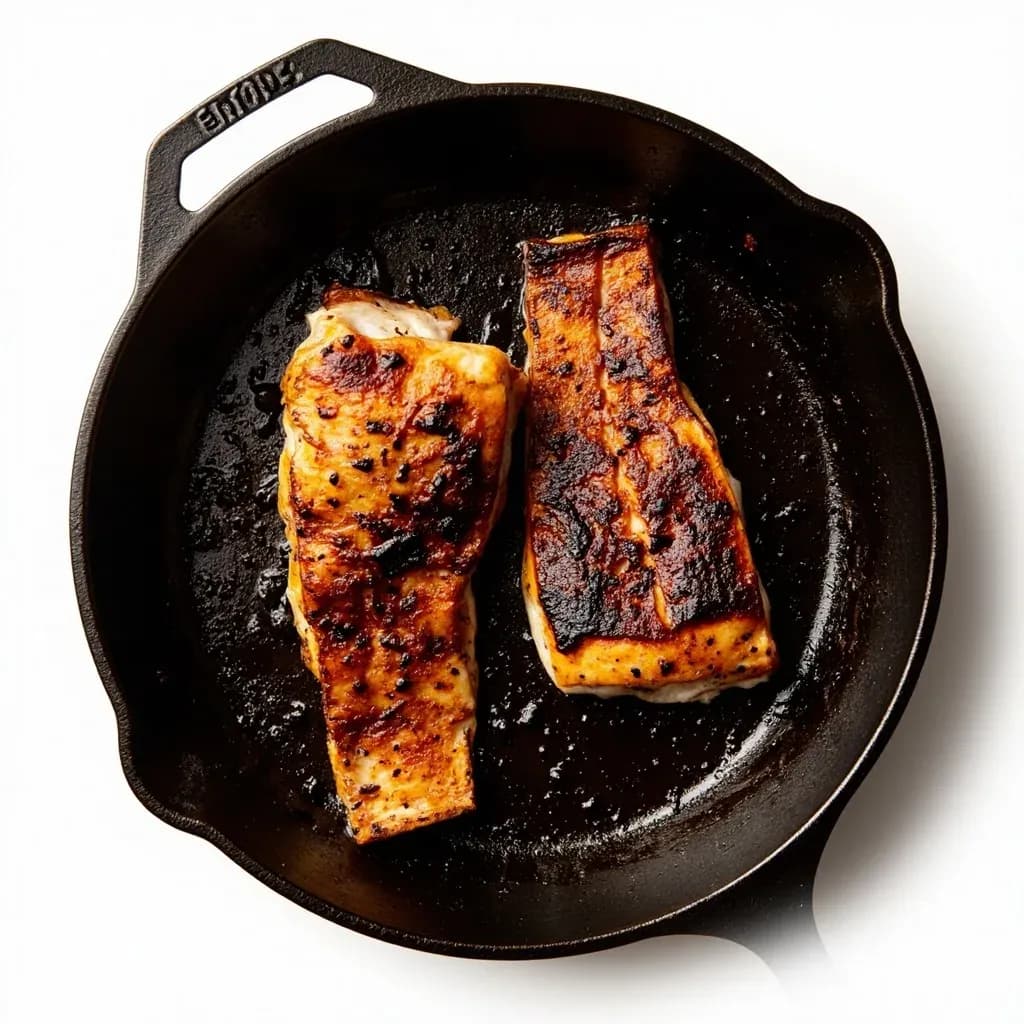
Coating fish or meat in spices and searing it in a screaming-hot skillet to form a dark, crusty char.
Blackening dredges fish or meat in butter and a paprika-heavy Cajun spice blend, then sears it in a cast-iron skillet heated until nearly smoking, charring the spice crust dark and savory. The technique, popularized for redfish in Louisiana, develops bold flavor and a crisp coating in minutes. It generates heavy smoke, so it is often done outdoors or under strong ventilation.
Blackening is a high-heat dry-searing technique that produces an intensely dark, craggy crust on spice-coated fish or meat. The signature color comes not from burned protein but from a complex interplay between paprika- and cayenne-laden spices, the milk solids in melted butter, and the searing surface of a screaming-hot cast iron skillet. The crust forms fast — often in three or four minutes per side — and the technique is widely considered a defining technique of modern Cajun cooking.
The mechanism is a rapid version of the Maillard reaction combined with aggressive surface dehydration. A heavy coat of spice mixed with butter is laid onto dry protein and dropped into a pan heated past the smoke point of butter, with the cooking surface sitting around 500°F (260°C). Surface water flashes off, the butter browns, and the spices toast into a hard, brittle crust that releases cleanly from the pan when the sear is complete. Cast iron is essentially non-negotiable: its thermal mass keeps the temperature from crashing the moment cold protein hits the metal, which is what produces the dry, even char rather than a soggy, gray film.
Blackening was popularized in 1980 by chef Paul Prudhomme at K-Paul's Louisiana Kitchen in New Orleans, originally applied to skin-on red drum (redfish). The dish's runaway popularity briefly threatened wild Gulf redfish populations and contributed to today's strict bag limits; farm-raised redfish, catfish, and other firm-fleshed species have largely taken its place. The technique generates truly prodigious smoke, and most home cooks either run a powerful exhaust fan, open every window, or move outdoors to a propane burner.
- Difficulty
- Medium
Types & varieties
Heavy on paprika, thyme, oregano, and white pepper; the original blend contains no sugar, which can scorch quickly at these temperatures
The original application — skin-on red drum fillet, dredged in spice and seared hard; wild fish is now rare due to overfishing driven by the dish's popularity
Widely adopted in Southern home cooking; farm-raised catfish holds up to the heat and stands in well for traditional redfish
Usually skin-on boneless breast or pounded thigh; the crust forms before the breast dries out if thickness is evened out first
Most often a thick-cut ribeye or strip; creates a pepper-forward bark in place of a standard sear
Often left rare in the center; the thick, oily flesh is forgiving and matches the spice heat well
Caribbean cousin using Scotch bonnet, allspice, and cloves in the spice mix for a hotter, more aromatic crust
Pre-mixed products from brands like Zatarain's, Slap Ya Mama, and Paul Prudhomme's Magic Seasoning Blends; salt and heat levels vary widely, so taste before seasoning
How to do it
- 1
Prepare the blackening seasoning
Combine paprika, cayenne, dried thyme, dried oregano, garlic powder, onion powder, salt, and white or black pepper in a shallow bowl or pie plate. A typical ratio is 3 parts paprika to 1 part each of the herbs and aromatics, with cayenne adjusted to taste.
- 2
Dry the protein thoroughly
Pat fillets, chicken, or steaks with paper towels until no surface moisture remains. For fish, leave the skin on if it is thick enough; for chicken, pound to an even thickness of about ¾ inch.
- 3
Dip in melted butter
Melt 4–6 tablespoons of unsalted butter per pound of protein in a separate wide bowl. Coat each piece completely on both sides, letting the excess drip off.
- 4
Dredge in the spice mix
Press the buttered protein firmly into the seasoning blend, turning to coat every surface including the sides. The coat should be thick and even — do not shake off excess. Let it rest 1–2 minutes so the spices adhere.
- 5
Heat the cast iron skillet
Place a 12-inch cast iron skillet over high heat for 3–5 minutes until very hot. Add 1–2 tablespoons of butter; it should immediately foam, brown at the edges, and begin to smoke hard.
- 6
Sear the first side
Lay the coated protein in the pan away from you. Do not move it. Cook 3–4 minutes for a fish fillet, 4–5 minutes for chicken, or 2–3 minutes for steak, until a dark mahogany-to-black crust has formed and the edges look crisp.
- 7
Flip and finish
Turn once with a thin metal spatula and cook the second side for a similar time, adjusting for thickness. For chicken and thick pork chops, reduce heat to medium after flipping and finish covered or in a 400°F oven to reach a safe internal temperature without burning the crust.
- 8
Rest and serve
Transfer to a warm plate and rest 2–3 minutes. Serve with lemon wedges, a cool remoulade, or a simple butter sauce to balance the heat.
Choosing and prepping the protein
The ideal blackening candidate is a firm, relatively dry, boneless cut of even thickness — about three-quarters to one inch works best. Thinner pieces scorch before the cook can develop a proper crust, and very delicate fish like sole or flounder fall apart or steam rather than sear. Boneless chicken thighs are more forgiving than breasts because their higher fat keeps the meat moist under the aggressive crust. Whatever you choose, the surface must be patted completely dry with paper towels; any surface moisture prevents the spice crust from adhering and crisping.
- For fish, leave the skin on when it is thick enough (redfish, salmon, snapper) — it protects the flesh and adds textural contrast
- Pound chicken breasts to an even ¾-inch thickness for consistent cooking and to prevent the edges from over-charring
- Press extra-firm tofu under weights for at least 30 minutes to drive out surface water before dredging
- For cauliflower steaks, use a long initial sear on each flat side so the crust has time to set before the vegetable softens
- Plan on about ¼ cup of spice blend and 4–6 tablespoons of melted butter per pound of protein
Common uses
Tips & pitfalls
- Use a well-seasoned cast iron skillet; stainless steel will not retain enough heat and the food will steam instead of char
- Pat the protein completely dry before dipping in butter — any surface moisture prevents the spice crust from adhering and crisping
- Heat the empty pan over high heat for several minutes before adding butter; the butter must smoke immediately on contact
- Use only a thin film of butter in the pan (1–2 tablespoons), not a pool — excess butter smokes without searing
- Press the dredged fillet firmly into the spice mix so it forms a thick, even coat; a thin dusting yields a gray, patchy result
- Turn on an exhaust fan, open windows, or cook outdoors — the smoke is intense and will set off smoke detectors
- Do not move or flip the fillet until the crust releases naturally from the pan; peeking too early tears the crust
- Do not crowd the pan; cook in batches or the pan temperature drops and the crust turns muddy
- A thin smear of oil on the protein before the butter dip helps the spices cling and brown more evenly
- Let the cooked protein rest 2–3 minutes before slicing; the dark crust is fragile and needs a moment to set
Good to know
- Origin
- Louisiana Cajun cooking; popularized in 1980 by chef Paul Prudhomme at K-Paul's Louisiana Kitchen in New Orleans
- Core mechanism
- Spice-butter coating seared in screaming-hot cast iron produces a dark crust via the Maillard reaction and rapid dehydration of the spice layer — not carbonized protein
- Essential equipment
- Heavy cast iron skillet (traditionally 12-inch); thinner pans lose heat on contact and steam the protein instead of charring it
- Cooking temperature
- Skillet surface around 500°F (260°C); the melted butter must smoke immediately on contact
- Traditional protein
- Redfish (red drum); modern substitutes include farm-raised catfish, salmon, snapper, chicken, pork chops, and steak
- Spice blend base
- Paprika, cayenne, dried thyme, dried oregano, garlic powder, onion powder, salt, and white or black pepper — no sugar in the original Prudhomme formula
- Sensory cue
- Crust should be deep mahogany to nearly black, dry, and crisp; a gray, soggy surface means the pan wasn't hot enough or the protein was too wet
- Seasoning yield
- Roughly ¼ cup of dry spice mix plus 4–6 tablespoons melted butter per pound of protein
Also called
Cajun Blackening
Related

Sear
Blast the surface hot for a deep-browned, savory crust

Sauté
Cook quickly in a little fat over lively heat, tossing as you go

Stir-Fry
Toss bite-sized pieces over roaring heat for fast, smoky cooking

Pan-Fry
Crisp food in a shallow layer of hot fat, turning once or twice

Deep-Fry
Submerge in hot oil for an all-over crackling crust

Roast
Cook uncovered in dry oven heat for browned edges and tender centers

Bake
Cook with steady, surrounding oven heat — the soul of bread and pastry

Broil
Hit food from directly above with fierce overhead heat