Prep & Assembly
Blotting Excess Moisture
Pressing food with paper or cloth to remove surface water or grease before the next step.
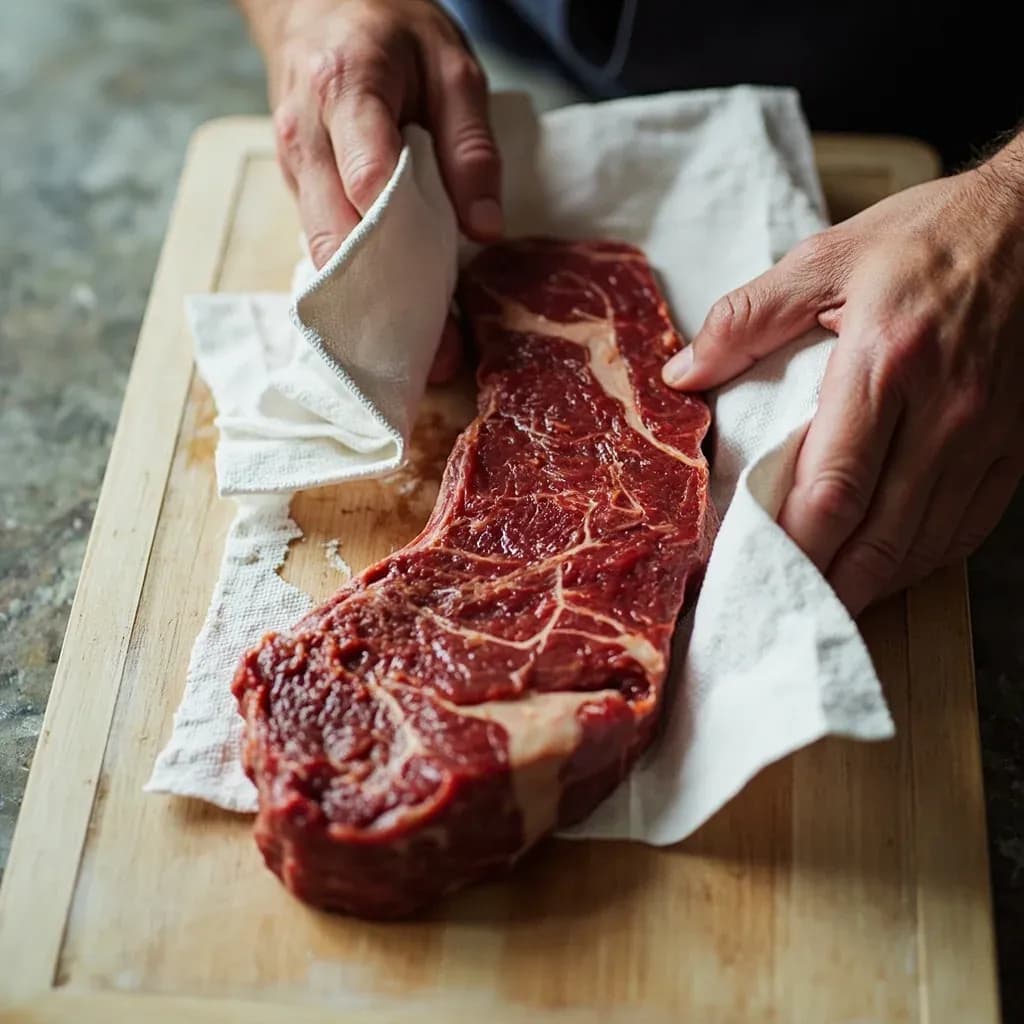
Blotting uses paper towels or a cloth to lift surface moisture or excess oil off food. Drying proteins before searing promotes browning, while blotting fried food removes draining grease. The light, absorbent contact pulls liquid away without crushing or reshaping the food.
Blotting is the practice of pressing an absorbent paper or cloth against food to lift surface water or oil that the food is holding between steps. It is not a cooking technique in its own right but a bridge step — a few seconds of work that determines whether the next step (searing, breading, dressing, frying) actually performs the way the recipe assumes. The principle behind it is consistent across the kitchen: water on the surface of food drops pan temperature, prevents coatings from adhering, dilutes salt, oil, and vinaigrette, and is the leading cause of violent oil splatter. Removing that film addresses all four problems at once.
The method itself is simple, which is why it tends to be skipped. A dry towel, a gentle press, and a lift — not a wipe. The distinction matters: rubbing smears moisture around and can crush delicate surfaces like fish flesh, tofu, or tender herbs, while a clean press-and-lift pulls liquid into the towel and leaves the food intact. The same move works on a leaf of lettuce coming out of the spinner and on a piece of fried chicken coming out of the oil; only the towel, the pressure, and the urgency change.
Blotting is one of the highest-leverage habits a cook can develop. The few seconds it takes to dry the surface of a fish fillet or a washed salad is the difference between a hard, mahogany sear and a pale, steamed piece of protein, between a glossy dressed salad and a watery puddle at the bottom of the bowl.
- Difficulty
- Easy
Types & varieties
The everyday method. Lay paper towel on food or food on towel, press gently, lift. Replace the towel as soon as it feels damp. Good for greens, fish, tofu, and ground meat.
Reusable lint-free cotton or linen tea towels. Preferred for larger items like washed spinach, herbs, or rinsed potatoes. Launder between uses, especially after raw meat.
Bundle small or fragile items (berries, herbs, chopped vegetables) and squeeze gently. Excellent where rubbing would bruise the produce. Rinse and wring new cheesecloth first to remove the factory starch.
Drain fried foods in a plain brown paper bag to wick oil; a classic approach for French fries and fried chicken. The bag doubles as carry-home packaging.
Rest fried items on a wire rack set over a paper-towel-lined sheet pan so steam escapes from below. Keeps the crust crisp while still lifting surface oil.
Centrifuge off wash water first, then finish with a quick towel pat to catch the clinging droplets the spinner leaves behind — the combination is far more effective than either alone.
How to do it
- 1
Drain first, blot second
Get rid of standing water before reaching for a towel. Lift items from the wash water, shake gently, or run them through a salad spinner. A towel is for surface film, not puddles — trying to soak up free water just tears the towel and wastes time.
- 2
Set up your station
Line a sheet pan, plate, or cutting board with a double layer of paper towel, or lay out a dry lint-free cloth. For fried foods, set a wire rack over a paper-towel-lined tray so steam escapes from underneath and the crust stays crisp.
- 3
Arrange in a single layer
Spread the food out so pieces don't touch. Overlap traps moisture between items and forces you to redo the work. For large batches, blot in two rounds rather than piling.
- 4
Pat — never rub
Press a dry paper towel or cloth gently onto the surface, hold a second, and lift straight up. Rotate the food 90° and pat again to catch moisture the first pass missed. For leafy greens, lift the whole pile, set a fresh towel on the board, and lower the greens back onto it.
- 5
Flip and repeat
Turn the food over and blot the other side. Swap in a fresh towel the moment the one in use feels damp — a saturated towel just smears moisture around instead of lifting it.
- 6
Move immediately to the next step
Surface moisture creeps back within minutes, especially for porous foods like tofu, eggplant, and blanched vegetables. Season, bread, sear, or dress right away — don't let blotted food sit on the counter while you finish prep.
- 7
For fried foods specifically
Lift food from the oil with a slotted spoon or spider, let it drain over the pot for 5–10 seconds, then transfer to the rack. Press (don't drag) a paper towel to the top surface for 1–2 seconds and season while the surface is still hot and receptive.
Why surface moisture is the enemy
Four failure modes trace directly back to wet surfaces, and blotting prevents all of them at once.
- Pan temperature: water on a fillet hitting a hot pan absorbs energy as steam and drops the surface temp below the Maillard window, so the food steams in its own moisture instead of browning.
- Coating adhesion: a breading or spice rub needs a dry, slightly tacky surface to grab; wet protein or vegetables shed the coating the moment it hits the oil.
- Dressing dilution: vinaigrette, soy sauce, and marinades are salt- and oil-based; a film of water dilutes them and pools at the bottom of the bowl.
- Splatter: water in hot fat vaporizes explosively. A dry surface entering the pan keeps oil in the pan.
Press, don't wipe
The motion matters as much as the towel. A clean press-and-lift pulls liquid into the absorbent material; a wipe or rub smears the same moisture around and can damage delicate structure.
- For fish, tofu, leafy greens, and herbs: use a light touch, brief contact, lift straight up.
- For thick-skinned items like potatoes, eggplant rounds, or fish skin: firmer pressure is fine and helps draw out more water.
- For ground meat in a pan: tilt the skillet and press a folded paper towel against the pooled grease rather than stirring it through.
Common uses
Tips & pitfalls
- Pat, don't rub — pressing and lifting preserves the surface of delicate items like fish, tofu, and leafy greens, while a wipe crushes the structure you're trying to protect.
- Change to a fresh dry towel as soon as the current one feels damp; a wet towel just smears moisture around instead of absorbing it.
- Blot fried foods the moment they come out of the oil while still hot — paper wicks oil more effectively when warm, and seasoning sticks better to a hot, dry surface.
- Always blot in a single layer with air space around each piece; piling wet items traps steam and undoes the work.
- After towel-blotting greens, give the spinner one last short spin to fling off the trace moisture the towel left behind.
- Don't reuse the same cloth towel for raw-meat blotting and produce without laundering it in between at 60 °C / 140 °F or above.
- For large batches of washed greens, spread them on a dry linen towel, roll into a log, and press — the bundle method soaks up water fast and the leaves re-emerge crisp.
- Resist the urge to blot breaded or coated items before frying; let the coating set on a rack first or it will slough off onto the towel.
- On humid days, blot just before the next step — surface moisture returns within minutes in a steamy kitchen, especially over a pot of boiling water.
Good to know
- Also called
- Patting dry, pressing dry
- Primary materials
- Paper towels, clean lint-free kitchen towels, cheesecloth, brown paper bags
- Key purpose
- Remove surface moisture or oil so coatings adhere, browning occurs, dressings cling, and oil doesn't splatter
- Most common foods
- Washed salad greens, fried foods, blanched vegetables, drained tofu, ground meat, bacon, rinsed potatoes, fish fillets, drained beans
- Time required
- Seconds to a couple of minutes depending on quantity
- Difficulty
- Beginner
- Working temperature
- Room temperature for washed foods; immediately after frying for hot oiled foods while still hot
- Safety note
- Always blot fried foods on a heat-safe surface (rack or paper-lined tray) — paper can scorch if food is very hot
Also called
Blotting Excess Grease · Patting Dry
Dishes that rely on it
Related

Whisk
Beat ingredients smooth and aerated with a looping wire motion

Sift
Pass dry ingredients through mesh to aerate and remove lumps

Strain
Pour through mesh to separate solids from liquid for a smooth result

Filter
Pass liquid through fine material to clarify out the smallest particles

Rice
Press cooked potatoes through small holes for fluffy, lump-free texture

Mash
Crush soft cooked food into a rustic, creamy purée

Grind
Crush food into a coarse to fine texture, from spices to meat

Grate
Shred food into fine bits against a sharp-toothed surface