Knife Skills
Chining
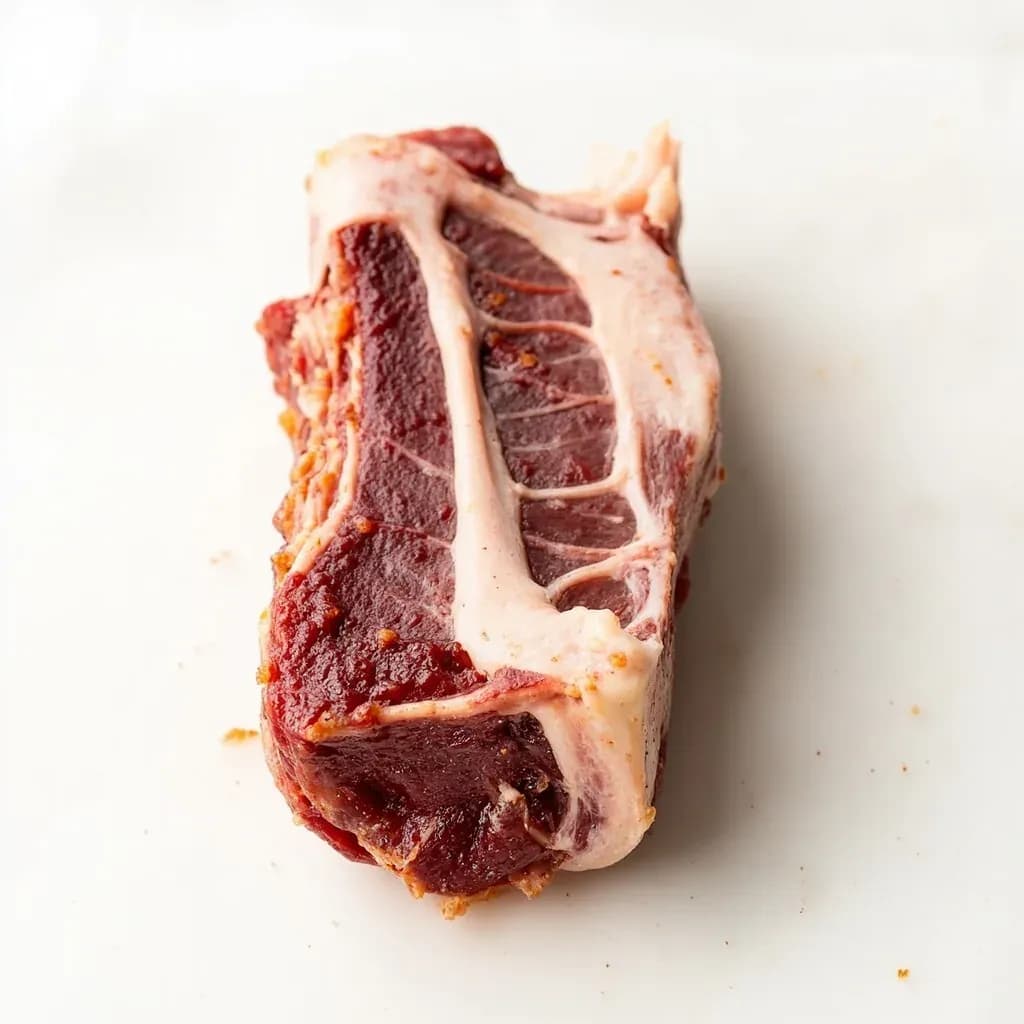
Cutting through the backbone of a rib rack so it carves into individual chops.
Chining is the butchery step of sawing through or removing the chine, the backbone, attached to a rack of ribs or loin. Separating the backbone lets the cooked rack be carved cleanly into single chops or cutlets at the table. Butchers usually chine before sale, leaving the bone partly attached so the rack stays together during roasting.
Chining is the butchery technique of cutting through the chine bone — the vertebral column that runs along the back of any ribbed primal — either to split a rack into individual chops or to remove the backbone entirely. The name comes from the French chine, meaning spine, and the technique sits at the intersection of knife work and primal butchery, showing up wherever a cook handles a rack of lamb, pork, veal, beef, or venison. Chining is often confused with Frenching, but the two are distinct: Frenching cleans meat and fat from the exposed rib bones for a tidy presentation, while chining actually severs bone, either between the ribs to release chops or along the length of the backbone to free the rack for shaping.
The reason the cut matters as much as the meat on the plate is practical. A whole rack with the chine intact cooks unevenly — the thick meat of the eye sits against a wall of vertebrae that blocks heat and makes carving awkward. Once the chine is gone, the rack lies flat, seasons evenly, and finishes in noticeably less time. In restaurants, every double chop of lamb or pork that arrives at the table with a clean, frenched bone handle has been chined. Every crown roast has had its chine removed so the rack can curl into a tight circle. The technique is the bridge between a primal cut and the polished portion the diner actually sees.
Done well, chining is a confident, decisive act — one firm stroke through cold bone with a heavy, sharp knife. Done poorly, it splinters vertebrae, shatters ribs, and leaves jagged bone fragments that complicate both cooking and presentation. The skill lives less in any particular cut angle than in knife choice, temperature control, and the willingness to commit to a single downward push rather than saw.
- Difficulty
- Hard
Types & varieties
Cutting cleanly between every rib to produce separate chops or cutlets, each with its own frenched bone.
Cutting along the entire length of the vertebral column to free the rack from the spine — the standard prep for a crown roast of lamb or pork.
Cutting partway through the chine so the rack opens like a book, allowing faster, more even grilling or roasting while the rack remains connected.
How to do it
- 1
Prepare the rack
Trim excess surface fat and silverskin, and French the bones if desired (scrape meat from the last 1–2 inches of rib bone and trim intercostal meat flush). Pat the rack dry and chill it for 30–60 minutes so the bones and fat are firm — cold bone cuts cleanly; warm bone flexes and splinters.
- 2
Set up a stable station
Place a damp towel under a wooden or polyethylene cutting board to stop it sliding. Position the rack bone-side up with the chine facing you for spine removal, or the eye of the ribs facing you for chop portioning. Never cut on glass, stone, or bamboo.
- 3
Locate the cut lines
Run your thumb between the ribs to feel the intercostal spaces. For individual chops, mark the desired portion width (typically one rib per chop, or two ribs for a double chop). For backbone removal, identify where the chine meets the rib bones along the length of the rack.
- 4
Cut between the bones (individual chops)
Hold the knife vertically over the gap between two ribs. Press straight down in a single firm stroke, letting the weight of the blade do the work. If the cut stalls, tap the spine of the knife with the heel of your hand rather than rocking the blade sideways, which can snap vertebrae. Repeat between each pair of ribs to release the chops.
- 5
Or: remove the chine (backbone)
Stand the rack on end, chine side up. Run the knife along one side of the vertebral column, angling slightly inward toward the bone, and work the blade through in short, firm downward strokes to free the rack in one piece. Trim any remaining meat from the removed chine for another use — it braises well or can be ground.
- 6
Finish and tidy
Use kitchen shears or a paring knife to snip any protruding bone splinters. Pat the chops or opened rack dry, season, and proceed with the recipe. If holding, refrigerate uncovered on a wire rack for up to 24 hours so the cut edges stay clean and dry.
Chining vs. Frenching
The two terms get tangled because they are often performed on the same rack, sometimes minutes apart. Frenching is a cosmetic and functional prep that strips the intercostal meat and silverskin from the last inch or two of each rib bone, exposing clean white bone that looks elegant on the plate and provides a natural handle. Chining is a structural cut that severs the chine — either between ribs to make chops, or along the spine to free the rack. You can french a rack without chining it (and most butchers do), and you can chine a rack without frenching it (common in rustic braises), but the polished restaurant result requires both. The order is flexible, but most kitchens french first, then chine, because a frenched rack is easier to read by eye and palpate between the bones.
- Frenching cleans bone; chining severs bone.
- Frenching affects appearance; chining affects cooking, portioning, and shaping.
- A crown roast requires both — a frenched rack with the chine removed.
- A double lamb chop requires both — the chine is fully removed and the rack is portioned between every other rib for a thicker cut.
When to chine
Chine any time the recipe calls for individual chops, a crown roast, a flat or fanned presentation, or a more even cooking surface. For whole-rack presentations served at the table, the chine is typically removed so a host can carve clean slices between the ribs without battling the backbone. For a casual grill, partial chining is often enough — the rack opens, the heat hits both sides of the eye, and the connective tissue holds everything together for a family-style presentation.
- Individual chops: chine removed, then cut between every rib.
- Crown roast: chine fully removed, rack bent into a circle and tied.
- Flat-roasted or grilled rack: partial chine, opened like a book.
- Double chops: chine removed, rack portioned between every other rib for a thicker cut.
Common uses
Tips & pitfalls
- Chill the rack 30–60 minutes before cutting; firmer meat and cold fat produce a cleaner bone cut and less splintering.
- Use the heaviest knife you can control — an 8–10 in chef's knife, a stiff butcher's knife, or a 7–9 in cleaver — and make sure it is genuinely sharp, not just recently honed.
- Position the rack bone-side up and palpate for the soft intercostal gaps between ribs; aim the cut there, not through the center of a bone, whenever the application allows.
- When you must cut through a rib, hold the blade straight up and apply firm downward pressure in one decisive motion — sawing shatters bone and dulls the edge fast.
- If a single stroke stalls, tap the spine of the blade with the heel of your hand or a wooden mallet rather than rocking the knife sideways, which can snap vertebrae and send fragments into the meat.
- Common mistake: cutting on a slippery board. A damp towel beneath a wood or poly board keeps it from skating at the moment of commitment.
- Trim any loose bone fragments from the chops with kitchen shears or a paring knife; a single splinter can ruin plate presentation and is unpleasant to bite into.
- Wrap exposed bone tips in small foil caps during cooking and remove before serving — this prevents charring on the grill and keeps bone color clean for a crown roast.
Good to know
- Definition
- Cutting through the chine bone (vertebral column) of a ribbed primal — most often a rack of lamb, pork, veal, beef, or venison — either to separate it into individual chops or to remove the backbone entirely.
- Etymology
- From the French chine, meaning backbone or spine; the technique is rooted in classical French butchery (boucherie).
- Category
- Butchery / knife skills.
- Typical tools
- Heavy chef's knife (8–10 in), stiff butcher knife, or cleaver; stable wooden or polyethylene cutting board.
- Common applications
- Lamb rack, pork rib rack, veal rib rack, beef rib roast, venison rack.
- Difficulty
- Intermediate — requires confidence cutting through bone and a sharp, heavy blade.
- Effect on cooking
- Reduces cooking time, allows even heat penetration, and enables flat or fanned presentation.
- Related techniques
- Frenching (cleaning bone of meat), spatchcocking/butterflying, and the specific prep sometimes called 'frenching the chine' for a crown roast.
- Time required
- 1–3 minutes per rack once the knife is positioned and the cut lines are identified.
Also called
Chine Removal · Cracking the Chine
Related

Chop
Cut into rough, irregular pieces — the everyday workhorse cut

Dice
Cut into uniform cubes for even cooking and a tidy look

Mince
Cut as fine as possible so flavor melts evenly into the dish

Slice
Cut into even, flat pieces for consistent cooking and presentation

Julienne
Cut into thin matchsticks for fast cooking and elegant garnish

Brunoise
Cut into tiny, precise cubes — the finest dice in the kitchen

Chiffonade
Roll and slice leafy greens into delicate ribbons

Batonnet
Cut into tidy sticks, thicker than julienne — think classic fries