Water & Steam
Depouillage (Skimming)
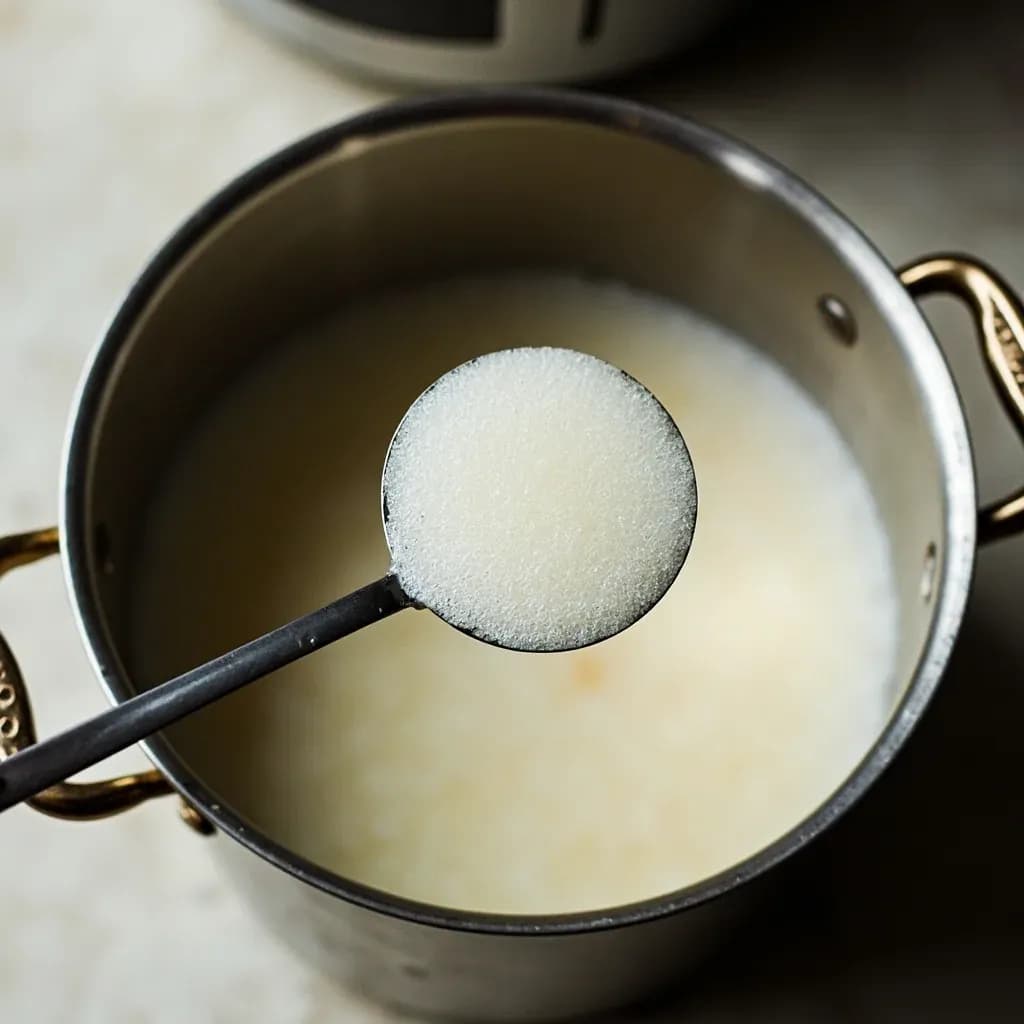
Skimming the scum, fat, and impurities that rise to the surface of a simmering stock or sauce.
Depouillage is the French technique of repeatedly skimming the foam, rendered fat, and impurities that collect on top of a simmering stock or sauce. Keeping the pot at a low simmer drives these impurities to one side or to the surface where they can be lifted off with a ladle. Diligent skimming is what gives a finished stock or consomme its clarity and clean flavor.
Dépouillage — the classical French term for skimming — is the quiet, patient work of lifting the gray-white foam, rendered fat, and suspended impurities that collect on the surface of a simmering liquid. As bones, meat, and vegetables release albumen, blood, and other proteins into a stock, heat causes those proteins to coagulate; they rise with the convection currents and aggregate at the top, often within the first thirty minutes of cooking. Left alone, the foam breaks apart, recontaminates the liquid, and contributes bitter, sulfurous, or 'eggy' off-notes. A cook who skims well produces a stock that is pale and translucent, with a clean savory aroma rather than a muddy one.
In the brigade kitchen, dépouillage is taught as soon as a young cook is trusted with the stockpot. It is paired with the discipline of a bare simmer — never a rolling boil — because violent agitation emulsifies fat and drives impurities back into the body of the liquid. The same principles govern a court-bouillon for poaching fish, a dark espagnole reduction headed for demi-glace, and a clear vegetable broth alike. Skimming is distinct from clarification (raffinage): skimming removes what has already surfaced, while clarification actively pulls suspended particles out of the liquid by trapping them in a raft of egg whites, lean meat, and mirepoix, as in a classic consommé.
The reward for the work is a liquid that tastes brighter and looks jewel-like in the bowl. A clear stock reduces predictably and can be clarified further if needed. The skimmings themselves are generally discarded in refined cookery, though in rustic kitchens they are often folded back into soups and pan sauces where opacity and body matter more than clarity.
- Difficulty
- Easy
Types & varieties
The classic form: lifting surface scum and foam with a flat skimmer or shallow ladle as it rises.
Removing rendered fat from the surface, typically after chilling so it solidifies into a firm sheet, or warm with a fat separator pitcher.
Chilling the finished stock overnight so fat congeals into a single firm layer that lifts cleanly off the top.
A more advanced procedure in which a raft of egg whites, ground lean meat, and mirepoix is simmered with the stock to adsorb suspended impurities, yielding a perfectly clear consommé.
A quick kitchen shortcut: lay a paper towel flat on the surface to absorb fat and foam, then peel it away.
How to do it
- 1
Bring the liquid to a bare simmer
Heat gently. A hard boil emulsifies fat and stirs impurities back into the liquid; aim for occasional bubbles breaking the surface (about 180–195°F / 82–90°C).
- 2
Watch for the first foam
Within the first 10–20 minutes, gray-white scum and frothy albumen will rise. This is the most important window for skimming — the foam is densest and easiest to lift now.
- 3
Tilt the pot
Tip the pot slightly so the scum collects in a single arc on the surface, making it easier to capture in one sweeping pass.
- 4
Skim with a flat skimmer or shallow ladle
Hold the tool nearly flat against the surface. Sweep in a smooth, low-angle motion, lifting only the top layer. Discard the skimmings or reserve them for rustic use.
- 5
Repeat through the first hour
New scum will continue to rise for 30–60 minutes. Skim at 10–15 minute intervals, then less frequently as the liquid clarifies.
- 6
Defat if needed
For stocks destined to be reduced, chill the liquid until the fat solidifies, then lift the fat off in a single sheet. For warm sauce work, use a fat separator pitcher or blot the surface with a paper towel.
- 7
Final check
A well-skimmed stock should be clear or pale and translucent, with a clean savory aroma. If it still looks cloudy, return it to a gentle simmer and repeat the process.
Tools of the trade
The right tool makes skimming faster and gentler. A shallow, flat pass — never a stabbing motion — is what keeps the liquid from churning and reincorporating the very impurities you are trying to remove.
- Araignée ('spider'): a flat, wire-mesh skimmer shaped like a shallow basket. The classic professional choice because it glides across the surface and lets liquid drain through instantly.
- Écumoire: a shallow, perforated ladle, often hemispherical with small holes. Slightly deeper than a spider; useful for skimming foam and for lifting small solid pieces.
- Fine-mesh sieve: a backup for capturing loose foam that has broken up, and for the final strain of a finished stock.
- Fat separator pitcher: a jug with a low spout that pours from the bottom, leaving fat behind — used for warm dégraissage when chilling is not practical.
- Cheesecloth: for the final pass when a stock must be perfectly clear, or for lining a sieve to catch the last of the fine sediment.
- Paper towel: the home shortcut — laid flat on the surface, it wicks up fat and foam in seconds, then peels away.
Skimming versus clarification
The two techniques are often confused, and the difference is worth knowing. Skimming deals only with material that has already migrated to the surface; clarification goes after the particles still suspended in the body of the liquid.
- Skimming is preventive and ongoing — performed during the simmer, especially in the first hour.
- Clarification (raffinage) is a separate procedure, usually reserved for consommé, that uses a protein raft to capture impurities throughout the liquid.
- A well-skimmed stock still benefits from a final strain through cheesecloth; a clarified consommé still benefits from careful skimming once the raft is removed.
- Both rely on gentle heat. A hard boil will break a raft apart and re-emulsify fat into any stock.
Common uses
Tips & pitfalls
- Bring the pot up to temperature slowly; a hard boil emulsifies fat and drives impurities back into the liquid rather than letting them rise.
- Skim early and often during the first 30–45 minutes, then periodically thereafter as new foam appears — waiting too long lets the scum break apart and resuspend.
- Tilt the pot to one side so the scum pools in a single arc, making it easier to lift cleanly in one pass.
- Hold the skimmer nearly flat against the surface at a low angle; stabbing downward disturbs the liquid and reincorporates impurities.
- Start stocks with cold water. Hot water drives albumen out too quickly and can seal it into the liquid before it can be skimmed.
- Don't fill the pot more than two-thirds full — a wide, shallow surface area releases impurities more readily than a deep, narrow column.
- Avoid stirring once the simmer is established; agitation keeps fine particles suspended and undoes your skimming work.
- Reserve the first cloudy foam in a side bowl — it can be folded into rustic soups or pan sauces where clarity does not matter.
- For consommé, never let the raft boil; a hard boil will break it apart and cloud the liquid just as you are trying to clear it.
- After cooking, chill the stock overnight and lift the solidified fat in a single sheet for the cleanest possible dégraissage.
Good to know
- Origin
- French culinary term, from 'dépouiller' — to strip or remove the skin or husk
- Primary purpose
- Removing scum, foam, fat, and impurities that rise to the surface of simmering stocks, sauces, and soups
- Temperature
- Performed at a bare simmer (about 180–195°F / 82–90°C); never a rolling boil
- Most critical window
- First 30–60 minutes of a stock simmer, when coagulated albumen and proteins rise to the surface
- Key tools
- Flat wire skimmer (araignée / 'spider'), shallow perforated ladle (écumoire), fine-mesh sieve, fat separator, cheesecloth
- Skill level
- Beginner; a foundational kitchen skill taught in classical brigade training
- Effect on clarity
- Produces a clear, pale, jewel-like stock or sparkling consommé
- Effect on flavor
- Removes bitter, sulfurous, or 'eggy' notes contributed by coagulated proteins and rendered impurities
Also called
skim · Skimming
Dishes that rely on it


Related

Boil
Cook in vigorously bubbling liquid at full rolling heat

Simmer
Hold liquid at a gentle shimmer for tender, unhurried cooking

Poach
Cook gently in barely-trembling liquid for silky, tender results

Steam
Cook in rising vapor to keep color, nutrients, and shape intact

Blanch
Plunge briefly in boiling water, then shock cold to lock color

Braise
Sear, then cook slow in a little liquid until fall-apart tender

Stew
Simmer bite-sized pieces fully submerged into a rich, unified pot

Sous-Vide
Seal and cook in precise warm water for edge-to-edge doneness