Knife Skills
Filleting Fish
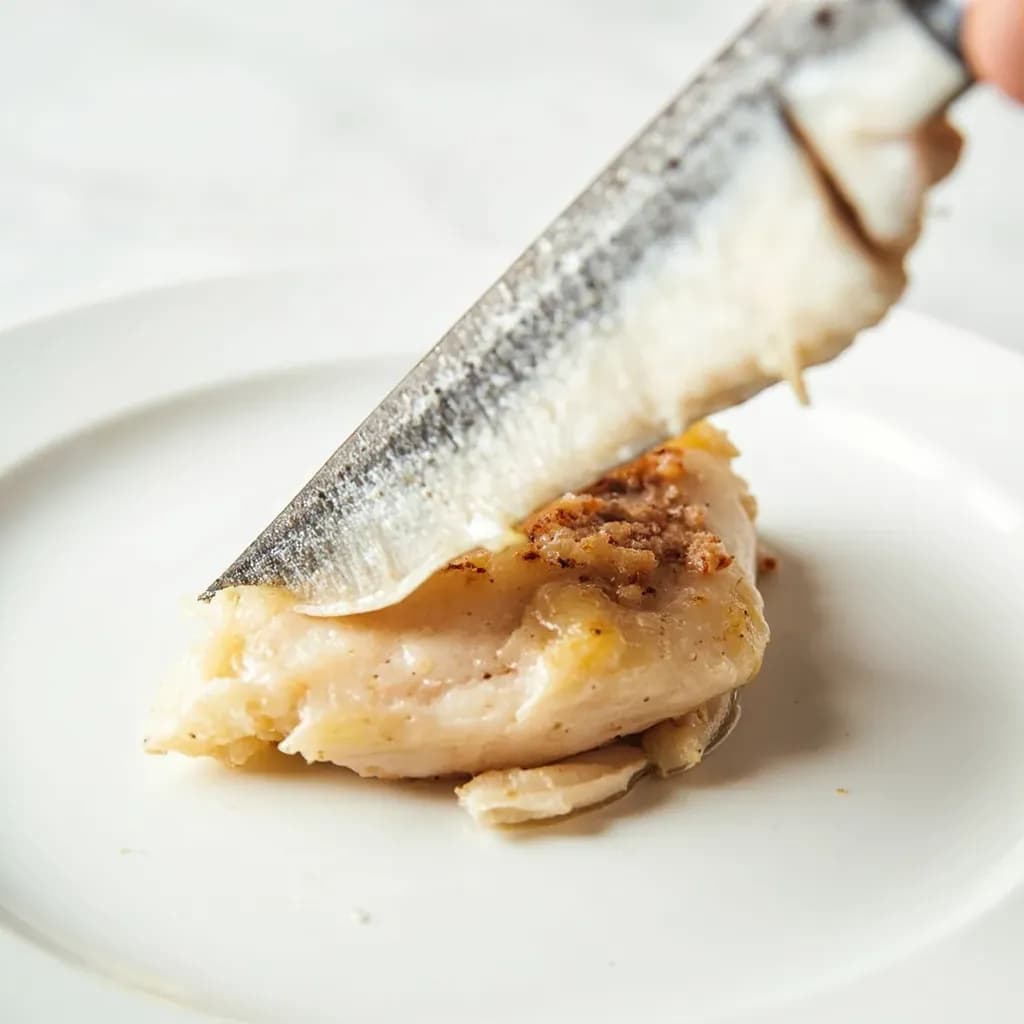
Cutting boneless fillets off the bones of a whole fish with a flexible knife.
Filleting is the knife skill of removing clean, boneless portions of flesh from a whole fish by cutting along the backbone and over the rib cage with a thin, flexible blade. Keeping the blade flat against the bones maximizes yield and leaves the skeleton clean. Round fish yield two fillets and flatfish four, and the same precision underlies cutting fish steaks across the bone.
Filleting is the technique of separating the edible flesh of a whole fish from its skeleton in clean, boneless portions. It matters because the same fish, in the hand of a careful cook, becomes a much more versatile ingredient: a salmon yields two long fillets for roasting or curing, a sole yields four delicate escalopes for pan-frying, and the carcass becomes the foundation of a stock. The skill is the single biggest determinant of yield from a whole fish, and once learned it transfers across species, from a small trout to a large halibut.
The technique hinges on a flexible, very sharp knife and a feel for the skeleton. The blade is held almost flat against the spine, edge angled slightly toward the bones, and run in one long stroke from head to tail. The fish should be as cold as possible so the flesh is firm and the pin bones release cleanly. Round fish (salmon, cod, snapper) give two fillets; flat fish (sole, flounder, halibut) give four, removed from each side in turn with the knife worked horizontally away from the bones.
- Difficulty
- Hard
Types & varieties
Two fillets removed from a cylindrical fish such as salmon, cod, sea bass, trout, snapper, or mackerel.
Four fillets taken off a flat fish such as Dover sole, lemon sole, flounder, halibut, or turbot; the dark upper skin is usually removed, the white underside often left on.
Fillet removed with the skin intact, used when the skin will be crisped or when presentation calls for it.
Skin removed in a second pass, producing a pure piece of flesh for delicate cooking or raw preparations such as sashimi and crudo.
Both sides removed but the belly left attached so the fish opens flat, often for grilling or stuffing.
The thick, fatty section behind the gills and around the pectoral fins, prized on species like salmon and yellowtail.
How to do it
- 1
Prepare the fish
Scale the fish if the skin is to remain on, working from tail to head with the back of a knife or a fish scaler. Snip off the dorsal, anal, and pectoral fins with kitchen shears. Rinse and pat dry; the fish should feel cold and firm to the touch.
- 2
Make the gill cut
Lay the fish on its side. Just behind the gill plate, cut down at a slight angle until the blade touches the spine. Do not sever the head; this cut simply defines where the fillet will start.
- 3
Run the blade along the spine
Turn the knife so the blade is flat, edge pointing toward the head, with the tip angled gently down toward the bones. From the gill cut, slide the knife along the backbone in one long, smooth motion toward the tail, keeping the tip in contact with the ribcage the whole way.
- 4
Release the first fillet
As you reach the tail, lift the fillet slightly and slice through the skin at the tail end to free it. Set the fillet aside skin-down on the board.
- 5
Turn and repeat
Flip the fish over. Repeat the gill cut, the spine run, and the tail release to remove the second fillet. Reserve the carcass for stock or bisque.
- 6
Trim the rib bones
Lay the fillet skin-down. With the knife tip, feel for the thin rib bones running down the center third of the fillet. Slice them away in a single shallow wedge, taking as little flesh as possible. Run a fingertip along the rib line until it feels smooth.
- 7
Remove the skin (optional)
If a skinless fillet is needed, lay it skin-down with the tail overhanging the board. Grip the tail with a paper towel or salt-rubbed fingers. Angle the knife slightly downward into the flesh a finger's width from the tail and slide it side to side between skin and meat, keeping the blade flat against the skin until the fillet releases.
- 8
Pull pin bones
Run a fingertip along the centerline to locate pin bones. Grip each one with needle-nose pliers or tweezers and pull at a shallow angle toward the head; they will slide out cleanly if the fish is still cold.
Flat fish: a different approach
Round and flat fish are not filled the same way. A round fish is a cylinder; you work along one long spine. A flat fish is a compressed oval with bones radiating out from a central axis, and you work the knife horizontally between flesh and skeleton, lifting each quarter off the ribs in turn. Misapplying the round-fish method to a sole is the most common error a beginner makes and the reason flat fish often look ragged on the plate.
- Scale the fish on both sides and snip away the frilly fins along the outer edge.
- Make a curved cut behind the gills, then run the knife down the centerline (along the backbone) from head to tail, cutting all the way through.
- Working from the head end, slide a flexible knife horizontally between the flesh and the bones on one side of the centerline, easing the upper fillet away as you go. Repeat on the other side of the centerline to free the second fillet.
- Flip the fish and repeat on the reverse side to release the two lower fillets, giving four in total.
- The dark (eyed) side skin is tough and usually pulled off; the white side skin is delicate and often left on for presentation.
Round fish: standard method
The classic two-fillet method used for salmon, cod, snapper, sea bass, trout, mackerel, and most other cylindrical fish. The goal is to follow the natural seam where the flesh meets the ribcage, lifting the meat cleanly off the bone in one piece rather than cutting through it.
- Work with the fish lying on its side, head to your non-dominant hand if right-handed (head to the left for a right-handed cut).
- Make a single shallow cut just behind the gill plate down to the spine, defining the start of the fillet without severing the head.
- Turn the knife flat, edge toward the head, tip angled down toward the bones, and run it along the spine in one long stroke to the tail.
- Lift the fillet as you near the tail and slice through the skin at the tail end to free it cleanly.
- Flip the fish and repeat to remove the second fillet, then trim the rib bones from each fillet in a single shallow wedge.
Common uses
Tips & pitfalls
- Sharpen the knife before you start; a dull blade slips and tears the flesh more readily than a sharp one and is the most common cause of ragged fillets.
- Use one long, smooth pull from head to tail rather than short sawing strokes, which chew the flesh and leave meat on the carcass.
- Keep the blade tip in contact with the ribcage and spine at all times; lift it away and you leave good meat behind.
- Stop just before the tail and cut through the skin to release the fillet cleanly, rather than tearing through the narrow tail section.
- Work over a tray when filleting round fish so any roe, liver, or milt can be saved intact.
- Rinse the knife between sides to keep the blade gliding and the flesh clean.
- Remove pin bones toward the head at a low angle; pulling toward the tail snaps them off at the surface.
- For skinning, lay the fillet skin-down, grip the tail with a paper towel or salt-dusted fingers, and slide the knife between skin and flesh with a slight side-to-side motion, keeping the blade almost flat against the skin.
- Do not press down on the fish with your free hand; pin it gently by the head or tail so you do not crush the flesh.
- Keep the fish on ice between sides, especially with large specimens, so the flesh firms up and the pin bones release cleanly.
Good to know
- Category
- Knife Skills
- Difficulty
- Intermediate; requires practice to maximize yield
- Typical yield
- Roughly 40–60% of whole fish weight, depending on species and skill
- Essential tool
- Flexible fillet knife, 6–9 inches (15–23 cm), with a thin, very sharp blade
- Other useful tools
- Cutting board (with a damp towel beneath for stability), kitchen shears for fins, needle-nose pliers or tweezers for pin bones
- Fish temperature
- Best filleted very cold, just off the ice; firm flesh is easier to cut cleanly and safer to handle
- Round vs flat
- Round fish yield two fillets; flat fish yield four
- Blade angle
- Held almost flat against the spine, angled slightly down toward the bones to maximize meat recovery
Also called
Filleting Fish · Fillet (Lever les Filets) · Fish Filleting
Dishes that rely on it
Related

Chop
Cut into rough, irregular pieces — the everyday workhorse cut

Dice
Cut into uniform cubes for even cooking and a tidy look

Mince
Cut as fine as possible so flavor melts evenly into the dish

Slice
Cut into even, flat pieces for consistent cooking and presentation

Julienne
Cut into thin matchsticks for fast cooking and elegant garnish

Brunoise
Cut into tiny, precise cubes — the finest dice in the kitchen

Chiffonade
Roll and slice leafy greens into delicate ribbons

Batonnet
Cut into tidy sticks, thicker than julienne — think classic fries