Heat & Fire
Spoon-Dropping Fritters (Bacalaítos)
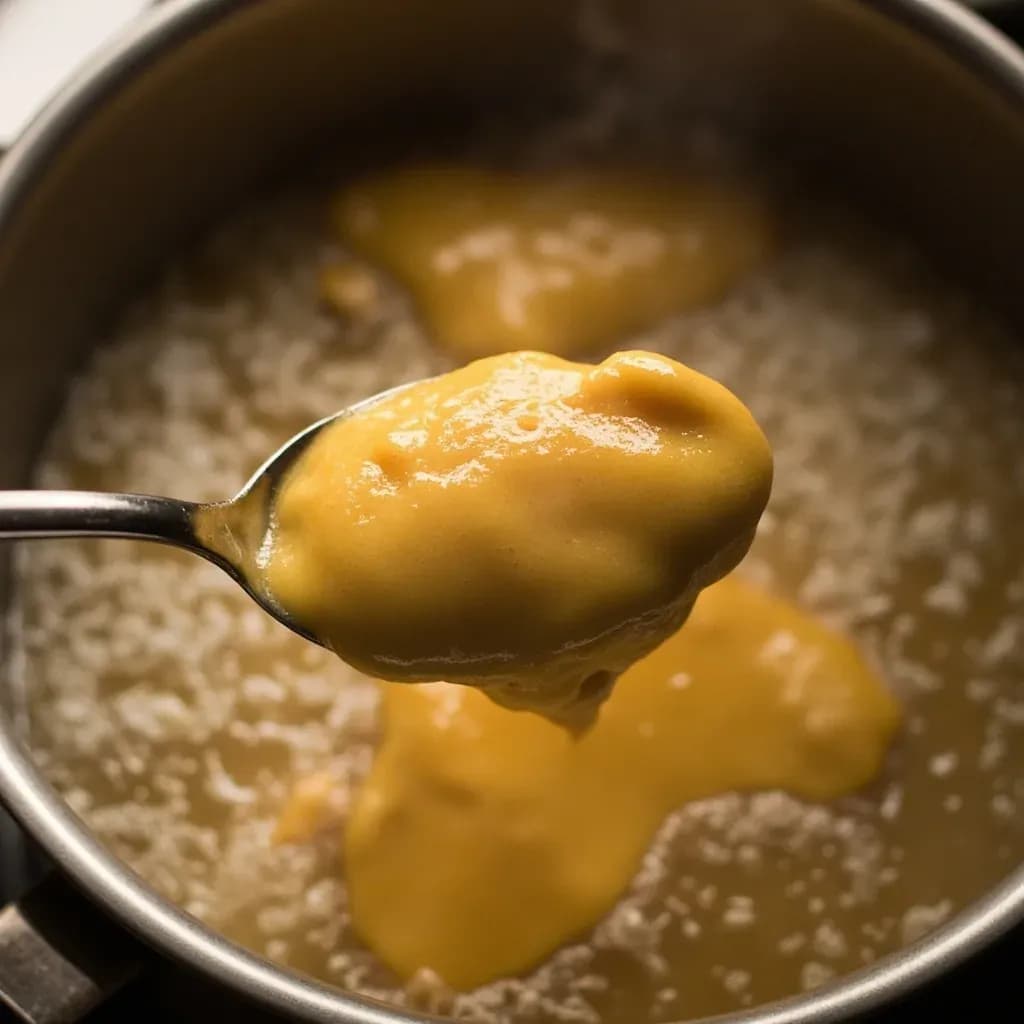
Dropping spoonfuls of loose batter into hot oil to fry free-form fritters.
Spoon-dropping fritters scoops a loose, pourable batter and drops it directly into hot oil so each portion fries into a craggy, irregular fritter, as with Puerto Rican bacalaítos and many frituras. The batter spreads on contact, giving lacy crisp edges and a tender center, and consistent spoon size keeps the fritters cooking evenly. The oil must stay hot enough to set the batter quickly without greasing it out.
Spoon-dropping is the most forgiving of the deep-frying methods for fritters: a loose, ribbon-like batter is pushed off the back of a spoon into hot oil, where it sets into an irregular, lacy disc with crinkled edges that crisp more aggressively than any shape a mold could produce. The philosophy is the opposite of forming a perfect croquette — irregularity is a feature, not a failure, and the uneven crust is what carries sauce and shatters under the tooth. The canonical example is the Puerto Rican bacalaíto, a salt-cod fritter fried in fritura stands and home kitchens alike, but the same method describes Japanese kakiage, Indian pakora, Italian fritto misto, and a long list of free-form fritters from across the Caribbean.
What separates spoon-dropping from extruded or molded frying is the batter itself. It has to be loose enough to fall from the spoon in a thick ribbon, but tight enough to hold a brief mound before relaxing in the oil. Get that window right and the fritter puffs at the edges, blisters across the top, and cooks through in four to six minutes. Get the oil wrong — too cool and the fritter drinks oil, too hot and the crust scorches before the inside sets — and the same batter that should have been crisp and feathery lands on the plate dense and greasy. The technique is easy to learn and hard to perfect only in the sense that it rewards attention to oil temperature, batch size, and the way the batter is handled in the bowl.
- Difficulty
- Easy
Types & varieties
Salt-cod batter bound with flour, egg, water, and recao (culantro) or parsley; achiote sometimes added for color and aroma
Caribbean and West African cognates made with salted cod or malanga, dropped by the spoonful and fried until blistered
Spanish counterpart, often leavened with yeast or beaten egg white; dropped loose in some regions, piped in others
Puerto Rican sweet-plantain cylinders stuffed with a salt-cod fritter batter and refried — uses the same loose drop-style mix
Japanese mixed vegetable-and-seafood fritters dropped in loose clusters from chopsticks or a spoon into shallow oil
Indian fritters of besan (chickpea-flour) batter with onion, spinach, or potato; identical drop-from-spoon principle
Italian mixed-seafood and herb fritters, spoon-dropped when the batter is loose enough to self-shape
Thicker minced-fish mixtures dropped rather than formed, sharing the forgiving, hand-shaped philosophy
How to do it
- 1
Rehydrate and prep the salt cod
Soak 1 lb (450 g) boneless, skinless salt cod in cold water for 24–48 hours, changing the water 3–4 times. Drain, rinse, and flake the cod finely, picking out any stray bones. Pat very dry with a clean towel — excess water thins the batter and splatters the oil.
- 2
Make the batter
Whisk together about 1 cup (120 g) all-purpose flour, 1 large egg, ¾ cup (180 ml) cold water, 2 tablespoons finely chopped recao (culantro) or flat-leaf parsley, 1 small minced garlic clove, ½ teaspoon kosher salt, and ¼ teaspoon black pepper. Fold in the flaked cod. The batter should drop off a spoon in a thick ribbon and briefly hold its mound; loosen with 1–2 tablespoons of cold water if it tightens. Rest 10 minutes.
- 3
Heat the oil
Pour about 2 inches (5 cm) of neutral oil — vegetable, canola, sunflower, or peanut — into a heavy 4–6 qt pot. Heat over medium to 350–375 °F (175–190 °C), clipping a deep-fry thermometer to the side. Adjust the burner so the temperature holds steady rather than swinging.
- 4
Test the temperature
Drop a ¼-teaspoon of batter into the oil. It should sizzle on contact, rise to the surface within 2–3 seconds, and turn pale gold in roughly 60 seconds. If it sits flat and darkens slowly, the oil is too cool. If it browns in under 30 seconds, slide the pot off the burner to recover.
- 5
Drop the fritters
Using a long-handled tablespoon, scoop a heaping tablespoon of batter and let it slide off the spoon in a single motion. Drop into the oil on the side of the pot, not the center, and away from you to avoid splatter. Space drops about 1–2 inches (3–5 cm) apart; fry 6–8 at a time so the oil temperature stays above 340 °F.
- 6
Fry and flip
Fry 2–3 minutes per side, nudging gently with a wire spider or slotted spoon to turn once the underside is deep golden. Total cook time is 4–6 minutes per fritter. If the batter tightens up in the bowl as you work, whisk in 1–2 tablespoons of cold water to bring it back to ribbon consistency.
- 7
Drain and season
Lift fritters out with the spider, let oil drip for a moment over the pot, then transfer to a wire rack set over a sheet pan. Immediately sprinkle with fine salt while the crust is still slick with oil — the salt crystals need a touch of grease to stick.
- 8
Hold and serve
Serve within 15–30 minutes for peak crispness, or hold up to 1–2 hours on the rack in a 200 °F (95 °C) oven, uncovered. Offer with pique, mayo-ketchup, mojo de ajo, or lime wedges. Leftovers keep refrigerated up to 2 days; re-crisp in 375 °F oil for 1–2 minutes — never microwave, which turns the crust leathery.
The Shape Tells the Story
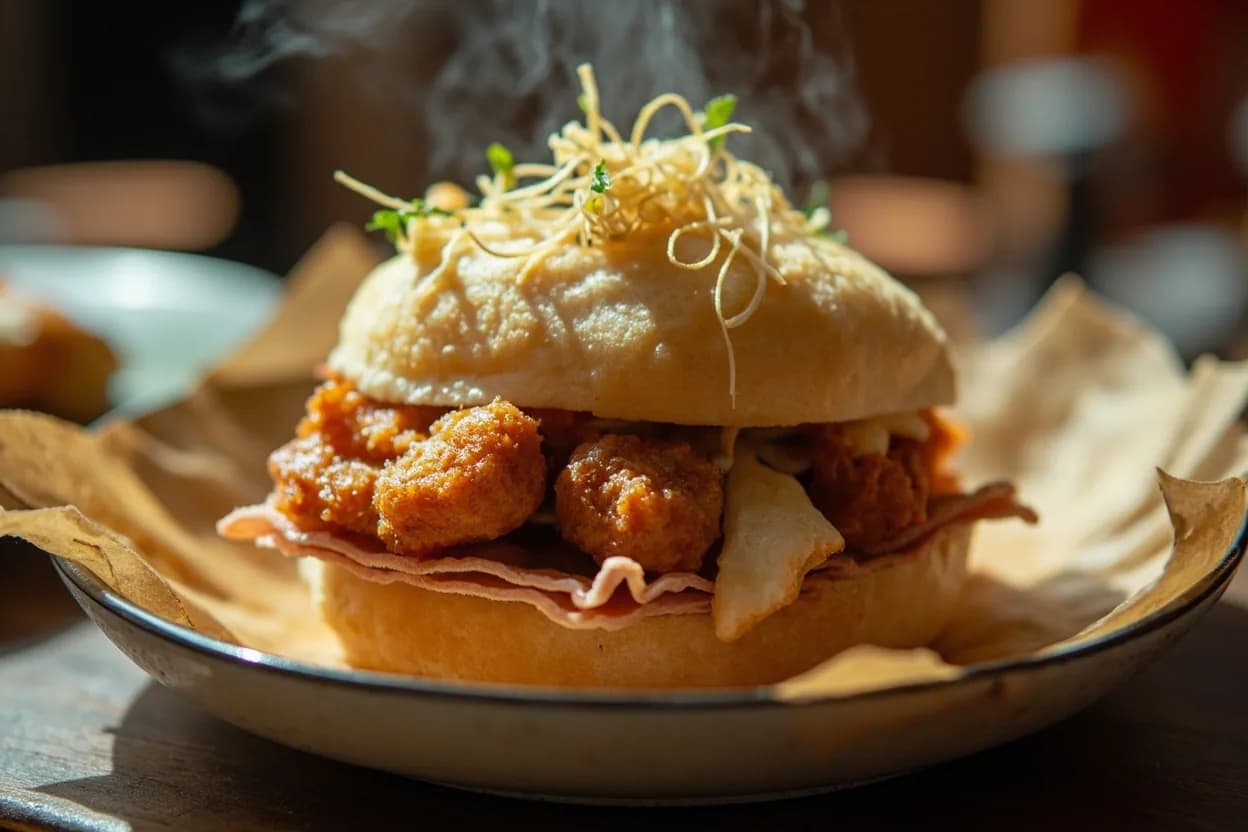
The defining feature of a spoon-dropped fritter is its silhouette. Because the batter falls in a thick ribbon and self-spreads in the oil, each piece carries ragged, crinkled margins that are essentially extra surface area — and surface area is what crisps. Those edges also grip sauces and condiments far better than the smooth perimeter of a molded or extruded fritter. A pan con bacalaíto works precisely because the rough outer crust grips the butter-soaked bread and any drizzle of pique or mayo-ketchup pooled on the plate. Resist the urge to round the drops with the back of the spoon; the irregularity is the point.
- Drop in a single motion and let the batter fall where it falls — do not stir or smooth it in the pot
- The ragged edges carry more sauce and shatter more cleanly than molded fritters
- Color variation across a single fritter (deep gold at the fringe, paler in the center) is a sign of correct oil temperature
Oil as the Constant
Across cuisines, the batter changes — besan for pakora, lager and flour for kakiage, sofrito-laced flour-and-egg for bacalaítos — but the oil stays the same. A 2-inch depth of neutral, high-smoke-point oil held at 350–375 °F in a heavy pot is the universal frame. The only variables a cook really controls are how fast the oil recovers between drops, how many fritters are in the pot at once, and where they are dropped. Master those three and the technique is portable across every variant in this entry.
- Use a heavy 4–6 qt pot or cast-iron Dutch oven; thin pots cycle in temperature too fast
- Clip a deep-fry or candy thermometer to the side — do not guess
- Recover time between drops should be under 15 seconds; if it is longer, fry smaller batches
- Strain and reuse the oil 2–3 times for fritters before discarding
Common uses
Tips & pitfalls
- Desalt the bacalao properly: soak 24–48 hours with 3–4 water changes and taste a sliver before mixing — it should taste seasoned, not briny.
- Keep the batter cold and the oil hot. Cold batter into hot oil gives a clean, blistered crust; warm batter into tepid oil gives a greasy one.
- Drop on the side of the pot, away from you, never into the center and never into a crowd. Leave 1–2 inches between drops so the oil can recover.
- Fry in small batches — 6–8 fritters per 4-qt pot — so the oil temperature rebounds within 10–15 seconds. A slow recovery is the first sign of overcrowding.
- Drain on a wire rack set over a sheet pan, not on flat paper towels; steam trapped under paper softens the crust within minutes. Salt the fritters the instant they leave the oil.
- For a more traditional flavor, fry in lard instead of neutral oil — many Puerto Rican households consider it the only authentic choice, and it adds a savory depth that neutral oils do not.
- Common mistake: overmixing the batter until gluten develops. Stir only until combined; lumps are fine and a tight batter is the enemy of a lacy edge.
- Common mistake: oil too cool. Fritters sink, drink oil, and emerge pale and heavy — raise the heat and reduce the batch size.
- Common mistake: oil too hot. The outsides scorch before the inside cooks through; pull the pot off the burner briefly to let it recover to 360 °F.
Good to know
- Technique class
- Drop-frying — free-form fritters shaped by a spoon rather than a mold, cutter, or extrusion
- Canonical example
- Bacalaítos, Puerto Rican salt-cod fritters (also bacalaitos fritos, empanadillas de bacalao)
- Origin and use of named example
- Puerto Rico; rooted in Spanish colonial salt-cod cookery with Caribbean and African-influenced one-pot frying; traditional Lenten fare, especially Holy Week and meatless Fridays
- Frying medium
- Neutral oil with high smoke point (vegetable, canola, sunflower, or peanut); lard is the traditional choice in many Puerto Rican households
- Oil temperature
- 350–375 °F (175–190 °C); aim for ~360 °F (182 °C) as a working target
- Cook time
- 2–3 minutes per side; 4–6 minutes total per fritter
- Drop size
- About 1 heaping tablespoon (≈15–20 g) per fritter; yields 2½–3 in (6–8 cm) irregular discs
- Batter consistency
- Loose, ribbon-like — drops off the spoon in a thick ribbon and briefly holds a mound before relaxing
- Yield guidance
- 1 lb (450 g) salt cod with a standard batter produces roughly 24–30 fritters
- Key equipment
- Heavy 4–6 qt pot or cast-iron Dutch oven, deep-fry or candy thermometer, wire spider or slotted spoon, rimmed sheet pan over a wire rack, long-handled spoon for dropping
- Storage
- Best eaten within 30 minutes; can be held 1–2 hours on a rack in a 200 °F oven. Refrigerate leftovers up to 2 days; re-crisp in 375 °F oil for 1–2 minutes (do not microwave)
- Common dippers
- Pique (Puerto Rican hot vinegar sauce), mayo-ketchup, mojo de ajo, lime wedges
Also called
Frituras Dropping · Drop Frying
Dishes that rely on it
Related

Sear
Blast the surface hot for a deep-browned, savory crust

Sauté
Cook quickly in a little fat over lively heat, tossing as you go

Stir-Fry
Toss bite-sized pieces over roaring heat for fast, smoky cooking

Pan-Fry
Crisp food in a shallow layer of hot fat, turning once or twice

Deep-Fry
Submerge in hot oil for an all-over crackling crust

Roast
Cook uncovered in dry oven heat for browned edges and tender centers

Bake
Cook with steady, surrounding oven heat — the soul of bread and pastry

Broil
Hit food from directly above with fierce overhead heat