Prep & Assembly
Grinding Spices
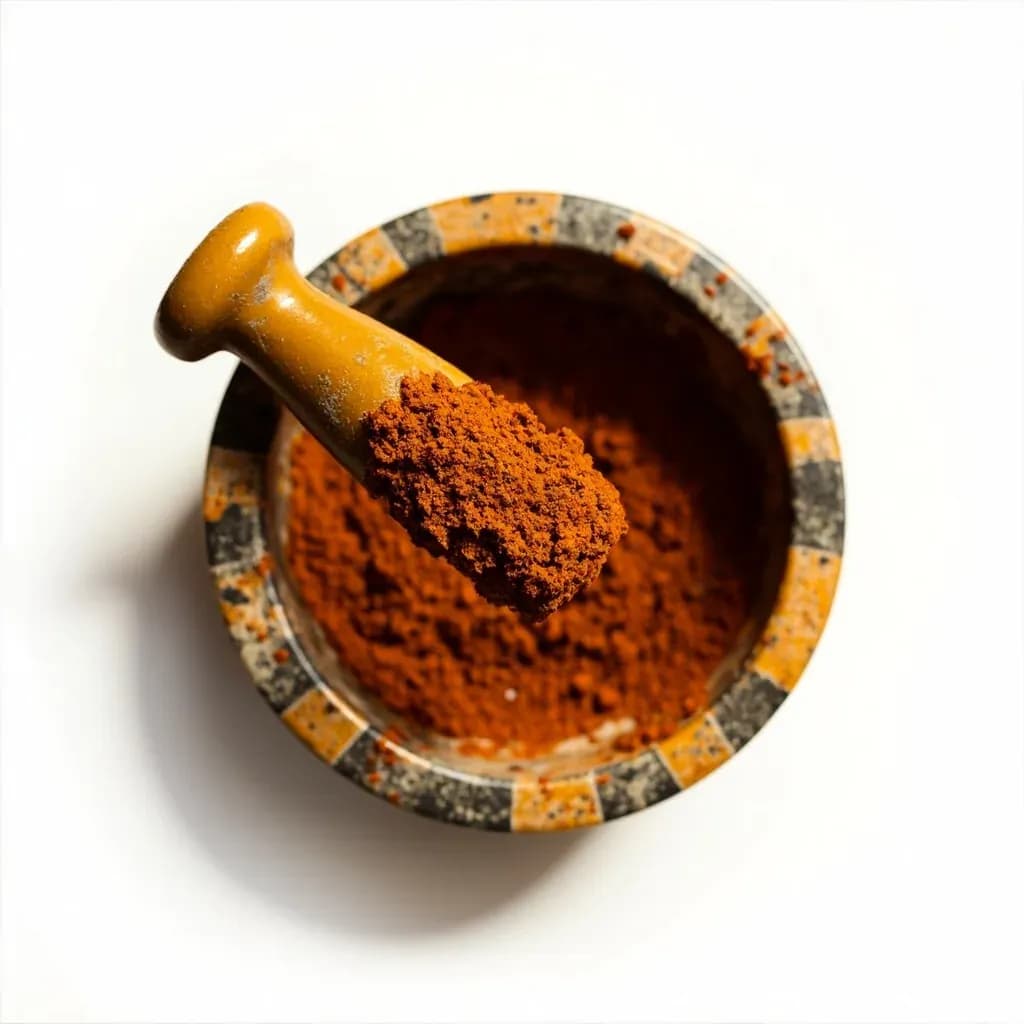
Crushing toasted whole spices into fresh powder for maximum aroma.
Grinding spices breaks down whole seeds, pods, and barks into powder using a mortar and pestle, spice grinder, or stone. Freshly ground spices are far more aromatic than pre-ground ones because their volatile oils degrade quickly once exposed. Toasting the spices first and grinding only what you need keeps the resulting masala potent.
Grinding spices is the act of reducing whole dried spices—seeds, bark, dried chiles, roots—to coarse, medium, or powder-fine particles by mechanical force. The point is not fineness for its own sake but rupture: the cells of a cumin seed or cinnamon stick hold their essential oils in tiny compartments, and crushing them at the moment of use is what releases the volatile compounds that give a dish its lift. Whole spices keep for years on a shelf because those compartments are still sealed; the moment a blade or pestle breaks them open, the clock starts, and most ground spices lose noticeable aroma within fifteen to thirty minutes of being milled.
The practice matters most in the cuisines built on toasted-spice blends—Indian garam masala, baharat, ras el hanout, Ethiopian berbere, Chinese five-spice—where the difference between a week-old jar and a minute-old grind is the difference between a flat stew and a fragrant one. It also pays off in modest ways in any kitchen: grating whole nutmeg over pasta, cracking pepper over a finished plate, or toasting and powdering cumin for a quick dal. The real skill is not technique but timing—matching the grind to the moment it hits fat or liquid—and choosing a texture that suits the dish, from a coarse crack in a dry rub to a fine powder dusted over eggs.
- Difficulty
- Easy
Types & varieties
Manual, low-heat, allows variable texture from cracked to fine; ideal for small batches, wet pastes, and spices that suffer from heat.
Fast and fine; risks heating the spice and losing delicate volatiles. Best for hard bark and large dry batches.
Produces a uniform grind with less heat than a blade grinder; primarily a coffee tool but works well for spices.
Low-tech, no-heat option for coarse 'cracked' textures—good for steak rubs and pickling spice.
Used for hard whole spices grated directly into a dish, especially nutmeg and whole cinnamon sticks.
Rough basalt surface provides strong traction for dried chiles and seeds; traditional in Mexican cooking.
Grooved ceramic bowl with wooden pestle; well suited to sesame seeds and small dry spice quantities.
How to do it
- 1
Choose whole spices
Select whole dried spices with strong aroma when crushed between the fingers. Discard any that smell flat, musty, or have lost their color.
- 2
Measure small batches
Grind only what you need within the next few minutes. A typical batch is 1–3 tablespoons of whole seeds; larger loads grind unevenly in a mortar and overheat in a blade grinder.
- 3
Toast (optional but recommended)
Heat a dry skillet over medium heat. Add the whole spices and shake or stir constantly for 1–3 minutes until fragrant and one shade darker. Remove immediately to a cool plate—spices scorch fast.
- 4
Cool fully
Let toasted spices return to room temperature, about 2–5 minutes. Grinding while warm causes clumping, can drive off aromatics, and may warp plastic grinder lids.
- 5
Pick your tool
Use a granite or marble mortar and pestle for variable textures, small batches, or wet pastes. Use an electric blade grinder for large dry batches and very fine powders. Use a rasp grater only for hard whole spices like nutmeg.
- 6
Crush first, then grind
In a mortar, begin with a firm circular pressing motion to crack the seeds. Once fragments form, switch to a forward-and-back grind against the side of the bowl. In a blade grinder, pulse in 3–5 second bursts with rests between them.
- 7
Check the grind
Stop when you reach the texture the dish calls for: coarse cracked (steak rubs), medium (curry powders), or fine powder (finishing). Smell at each stop—peak aroma tells you when to halt.
- 8
Sift and re-grind if needed
Pass the grind through a fine-mesh sieve. Return the larger fragments to the mortar or grinder for a second pass to ensure an even texture.
- 9
Use immediately or store
Add the freshly ground spice straight to oil, butter, or the cooking pot for maximum impact. If storing, transfer to a small airtight jar, label with date, and keep away from light and heat; plan to use within a few weeks.
Choosing the right grind
Texture is as important as freshness. A coarse crack of cumin in a dry rub gives pops of flavor and a pleasant bite; the same spice powdered fine turns dusty and can turn bitter. A medium grind suits curry powders and spice blends where even distribution matters; a fine powder is for finishing dishes—dusting over eggs, yogurt, or a finished stew—or for blending into smooth sauces where grit would be unwelcome. Match the grind to the moment in the dish: coarse for early stages where the spice will bloom in oil, fine for finishing where you want immediate aroma.
- Coarse cracked: steak rubs, pickling spice, finishing sprinkle on salads or yogurt.
- Medium: curry powders, garam masala, baharat, other toasted-spice blends.
- Fine powder: finishing dusts, spice rubs that need to adhere, smooth sauces and braises.
- Wet paste: curry pastes, sofrito-style spice bases, pesto-style mixtures where a splash of liquid carries the grind into a slurry.
Heat, oxidation, and timing
The volatile oils in spices—cinnamon's cinnamaldehyde, pepper's piperine, cumin's cuminaldehyde—begin to oxidize the moment the cell walls are broken. A minute-old grind bloomed in hot ghee delivers the bright, piercing aroma that defines good Indian home cooking; a week-old pre-ground spice in a slow-cooked stew tastes dull by comparison. Two habits make the biggest difference: toasting whole spices in a dry pan before grinding (which deepens flavor and dries the surface for a cleaner grind) and grinding as close to the moment of use as practical. When pre-grinding is unavoidable, small airtight jars refreshed every few weeks beat a large tin that gets opened daily.
- Toast whole spices in a dry skillet over medium heat for 1–3 minutes, until fragrant and one shade darker, then cool fully before grinding.
- Grind within minutes of cooking; the volatile compounds peak briefly and fade.
- If pre-grinding, store in small jars, label with date, and keep away from light and heat.
- Whole spices keep 1–4 years; ground spices are best used within 6–12 months, sooner for delicate ones like nutmeg.
Common uses
Tips & pitfalls
- Toast whole spices in a dry skillet over medium heat until fragrant and a shade darker, then cool fully before grinding—hot spices clump and can damage a grinder's lid seal.
- Reserve a blade grinder solely for spices; coffee oils and aromas linger in the chamber and will taint delicate spices.
- Pulse in short bursts with a 5–10 second rest between pulses to keep heat down; smell-test to catch the moment of peak aroma before it fades.
- In a mortar and pestle, start with a circular 'crushing' motion and only progress to a back-and-forth grind once the pieces are broken—pressing before crushing wastes effort.
- Don't grind spices that are meant to be bloomed whole, like cardamom pods in a pilaf or star anise in a braise; grinding releases too much too fast.
- For sticky resinous spices like dried ginger or turmeric root, freeze them briefly first to firm up the fibers and reduce clogging.
- Crack, don't powder, spices like cumin and coriander when a coarse texture is desired in a rub or finishing sprinkle—over-grinding makes them dusty and bitter.
- Grind as close to the moment of use as practical; if you must pre-grind, store in small airtight jars and refresh every few weeks.
Good to know
- Definition
- Reducing whole dried spices to smaller particles—coarse, medium, or powder—to rupture cell walls and release volatile aromatic compounds.
- Why fresh-ground
- Whole spices retain essential oils and aroma for years; rupturing the cells at the moment of use is what releases the lift that pre-ground jars lose over months.
- Aroma window
- Most ground spices lose noticeable aroma within 15–30 minutes of grinding; jarred pre-ground spices lose potency steadily over months on a shelf.
- Pre-grind step
- Dry-toasting whole spices in a pan over medium heat for 1–3 minutes drives off moisture and deepens flavor before grinding.
- Best tools
- Granite or marble mortar and pestle for variable texture and small batches; dedicated blade grinder for large dry batches and fine powders; rasp grater for nutmeg and cinnamon bark.
- Grinder heat risk
- Electric blade grinders spin at high RPM; extended pulses heat the load and can volatilize delicate aromatics—use short pulses and let the chamber rest.
- Sifting
- A fine-mesh sieve separates fine powder from coarser fragments; re-grind the larger pieces for uniform texture.
- Storage of ground spices
- Airtight glass jar, dark, cool, away from the stove; whole spices keep 1–4 years, ground 6–12 months depending on the spice.
Also called
Grinding Spices (Mortar) · Spice Grinding (Masala Pisna) · Crushing Spices · Pounding Spices
Dishes that rely on it
Related

Whisk
Beat ingredients smooth and aerated with a looping wire motion

Sift
Pass dry ingredients through mesh to aerate and remove lumps

Strain
Pour through mesh to separate solids from liquid for a smooth result

Filter
Pass liquid through fine material to clarify out the smallest particles

Rice
Press cooked potatoes through small holes for fluffy, lump-free texture

Mash
Crush soft cooked food into a rustic, creamy purée

Grind
Crush food into a coarse to fine texture, from spices to meat

Grate
Shred food into fine bits against a sharp-toothed surface