Prep & Assembly
Launching to Oven
Sliding a loaded pizza or bread off a peel into a hot oven in one confident motion.
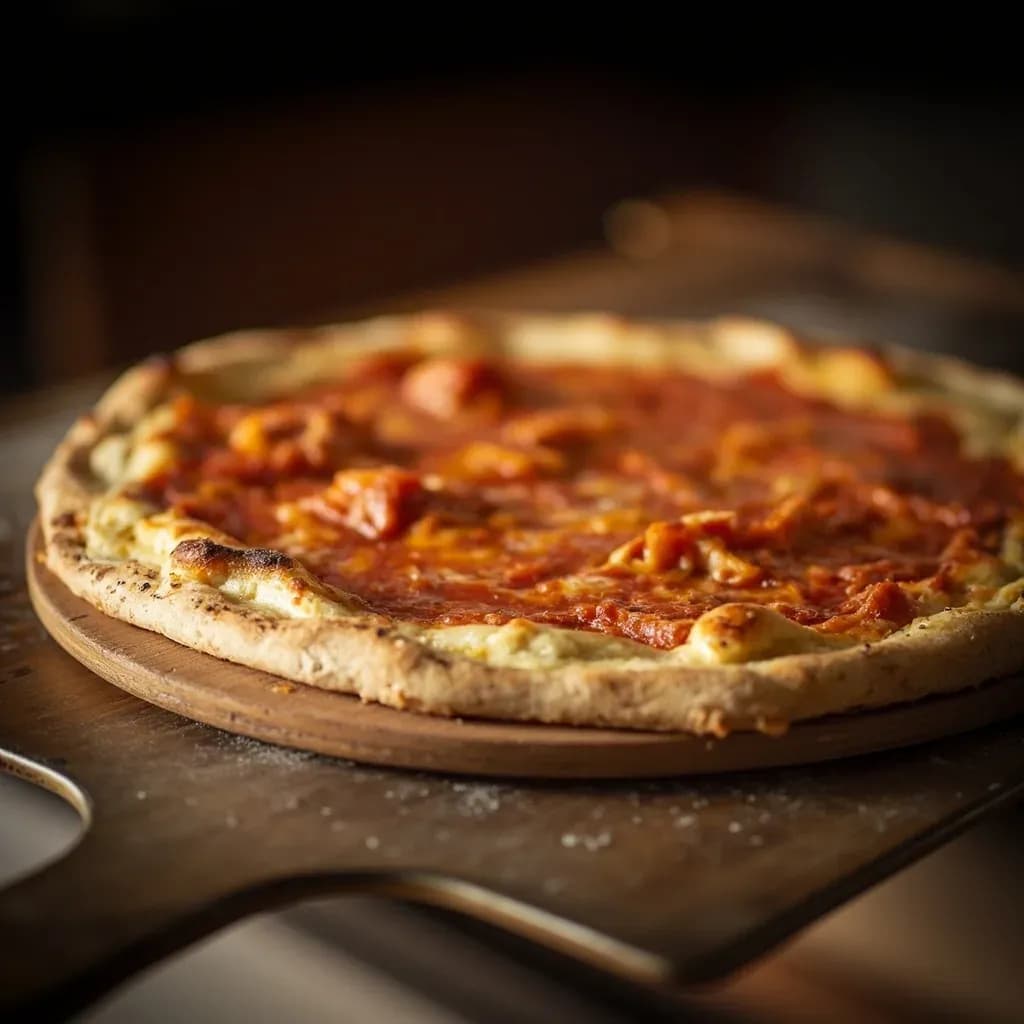
Launching is the act of transferring a topped pizza or shaped loaf from a peel onto a hot oven floor or stone with a single quick slide. A well-floured peel and a decisive jerk-and-pull motion release the dough cleanly without dragging or sticking. Mastering the launch prevents toppings from sliding and the dough from folding mid-transfer.
Launching is the deceptively simple transfer of a fully topped pie, flatbread, or hearth loaf from a peel onto a hot baking surface, done in a single motion. Everything before it — dough hydration, bench flour, peel choice, topping order — is judged in the second the dough meets the deck. If the underside sticks, the pie folds, toppings avalanche, and the cook is left scraping a half-baked disc off a 550 °F stone. The motion itself is less about strength than about friction management: a dry, well-dusted peel, a fully preheated stone or steel, and a quick pull rather than a push.
The technique is rooted in commercial Neapolitan practice, where pizzaioli have launched pies onto 900 °F deck ovens for over a century, refining the rhythm of dust, stretch, top, test, and pull. Home baking adopted the same vocabulary only in the last fifteen years, as pizza stones and steels became common equipment. That adoption also imported the familiar failure modes: a lukewarm deck that does not flash-sear the dough, a wet peel from over-sauced edges, and the classic hesitant shove that drags a pie into a comma shape.
A clean launch is a chain of small decisions made in the moments before the oven opens. The shake test — giving the loaded peel two or three short back-and-forth motions to confirm the dough glides — is the only reliable check. Parchment and pizza screens are legitimate escape hatches for beginners, wet doughs, or under-heated stones, but they soften the bottom crust and are best treated as training wheels rather than permanent tools.
- Difficulty
- Medium
Types & varieties
Traditional wooden peel; absorbs surface moisture so dough releases readily, but the thicker leading edge is harder to slide under a built pie, and the wood stains over time.
Thin metal peel with a minimal leading edge; the standard in pizzerias for both launching and retrieving because friction is almost nil.
Holes in the blade let excess flour fall away, reducing gummy buildup and the burnt-flour smell that plagues flour-heavy launches.
Large round metal peel used to rotate the pie mid-bake in a deck oven; also the right tool for retrieving a finished pie cleanly.
Build and bake the pie on a parchment round, then slide paper and all onto the stone; a common home workaround for wet doughs or cool stones.
Dough sits on an aluminum screen that slides off the peel onto the deck; gives reliable release but a softer, less crisp bottom crust.
How to do it
- 1
Preheat the oven and deck
Place a pizza stone or steel on a middle or upper rack and preheat at full oven temperature — typically 500–550 °F at home, 600–900 °F in a commercial deck — for at least 45 to 60 minutes. The stone or steel must be fully saturated with heat, not just hot to the touch.
- 2
Prep the peel
Sprinkle a thin, even layer of semolina, flour, or a 50/50 mix across the peel's surface, then tap off the excess. The peel should look lightly dusted, not blanketed — too much flour will burn and taste bitter on the bottom of the pie.
- 3
Stretch and place the dough
Shape the dough on a floured counter, shake off excess flour, and lay it on the peel. A properly stretched dough has a slightly drier underside and should already move freely on the counter before any topping goes on.
- 4
Top quickly, keeping the leading edge bare
Sauce and cheese should cover only the central two-thirds of the dough, leaving a 1-inch clean border at the rim. Keep the peel dry — sauce or wet cheese smeared on the peel surface is the single most common cause of a stuck launch.
- 5
Do the shake test
Hold the peel level and give it two or three short back-and-forth motions. The dough should glide. If it catches, lift the edge and dust more semolina underneath before topping further; never force a stuck pie toward the oven.
- 6
Position the peel at the back of the deck
Open the oven. Set the peel's leading edge onto the back of the stone or steel so the far edge of the dough is already touching the hot surface, with the peel angled slightly downward toward you.
- 7
Launch in one quick, confident pull
Pull the peel back toward you in a single short jerk, keeping the angle low. The dough should release and land flat. Do not push, do not drag, and do not pause — a hesitant long slide is what folds pies.
- 8
Recover and bake
Pull the peel out cleanly, close the oven, and bake to time. In a Neapolitan deck oven, rotate the pie once at the 30-second mark; in a home oven, rotate 180° halfway through to even out hot spots. If the bottom is browning faster than the top, drop the oven temperature 25 °F.
- 9
Retrieve with a metal peel
Slide a thin metal or turning peel under the finished pie, supporting the center, and lift out in one smooth motion. Let the pie rest 1–2 minutes on a cutting board before slicing so the cheese sets and the bottom crisps.
The shake test
The shake test is the single most important habit in launching. With the pie fully topped and the peel held level — not tilted — give it two or three short back-and-forth motions, roughly an inch each way. The dough should glide across the peel as if floating. If it catches, snags, or moves reluctantly, lift the nearest edge with one hand and dust a pinch of semolina underneath, then re-test. Never push forward from this point. A dough that does not slide on the counter will not slide on a 550 °F stone; the heat does not magically free a stuck underside, it bakes it in place.
- Always test before opening the oven; once the door is open, heat escapes with every second you hesitate.
- A failed shake test means stop, lift, dust, and re-test — do not launch and hope.
- Re-dusting after the test is fine; the small extra flour burns off on contact with a properly heated stone.
Why launches fail, and how to fix them
Most failed launches trace to one of three causes: a cool deck, a wet peel, or a hesitant hand. A stone or steel that has not preheated for at least 45 minutes will not flash-set the dough's bottom, so the dough stays gummy and clings. A peel that has absorbed sauce, oil, or moisture cannot release dry dough, so keep the assembly line clean and never sauce past the dough's edge. A slow or wobbly push lets the dough fold over its own leading edge. The fix in every case is preparation, not strength.
- Cool deck: extend preheat to a full 45–60 minutes; a stone that has not fully saturated with heat cannot be rescued by adjusting temperature mid-bake.
- Hot bottom: if the deck is over-browning the crust before the top cooks, drop oven temperature 25 °F and rotate the pie 180° to even out exposure.
- Wet peel: wipe with a dry cloth, re-dust, and rebuild the pie on a clean surface; never oil a peel.
- Folded dough: abandon the launch, peel the dough back onto the counter, re-shape, dust, and try again — a folded pie will not un-fold in the oven.
- Stuck halfway off: pull the peel straight out to let the dough drop, or free the edge with a thin metal spatula rather than yanking the peel back.
Common uses
Tips & pitfalls
- Test the release every single time with the shake test; if the dough hesitates, lift the edge and dust more semolina underneath rather than forcing it toward the oven.
- Build the pie at the front edge of the peel so the far edge hits the stone first; this prevents toppings from sliding back toward you on contact.
- Use semolina or a 50/50 flour-and-semolina blend. Plain bread flour can turn gummy under a wet pie; semolina's larger granules act like ball bearings.
- Commit to the motion. A hesitant, slow push is what folds pies — one quick, short pull is cleaner than any long slide.
- If a pie sticks partway off, do not yank the peel back; pull the peel straight out and let the dough drop, or free the edge with a thin metal spatula.
- Never oil the peel. Oil turns into a sticky residue that ruins the next launch and smokes at oven temperature.
- Keep wet toppings — sauce, fresh mozzarella brine, olive oil pools — at least half an inch from the dough's edge so they never contact the peel surface.
- Lower the oven temperature by 25 °F if the bottom is browning faster than the top; a properly preheated stone is forgiving, but it can outrun a broiler element.
Good to know
- Also called
- Launching, transferring from peel, peeling into the oven
- Primary tool
- Pizza peel (wood, metal, or perforated metal)
- Origin
- Italian pizzeria practice, Naples; standardized as steel-deck ovens spread in the 20th century
- Difficulty
- Moderate; requires confidence and a properly prepped peel
- Ideal oven temperature
- 500–900 °F (260–482 °C); home ovens typically 500–550 °F on a stone or steel
- Minimum preheat for stone or steel
- 45–60 minutes at full oven temperature
- Standard dusting flour
- Bread flour, semolina, or a 50/50 blend; cornmeal is also used
- Neapolitan bake time after launch
- 60–90 seconds at 850–900 °F
- Home-oven bake time after launch
- 5–8 minutes on a preheated stone or steel at 500–550 °F
- Pairs with
- Preheating a stone or steel, dough stretching, oven-spring management
Also called
launching · loading · Peeling In
Dishes that rely on it
Related

Whisk
Beat ingredients smooth and aerated with a looping wire motion

Sift
Pass dry ingredients through mesh to aerate and remove lumps

Strain
Pour through mesh to separate solids from liquid for a smooth result

Filter
Pass liquid through fine material to clarify out the smallest particles

Rice
Press cooked potatoes through small holes for fluffy, lump-free texture

Mash
Crush soft cooked food into a rustic, creamy purée

Grind
Crush food into a coarse to fine texture, from spices to meat

Grate
Shred food into fine bits against a sharp-toothed surface