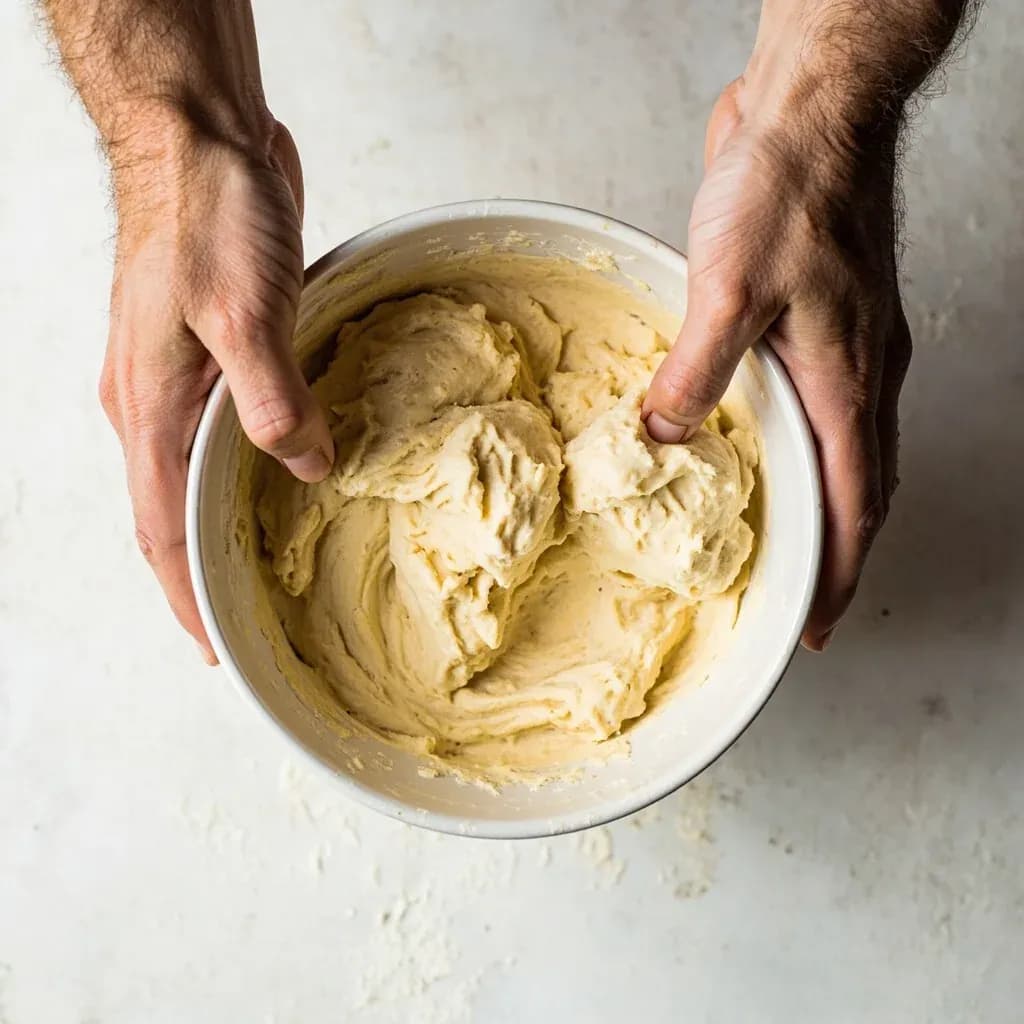
Prep & Assembly
Mixing & Kneading Masa
Combining masa harina or nixtamal with water and fat into workable dough.
Mixing and kneading masa blends ground nixtamalized corn or masa harina with water, and sometimes fat, then works it until smooth and uniform. Proper mixing distributes moisture evenly so the dough presses cleanly into tortillas or holds for tamales. Adding water gradually and kneading until it no longer cracks is the mark of well-prepared masa.
Mixing and kneading masa is the pivotal step that turns nixtamalized corn — either fresh-ground hominy or reconstituted masa harina — into the workable dough behind tortillas, tamales, sopes, pupusas, and a long list of other Mexican and Central American staples. The technique is essentially a hydration and aeration process: water activates the pre-gelatinized starch left over from alkaline nixtamalization, fat shortens the texture and keeps finished tortillas pliable, and kneading (or, for tamales, vigorous beating) incorporates air for a tender crumb. Get it right and the masa presses cleanly, spreads evenly, and cooks up soft rather than crumbly; get it wrong and the same flour produces cracked, dry, or gummy results no matter how carefully you cook it.
The single most important habit to build is judging hydration by feel rather than by rigid measurement. Nixtamal absorbs water unevenly depending on grind, age, and brand, so even a precise ratio on paper may need a tablespoon of water or flour in practice. A short rest after the initial mix is non-negotiable: it gives the flour time to fully hydrate, tightens the dough so it doesn't stick to your hands or the press, and — if extended into the refrigerator — develops a subtle, almost sourdough-like tang. With those two instincts (feel and patience) the rest of the work is straightforward and forgiving.
- Difficulty
- Medium
Types & varieties
Firmer, drier dough with less fat; tight enough to hold a clean press without sticking.
Looser and fluffier, heavily whipped with fat and often broth until it is light, airy, and spreadable like thick cake batter.
Wet, perishable ground hominy from a tortillería; same technique with significantly less added water since the corn is already moist.
Reconstituted from dried nixtamal flour — the standard home-cook version and the easiest to standardize.
Stiffer dough shaped by hand into thick disks with pinched rims to hold toppings.
Often blended with cooked rice or enriched with cheese, plus a touch of water; kneaded until very smooth.
How to do it
- 1
Measure and combine the dry ingredients
Place the masa harina in a large bowl with about 1/2 teaspoon salt per 2 cups of flour, plus 1 to 2 teaspoons of baking powder if you want puffier tortillas. Whisk to distribute evenly.
- 2
Add warm water gradually
Pour in roughly two-thirds of the warm (not hot) water and stir with a wooden spoon or your hand, breaking up clumps. Add the remaining water a splash at a time until the masa comes together in a soft, slightly tacky mass with no dry pockets. Different brands absorb very different amounts of water, so the exact quantity will vary.
- 3
Rest the masa
Cover the bowl with a damp cloth or plastic wrap pressed directly onto the surface and let it sit for 15 to 30 minutes. This rest — called reposar — lets the nixtamal fully absorb the water and tightens the texture so the dough stops sticking. A longer, refrigerated rest of 1 to 12 hours develops a tangier, more complex flavor.
- 4
Add the fat and knead
For tortillas, work in 2 to 3 tablespoons of softened lard or shortening by hand until the fat is fully incorporated and the masa feels smooth and pliable, about 2 to 3 minutes of kneading. For tamales, transfer the rested masa to a stand mixer (or keep it in the bowl with a wooden spoon), drizzle in 1/2 to 1 cup of melted lard and warm broth, and beat vigorously for 5 to 10 minutes until the masa is light, fluffy, and the consistency of thick cake batter.
- 5
Perform the float test
Pinch off a teaspoon of masa, roll it into a smooth ball, and drop it into a cup of cold water. If it floats, the masa is properly hydrated and aerated. If it sinks, knead in a tablespoon of water, wait a minute, and retest.
- 6
Adjust the consistency
Too sticky or soft: knead in a tablespoon of masa harina. Cracks at the edges or feels sandy: knead in a tablespoon of water. Both corrections are normal; trust the feel over any printed ratio.
- 7
Form and cook
For tortillas: pinch off golf-ball portions, flatten between two sheets of plastic in a tortilla press, and cook on a hot comal or dry skillet 45 to 60 seconds per side until lightly speckled. For tamales: spread a thin, even layer (about 1/4 inch) of masa on a soaked corn husk or banana leaf, add filling, wrap, and steam 1 to 1.5 hours until the husk pulls away cleanly.
- 8
Store any leftover masa
Press plastic wrap or a damp cloth directly onto the surface of any unused masa, seal in a container, and refrigerate up to 3 days or freeze up to 3 months. Thaw overnight in the refrigerator and knead briefly before using; tamale masa may need a quick re-whip with a splash of broth to come back to life.
Why nixtamalization changes everything
Masa is not the same as cornmeal or polenta. The corn has been cooked and steeped in an alkaline solution (traditionally wood ash or cal — calcium hydroxide), a process called nixtamalization that loosens the hulls, frees the niacin, and — crucially for the cook — partially gelatinizes the starch. That pre-gelatinization is why masa hydrates so quickly with warm water and why it holds together in a tortilla press where untreated cornmeal would crumble. It also means the dough behaves more like a hydrated starch paste than a wheat dough: there is no gluten development, so the technique is about hydration and aeration, not gluten window-paneing.
Reading the dough
Visual and tactile cues matter more than ratios. A properly mixed tortilla masa should feel like soft Play-Doh — cohesive, slightly tacky, and smooth. Pinch a small piece and press it between your fingers: it should hold together without cracking at the edges and not stick aggressively to your skin. For tamales, the masa should look paler than it started and fall from a spoon in a slow ribbon; under-whipped masa will be dense and streaky, while over-whipped masa becomes greasy as the fat separates.
- Cracks at the edges of a pressed tortilla → too dry; knead in water a tablespoon at a time.
- Sticks to the press, hands, or plastic → too wet; dust with masa harina.
- Tamale masa sinks in the float test → add water and re-whip before assembling.
- Tamale masa splits or tears when spread → likely under-whipped or too cold; beat a minute longer and let it come to room temperature.
Fat and flavor
Fat is not optional. Beyond tenderness, it carries flavor, slows staling, and — in tamales — is what lets the masa hold the air you beat into it. Lard is traditional and gives the cleanest corn flavor; duck fat adds richness; vegetable shortening is the neutral, kosher-friendly option. Butter can work but has a lower smoke point and can produce a denser, less pliable tortilla. The fat is almost always added after the initial hydration and rest, so it coats the hydrated starch rather than sealing out water.
Common uses
Tips & pitfalls
- Use warm, not hot, water. Hot water can partially cook the starch and make the masa gummy, while cold water won't hydrate the nixtamal evenly.
- Never skip the rest. The 15-to-30-minute reposo is what turns a shaggy, sticky mass into a smooth, pressable dough — and an overnight rest deepens the flavor noticeably.
- Add the fat after resting, not before. Folding fat into dry masa can coat the starch granules and slow hydration, leaving you chasing the right texture indefinitely.
- For tamales, beating is more important than kneading. Aggressive whipping with a wooden spoon or stand mixer incorporates the air that gives tamales their light, almost mousse-like crumb.
- The float test beats the feel test for first-timers. If the 1-teaspoon ball sinks, the masa needs more water and a minute more work — no matter how good it looked to your eye.
- Cracked edges on a pressed tortilla mean the masa is too dry; sticking to the plastic means it is too wet. Both problems are fixed in one-tablespoon increments, not by redoing the whole batch.
- Cover resting masa with a damp cloth or plastic pressed onto the surface. A dry skin forms within minutes and creates lumps that are hard to knead out later.
- A teaspoon or two of baking powder per 2 cups of masa harina gives noticeably puffier, more flexible tortillas without affecting flavor.
Good to know
- Base ingredient
- Masa harina (dried nixtamalized corn flour) or fresh nixtamal masa from a tortillería
- Origin
- Mesoamerica; foundational to Mexican and Central American cuisines for thousands of years
- Hydration ratio (tortillas)
- About 1 to 1.5 cups warm water per 2 cups masa harina, adjusted by feel
- Hydration ratio (tamales)
- Wetter than tortilla masa; roughly 2 to 2.5 cups liquid (water or broth) per 2 cups masa harina
- Resting time
- 15–30 minutes minimum; up to 12 hours refrigerated for deeper flavor and easier handling
- Doneness test
- Float test — a 1-teaspoon ball dropped into cold water should float
- Typical fats
- Lard (traditional), pork or duck fat, vegetable shortening, butter, or bacon fat
- Common additions
- Salt, baking powder (optional, for puffier tortillas), broth or stock (for tamales)
- Mixing tools
- Hands (traditional), wooden spoon, or stand mixer with paddle attachment
- Yield guidance
- 2 cups masa harina makes roughly 12–16 six-inch tortillas or masa for 18–24 small tamales
- Storage of prepared masa
- Refrigerate up to 3 days in a sealed container; freeze up to 3 months
Also called
Mixing & Kneading Masa · Preparing Masa
Dishes that rely on it
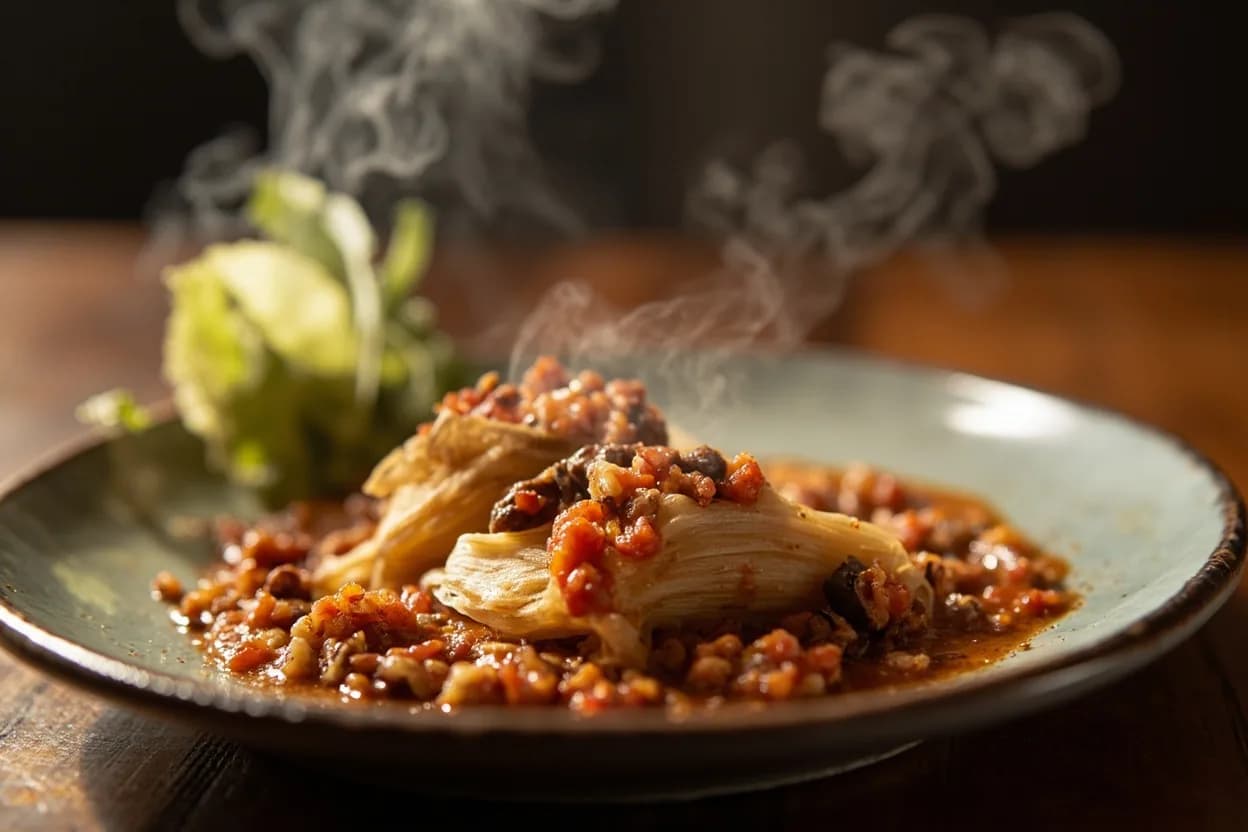
Related

Whisk
Beat ingredients smooth and aerated with a looping wire motion

Sift
Pass dry ingredients through mesh to aerate and remove lumps

Strain
Pour through mesh to separate solids from liquid for a smooth result

Filter
Pass liquid through fine material to clarify out the smallest particles

Rice
Press cooked potatoes through small holes for fluffy, lump-free texture

Mash
Crush soft cooked food into a rustic, creamy purée

Grind
Crush food into a coarse to fine texture, from spices to meat

Grate
Shred food into fine bits against a sharp-toothed surface