Heat & Fire
Garlic-Chili Refrito Finishing
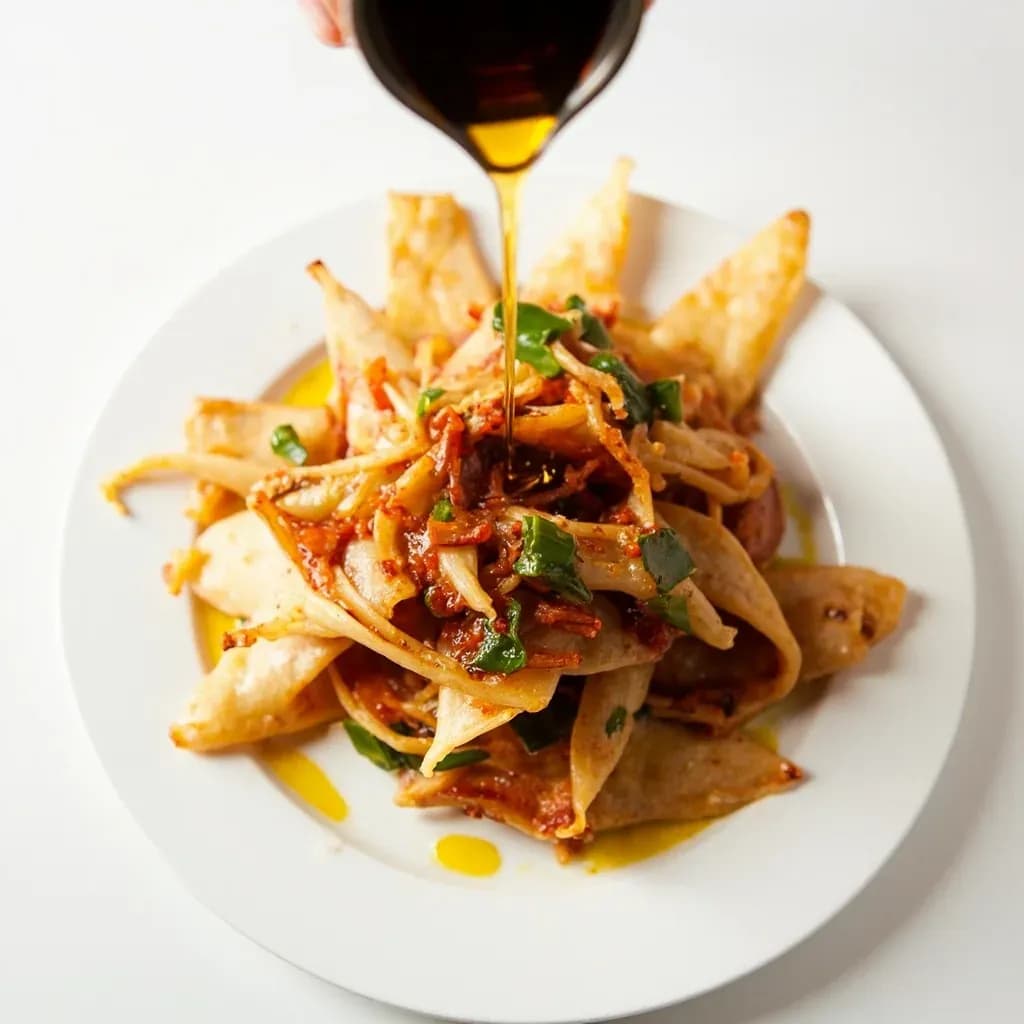
Finishing a dish with hot oil bloomed with garlic and chili, poured over to add aroma and bite.
Refrito finishing tops a finished dish with a quick fry of garlic, chili and spices in hot oil, poured over just before serving so the aromatics bloom and crackle on contact. Found across Latin American and broader cuisines (akin to a tarka or chili crisp), it adds a final burst of fragrance, heat and richness. The hot oil carries flavor into the dish without overcooking it.
Refrito finishing is the final, deliberate act of bloomed aromatics — a small amount of fat heated just past its aromatic threshold, garlic and chili dropped in for seconds, then poured, solids and all, over a finished dish. It is less a cooking method than a delivery system: the hot oil dissolves fat-soluble flavor compounds (allicin from garlic, capsaicin and carotenoids from chili, the pyrazines that give alliums their roasted backbone) and carries them onto the food at peak volatility, when the nose reads them first and the palate catches them on the opening bite. The technique appears under a dozen names — refrito in Spain and Latin America, tumis in Indonesia, hong you in Sichuan, sarciado in the Philippines, chow hing among the Hakka — but the discipline is identical everywhere.
What makes the move distinctive is its timing and dose. Unlike a stir-fry or sauté, the aromatics are not the dish; they are punctuation. Roughly one to two tablespoons of fat per serving, garlic sliced thin or minced fine, chili seeded or whole depending on heat tolerance, and the whole exercise over in under a minute. The window between aromatic and burnt is famously narrow — about ten seconds — which is why cooks who do this daily treat it as a final act at the stove, never a step they walk away from. The reward is a layer of flavor no amount of simmering can replicate: crisp garlic shards, glossy red oil, and the fragrant hiss when fat hits the bowl.
The technique also doubles as a finishing rescue. A stew that smells flat, a bowl of noodles missing a top note, grilled fish that needs punctuation — a refrito poured tableside fixes all three in a single pour. Because the oil is hot enough to sizzle on contact, it re-warms the top layer of the dish and resets the aromatics, which is why so many traditional presentations (Hakka poached chicken with devil's oil, Dominican goat stew finished with onion-and-garlic oil, Burmese mohinga crowned with to-hpu) lean on this move rather than baking the flavor into the main cook.
- Difficulty
- Easy
Types & varieties
Sofrito-style base of garlic, onion, and chili bloomed in lard or olive oil, used as a finishing garnish over beans, rice, or boiled green bananas
Chili oil finished with bloomed garlic and sometimes Sichuan pepper, poured cold over noodles or cold-dressed salads (liang cai)
Garlic sautéed in oil, often with chili, poured over fried or grilled fish; tore is the Cebuano term for the same act
Shallots, garlic, and dried chili bloomed in peanut or chickpea oil, used to finish mohinga and salads
Sliced garlic and ñora or guindilla peppers in olive oil, the classic Catalonian finish for escalivada or cocido
Garlic and chili bloomed in hot oil served alongside poached chicken or steamed fish
Garlic-chili oil poured over stewed goat or bean dishes at the table
Shallot- and garlic-infused oil, often with chili, used to finish soto, bakso, and nasi goreng
How to do it
- 1
Prep the aromatics
Slice 3–4 garlic cloves thinly (about 1.5 mm) for shards that crisp at the edges; stem and halve 2–4 dried árbol or Thai chiles, leaving seeds in or out depending on heat tolerance. Pat the garlic dry with a towel — surface moisture causes violent splattering and steams rather than fries.
- 2
Heat the fat
Add 1–2 tablespoons per serving of a neutral, high-smoke-point oil (rice bran, peanut, or grapeseed) to a small skillet or wok. Heat over medium-high until the first wisp of smoke appears, or test with a single garlic slice — it should sizzle aggressively within 2 seconds.
- 3
Bloom the chili first (optional)
Drop the dried chiles into the hot oil; they will darken and smell toasty in 5–10 seconds. Lift them out with a slotted spoon for a milder, color-only finish, or leave them in for full heat.
- 4
Add the garlic
Slide the sliced garlic in and swirl so it fries rather than steams. Cook 20–40 seconds, stirring, until pale gold and just beginning to turn tan at the edges. Minced garlic needs only 5–15 seconds.
- 5
Watch the cues
The sizzle quiets as the garlic's surface moisture evaporates. That quiet is your window: from quiet to browning is roughly 10 seconds. Pull the pan off the burner the moment the garlic turns pale gold — residual heat will finish the work.
- 6
Pour over the dish
Immediately pour the oil, garlic, and chili over the finished dish at the table or just before plating. The oil should audibly hiss on contact with the food. Distribute the garlic shards and chili pieces evenly so every bite gets aroma and bite.
- 7
Rest briefly and serve
Let the dish sit 30–60 seconds so the oil can carry flavors into the top layer of food. Serve while the garlic shards are still crisp and the oil glossy — both fade within minutes.
Choosing the fat
The fat is the carrier, so its smoke point and flavor both matter. Neutral oils with high smoke points — rice bran, peanut, grapeseed, canola — are the default for high-heat versions where garlic turns gold in 30 seconds. Lard and schmaltz add a savory depth that suits bean and meat dishes. Ghee works for South Asian tempering and Burmese to-hpu, where the toasted-milk solids complement the chili. Olive oil belongs only in the gentler bloomers — Spanish refrito de ají, Italian aglio e olio — because it smokes and turns bitter above 190°C. Coconut oil fits Southeast Asian tumis, but its sweetness can flatten chili heat if overused. As a rule, pick the fat you would want to taste in the finished dish; the aromatics will not disguise a wrong choice.
- Rice bran or peanut oil: high-heat, neutral, the all-purpose default
- Lard or schmaltz: savory depth for beans, stews, grilled meats
- Ghee: nutty base for South Asian tempering and Burmese to-hpu
- Olive oil (mild heat only): for Spanish, Italian, and Levantine finishing moves
- Coconut oil: fits Indonesian and Burmese dishes, but use sparingly to keep chili heat forward
Reading the window
Every cook who has done this technique remembers the moment the garlic goes from gold to brown to black in what feels like a single second. The reason is moisture. Fresh garlic is roughly 60% water; that water boils out as steam, and the loud sizzling is the sound of that steam escaping. When the sizzling quiets, the water is gone and the oil temperature at the garlic's surface jumps toward the full 170–180°C of the surrounding fat. Browning now begins in earnest, and from quiet to burnt takes about ten seconds. Learning to hear the quiet — and to pull the pan at the first sign of it — is the entire skill. Residual heat in the pan and oil will finish cooking the garlic after you take it off the burner, which is why cooks pull at pale gold rather than deep gold.
- Loud sizzle = water still leaving the garlic, browning not yet started
- Quiet sizzle = water gone, browning beginning — pull the pan now
- Pale gold at removal = correct final color after carryover
- Tan to brown = already past the window, flavor turns acrid
- Smoke from the oil before the garlic colors = fat too hot, start over
Common uses
Tips & pitfalls
- Dry your garlic thoroughly before it goes in — water causes violent splatter and steams rather than fries.
- Pull the pan off heat when garlic just turns pale gold; carryover heat cooks it further, so deeper color at removal means burnt on the plate.
- Pour the moment the sizzling quiets — that signal means water has left the oil and browning is about to begin.
- Use whole dried chiles (árbol, Thai bird, ñora) and remove the seeds if you want color and aroma without fierce heat.
- For a sharper raw bite, sprinkle a small amount of grated raw garlic on the dish before pouring the hot oil over it — you get both cooked depth and raw pungency.
- Avoid olive oil above its smoke point (~190°C); save it for milder bloomers and use rice bran or peanut oil for high-heat versions.
- Salt the dish before, not after — finishing oil coats an already-seasoned surface better and the salt won't sit unabsorbed on top of the oil.
- If garlic burns, strain it out and start over; there is no rescuing burnt allium without compounding bitterness.
Good to know
- Also known as
- Rehogado (Spanish/Latin Am.), tempering (South Asian), tumis (Indonesian), hong you (Sichuan), sarciado/tore (Filipino), chow hing (Hakka)
- Spanish root
- From rehogar (to brown or sauté) with the -ito suffix denoting the brief, finishing version
- Core principle
- Hot fat acts as a solvent for fat-soluble flavor compounds in allium and chili (allicin, pyrazines, capsaicin, norisoprenes), delivered at the moment of serving
- Target fat temperature
- 160–180°C / 320–355°F — hot enough to sizzle garlic instantly, below ~190°C / 375°F where oil smokes and allicin turns acrid
- Time in oil
- 20–45 seconds for sliced garlic; 5–15 seconds for minced garlic; 5–10 seconds for dried chili until fragrant
- Visual cue
- Garlic turns pale gold and the sizzling quiets as surface moisture leaves — pull the pan then, carryover heat finishes the cook
- Yield
- Roughly 1–2 tablespoons of fat per serving as a finishing dose, not a cooking medium
- Storage
- Best used within minutes; leftover infused oil keeps 2–3 weeks refrigerated, strained of solids for longer life
Also called
refrito · garlic chili oil finish
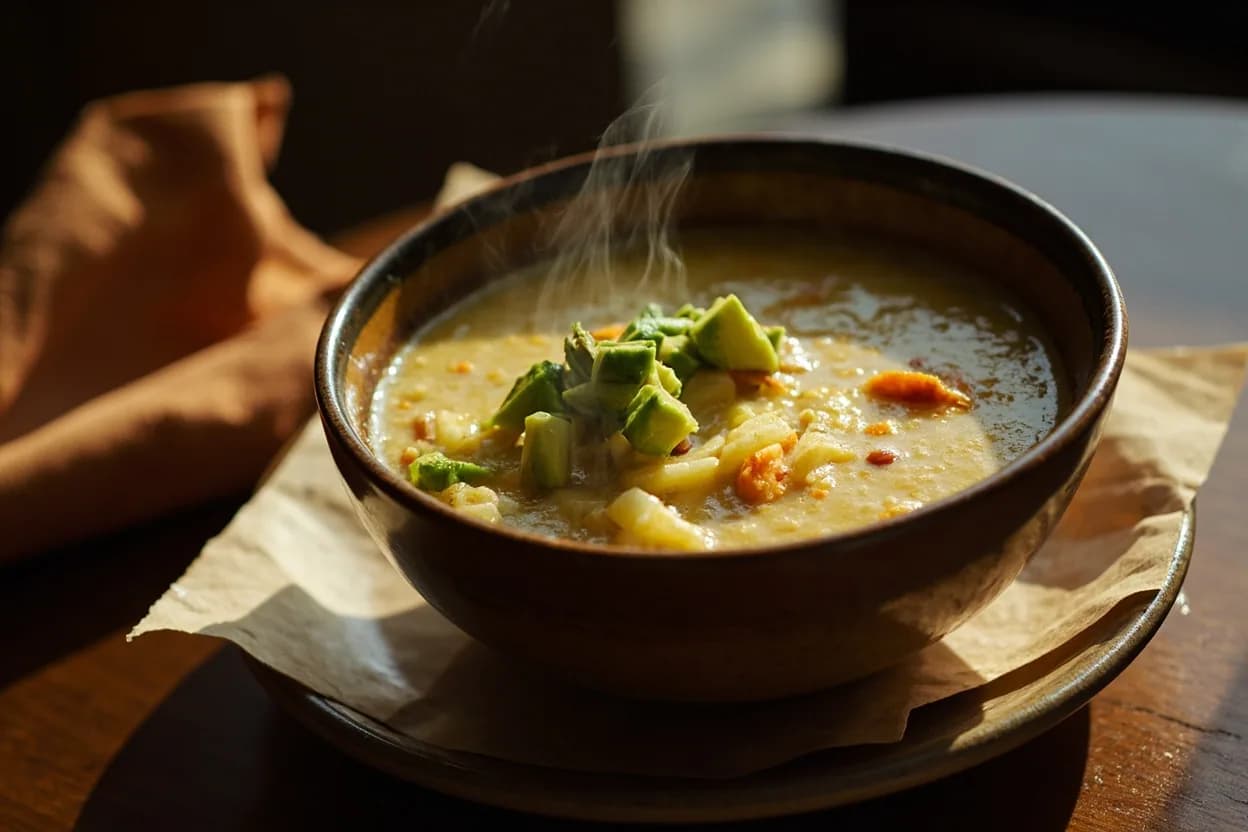
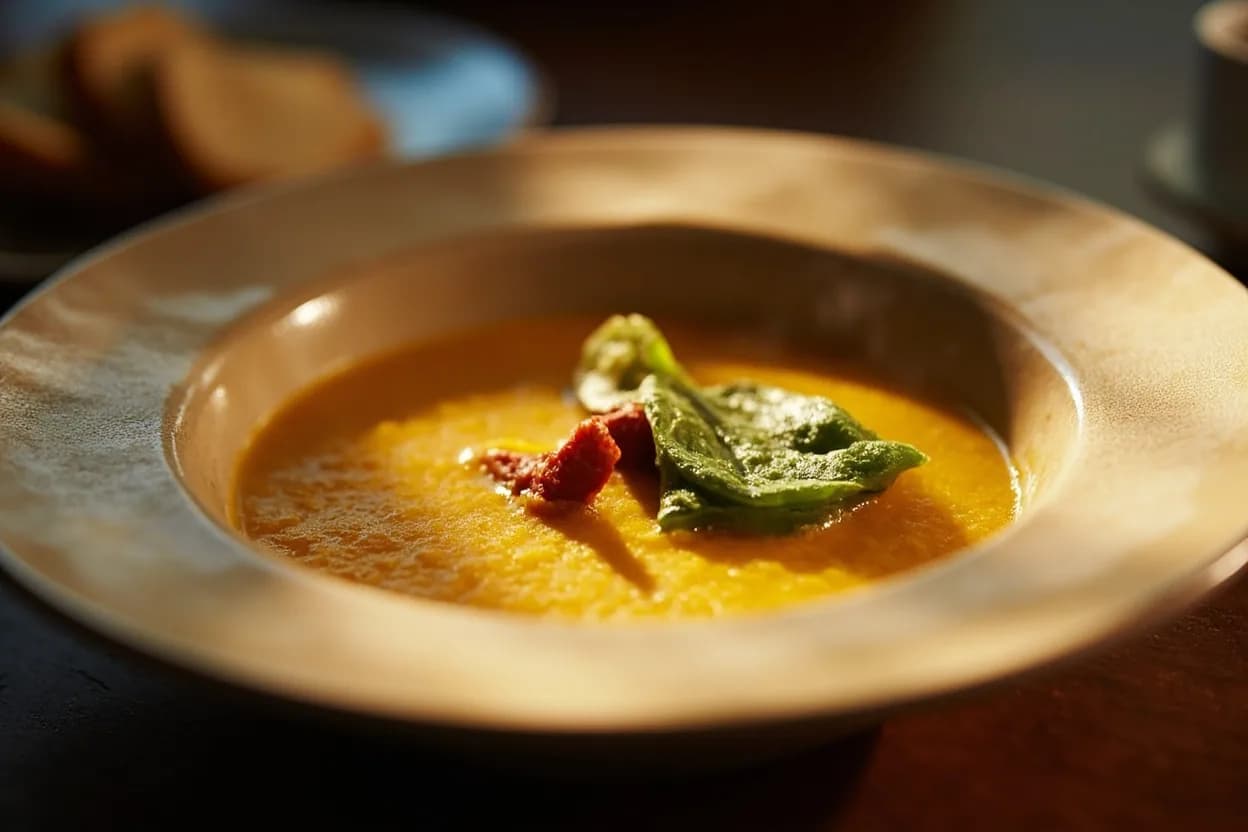
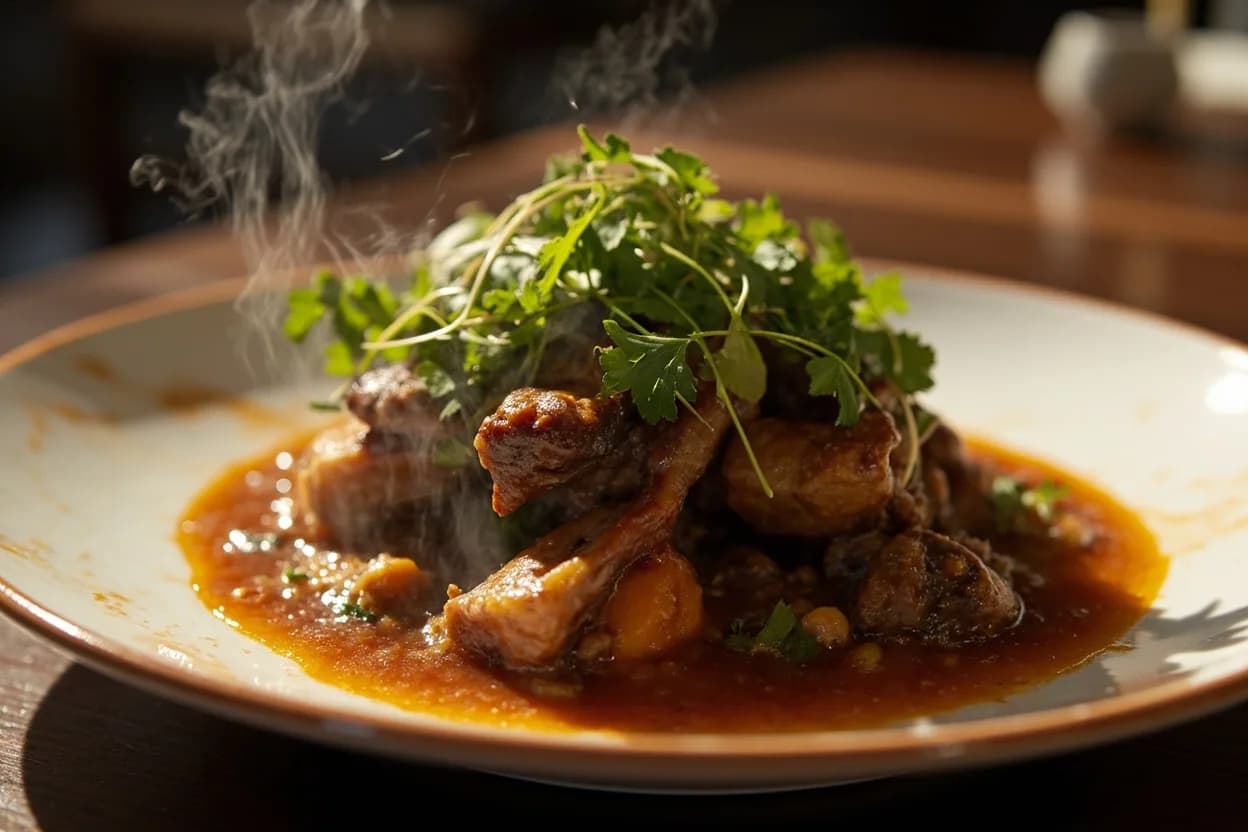
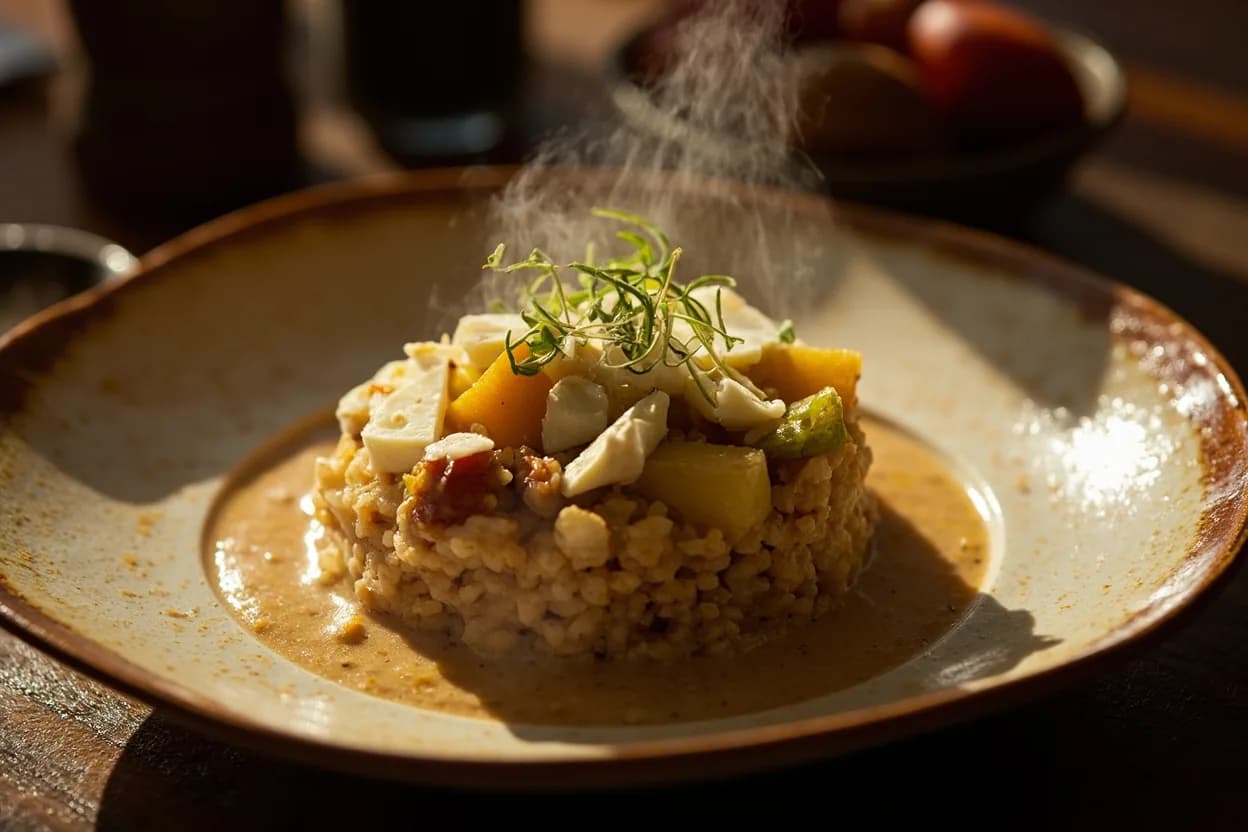
Dishes that rely on it
Related

Sear
Blast the surface hot for a deep-browned, savory crust

Sauté
Cook quickly in a little fat over lively heat, tossing as you go

Stir-Fry
Toss bite-sized pieces over roaring heat for fast, smoky cooking

Pan-Fry
Crisp food in a shallow layer of hot fat, turning once or twice

Deep-Fry
Submerge in hot oil for an all-over crackling crust

Roast
Cook uncovered in dry oven heat for browned edges and tender centers

Bake
Cook with steady, surrounding oven heat — the soul of bread and pastry

Broil
Hit food from directly above with fierce overhead heat