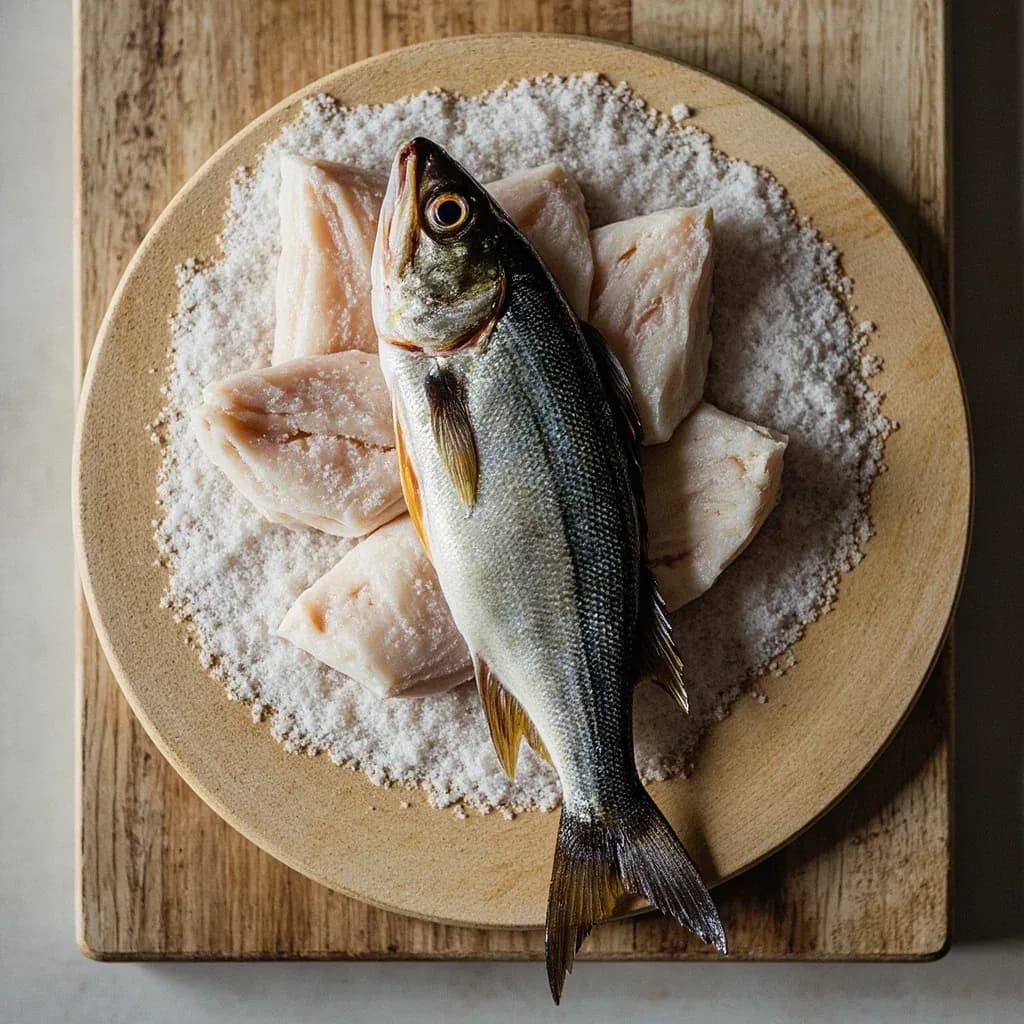
Transform & Preserve
Salt-Curing Fish
Packing fish in salt to draw out moisture and preserve it, as for salt cod and dried fish.
Salt-curing fish layers whole or split fish in heavy salt, which draws out water and creates conditions hostile to spoilage, then the fish is often sun-dried or air-dried to finish. This is how preserved staples like bacalao, dried anchovies, and tamleeh are made, keeping protein edible for months without refrigeration. Salted fish is typically soaked in fresh water before cooking to rehydrate it and rinse away the excess salt.
Salt-curing fish is a dry preservation method built on simple osmosis: salt packed against the flesh draws water out of the cells, and the resulting salt-saturated, low-moisture environment halts the bacteria and enzymes that cause spoilage. It is among the oldest food-preservation techniques known, and the foundation for iconic ingredients from salt cod and bottarga to gravlax and salt-packed anchovies. The same action — drawing water out, denaturing proteins, concentrating flavor — also firms the flesh and gives cured fish its characteristic translucent, almost waxy texture.
The character of the final product depends entirely on two variables: how much salt is used and for how long. A heavy, dry-salt pile left for a week and then air-dried produces salt cod that keeps for months and must be soaked for days before cooking. A light salt-and-sugar rub held for two days yields gravlax, eaten raw within the week. Lean, white-fleshed species — cod, haddock, pollock, hake, ling — are the classic targets because their low fat content resists rancidity; oily fish like salmon, mackerel, and herring cure beautifully but turn quickly once out of the salt. Done well, salt-curing is forgiving: timing, salt percentage, and even contact are what separate a perfectly preserved fish from an over-salted or unevenly cured one.
- Difficulty
- Medium
Types & varieties
Heavy dry-cure followed by air-drying on rocks or racks; cornerstone of Iberian, Italian, Portuguese, Norwegian, and Caribbean cooking
Commercial dry-salt pile cure in which fish are stacked in salt and weighted, often drained and re-salted once, before further drying
Wet cure in a cool salt solution, sometimes with sugar; gentler and faster, used for salmon and trout
Scandinavian cure of salmon with equal parts salt and sugar plus dill and sometimes juniper; cured 48–72 hours and sliced raw
Light salt-sugar cure often followed by cold-smoking; eaten raw or barely cooked
Whole herring packed in salt; basis for rollmops, Bismarck herring, soused herring, and lightly cured matjes
Layered in salt and pressed in tins or barrels; filleted for the Mediterranean condiment, or pressed to make colatura di alici
Salt-cured, pressed, and dried fish roe, traditionally from grey mullet or bluefin tuna; grated or shaved over pasta, clams, or vegetables
Spanish salt-cured tuna loins, air-dried and sliced paper-thin like a cured meat, served with olive oil and almonds
Small oily fish such as anchovies and sardines layered in salt under pressure; long shelf stability from salt and compression
How to do it
- 1
Choose and prepare the fish
Start with very fresh, properly gutted fish. Leave small whole fish such as anchovies and herring intact. For fillets or sides, butterfly thick pieces and score the flesh to the skin in parallel lines so salt reaches the center. Rinse briefly, then pat completely dry — surface water dilutes the salt and slows the cure.
- 2
Make the curing salt
Use coarse non-iodized salt. For full preservation, salt alone is traditional. For salmon-style cures, blend roughly equal parts salt and sugar by volume and add aromatics: dill for gravlax, juniper and bay for northern European salt cod, citrus zest for Mediterranean styles.
- 3
Pack the fish in salt
Line the bottom of a deep glass, ceramic, or stainless pan with a thick layer of salt. Lay fish skin-side down with space between pieces, then bury each layer under more salt until no flesh is exposed. Stack sides alternately skin-up and skin-down so they lie flat. Press the top layer firmly so salt clings to the flesh.
- 4
Weight and cure under refrigeration
Set a board or second pan on top and weight it with a few pounds of cans or a wrapped brick. The fish will quickly release liquid and sit in its own brine. Refrigerate at 34–40°F (1–4°C); do not freeze.
- 5
Time the cure
Thin fillets: 12–24 hours. Sides, butterflied salmon, and small whole fish: 36–72 hours (gravlax is usually pulled at 48–72). Thick whole fish such as cod: 5–7 days, with a re-salting at the midpoint for kench-style cures. The flesh should feel firm and look translucent when cut.
- 6
Rinse, dry, and store — or proceed to air-drying
Brush off the salt crust, rinse briefly under cold water, and pat dry. For table-ready cures such as gravlax, slice thin and serve within a few days. For salt cod, drain and air-dry in a cool, breezy, fly-free place until hard, then store in a cool, dark spot. Before cooking, desalt in repeated changes of cold water for 24–48 hours.
How salt actually preserves fish
Salt works in three overlapping ways. First, it is hygroscopic: applied to the surface, it draws free water out of the cells by osmotic pressure, shrinking the flesh and producing the liquid that soon pools in the pan. Second, that liquid dissolves into a concentrated brine that saturates the muscle, lowering the water activity to a level where spoilage bacteria, molds, and most enzymes cannot function. Third, salt denatures the proteins in the flesh, which is why properly cured fish turns translucent and firm, and why lean white fish can then be air-dried into something shelf-stable for months.
The curing length and salt percentage set the final product. A dry pile at high salt concentration drives water out fast and cures deeply, which is what you need for salt cod. A light salt-and-sugar rub on a salmon side works more gently, leaving the fish moist and silky. Going too short leaves the center under-cured and prone to spoilage; going too long over-salts the flesh and turns it chalky. Temperature matters as well: a cool cure slows bacteria, keeps the fish safe during the long, slow salt penetration, and produces a cleaner flavor.
Choosing the right style for the fish
Match the cure to the species and the dish you have in mind:
- Lean white fish — cod, haddock, pollock, hake — take to heavy dry cures and air-drying. Their low fat keeps them from going rancid during long cures, and the dense flesh stands up to a brine soak before cooking.
- Salmon and trout are best for light, sugar-balanced cures (gravlax, Nova) where the goal is silky, sliceable raw fish. Cures of 36–72 hours are typical.
- Oily fish — mackerel, herring, sardines, anchovies — cure quickly and reward heavy salt packing, but spoil fast once out of cure. Eat them within days, or preserve them further by pressing and air-drying.
- Tuna loins and large fish roe take well to dry cures of several days, followed by air-drying to make mojama and bottarga — cured like a meat or hard cheese, sliced thin and used as a condiment.
Common uses
Tips & pitfalls
- Start with the freshest fish you can find — salt-cure arrests spoilage but does not reverse it.
- Skip iodized table salt; it can grey the flesh and leave a chemical edge. Use coarse kosher or sea salt instead.
- Butterfly or score thick sides and whole fish so salt penetrates evenly to the bone; otherwise the center stays under-cured.
- Weigh the fish down so it sits in the brine it releases; uniform contact equals uniform cure.
- Use only glass, stainless steel, ceramic, or food-grade plastic — aluminum and copper react with salt and can taint the fish.
- For salt cod, desalting is half the dish: 24–48 hours in cold water changed 3–4 times, with thicker pieces demanding the longer soak. A brief finish in milk softens any remaining harshness and firms the flesh.
- Include a small amount of sugar in the salt mix for salmon-style cures; it tames harshness, balances the salt, and is the traditional gravlax ratio.
- Cure length tracks thickness, not just weight — a thick steak needs more time than a flat fillet of equal weight, and a whole fish needs more than a side of the same species.
Good to know
- Mechanism
- Salt draws water out of fish cells by osmosis; the resulting high-salt, low-water environment halts most bacterial and enzymatic spoilage
- Best fish
- Lean, white-fleshed species (cod, haddock, pollock, hake, ling); also salmon, mackerel, herring, trout, and bluefin
- Salt to use
- Coarse non-iodized salt (kosher or sea salt); iodine can discolor flesh and leave a metallic edge
- Salt-to-fish ratio
- Roughly 1:3 to 1:2 by weight for full preservation; lighter and balanced with sugar for table-ready cures like gravlax
- Cure time
- 12–24 hours for thin fillets; 36–72 hours for sides and small whole fish; 5–7 days for thick whole fish
- Ideal temperature
- 34–40°F (1–4°C) throughout the cure; never frozen
- Yield
- Heavy-salt cod loses roughly 60–70% of original weight once dried; gravlax loses about a third
- Desalting salt cod
- 24–48 hours in repeated changes of cold water, sometimes finished with a brief milk soak to soften flavor and firm the flesh
Also called
Salt-Curing Fish · Sun-Drying Fish · Tamleeh · Salt Cod Making
Related

Confit
Cook slowly submerged in fat for silky tenderness and keeping

Cure
Draw out moisture with salt and time to preserve and concentrate

Pickle
Steep in acidic brine for bright, tangy, crunchy preservation

Ferment
Let friendly microbes transform food into tangy, complex flavor

Marinate
Soak in a seasoned mix to flavor and tenderize before cooking

Brine
Soak in salt water so meat stays juicy and seasoned throughout

Dehydrate
Slowly dry out moisture to concentrate flavor and extend shelf life

Cold-Smoke
Perfume cured food with smoke without cooking it through