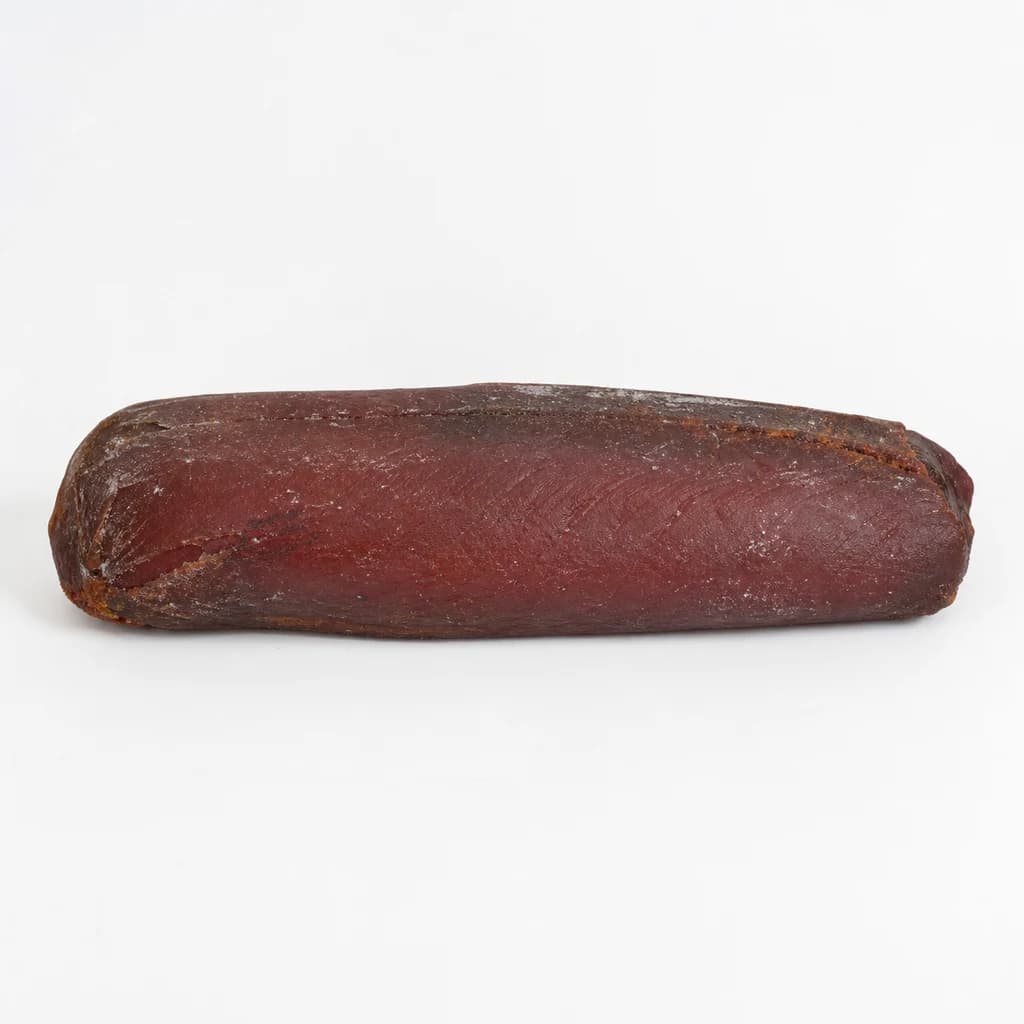
Natural form
Whole mojama loin: dense, dark red salt-cured dried tuna before slicing.
Shows the cured, dried whole loin so readers recognize mojama before it is cut — its compact shape, dark mahogany color, and dry exterior surface are the primary identifiers.
Proteins
Mojama
Spanish salt-cured, air-dried tuna loin sliced wafer-thin and drizzled with olive oil.
Mojama is tuna loin that has been salt-cured and air-dried, an ancient Mediterranean technique from southern Spain. It is sliced very thin and served as a tapa with olive oil and almonds, or shaved over salads. Dense and deep red, it has a concentrated, salty, savory tuna flavor often called the ham of the sea.
Mojama is Spain's most distinguished salt-cured fish, produced exclusively from the loin of bluefin tuna and hung to air-dry in the salt-wind studios of the Bay of Cadiz. Unlike smoked fish or heavily desiccated preparations, mojama retains a firm, almost buttery interior quality—the result of a controlled 3-to-8-week cure that draws moisture from the flesh without stripping its natural oils. The almadraba fishery of the Strait of Gibraltar, dating to Roman times, supplies the tuna; the Atlantic sea breeze called brisa marina provides the curing conditions unique to this corner of Andalusia. A properly cured mojama de la Bahía de Cádiz should display a deep mahogany color, a faintly glossy surface, and an aroma of concentrated savory intensity without any trace of ammonia or staleness. When sliced at the correct thickness—1mm or less—it should nearly dissolve on the tongue, delivering an almost pure expression of umami and sea salt. This is not a pantry staple to be used in bulk; it is a precision ingredient deployed in small amounts where its intensity can elevate simple preparations. The product holds EU Protected Designation of Origin status, making authentic mojama a clearly identifiable regional specialty distinct from imitations or similar dried tuna products found elsewhere in the Mediterranean or Asia.
- Measured in
- g
- Storage
- Fridge
Allergens
Types & varieties
The classic preparation from bluefin tuna loin. Most prized and traditional; look for PDO seal on imported product.
Made from little mackerel (melva), a more economical substitute from southwestern Spain. Slightly milder flavor, still well-cured.
Loins hung in open-air drying barns exposed to Atlantic brisa marina. Longer cure yields more complex, layered flavor.
Loins pressed during salting to expel liquids faster. Shorter process but still excellent quality; common in commercial production.
Common uses
Tips & pitfalls
- Slice as thin as humanly possible—a long slicing knife, mandoline, or deli slicer set to 1mm or less is essential; anything thicker loses the essential melt-in-mouth quality that defines proper mojama
- Let the whole loin hang at room temperature for 30–60 minutes before slicing; this allows the surface to soften slightly and the aromatic compounds to open up before serving
- Use the best olive oil available; a fruity, peppery Spanish EVOO is not optional—it is the essential partner that unifies the dish
- The salt content is extremely high; always taste before adding any additional salt to a preparation featuring mojama
- Authentic mojama from Cadiz carries a PDO seal; Spanish-imported mojama from other regions may be similar but is not the true product—verify the source if possible
- Store wrapped in cloth or breathable paper in the refrigerator, never sealed in plastic which causes condensation; properly stored, it keeps for months
- Common mistake: buying pre-sliced packages when whole loin is available—slicing thin to order makes a substantial difference in both texture and aroma release
- If the exterior appears overly dry or dusty, wipe gently with a damp cloth before slicing rather than soaking or rinsing
- Do not cook mojama extensively; its cured intensity and delicate texture mean it should only be added to hot dishes in the final moments or served at room temperature
Nutrition
Nutrition
No USDA FoodData Central match for Mojama yet. We surface a per-100 g profile once a generic whole-food entry is matched and verified.
In the shops
Matched grocery products
No matched grocery products for Mojama yet.
Good to know
- Origin
- Bay of Cadiz, Andalusia, Spain—specifically El Puerto de Santa María, Sanlúcar de Barrameda, and Jerez de la Frontera
- Main Ingredient
- Bluefin tuna (atún rojo) loin, salt-cured and air-dried 3–8 weeks
- PDO Status
- Mojama de la Bahía de Cádiz holds EU protected designation of origin
- Color
- Mahogany red to deep reddish-brown when fully cured; surface should be slightly glossy
- Texture
- Firm and dense when whole; sliced paper-thin (1mm or less) for serving, nearly dissolving on the tongue
- Flavor Profile
- Intensely savory, salty, umami-rich; concentrated tuna essence with a clean, briny finish
- Season
- Available year-round; produced during spring almadraba tuna fishing season (April–June)
- Shelf Life
- Months wrapped in cloth or paper in the refrigerator; improve slightly by hanging briefly before serving
Substitutes
- Spanish dried cod (bacalao seco) — Not a tuna substitute but offers similar intensely savory cured-fish character for tapas service. Significantly saltier; requires soaking in several changes of water before use.
- Italian bresaola — Cured beef, not fish, but provides the same thin-sliced cured protein concept and elegant appearance on a plate. Entirely different flavor but useful as a visual and textural reference.
- Korean myeolchi jeot (dried anchovy) — Different fish, much smaller, but offers intense umami-saltiness when used as a garnish in small quantities. Not a direct substitute for presentation but useful in cooking applications.
- Fresh high-quality tuna loin, briefly seared — Respects the tuna identity in composed dishes but produces a completely different texture and flavor. Not a substitute for the cured character; use when you want tuna without the salt intensity.
Pairs with
Also called
Salt-Cured Tuna · Dried Tuna Loin
Related
Egg
The kitchen's everything ingredient — bind, leaven, enrich, or fry
Chicken Breast
Lean, quick-cooking white meat for everyday dinners

Ground Beef
Versatile minced beef for burgers, ragù, tacos, and meatballs
Pork Loin
Lean, tender roasting cut that stays juicy with care
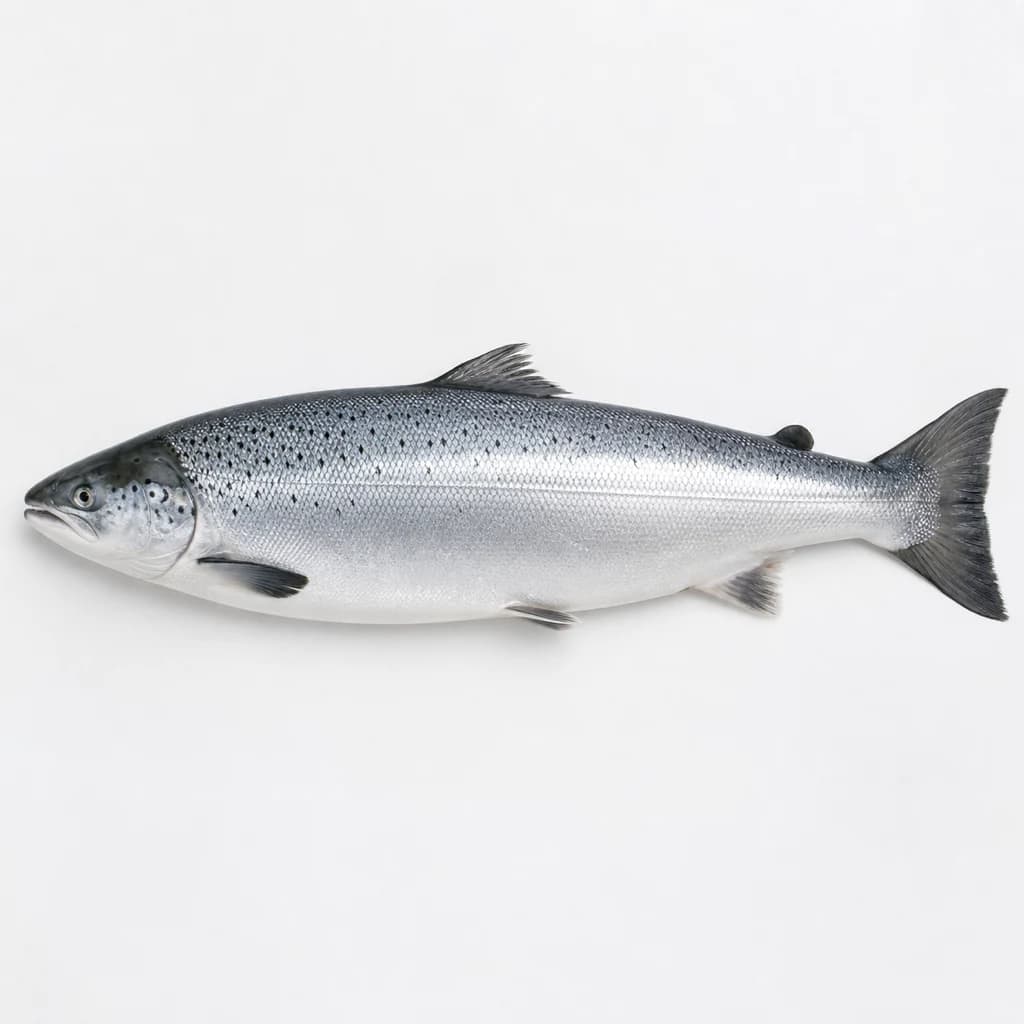
Salmon
Rich, rosy fish that roasts, grills, or cures beautifully

Egg White
Pure protein that whips to airy peaks for meringue and more
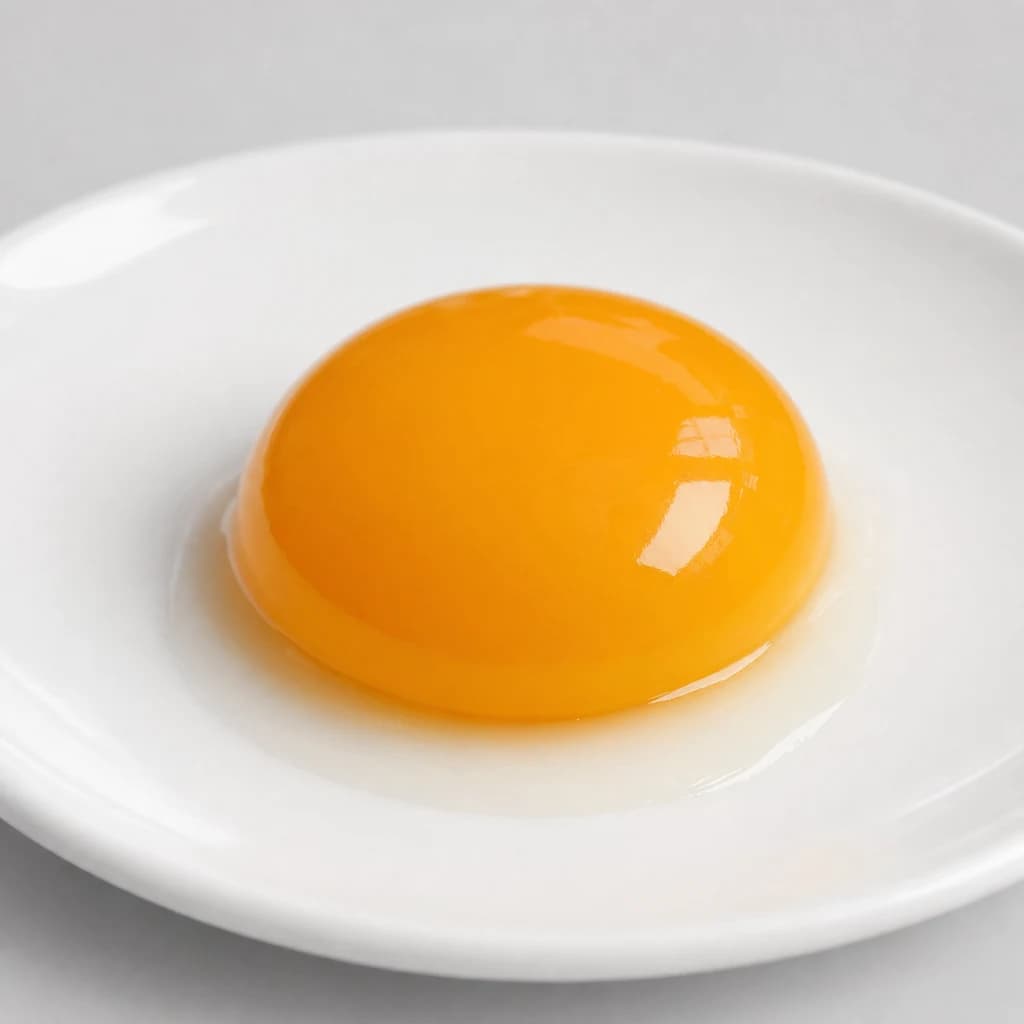
Egg Yolk
Rich, golden yolk for custards, mayonnaise, and pasta

Quail Egg
Tiny, speckled eggs for garnishing and elegant bites