Transform & Preserve
Cold Smoking
Smoking food at low temperature to flavor and preserve it without cooking it.
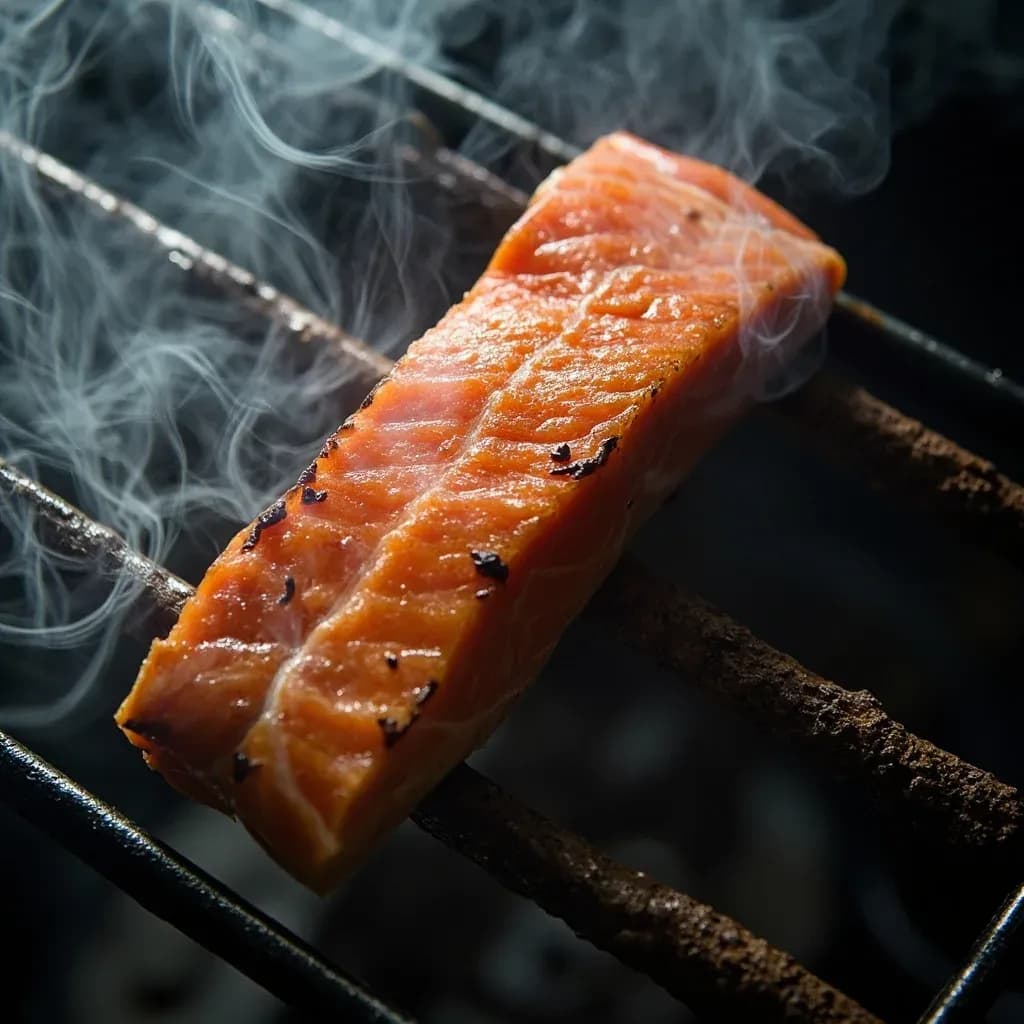
Cold smoking exposes food to smoke at temperatures low enough (typically under 30C) that it flavors and preserves without actually cooking the food. It is used for salmon, cheese, and bacon, usually after a cure that draws out moisture and inhibits bacteria. Because it does not cook, cold smoking depends on prior salting or curing for food safety.
Cold smoking is the slow, low-temperature deposition of wood smoke onto food that has already been preserved by other means. The chamber is held strictly below 25–30 °C (77–86 °F) — well under the temperatures that would set proteins or render fat — so the food never actually cooks. What changes is the surface: smoke phenols and organic acids lay down a thin, flavored, mildly antimicrobial skin, and the food picks up aroma and color without losing its raw, silky, or firm character. This is what makes a slice of smoked salmon translucent and velvety, a wheel of gouda golden and earthy, a country ham deep-red and complex rather than simply 'cooked'.
The defining idea behind cold smoking is that cure and smoke are doing two different jobs, and you have to plan for both. Salt (often with curing salts containing nitrite) draws out moisture, lowers water activity, and inhibits the bacteria that thrive in cold, damp, anaerobic conditions. Smoke contributes flavor, some surface antioxidant effect, and a modest antimicrobial boost — but it is not, on its own, a preservation method. Treat the cure as the safety net and the smoke as the seasoning, and a long, gentle smoke session becomes a way to add depth to food that is already shelf-stable or refrigerated-safe.
Because the temperatures are low and the times are long, cold smoking rewards patience and setup more than skill at the grill. A dedicated smoke chamber, a remote heat source, good ventilation, and reliable humidity are the real tools of the craft. In exchange you get flavors — beech on salmon, apple on cheese, oak and hickory on ham — that simply cannot be replicated any other way.
- Difficulty
- Hard
Types & varieties
Tall stone or log structure with a separate firebox at the base; smoke rises through a duct, regulated by a hatch or 'swan neck' damper.
Small enclosed chamber connected to an external smoke generator; the standard modern home setup.
Devices such as ProQ, Bradley, or Smokehouse Products that meter sawdust pucks into a cabinet at ambient temperature.
Curing/drying in one space, then a hose connection to a remote smoke source for the smoking pass.
Small tube or cartridge burned outside the food area, venting into a box or bag — ideal for cheese, butter, salt, or single-batch experiments.
How to do it
- 1
Select and prepare the food
Choose items suited to cold smoke: previously cured meats, dry-salted fish, hard or semi-hard cheese, butter, salt, or nuts. Raw uncured meat, poultry, eggs, or low-acid vegetables are not safe to cold smoke on their own.
- 2
Cure or salt the food
Apply the appropriate dry cure or brine for the item — typically 24–72 hours of dry-salt cure for salmon, several days to weeks for whole hams. Use measured salt, and for meats include a curing salt containing sodium nitrite or nitrate (such as Prague powder #2 for long smokes) according to a tested recipe. Rinse and pat dry after curing.
- 3
Form a pellicle
Rest the cured food uncovered on a wire rack in a refrigerator or cool, breezy room (4–13 °C) for 12–24 hours, until the surface is dry and slightly tacky. The pellicle lets smoke compounds deposit evenly and prevents a raw, washed-out appearance.
- 4
Set up the cold smoker
Place the food in a smoke chamber that is physically separate from the heat source. Keep the chamber clean, well-ventilated, and shaded from direct sun so the internal temperature stays below 25–30 °C. Hang fish on dowels, lay cheese on racks, or suspend hams from hooks with space between every piece.
- 5
Generate cool hardwood smoke
Light a small quantity of untreated hardwood sawdust, chips, or splits in a remote firebox or smoke generator. Aim for a thin, bluish, continuous stream — not heavy white billows. Oak, beech, and alder are safe defaults; fruitwoods (apple, cherry) are gentler for cheese and fish.
- 6
Smoke at low temperature
Smoke continuously or in short sessions with rest periods, watching that temperatures stay below 30 °C throughout. Typical times: 8–24 hours for salmon, 2–6 hours for cheese and butter, 12–48 hours for bacon, and several days to weeks for whole hams.
- 7
Rest and store
Let the food rest in the chamber or a cool area for a few hours so flavors mellow. Wrap cheese in parchment and refrigerate for a day or two before eating; vacuum-seal fish and meats, then refrigerate or freeze. Cold-smoked products are ready-to-eat only when fully cured — cook them afterward only if the recipe calls for it.
The cure-and-smoke relationship
Cold smoking fails most often because cooks treat smoke as a preservation step. It is not. Salt, time, and drying are doing the preservation; smoke is doing the flavor. A useful mental model: at the end of the process, the food should be safe to eat with or without the smoke on it, and the smoke is there to make it delicious. If a recipe skips the curing stage for a low-acid food such as fish, bacon, or ham, treat it as unsafe regardless of how many hours it spends in the smoke. Curing salts (such as Prague powder #1 or #2, which contain measured sodium nitrite or nitrate) are not optional for low-acid meats that will spend more than a few hours in the danger zone.
- Salt lowers water activity and stops the bacteria that thrive in cold, damp, oxygen-poor conditions.
- Nitrite/nitrate curing salts specifically suppress Clostridium botulinum, the principal cold-smoke hazard.
- A pellicle — the dry, tacky skin that forms after air-drying — is what lets smoke deposit evenly; wet surfaces shed smoke and look washed-out.
- Two classic failure modes: under-curing (unsafe) and over-smoking (bitter, sooty). Keeping records by batch makes both easier to avoid.
Choosing and burning wood
Smoke flavor is mostly the work of phenolic compounds, carbonyls, and organic acids that vary by wood species. Dense hardwoods burn long and clean; fruitwoods burn sweet and light; resinous softwoods release terpenes that taste harsh and can carry unwanted compounds. The visible character of the smoke matters as much as the species: thin, almost-transparent blue smoke deposits flavor gently, while thick white billows lay down bitter creosote and visible soot. If the chamber looks foggy, the damper is wrong, or the fuel is too wet, let the fire settle before exposing the food.
- Safe defaults: oak for general purpose, beech or alder for fish, apple or cherry for cheese and butter, hickory and mulberry for red meats.
- Keep the fire starved of oxygen — smoldering, not flaming — and let the smoke cool before it reaches the food.
- Season wood before use; green wood produces acrid smoke and inconsistent heat.
- Never use construction lumber, pallets, painted wood, or anything treated with preservatives.
Common uses
Tips & pitfalls
- Always cure with measured salt and, for low-acid meats, a curing salt containing nitrite or nitrate — smoke alone does not make food safe.
- Form a tacky pellicle by air-drying cured food in a cool, breezy place; smoke will not adhere to wet surfaces and the result will look raw and washed-out.
- Keep the chamber under 25 °C if you can; once you cross 30 °C you are hot-smoking and delicate fish will lose its silky texture.
- Burn clean, thin blue smoke — thick white smoke deposits bitter creosote and visible soot that no amount of resting will fix.
- Use only untreated hardwoods; a single splinter of pine, spruce, or treated lumber will taint an entire batch.
- Vent smoke slowly: rushing it through the chamber gives harsh, uneven flavor and raises the risk of creosote deposits.
- Smoke overnight or at dawn in summer, or run a cool basement or shaded outbuilding setup, so ambient heat does not push the chamber into the danger zone.
- Wrap food loosely in muslin or hang it on rods so every surface is exposed — never stack pieces, and label every batch with date, wood, and duration for future reference.
Good to know
- Temperature range
- Below 25–30 °C (77–86 °F); food must never reach protein coagulation temperatures.
- Primary purpose
- Impart smoke flavor and add surface preservation; the food is not cooked.
- Required pre-treatment
- Food must be salted or cured (and usually air-dried to a pellicle) before smoking.
- Typical duration
- Hours to several days for fish, cheese, butter, nuts, and bacon; weeks to months for whole hams.
- Smoke source
- Hardwood smoldering remotely, or a dedicated smoke generator feeding a separate chamber.
- Suitable woods
- Hardwoods only — oak, beech, alder, hickory, apple, cherry, maple, mulberry; never resinous softwoods.
- Woods to avoid
- Pine, spruce, fir, construction cedar, and any painted, glued, or treated wood.
- Food-safety risk
- Botulism (Clostridium botulinum) is the chief hazard in low-acid, low-salt products; measured salt and curing salts are essential.
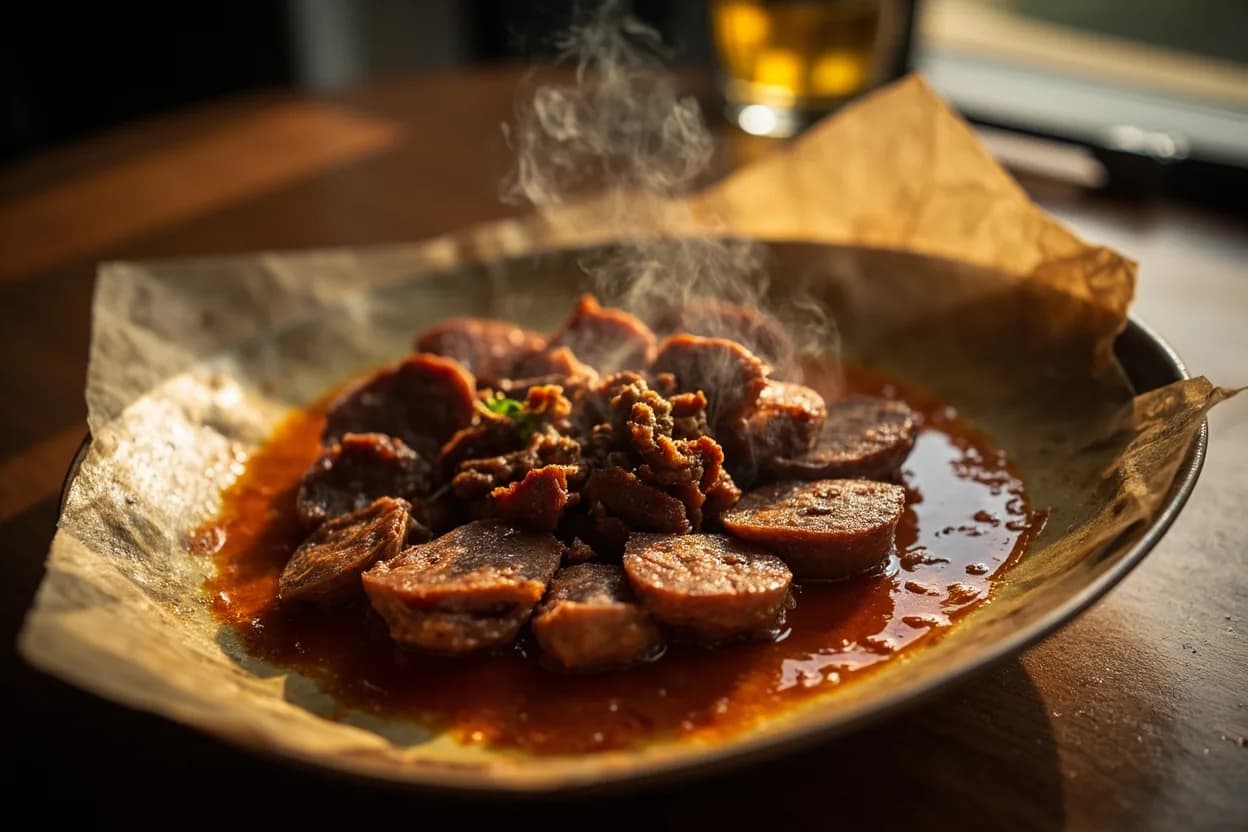
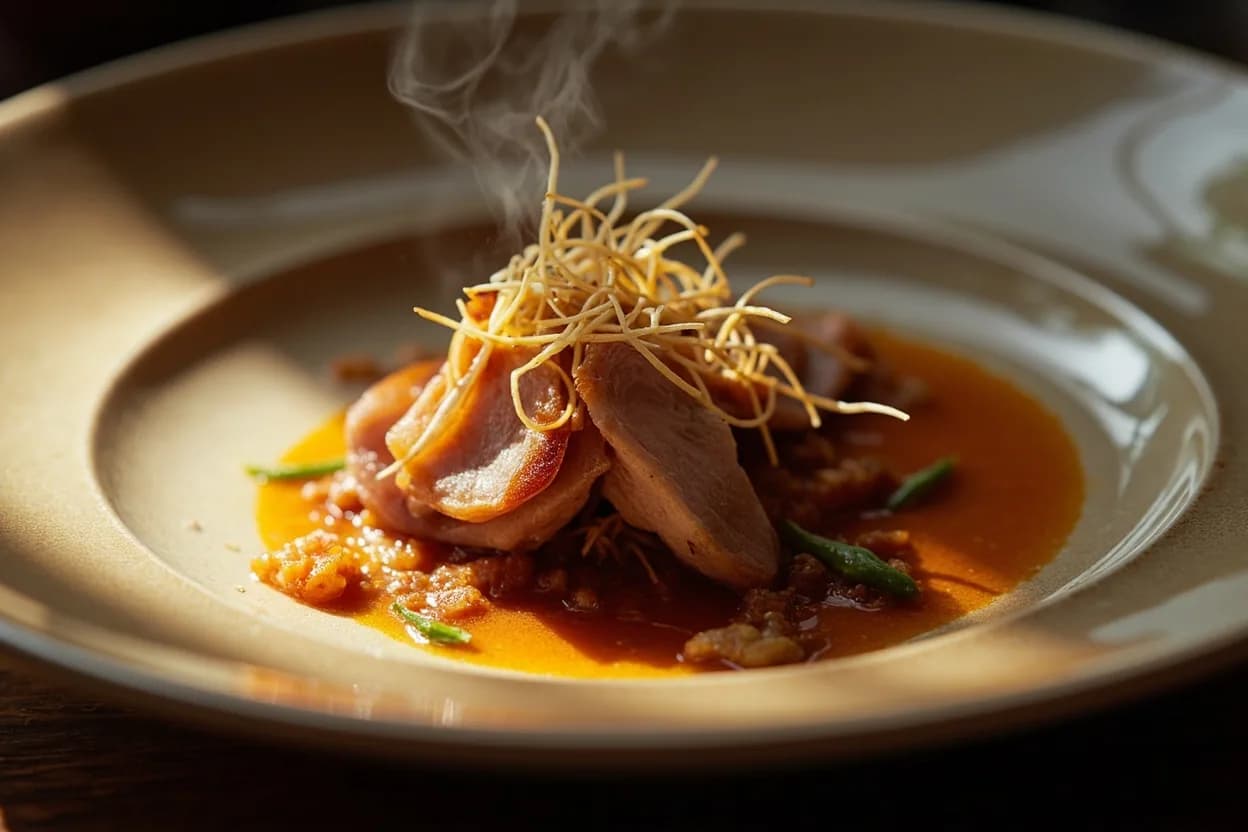
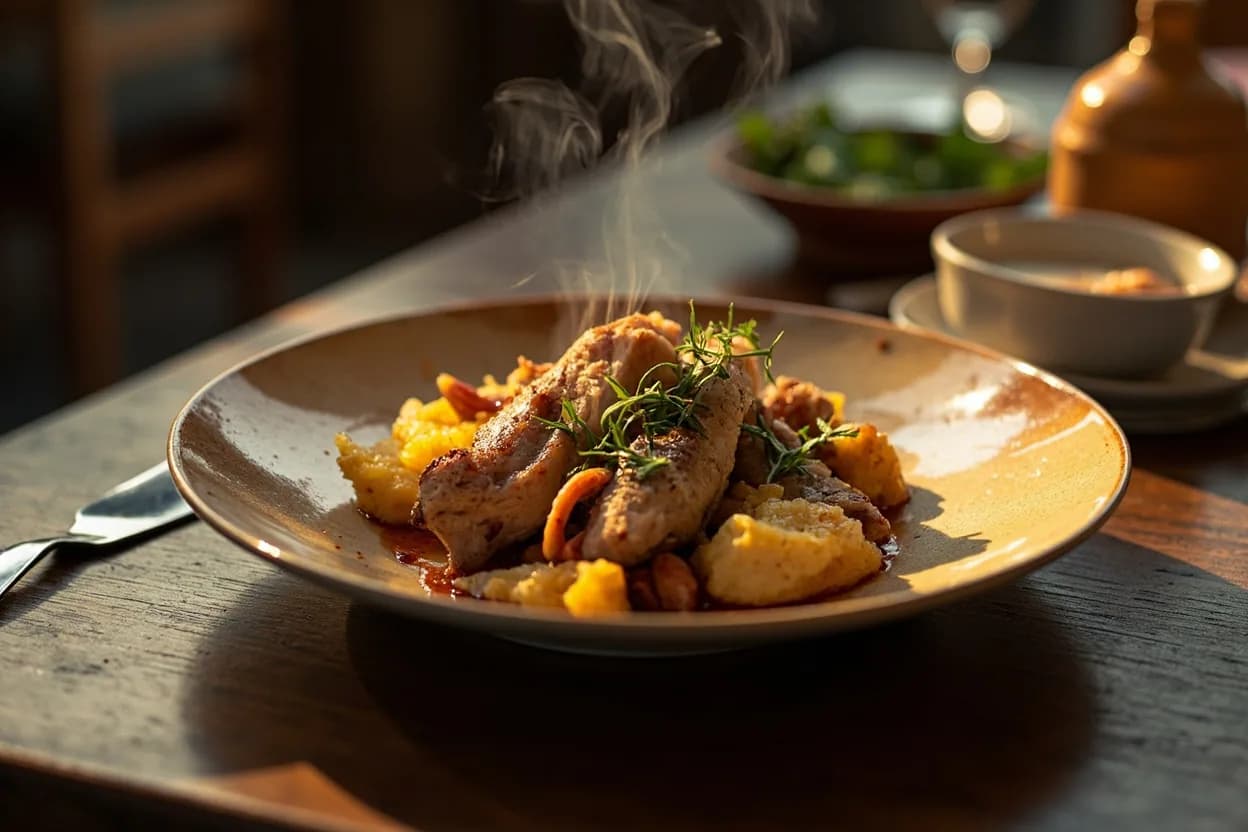
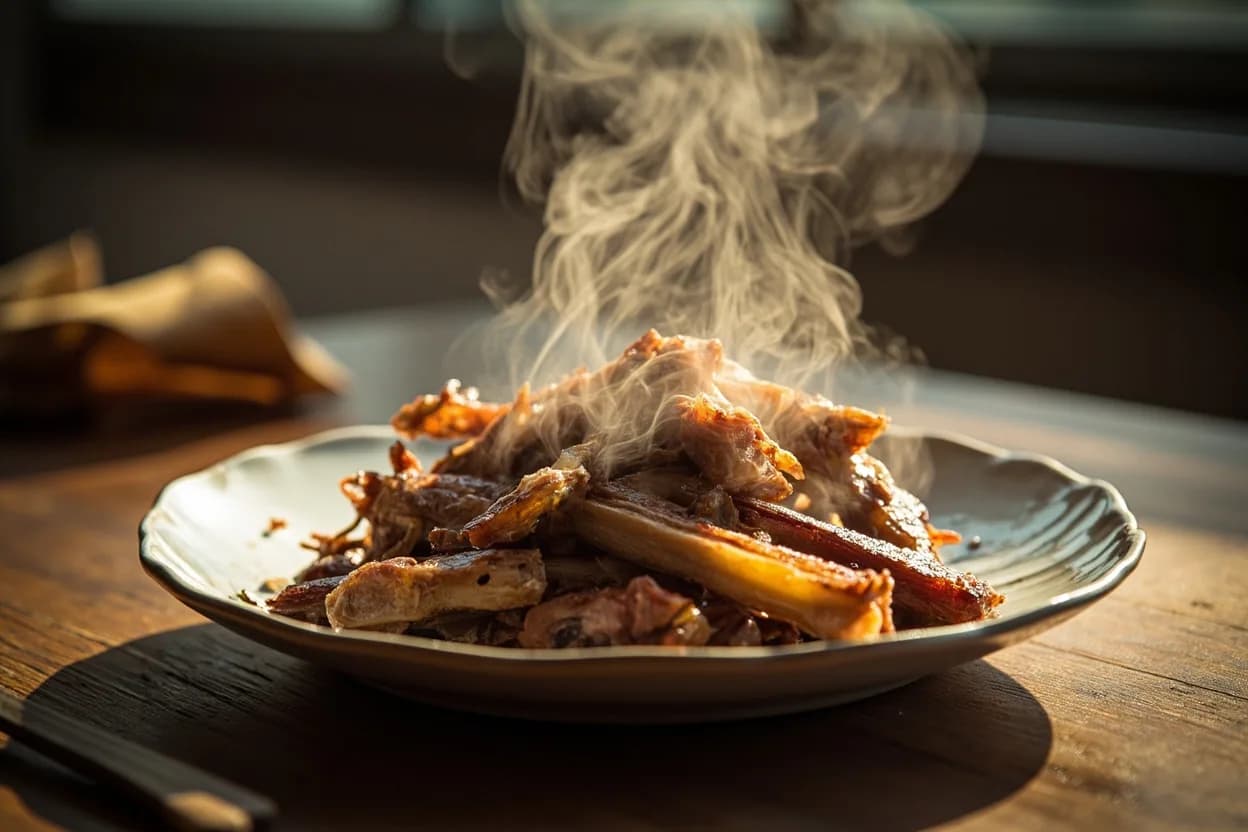
Dishes that rely on it
Related

Confit
Cook slowly submerged in fat for silky tenderness and keeping

Cure
Draw out moisture with salt and time to preserve and concentrate

Pickle
Steep in acidic brine for bright, tangy, crunchy preservation

Ferment
Let friendly microbes transform food into tangy, complex flavor

Marinate
Soak in a seasoned mix to flavor and tenderize before cooking

Brine
Soak in salt water so meat stays juicy and seasoned throughout

Dehydrate
Slowly dry out moisture to concentrate flavor and extend shelf life

Cold-Smoke
Perfume cured food with smoke without cooking it through