Heat & Fire
Tempering / Blooming Spices
Frying whole or ground spices in hot oil or ghee to release their aroma and flavor.
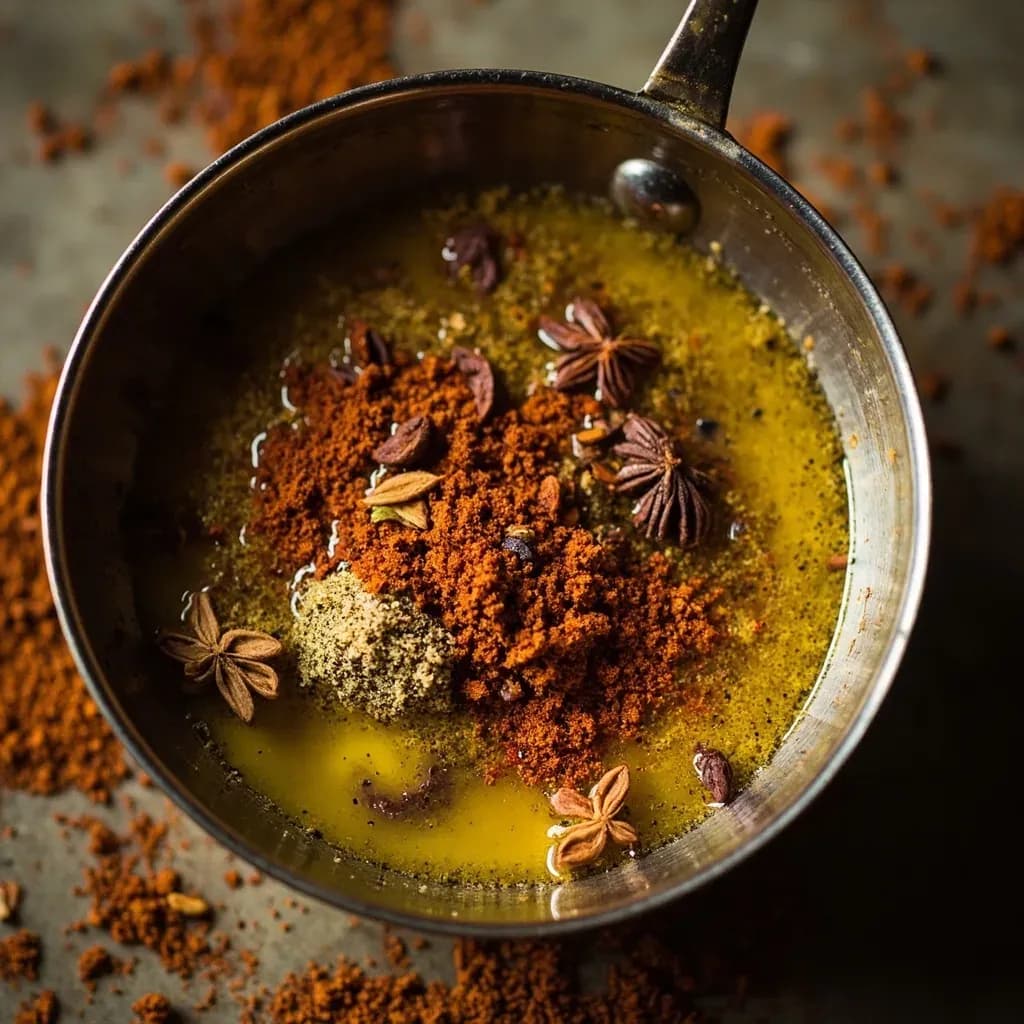
Tempering, known as tadka, tarka, or chaunk, fries spices and aromatics in hot fat to bloom their fat-soluble flavors, then pours the sizzling mixture over a dish to finish it. It is a cornerstone of South Asian cooking, transforming dals and curries with a final burst of aroma. Blooming can also start a dish, infusing the cooking oil before other ingredients go in.
Tempering, also called blooming, is the practice of frying whole or ground spices in hot fat — oil, ghee, clarified butter, or coconut oil — for a few seconds to about a minute before the fat is used to cook, finish, or dress a dish. The technique looks like a small, almost ceremonial pour of crackling oil and darkened seeds, but it is doing serious chemical work: many of the most prized flavor molecules in spices (cuminaldehyde in cumin, allyl isothiocyanate in mustard, ar-turmerone in turmeric, eugenol in cloves, the volatile oils in curry leaves) are fat-soluble and only fully released at temperatures well above boiling water. Hot oil ruptures the spice cells, vaporizes the lighter aromatic fractions, and dissolves the heavier oil-soluble compounds into a medium that can carry them through the rest of the dish.
The same logic underlies a French chef blooming paprika in butter for a roux, an Ethiopian cook frying berbere in niter kibbeh, a Cajun cook blooming paprika and cayenne into the roux of a gumbo, and a Bengali cook finishing dal with a sizzling tarka of nigella and dried chili. What changes between these traditions is the fat, the spice mix, and the moment in the cooking process when the tempering happens. What does not change is the principle: a small quantity of spices, cooked briefly in fat, produces a depth of aroma that no amount of simmering in water can match. Done well, the tempering is heard before it is tasted — the audible crackle as the hot oil hits the food is the volatile aromatics reaching the nose at their peak.
- Difficulty
- Easy
Types & varieties
A fiery final pour of hot ghee or oil with cumin, mustard seeds, hing, dried red chili, and curry leaves, often finished over dal, kadhi, or sabzi.
A gentler, slightly sweet tempering in ghee, with cumin, mustard seeds, fennel, and sometimes a pinch of sugar; the foundation of many Gujarati dal preparations.
Built on sesame or peanut oil with mustard seeds, urad dal, chana dal, curry leaves, and dried red chilies; the opening move for sambar, rasam, and many Andhra curries.
A milder, aromatic finish, often blooming saffron in butter or oil as a final flourish for rice dishes like khoresh.
Toasting and frying a berbere spice blend in niter kibbeh to build the deep red, smoky base of wats and stews.
Blooming ground spices such as paprika, smoked paprika, or cayenne in oil, butter, or roux as the flavor base for gumbos, étouffées, and chilis.
How to do it
- 1
Select and measure the spices
Decide whether you are using whole seeds, ground spices, or a mix. Whole seeds (mustard, cumin, fennel, fenugreek, nigella, dried red chilies, curry leaves) need longer; ground spices (turmeric, Kashmiri chili, coriander, paprika) need only seconds. Measure everything before heating, because the technique moves faster than you can react.
- 2
Heat the fat to the working temperature
Add 2 to 4 tablespoons of ghee, neutral oil, mustard oil, or coconut oil to a small heavy skillet over medium heat. Wait until the oil shimmers and a single test seed sizzles on contact. The fat should be hot but not smoking — roughly 150 to 180°C. Smoking oil has gone past the point where ground spices will scorch in seconds.
- 3
Add the hard whole spices first
Drop in mustard seeds, cumin seeds, or any other dense whole spice. Wait for the mustard seeds to pop and stop crackling, or for the cumin to darken a shade and smell nutty — usually 20 to 40 seconds. If the seeds blacken or the pan smells sharp, the oil is too hot; lower the flame and start over.
- 4
Add softer whole seeds and aromatics
Follow with fenugreek, nigella, fennel, dried red chilies, curry leaves, and minced garlic or ginger if using. These need only 5 to 15 seconds: the curry leaves should crisp and splatter, the garlic should turn pale gold, not brown. Dried red chilies should deepen in color, not char.
- 5
Bloom the ground spices
Pull the pan off the heat, or drop to the lowest flame, and sprinkle in ground turmeric, chili, coriander, or paprika. Stir constantly for 10 to 20 seconds. The moment they smell toasted and the oil turns a deep, even color, stop — ground spices scorch in a heartbeat and become bitter.
- 6
Pour or stir in immediately
Tip the hot tempering directly over the finished dish so it crackles on contact, or scrape it into a pot of dal, soup, or curry off the heat. Serve at once so the volatile aromatics reach the nose while still warm. A tempering that sits more than a minute loses most of what makes it special.
Why hot fat unlocks flavor
Water-based cooking extracts the water-soluble fraction of a spice — the sugars, the bitter glucosinolates, the pigments — and leaves most of the volatile oils behind. Hot oil extracts the rest. Cumin's warm, almost green aroma comes from cuminaldehyde and other aldehydes that are insoluble in water but dissolve readily in fat at frying temperatures. Mustard seed's sharp bite is allyl isothiocyanate, formed when the seed is crushed and an enzyme meets water; in oil it is freed without dilution. Turmeric's earthy depth lives in ar-turmerone and the related sesquiterpenes, which need both heat and fat to migrate out of the rhizome's fibrous structure. Curry leaves release a citrusy, grassy oil only when their cell walls are ruptured by a sizzle. Tempering is, in effect, a one-step infusion: the spice gives up its fat-soluble essence, and the fat carries that essence into every grain of rice or pulse of dal it meets.
- Fat-soluble compounds: cuminaldehyde (cumin), allyl isothiocyanate (mustard), ar-turmerone (turmeric), eugenol (cloves), cinnamaldehyde (cinnamon), piperine (black pepper, only partially).
- Volatile aromatics evaporate above roughly 100°C; hot oil vaporizes them quickly, which is why a tempering should be poured while still crackling.
- Pigments (curcumin, paprika carotenoids) dissolve into fat to give the characteristic deep yellow or red color of a finished tempering.
- Wet spices (ginger-garlic paste, wet masalas) splatter violently in hot oil — always pat them dry or bloom them with care.
When to temper in the cooking process
Indian and Ethiopian cooking uses the tempering at three distinct moments, and the moment changes what the tempering does. A base tempering goes into hot oil at the start of a dish and forms its aromatic spine; a middle tempering revives a stew or dal that has been simmering too long and gone flat; a finishing tempering is poured sizzling over the plated or pot-resting dish and delivers aroma directly to the nose. Most everyday home cooking uses a base or middle tempering; the finishing tempering is reserved for dals, kadhi, rasam, and upma where the audible sizzle is part of the eating.
- Base: South Indian sambar, North Indian curries, Ethiopian wats — the tempering goes in before the main ingredients.
- Middle: reviving a dal or curry that has lost its punch after long simmering — usually a fresh small tadka stirred in off the heat.
- Finishing: dal tadka, kadhi, raita dressing, flavored oil for chaat, butter-tarka for biryani rice — pour and serve at once.
Common uses
Tips & pitfalls
- Heat the fat until a single mustard seed or cumin seed tossed in sizzles immediately — that is your working temperature. Smoking oil is already too hot for ground spices.
- Add spices in order of density and required cooking time: hard whole seeds first (mustard, cumin), then softer seeds and aromatics (fennel, fenugreek, curry leaves, garlic), and ground spices last.
- Have every spice measured and at hand before the oil goes on. The entire process is over in under a minute, and you cannot pause once the mustard seeds start popping.
- Use a small pan with a long handle so you can pour the sizzle directly from pan to dish without burning yourself — this is exactly what a traditional tadka ladle (karchhi) is shaped for.
- Always pour the tempering onto a dish (or stir it into a pot off the heat) while it is still crackling. The sizzle is what releases the volatile aromatics into the food; a silent tempering has already gone flat.
- Burnt cumin is bitter and acrid. If the pan smells sharp, the seeds have turned black, or the oil is smoking, discard the fat, wipe the pan, and start over — there is no rescuing a scorched tempering.
- Ground turmeric, Kashmiri chili, and paprika scorch in 10 to 15 seconds. Pull the pan off the flame and swirl, or add a splash of liquid (tomato, yogurt, broth) to stop the cooking the instant you smell the toast.
- A pinch of asafoetida (hing) bloomed in the first 5 seconds of the tempering is the classic Indian trick to deepen umami, round out bitter notes, and aid the digestion of legumes.
Good to know
- Also known as
- Tadka, chaunk (chhonk), tarka, vaghaar, vaghar, talimpu, popu, ogaru, or baghaar
- Primary region
- Indian subcontinent; parallel techniques in Ethiopian, Cajun, and Middle Eastern cooking
- Etymology
- From the Sanskrit root for 'heating' or 'tempering,' referring to the hot-oil pour
- Fat medium
- Neutral vegetable oil, ghee, mustard oil, coconut oil, sesame oil, or niter kibbeh
- Working oil temperature
- Roughly 150–180°C / 300–350°F — hot enough to sizzle a test seed on contact but not smoking
- Typical duration
- 10 seconds to 1 minute total; ground spices need only 10–30 seconds before they scorch
- Equipment
- A small heavy skillet, a tadka ladle (karchhi), or a long-handled tempering spoon
- Why it works
- Releases fat-soluble and volatile aroma compounds (turmerones, cuminaldehyde, allyl isothiocyanate, eugenol) that water-based cooking cannot extract
Also called
Tadka · Tarka · Baghaar · Chaunk · Blooming Spices · Tempering Spices
Dishes that rely on it
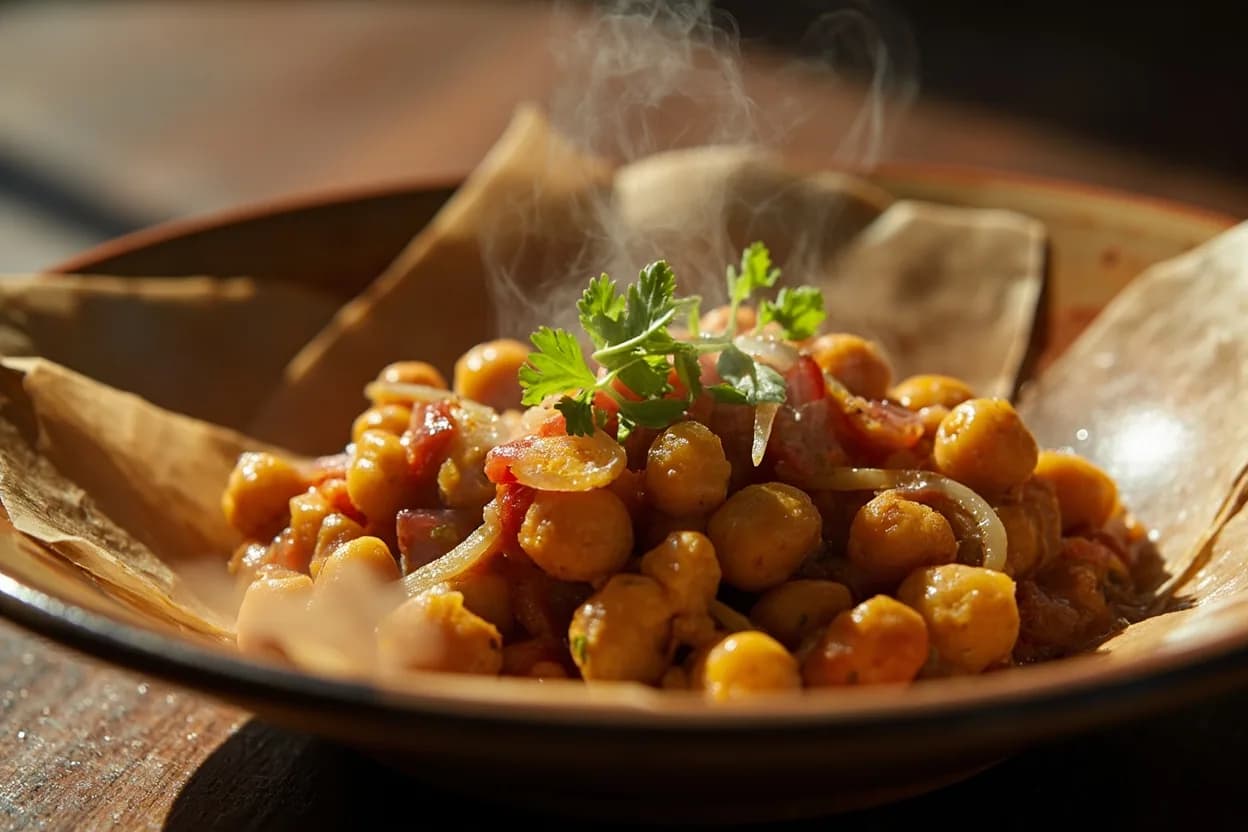
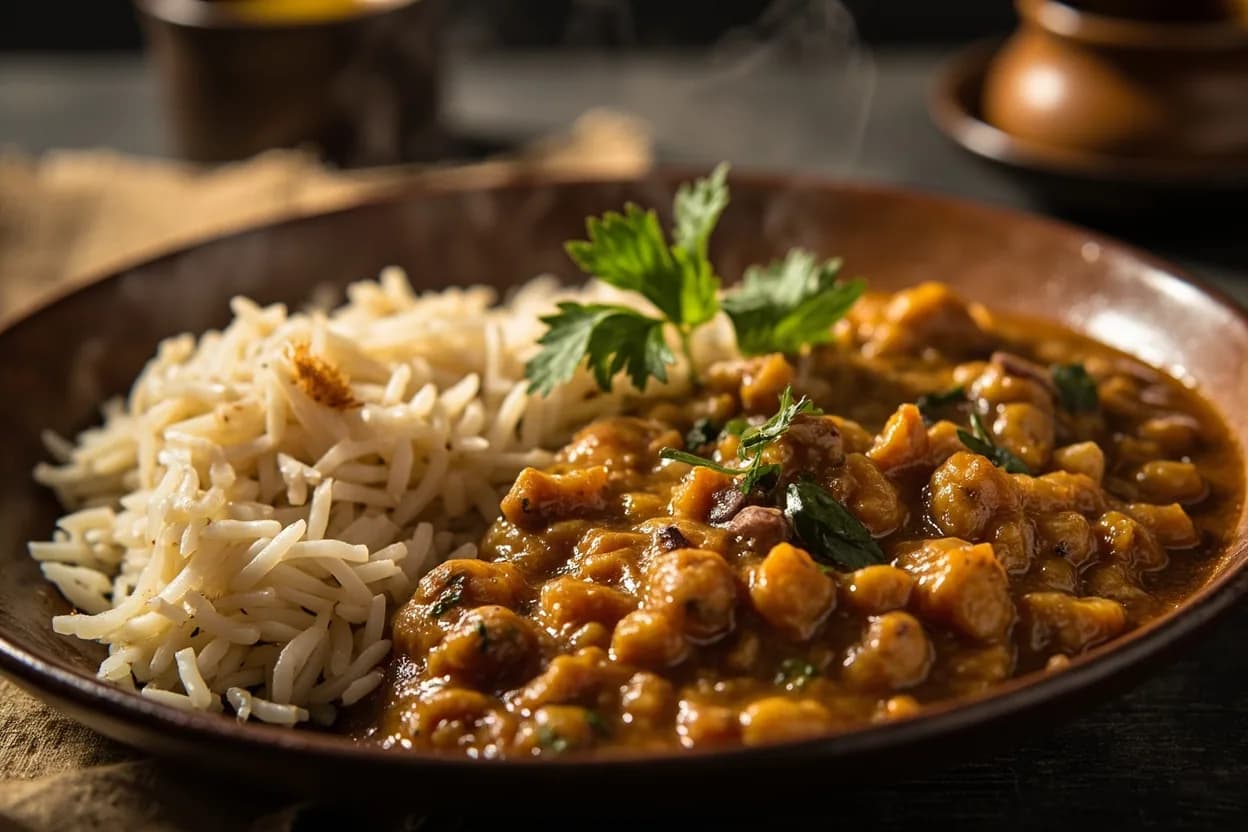
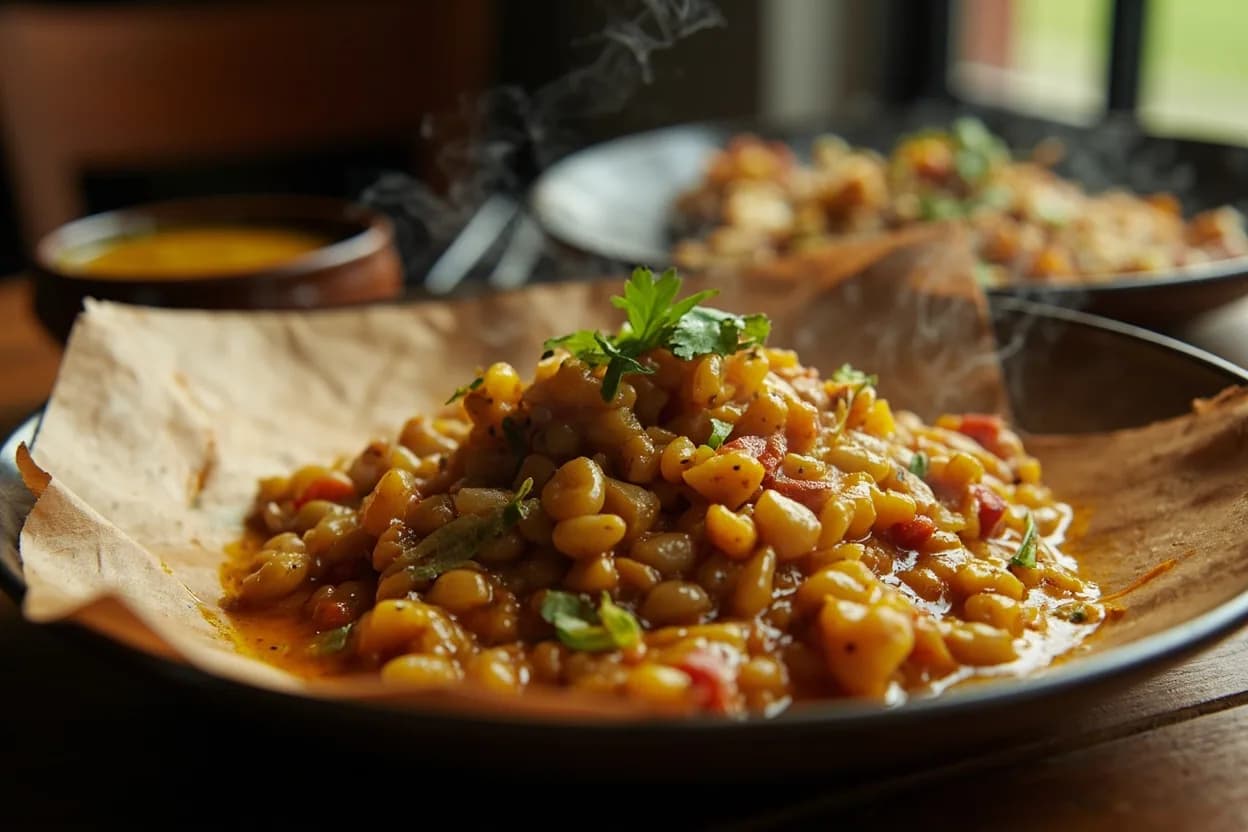
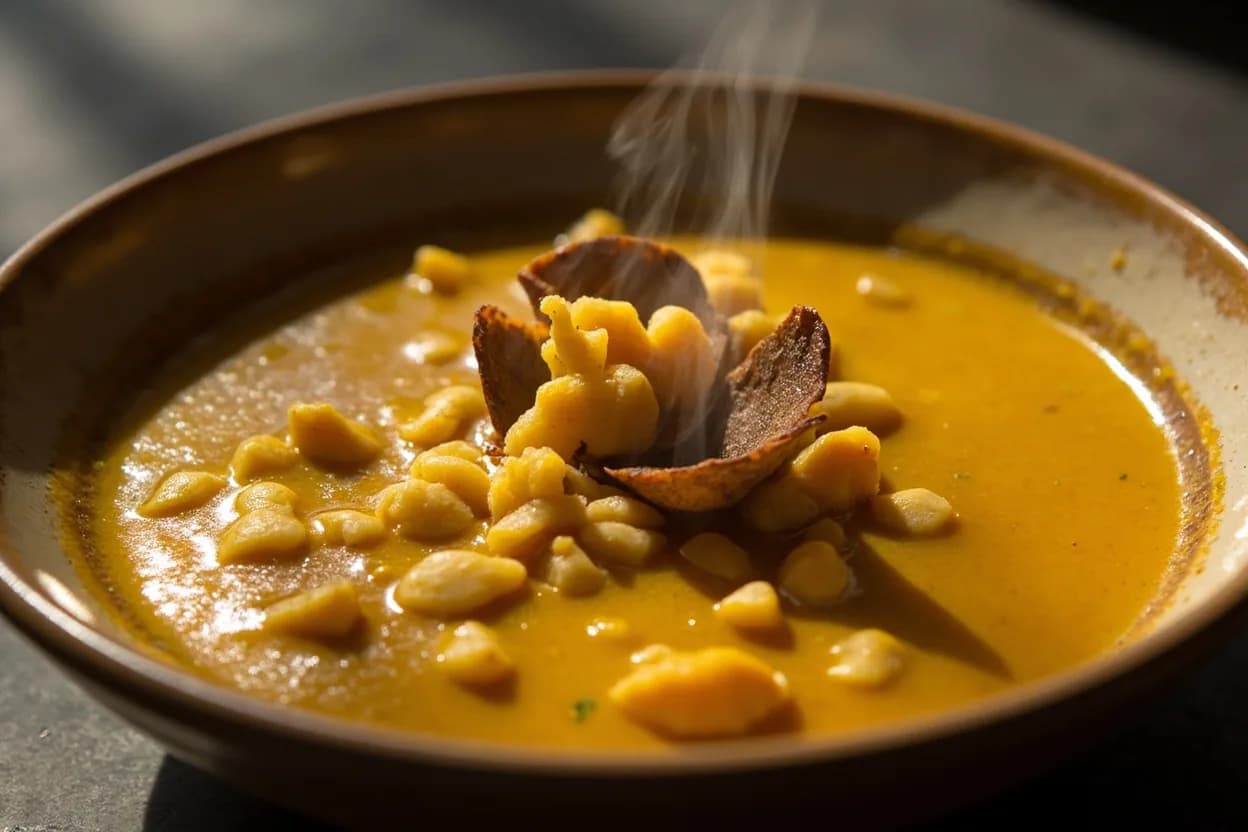
Related

Sear
Blast the surface hot for a deep-browned, savory crust

Sauté
Cook quickly in a little fat over lively heat, tossing as you go

Stir-Fry
Toss bite-sized pieces over roaring heat for fast, smoky cooking

Pan-Fry
Crisp food in a shallow layer of hot fat, turning once or twice

Deep-Fry
Submerge in hot oil for an all-over crackling crust

Roast
Cook uncovered in dry oven heat for browned edges and tender centers

Bake
Cook with steady, surrounding oven heat — the soul of bread and pastry

Broil
Hit food from directly above with fierce overhead heat