Transform & Preserve
Water Treatment / Salt Adjustment
Adjusting water mineral content for brewing, baking, or coffee to optimize extraction.
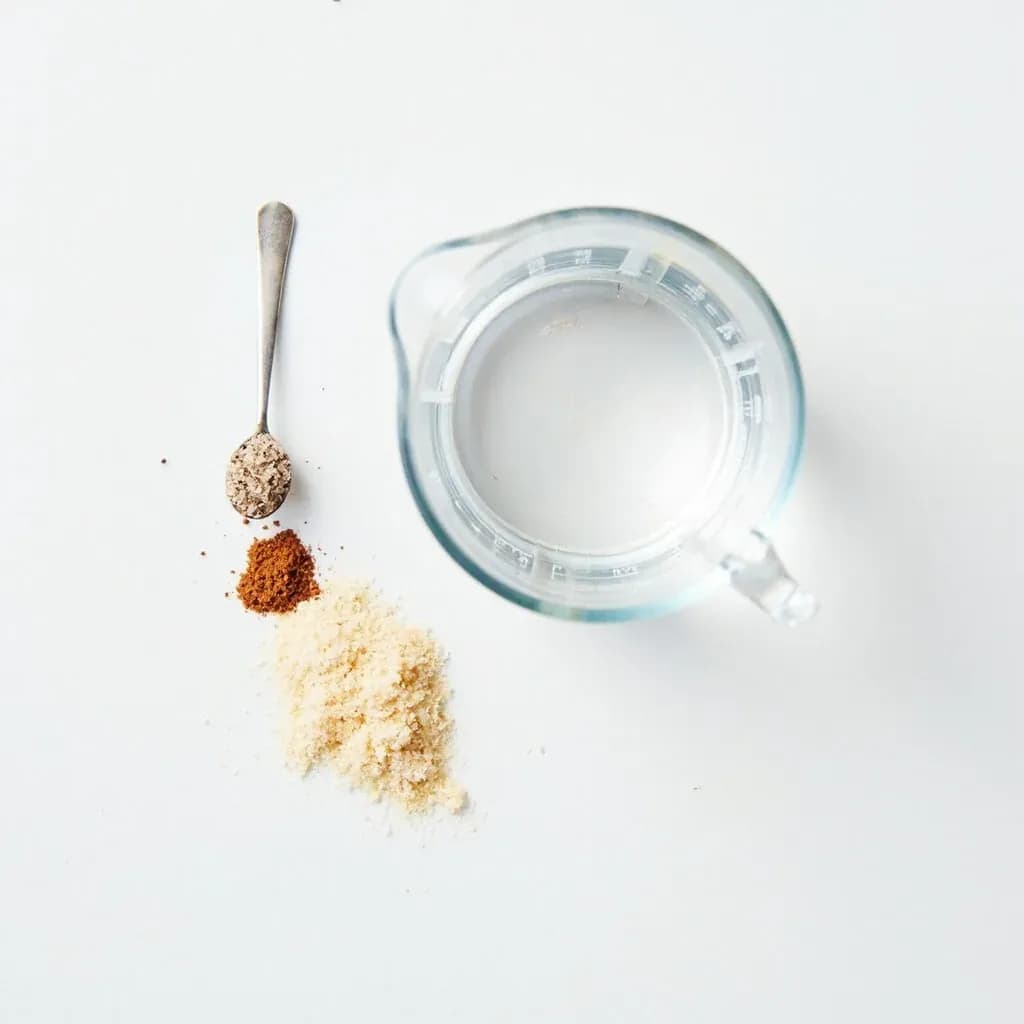
Water treatment tailors the mineral and salt content of water, by filtering, softening, or adding salts, to suit brewing, baking, or coffee. Calcium, magnesium, and bicarbonate levels strongly affect mash enzyme activity, dough gluten, and flavor extraction. Brewers and bakers often build a target water profile from purified water to get repeatable results.
Water is the quietest ingredient in the kitchen, but in brewing, baking, and coffee it does as much work as flour or beans. The dissolved minerals it carries — chiefly calcium, magnesium, sodium, bicarbonate, sulfate, and chloride — shape how flavors extract, how pH behaves, and how gluten forms. Hard, bicarbonate-rich water mutes flavor and tightens dough; very soft water can leave espresso thin, flat, or metallic, slacken a baguette, and pull green tea into harsh astringency. Treating water means reading its starting profile, deciding what to keep and what to remove, and then rebuilding it with specific salts to land on a target that suits the recipe.
The classic measurements are total hardness, reported as calcium carbonate (CaCO3) in ppm or grains per gallon, paired with alkalinity (essentially bicarbonate). The ratio of sulfate to chloride governs flavor direction in beer, while total mineral load and alkalinity govern clarity, sweetness, and body in coffee. The Specialty Coffee Association's target band — about 50–175 ppm hardness, 40–75 ppm alkalinity, pH 6.5–7.5 — is a sensible default for filter coffee and espresso. For brewing, the discipline is older: Burton-on-Trent's famously mineral-rich water, dominated by calcium and sulfate, gave English pale ales their crisp bitterness, and replicating it (a practice dubbed "Burtonization") remains standard in craft beer.
Plain distilled or reverse-osmosis water tastes flat, often slightly metallic, and has no buffering capacity to speak of. A carbon filter is the universal first step to strip chlorine and chloramine; from there, you either blend to a target or dose specific salts. The same logic that makes a great pale ale can also tame astringent green tea, brighten a loaf, or pull a sweeter shot of espresso — all by changing the water, not the recipe.
- Difficulty
- Hard
Types & varieties
Removes chlorine, chloramine, and many organics; leaves minerals untouched. The baseline step for most coffee and beer setups.
Strips essentially all minerals; usually paired with a remineralizing step or a blend with tap water. Slow at home — typically 3–4 L of waste per 1 L of pure water.
Produces mineral-free water; energy-intensive, rarely used in kitchens beyond small-scale lab-style prep.
Replaces calcium and magnesium with sodium. Lowers hardness, raises sodium, does not address alkalinity — not ideal for brewing on its own.
Dosing gypsum, calcium chloride, Epsom salt, and/or baking soda to hit a target profile — standard practice in all-grain brewing.
Mixing a hard tap water with RO or distilled to land at a target hardness/alkalinity — the simplest home-coffee approach.
Pre-weighed mineral blends (e.g., Third Wave Water, Lotus Coffee Water, Pure Water Blend) added to RO or distilled water at brewing time.
How to do it
- 1
Profile the starting water
Measure TDS, total hardness, alkalinity, and pH of the tap (or source) water with a TDS pen, drop-titre kit, or test strip. Note the values — these are the baseline for every decision that follows.
- 2
Pick a target profile
Choose a target matching the application: SCA-style coffee water (~100–150 ppm hardness, ~40–60 ppm alkalinity, pH ~7); a soft, low-mineral profile for green tea or a Pilsner; or a high-sulfate, high-calcium profile for a Burton-style pale ale.
- 3
Strip unwanted minerals and chlorine
Run the water through an activated carbon filter to remove chlorine and chloramine. If the source is very hard and the target is soft, pass it through RO, distillation, or a deionizing cartridge. Ion-exchange-softened water is not a substitute for RO when you want a true blank slate — it still carries alkalinity and adds sodium.
- 4
Remineralize or blend to target
Either blend stripped water with a measured volume of the original tap water, or dose the stripped water with weighed mineral salts — gypsum for Ca + SO4, calcium chloride for Ca + Cl, Epsom salt for Mg + SO4, baking soda for Na + HCO3. Stir until fully dissolved; predissolve chalk or large doses in a splash of hot water.
- 5
Verify and adjust
Re-measure hardness, alkalinity, and pH. Adjust in small doses (a pinch of salt at a time per liter) and re-test until the numbers fall inside the target range. For brewing, run a small sensory check — flat or metallic = under-mineralized, harsh and dry = too much sulfate, dull and cloying = too much chloride or bicarbonate.
- 6
Use and store
Use the finished water the same day for coffee or tea; for brewing, store in a clean, food-grade vessel and use within 24–48 hours. Carbon-filtered water for baking and dough can be held longer, refrigerated, but should be discarded if it develops any odor.
The four key salts
A brewer or serious coffee user really only needs to know four salts. Each one changes the profile in a specific direction, and once you understand them the rest is arithmetic.
- Gypsum (CaSO4·2H2O): adds calcium and sulfate. The workhorse for hop-forward beers and the namesake of Burtonization. Promotes crisp, dry bitterness and helps drive mash pH down.
- Calcium chloride (CaCl2): adds calcium and chloride. More soluble in cold water than gypsum. Pulls beer flavor toward malty, fuller, and rounder; in baking, encourages gluten development.
- Epsom salt (MgSO4·7H2O): adds magnesium and sulfate. Use sparingly — boosts yeast metabolism and a touch of perceived bitterness, but at high levels adds a sour, metallic edge.
- Baking soda (NaHCO3): raises alkalinity and pH. Powerful in small amounts; too much flattens coffee, slows mash enzymes, and gives bread a soapy aftertaste.
Reading a water report
A municipal water report — or a simple test-strip reading — lists the numbers you actually need to act on. The rest is detail.
- Total hardness: sum of calcium and magnesium, expressed as CaCO3. Below 60 ppm = soft; 60–120 ppm = moderately hard; 120–180 ppm = hard; above 180 ppm = very hard.
- Alkalinity: the water's buffering capacity, mainly bicarbonate. Under 40 ppm = low; 40–80 ppm = moderate; above 100 ppm = high and the most common reason for dull, ashy coffee.
- pH: a useful snapshot but less stable than alkalinity. In brewing and baking, alkalinity is the more actionable number.
- 1 grain per gallon (gpg) ≈ 17.1 ppm CaCO3 — the conversion to remember when reading British or older American brewing literature.
Common uses
Tips & pitfalls
- Test your starting water first — municipal supplies change seasonally and after main work. A TDS pen plus a simple alkalinity/hardness test strip is enough for most home cooks and brewers.
- Never serve coffee or tea with straight RO or distilled water. Remineralize to roughly 100–150 ppm total hardness and 40–60 ppm alkalinity for balanced extraction.
- Use a carbon filter before any brewing setup to strip chlorine and chloramine — chloramine in particular survives boiling and will knock down yeast in dough and beer.
- In baking, very hard water (>200 ppm) can toughen crumb and slow yeast; very soft water (<50 ppm) can make dough sticky and slack. Most all-purpose bakers do well around 100–150 ppm hardness.
- For hop-forward IPAs, push the sulfate-to-chloride ratio above 2:1 with gypsum and Epsom salt; for malty, balanced beers, push chloride above sulfate using calcium chloride.
- Calcium chloride is more soluble than gypsum in cold water and adds chloride instead of sulfate — choose by flavor target, not just convenience.
- Chalk (CaCO3) raises both calcium and alkalinity and is hard to dissolve; predissolve it in a small amount of hot water with a splash of acid, or substitute baking soda plus a calcium salt for easier mixing.
- Record every addition in grams per liter and verify with a meter — chasing flavor 'feel' on a small batch almost always means overshooting on the next.
Good to know
- Definition
- Adjusting the dissolved mineral content of water (mainly calcium, magnesium, sodium, bicarbonate, sulfate, and chloride) to optimize flavor extraction, pH behavior, and texture in brewing, baking, and beverage preparation.
- Key measurements
- Total hardness (Ca + Mg as CaCO3), alkalinity (HCO3/CO3), pH, and TDS. Hardness and alkalinity are reported in ppm or grains per gallon (1 gpg ≈ 17.1 ppm CaCO3).
- Coffee target (SCA)
- Total hardness 50–175 ppm CaCO3, alkalinity 40–75 ppm CaCO3, pH 6.5–7.5, free chlorine 0 mg/L, TDS 50–200 ppm.
- Beer brewing relevance
- Calcium drives mash pH down (roughly 2.5 pH drop per 100 ppm Ca in a grist with ~50 ppm alkalinity); the sulfate-to-chloride ratio shapes hop vs. malt perception (high SO4:Cl ≈ bitter and dry; high Cl:SO4 ≈ round and malty).
- Primary minerals used
- Calcium (gypsum/CaSO4·2H2O, calcium chloride/CaCl2, chalk/CaCO3), magnesium (Epsom salt/MgSO4·7H2O), sodium (table salt/NaCl, baking soda/NaHCO3).
- Origin of 'Burtonization'
- Coined to describe replicating the famously mineral-rich water of Burton-on-Trent, England — historically high in calcium and sulfate — to brew pale ales with crisp hop bitterness.
- Distilled/RO caveat
- Plain distilled or reverse-osmosis water has near-zero buffering capacity and a flat, sometimes metallic taste; it should be remineralized before brewing or coffee use.
- Difficulty
- Moderate. Single-pass carbon filtration is simple; precise brewing-water build-up from RO requires a TDS meter and small-scale mineral additions.
Also called
Salt Adjustment · Brewing Water Profiling · Water Chemistry
Related

Confit
Cook slowly submerged in fat for silky tenderness and keeping

Cure
Draw out moisture with salt and time to preserve and concentrate

Pickle
Steep in acidic brine for bright, tangy, crunchy preservation

Ferment
Let friendly microbes transform food into tangy, complex flavor

Marinate
Soak in a seasoned mix to flavor and tenderize before cooking

Brine
Soak in salt water so meat stays juicy and seasoned throughout

Dehydrate
Slowly dry out moisture to concentrate flavor and extend shelf life

Cold-Smoke
Perfume cured food with smoke without cooking it through