Central Asia
Central Asian Nomadic (Kazakh & Kyrgyz)
Also: Kazakh cuisine, Kyrgyz cuisine, steppe cuisine, nomadic Central Asian cooking
The pastoral cooking of the Eurasian steppe — built on boiled meat, fermented mare's milk, and the rhythms of a horse-back culture that shaped a continent.
Kazakh and Kyrgyz cuisines descend from millennia of nomadic pastoralism across the Eurasian steppe. The cuisine is defined by animal husbandry — horse, sheep, and camel — and the practical imperative of portability, preservation, and caloric density across vast, seasonally harsh landscapes. Boiling is the dominant cooking method; smoking, drying, and lacto-fermentation are the primary preservation strategies. Wheat came late and remains secondary to meat and dairy. The result is a cuisine of austere, deep flavour: fat-rich broths, dried and cured meats, and fermented dairy products of remarkable complexity.
The flavour base
Rendered sheep tail fat (kurdjuk) and strong bone broth form the aromatic base. Alliums (onion, wild garlic) are the primary aromatics. Spicing is restrained — black pepper, cumin, and bay leaf — allowing the quality of the meat and fermented dairy to dominate.
Pantry staples
Key ingredients
Signature techniques
Signature dishes
Central Asian Nomadic (Kazakh & Kyrgyz) on the table

At the table
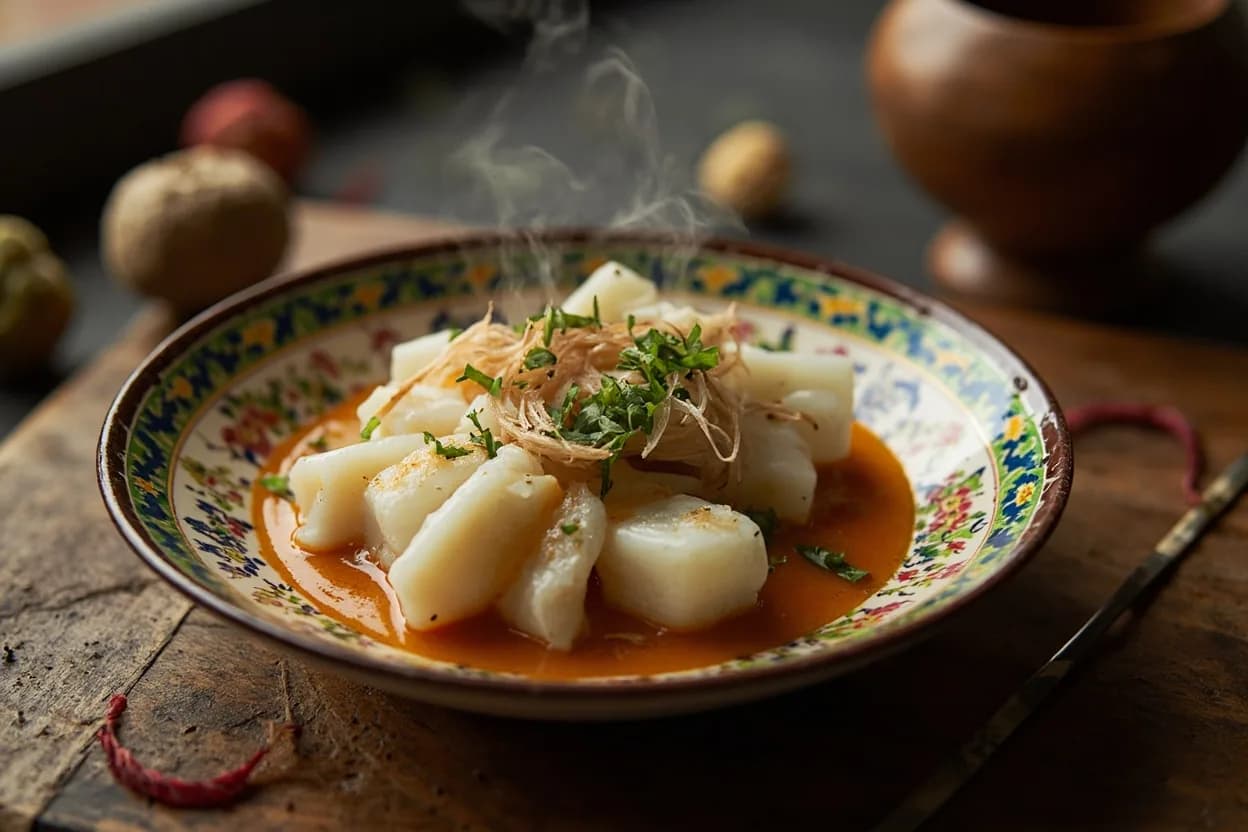
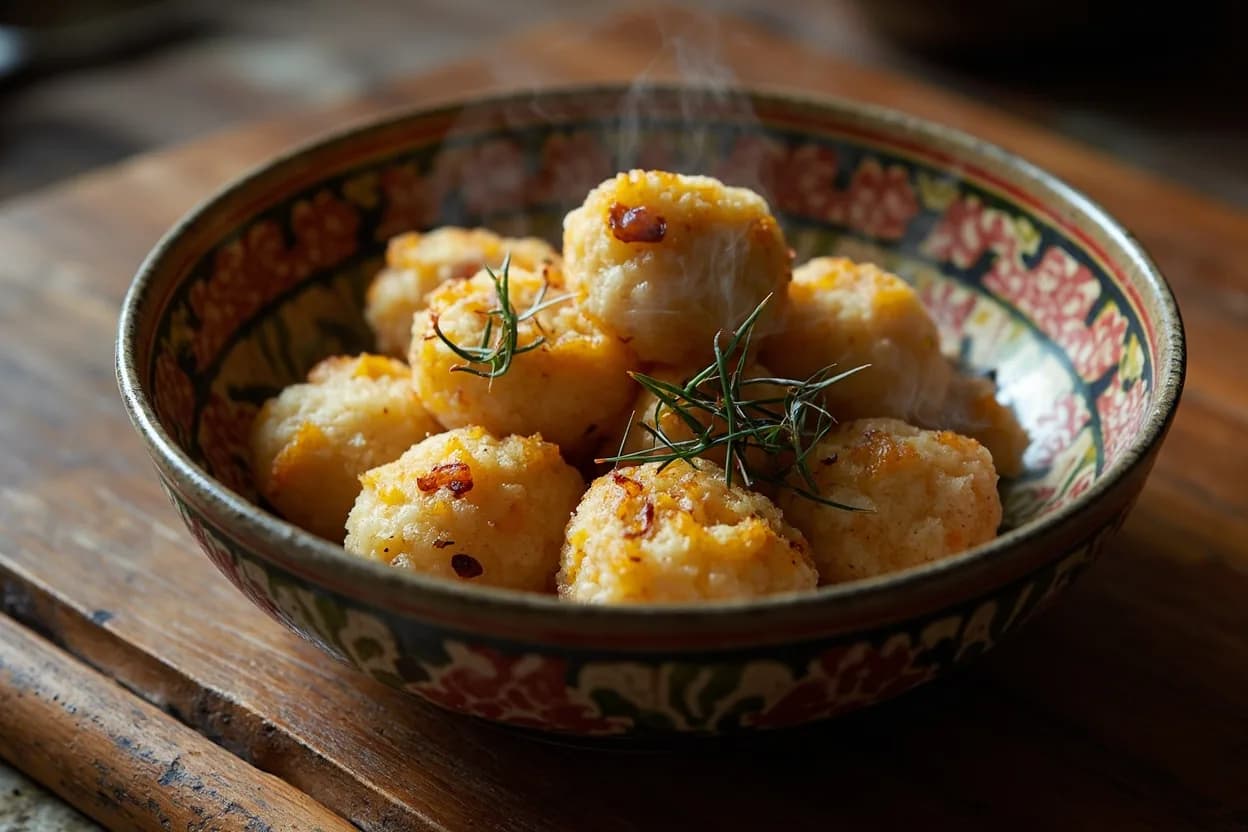
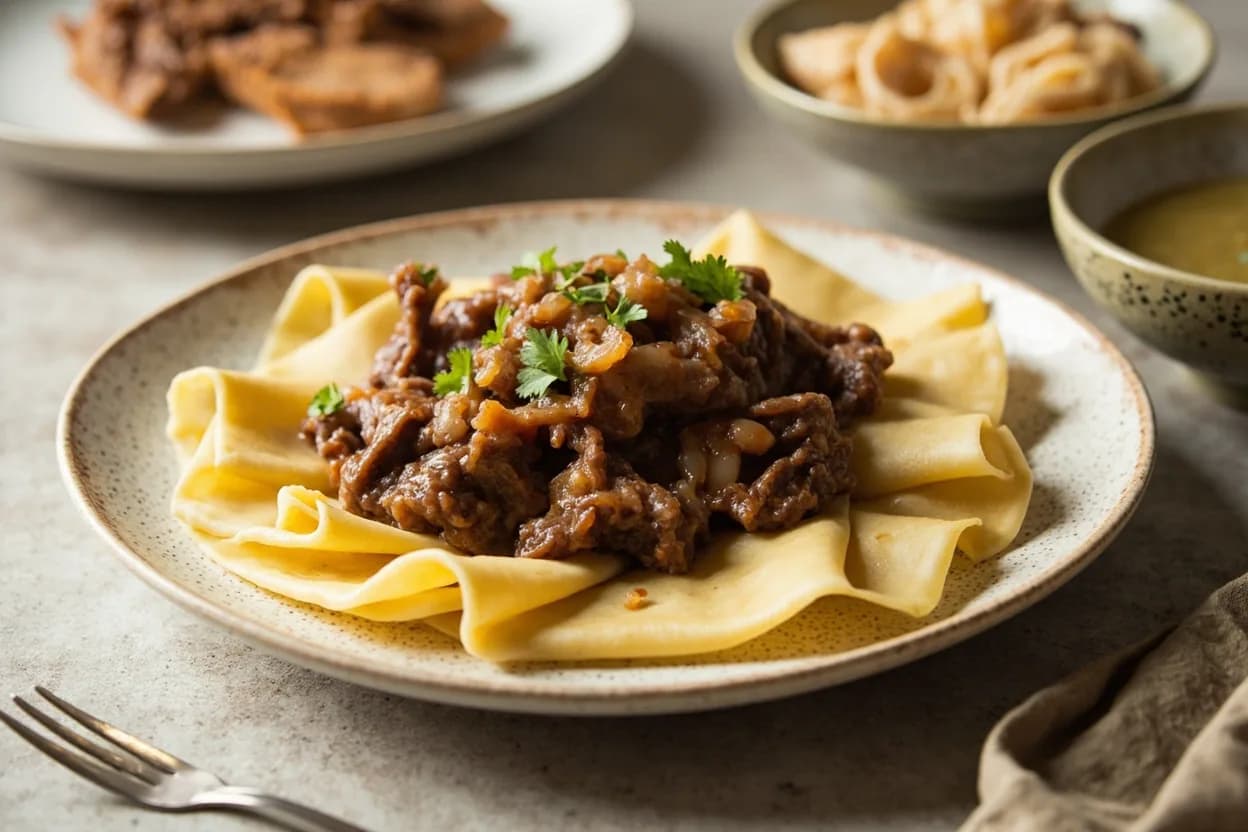
Meals centre on a single large communal dish, traditionally eaten by hand from a shared platter. Beshbarmak — the name means 'five fingers' — is the archetypal festive dish. Tea with milk is served constantly and is the social glue of hospitality. Kymyz and shubat (fermented camel milk) are served separately as beverages with near-medicinal status. Guest hierarchy governs who receives which cut: the sheep's head is reserved for the most honoured elder.
History & context
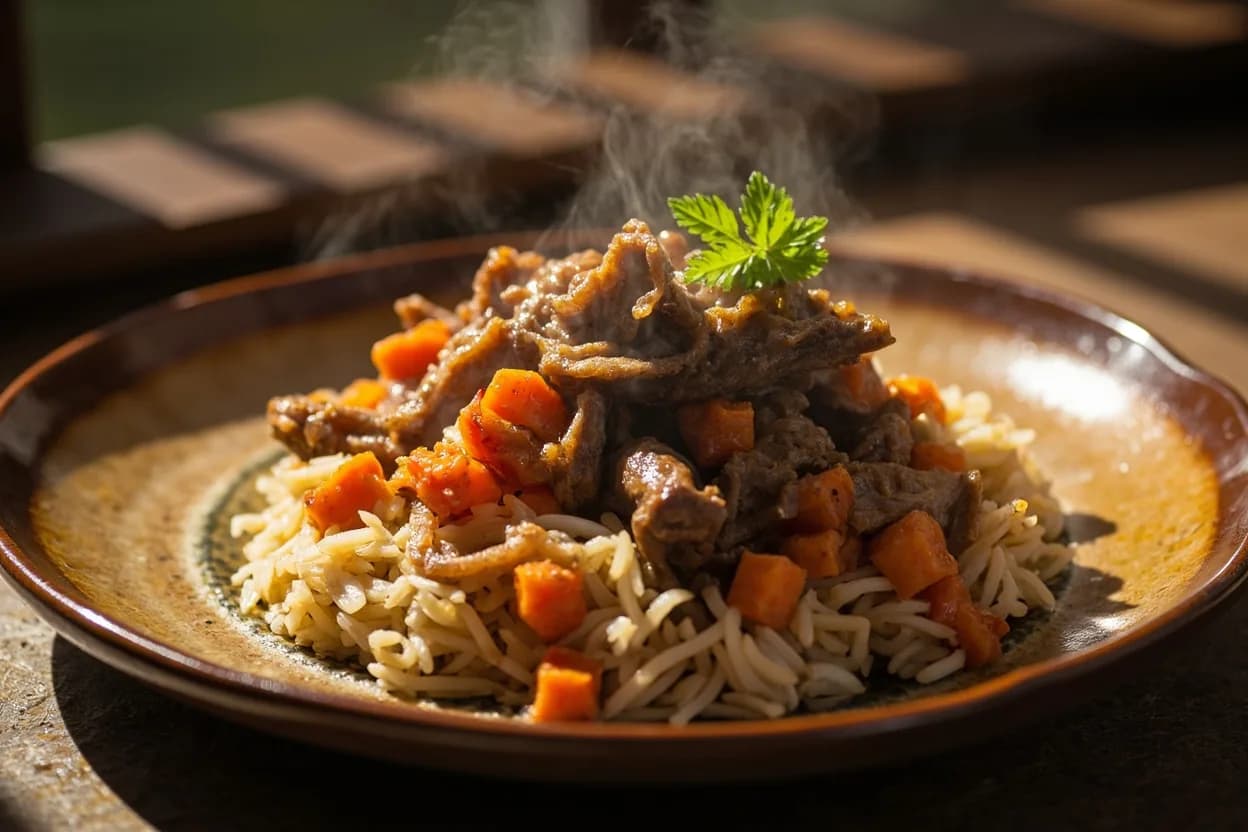
The Kazakh and Kyrgyz peoples are heirs to the great Turkic-Mongol steppe empires. For over two millennia, nomadic pastoralism dictated a cuisine built around what herds provided and what horses could carry. The Soviet era forced sedentarisation and introduced wheat, bread, and vegetable cultivation at scale, but the core nomadic foodways — beshbarmak for feasts, kymyz for summer, kurt for winter travel — survived and are now markers of ethnic identity. Post-independence revivals in both Kazakhstan and Kyrgyzstan have elevated traditional dishes as national heritage, with beshbarmak in Kazakhstan and kuurdak (fried meat with vegetables) in Kyrgyzstan serving as unofficial national dishes.
Regional variations
- Southern Kazakhstan (Shymkent region)
Stronger Uzbek influence: plov, lagman noodle soups, and heavier use of vegetables and legumes reflect proximity to the Fergana Valley.
- Kyrgyz mountain communities
Higher reliance on yak and smaller mutton breeds; oromo (steamed meat and vegetable roll) is distinctively Kyrgyz; tea culture includes salt and butter (kalmak chai).
- Northern steppe Kazakhstan
Most conservative nomadic tradition; horse meat consumption is highest; kazy horse sausage is a prestige item at all major celebrations.
Related cuisines
- Uzbek
Sedentary neighbour whose plov, samsa, and lagman have been adopted across Kazakhstan and Kyrgyzstan via the Silk Road and Soviet-era population mixing.
- Mongolian
Shares the core steppe pastoral template — boiled mutton, fermented mare's milk (airag in Mongolia), dried meat — from a shared Turco-Mongol cultural substrate.
- Russian
Soviet settlement introduced pelmeni dumplings, bread baking, and potato cultivation, all now integrated into everyday Kazakh and Kyrgyz home cooking.
- Uyghur
Lagman noodles and samsa varieties show direct Central Asian Turkic kinship across the Tian Shan mountain corridor.
Canonical recipes
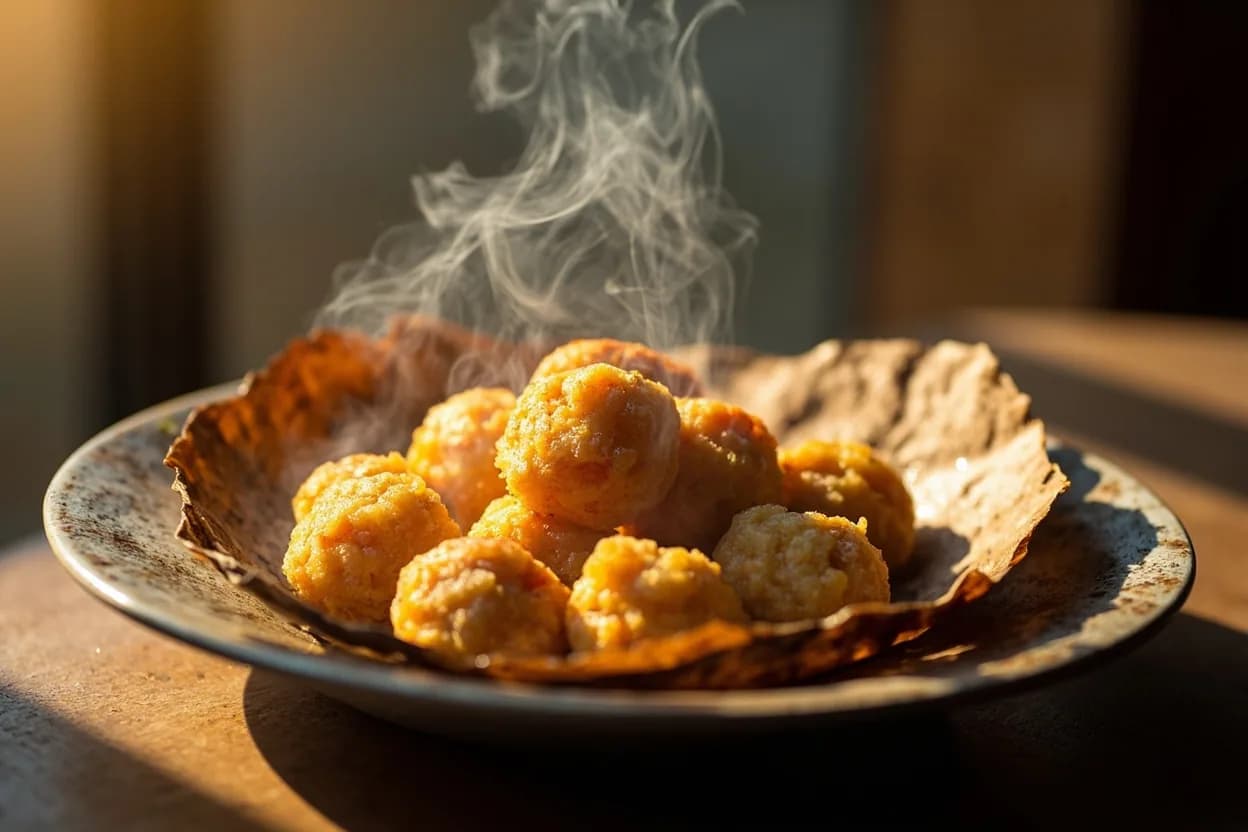
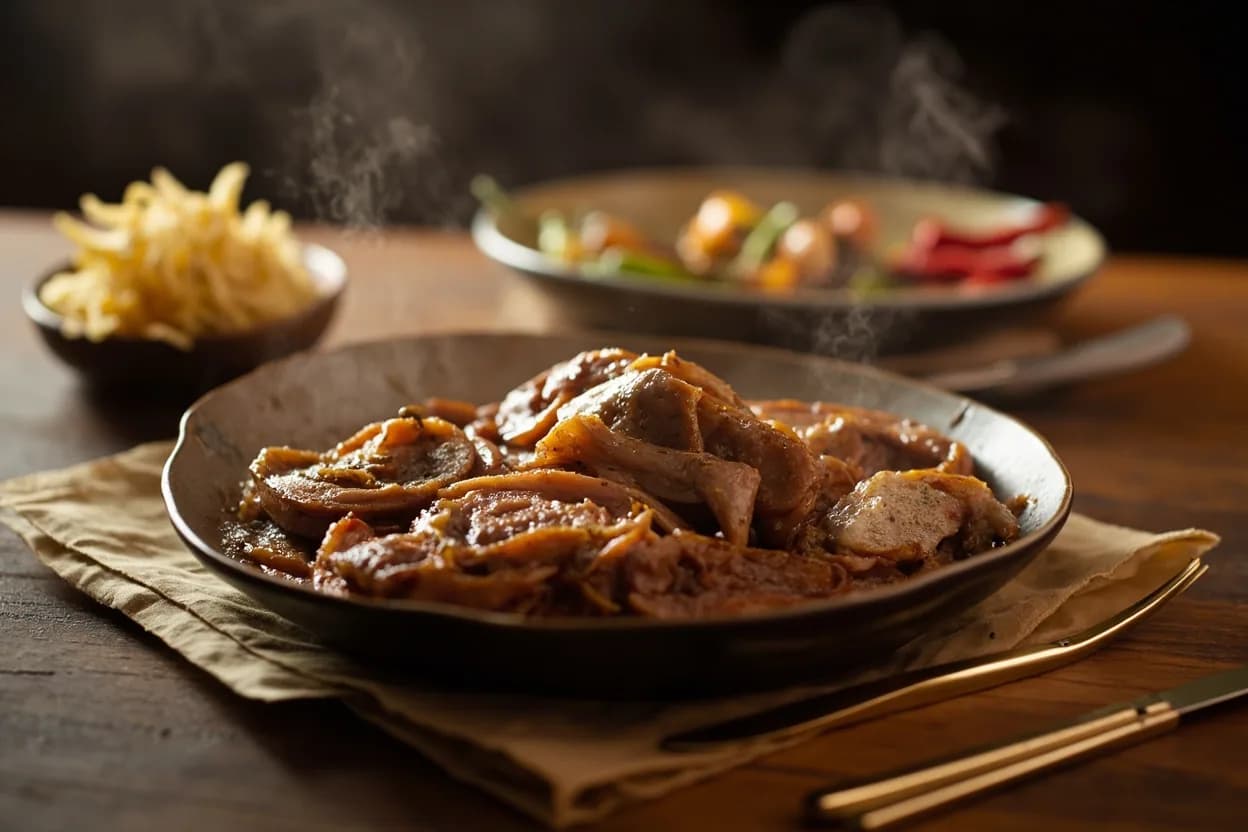
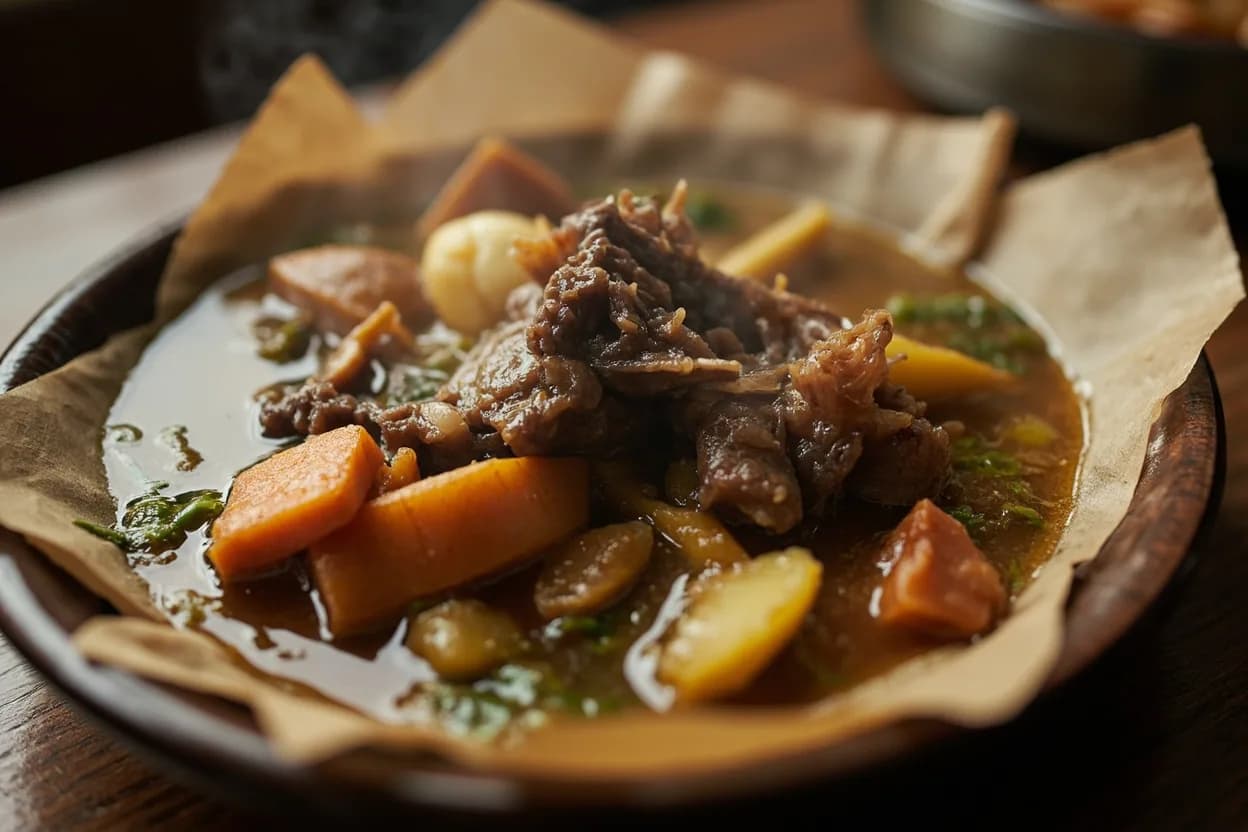
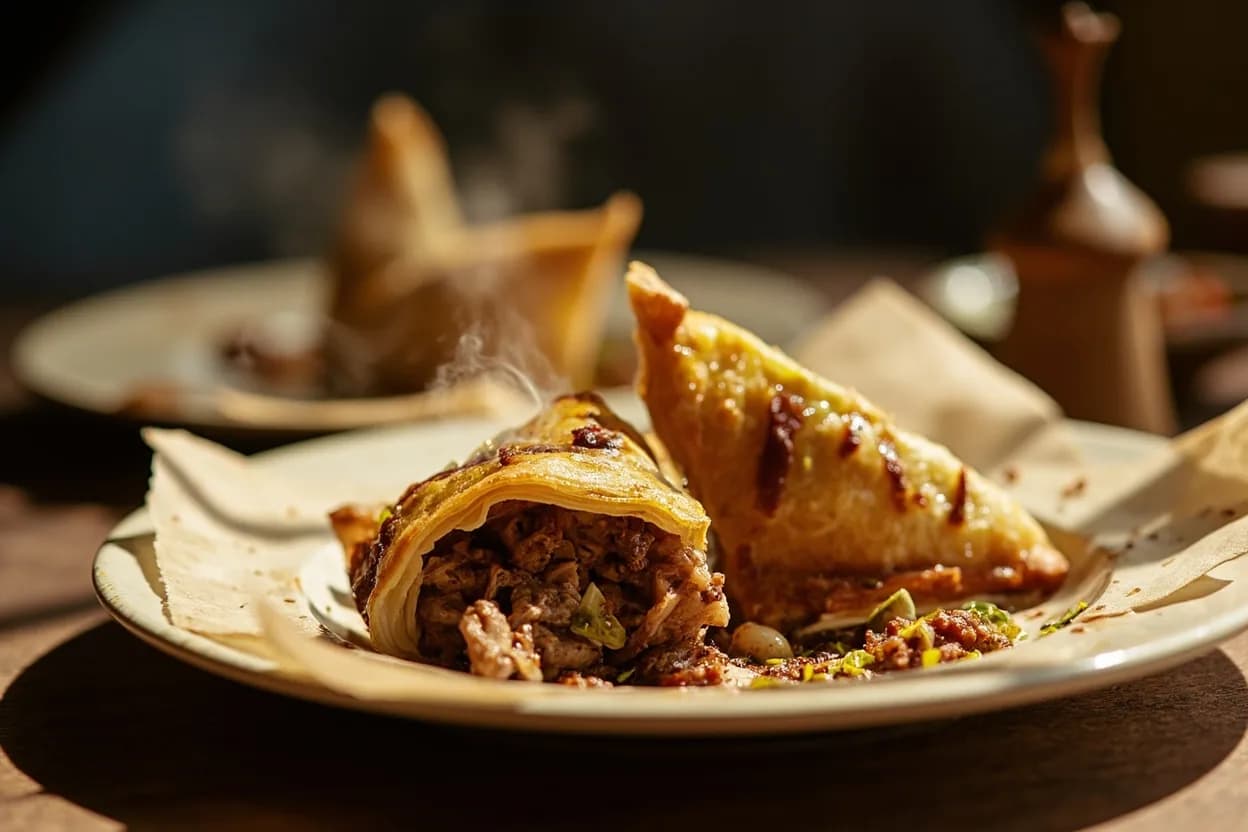
The dishes that define Central Asian Nomadic (Kazakh & Kyrgyz), documented in the Canon.
References
- 1.Culinary Cultures of the Middle East — Sami Zubaida & Richard Tapper (eds.)
- 2.The Oxford Companion to Food — Alan Davidson (3rd ed.)
- 3.Culinaria Russia (Ukraine, Georgia, Armenia, Azerbaijan) — Anjelike Ilies
- 4.Post-Soviet Cookbooks and Nomadic Food Heritage — Central Asian Heritage Foundation reviews
Confidence: high
Notes
Kymyz: beverage and medicine
Kymyz (fermented mare's milk) is mildly alcoholic (1–3% ABV), probiotic-rich, and traditionally prescribed for respiratory ailments. Kyrgyz mountain communities operate kymyz sanatoriums in summer where patients drink several litres daily. The fermentation is maintained in a leather bag (saba) that is churned repeatedly; each saba carries a live culture passed between generations.
The horse in the kitchen
Horse is the prestige protein of Kazakh cuisine. Kazy (horse rib sausage) and zhal (smoked neck fat) are luxury items served at weddings and funerals. The preference reflects pre-Islamic Central Asian tradition — horse was the primary meat before Islam discouraged it in some communities — but Kazakhs and Kyrgyz, though largely Muslim, maintained the practice, framing it as cultural heritage rather than religious exception.