Middle East
Iraqi Jewish (Baghdadi)
Also: Baghdadi Jewish cuisine, Iraqi-Jewish cooking, Babylonian Jewish cuisine
One of the world's oldest continuous food traditions — the 2,600-year-old cuisine of Baghdad's Jewish community, defined by Shabbat t'beet chicken, sour kibbeh hamda broth, sambousak pastries, and a pantry of tamarind, dried lime, and baharat that travelled to Bombay, Singapore, and Tel Aviv.
Iraqi Jewish (Baghdadi) cuisine is the cooking tradition of the Jewish community that traces an unbroken presence in Mesopotamia since the Babylonian exile of 586 BCE — making it arguably the world's oldest continuous diaspora food culture. Centered on Baghdad, with nodes in Basra, Mosul, and Hillah, this community developed a cuisine that is deeply Mesopotamian in structure (lamb, rice, wheat, dried fruits, sour-sweet flavoring) but inflected by kashrut and a centuries-long position as merchants and traders bridging Ottoman, Persian, and Indian trade routes. The 1950–51 mass emigration to Israel (Operation Ezra and Nehemiah), which removed nearly all of Iraq's 130,000 Jews in under two years, effectively ended this cuisine's living Iraqi context. It survives today in Israeli Iraqi-Jewish families, and in diaspora pockets in London, New York, Mumbai, and Sydney — where Baghdadi traders had established communities as far back as the eighteenth century.
The flavour base
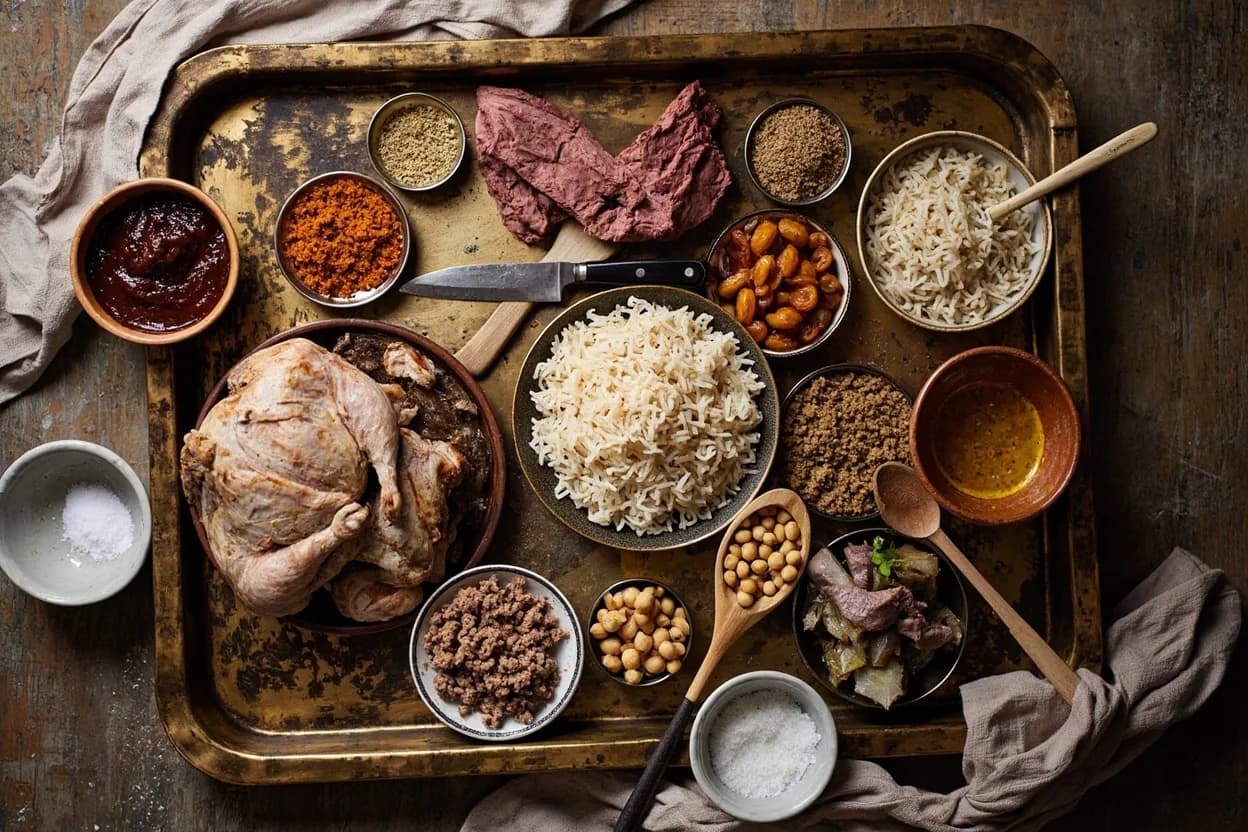
Tamarind, dried lime (loomi), pomegranate molasses, and baharat (warm spice blend of allspice, black pepper, cinnamon, coriander, cumin, cardamom, nutmeg, and cloves) create a sour-warm-aromatic flavor grammar that runs through both savory and sweet preparations.
Pantry staples
Key ingredients
Signature techniques
Signature dishes
Iraqi Jewish (Baghdadi) on the table
At the table
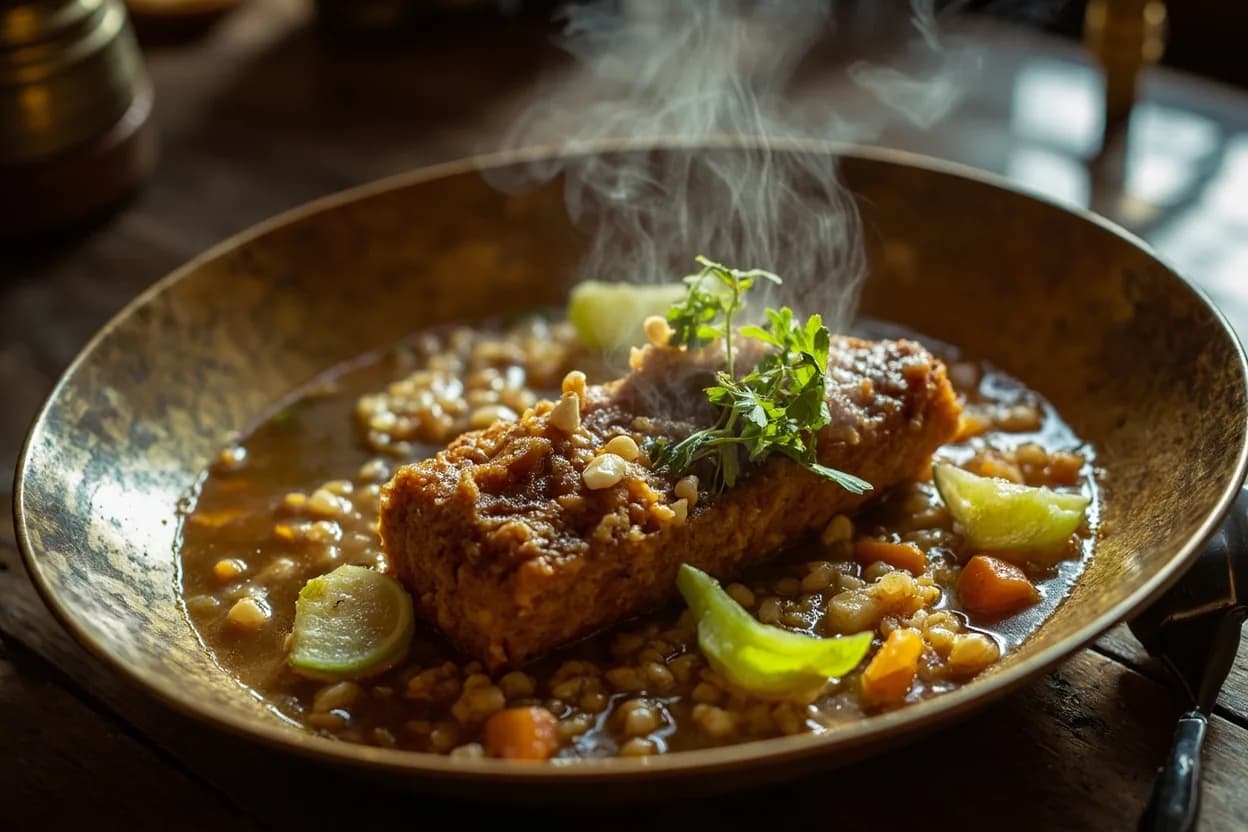
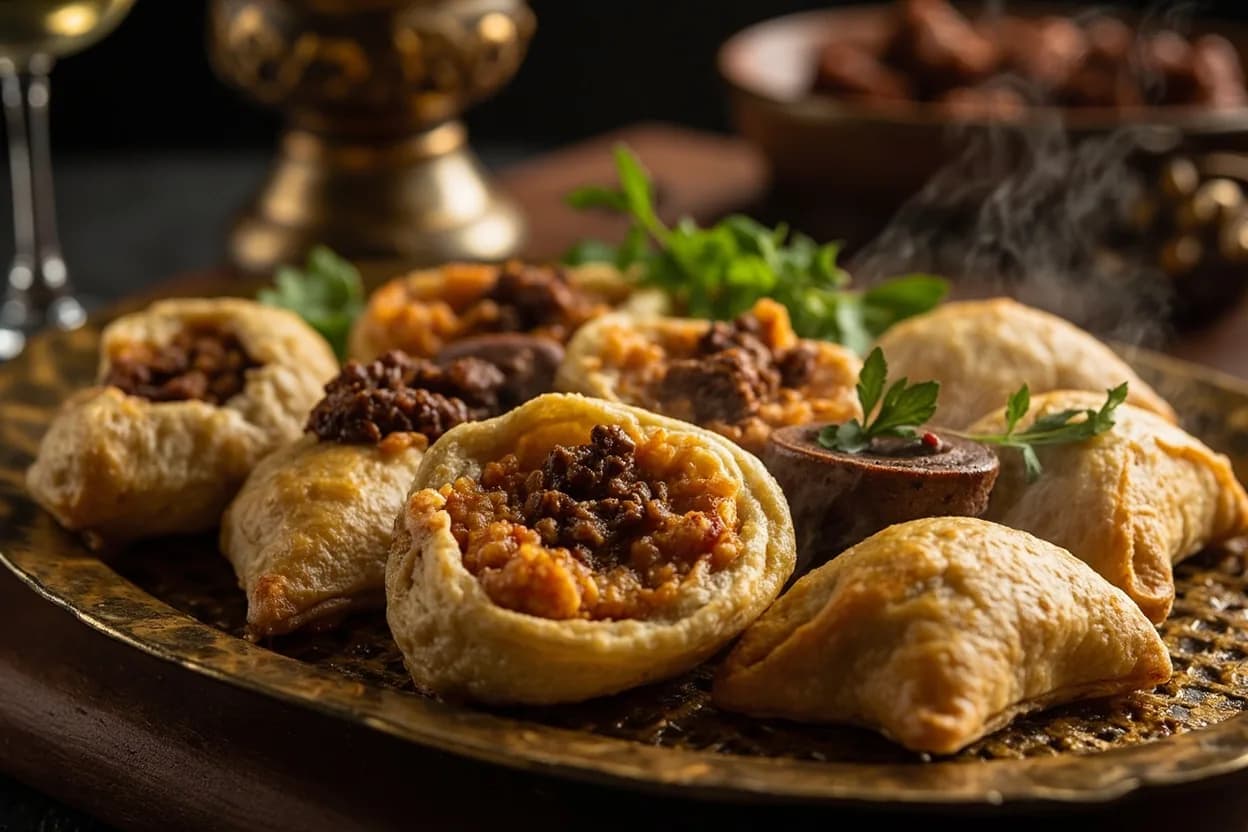
Shabbat structures the week. On Friday, t'beet goes on the fire before sundown and cooks overnight — the entire house fills with the scent of spiced chicken, rice, and baharat. Saturday lunch is that slow-cooked pot, eaten at midday as the day's main meal. Weekday cooking centers on rice-based dishes (lamb and rice, stewed vegetables over rice), with kibbeh soups as a substantial first course. Sambousak are eaten as snacks, at celebrations, or alongside soup. The cuisine is seasonal and calendar-aware: klaicha cookies appear at Purim; harosset at Passover uses date syrup (dibs) rather than wine.
History & context
Jews arrived in Mesopotamia following Nebuchadnezzar's conquest of Jerusalem in 586 BCE. Over 25 centuries, under Babylonian, Persian, Parthian, Sasanid, Arab, Mongol, Ottoman, and British rule, the community maintained Jewish law, Aramaic liturgy, and a cuisine that absorbed each successive wave of ruling culture while filtering everything through kashrut. Under Ottoman and British mandate rule, Baghdad's Jews were disproportionately prominent in finance, trade, and the professions — a position that, after Iraqi independence and the rise of Arab nationalism in the 1940s, made them targets. Following pogroms (the 1941 Farhud), discriminatory legislation, and eventually property confiscation, nearly the entire community emigrated between 1948 and 1952. The cuisine now lives primarily in Israeli Iraqi-Jewish households (where it is one of the best-preserved of all Mizrahi traditions) and in Baghdadi Jewish communities in Kolkata, Mumbai, Singapore, and Hong Kong — trade-route outposts dating from the eighteenth century.
Regional variations
- Basra (southern Iraq)
Persian Gulf proximity means more fish, more date products, and tamarind more aggressively used; rice preparations show Khuzestani Persian influence.
- Baghdadi diaspora (Mumbai / Kolkata)
Spices absorbed from Indian cooking — cardamom, turmeric, curry leaf — entered the kitchen; samosas replaced sambousak; dal influenced broth preparations.
- Israeli Iraqi-Jewish
The largest surviving community; t'beet and kibbeh hamda are fully alive; some Ashkenazi influence (margarine, processed foods) entered the home kitchen post-1950s but traditional dishes are actively revived.
Related cuisines
The Jewish and Muslim Baghdadi kitchen shared masgouf, kleicha variants, margoog, and the tamarind-loomi flavor base — kashrut (no pork; no shellfish; no meat-dairy combination) is the primary divergence point.
Shared sour-sweet flavor logic, rice culture (including tahdig-adjacent crusted rice), dried fruits in savory dishes, and baharat spice families reflect centuries of Mesopotamia-Persia exchange.
- Mizrahi Jewish
Iraqi Jewish is one of the most distinctive Mizrahi branches; shares the broad sour-warm spice grammar with Yemeni and Syrian Jewish cuisines but differs sharply in specific dishes and technique.
Canonical recipes
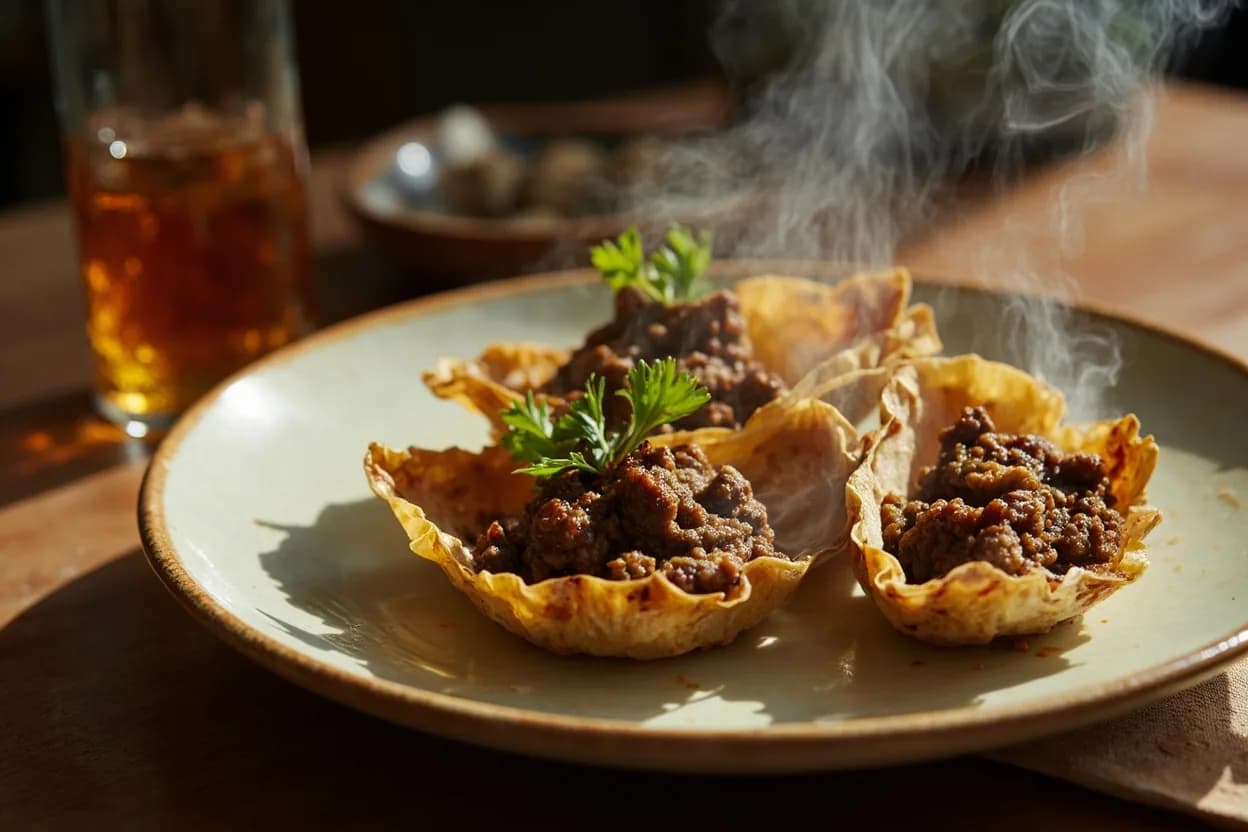
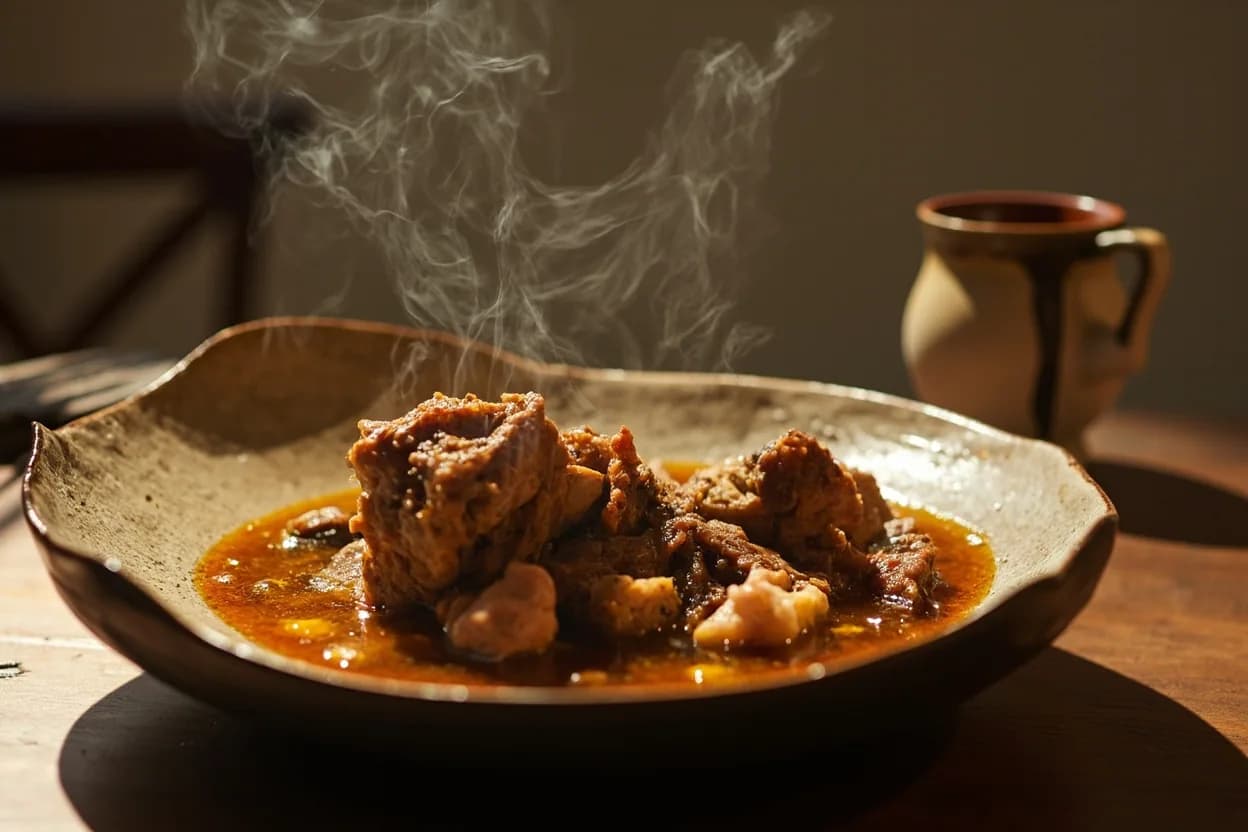
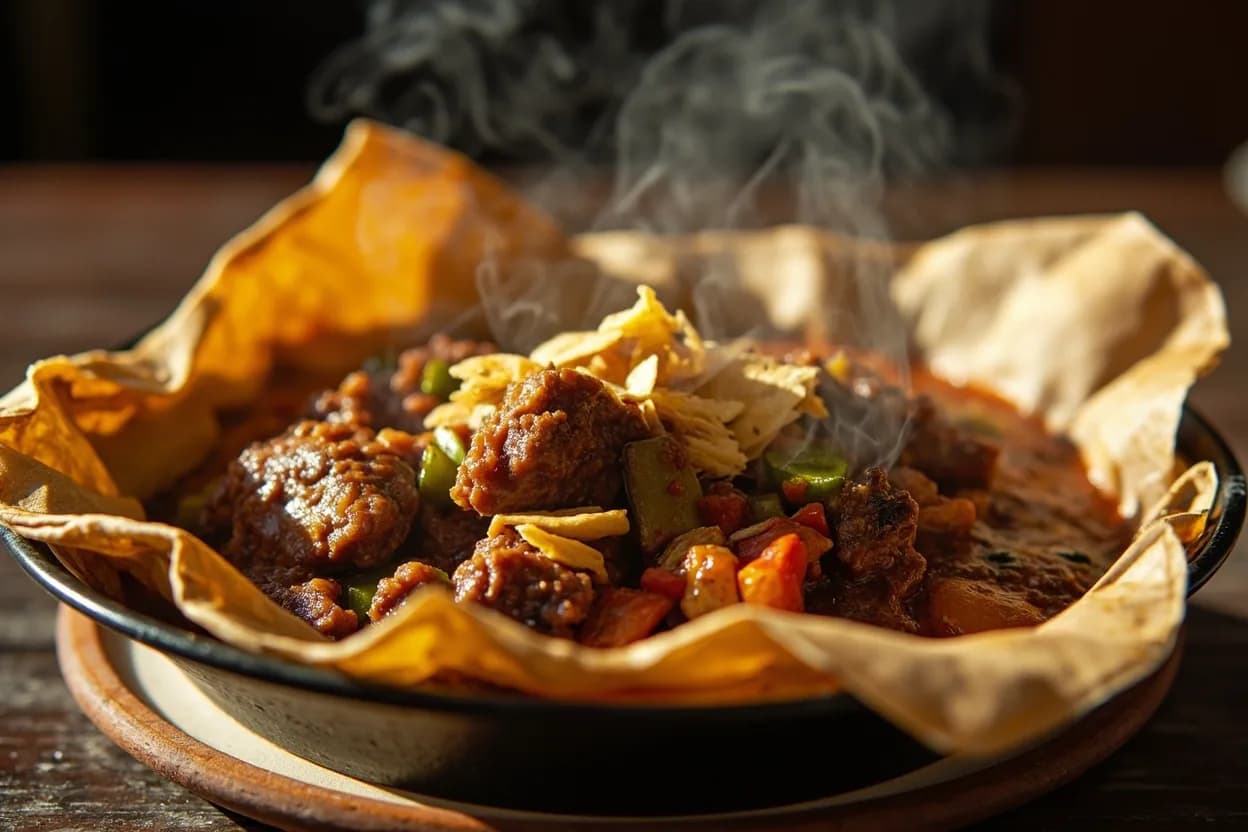
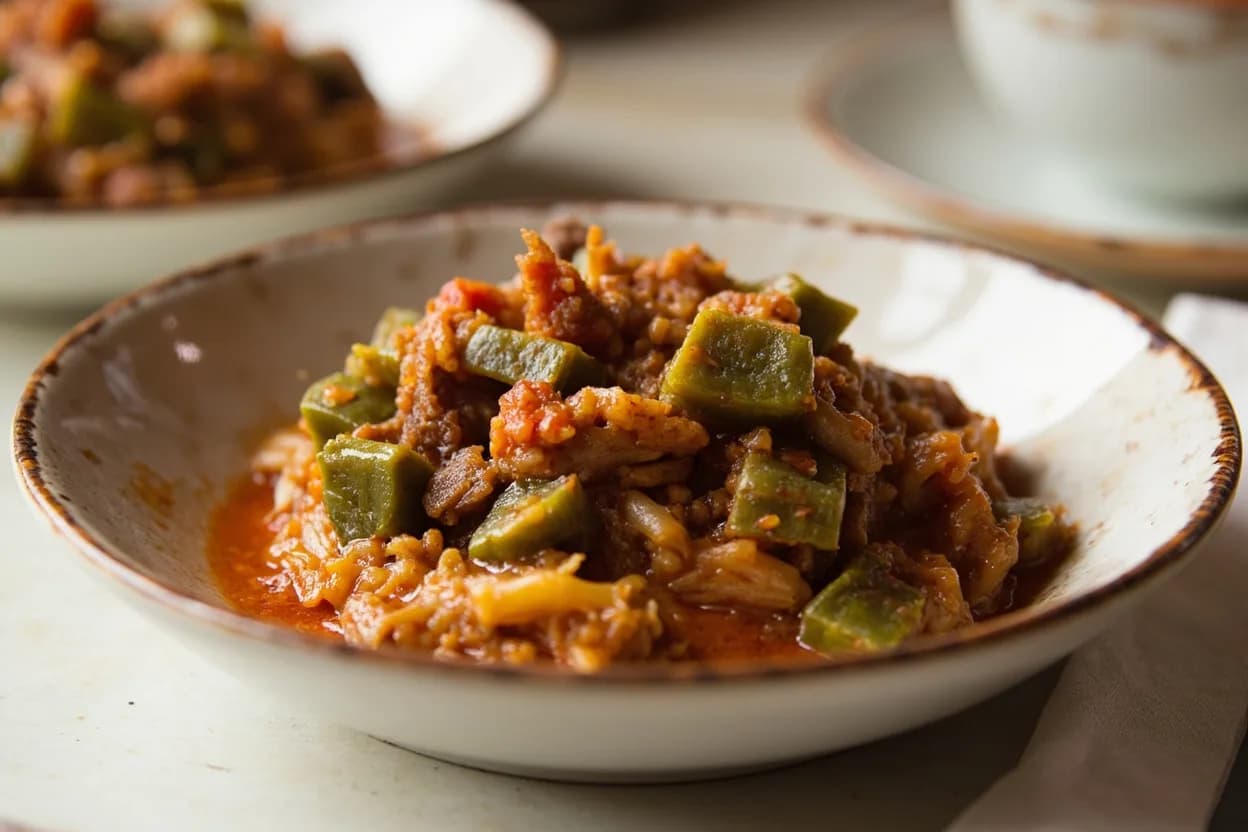
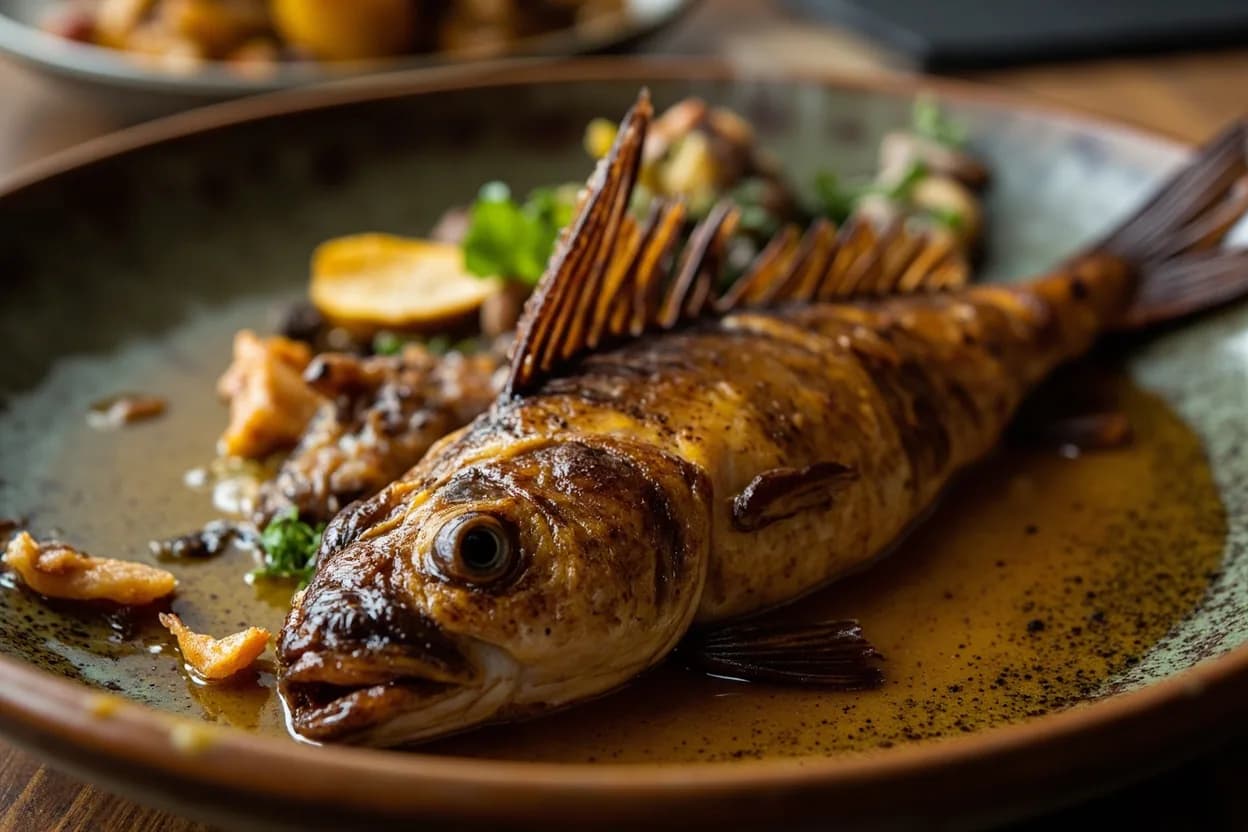
The dishes that define Iraqi Jewish (Baghdadi), documented in the Canon.
References
- 1.Claudia Roden, 'The Book of Jewish Food' (1997)
- 2.Rivka Goldman, 'Mama Nazima's Jewish Iraqi Cuisine' (2006)
- 3.Nawal Nasrallah, 'Delights from the Garden of Eden: A Cookbook and History of the Iraqi Cuisine' (2003)
- 4.Sami Zubaida & Richard Tapper (eds.), 'A Taste of Thyme: Culinary Cultures of the Middle East' (2000)
Confidence: high
Notes
T'beet and the Shabbat clock
T'beet is one of the most elegant solutions in Jewish Shabbat cooking: a whole chicken, stuffed with spiced rice, set on low heat Friday afternoon, and left entirely untouched until Saturday noon. By morning the rice has absorbed every drop of fat and broth; the chicken falls apart; the pot bottom forms a golden crust. The dish solves the no-cooking-on-Shabbat constraint not through workarounds but through long, transformative time.
Kibbeh hamda — a soup with no translation
Hamda means 'sour' in Iraqi Arabic. The broth is deliberately made tart with tamarind, tomato, and celery, then studded with thin-shelled kibbeh. The combination of sour liquid and rich meat-stuffed dumplings has no close analog elsewhere in the Levantine canon — it is one of the most distinctively Baghdadi preparations in either Jewish or Muslim cookery.