South Asia
Iyengar (Tamil Brahmin)
Also: Iyengar cuisine, Tamil Brahmin cooking, Vaishnava Tamil cuisine
The strictly Vaishnavite vegetarian cooking of Tamil Brahmin communities, defined by the complete absence of onion and garlic and a sacred relationship between food and devotion.
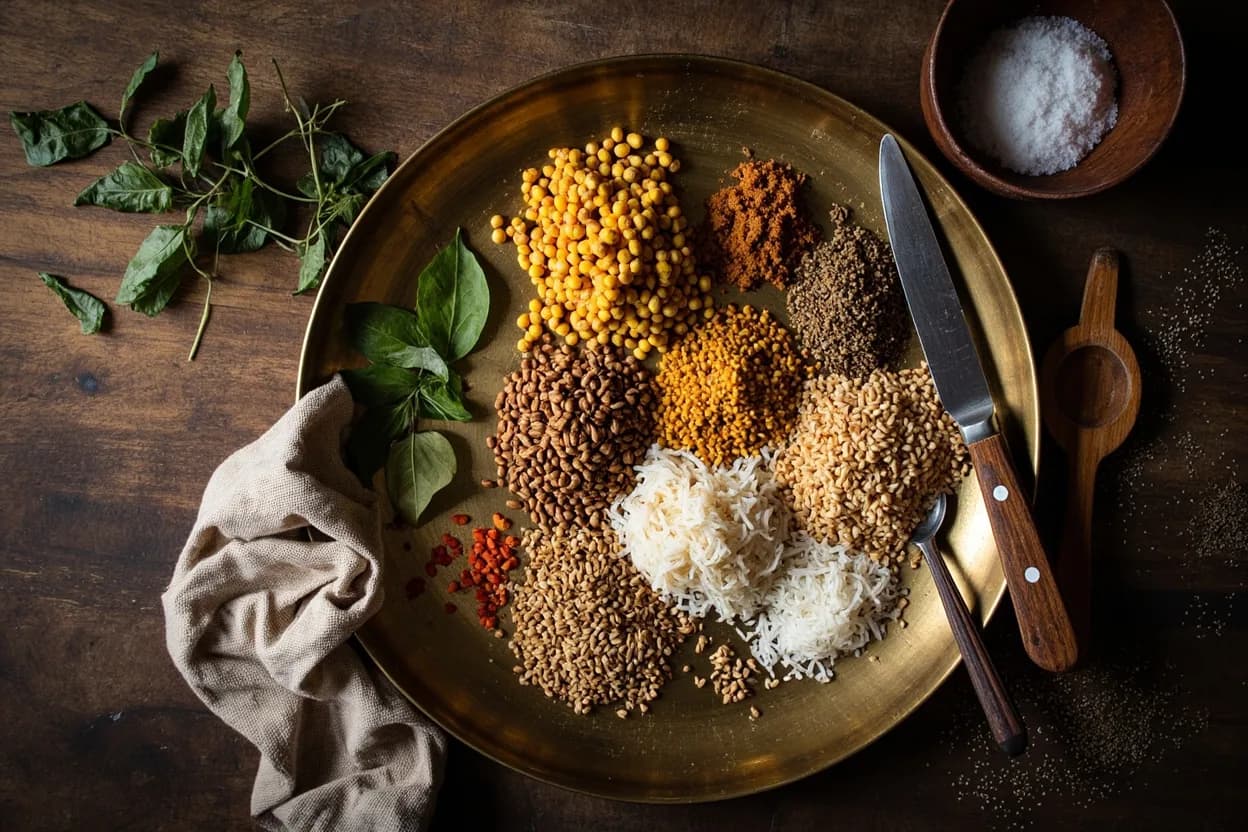
Iyengar cuisine is the culinary tradition of the Sri Vaishnava Brahmin community of Tamil Nadu, followers of the Vishishtadvaita philosophy of Ramanuja. The defining restriction is the avoidance of the five pungent roots — onion, garlic, shallot, leek, and chive — classified as rajasic foods that agitate the mind and obstruct spiritual practice. Flavor is built instead through asafoetida (perungayam), curry leaves, fresh ginger, tamarind, and a complex use of lentils. The cuisine encompasses temple food (prasadam) as its highest register, a vast repertoire of breakfast rice dishes, chutneys, and the beloved Iyengar bakery tradition of Bengaluru that has influenced South Indian urban snack culture for over a century.
The flavour base
Asafoetida-tempered ghee or sesame oil with curry leaves, dried red chillies, and mustard seeds; tamarind provides tartness in the absence of alliums
Pantry staples
Key ingredients
Signature techniques
Signature dishes
Iyengar (Tamil Brahmin) on the table
At the table
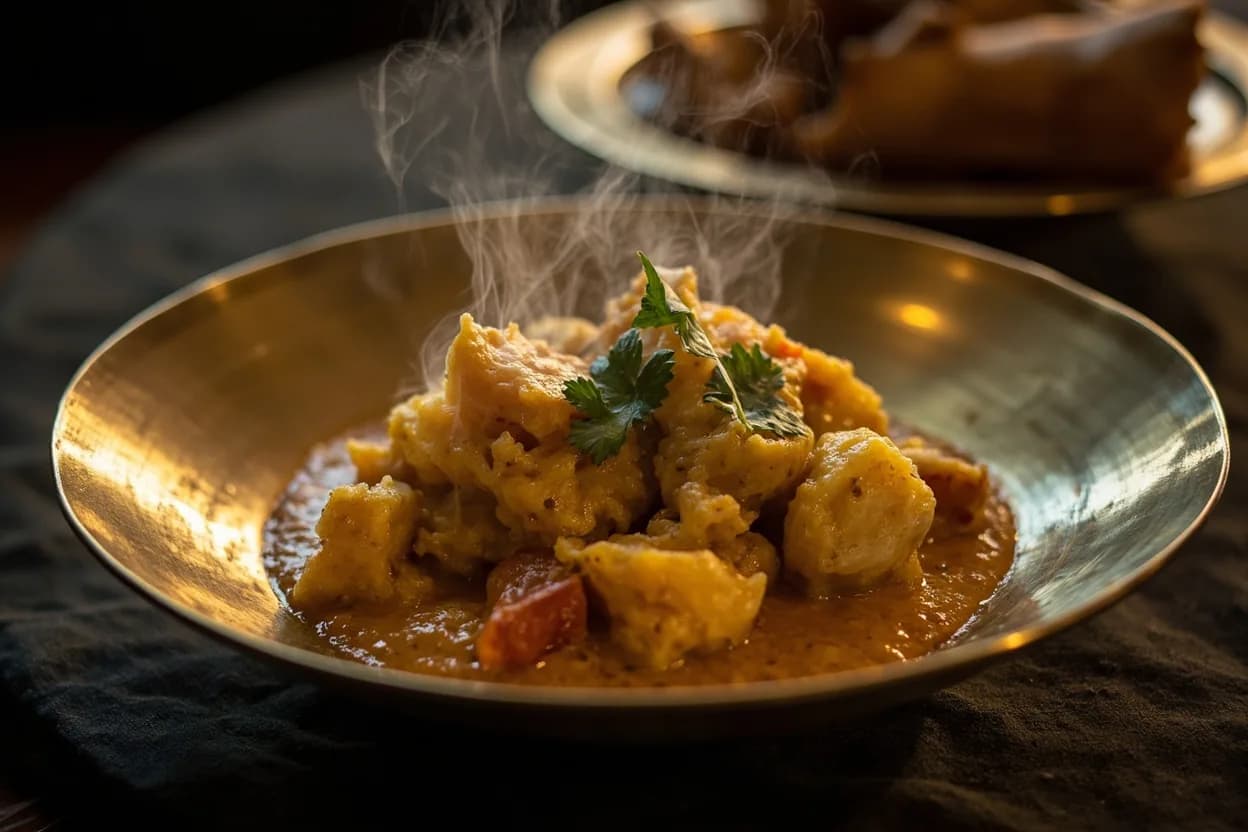
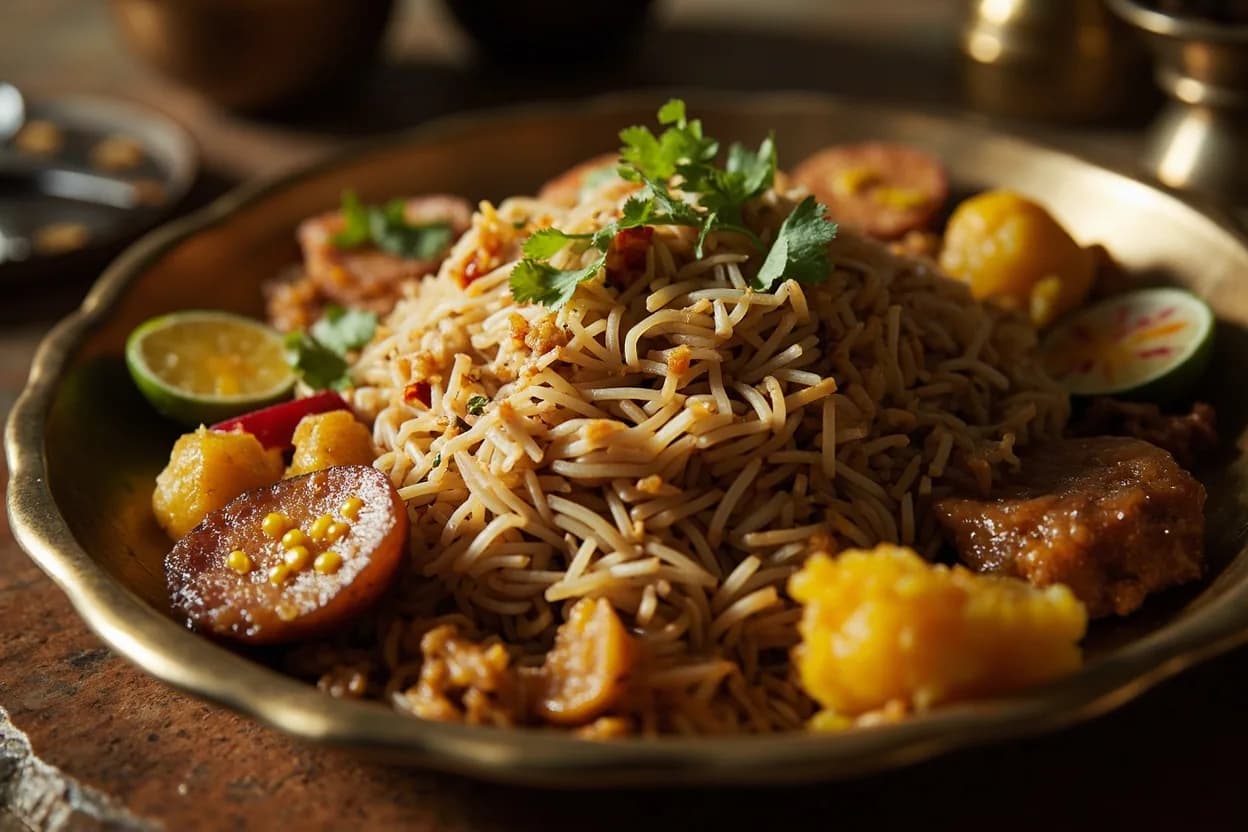
The traditional Iyengar meal is served on a banana leaf: rice anchors the plate, surrounded by sambar, rasam, kootu (vegetable-lentil preparation), poriyal (dry vegetable), appalam, and pickle, with curd rice as the final course. Meals follow a ritual sequence rooted in temple meal conventions. Breakfast culture is elaborate: tiffin items such as pongal, idli, dosai with multiple chutneys and sambar are prepared fresh. The Iyengar bakery tradition — savory khari biscuits, sweet buns, khara bun — evolved as a commercial extension of this domestic precision.
History & context
The Iyengar community traces its religious and culinary identity to the 11th–12th century reformist teachings of the philosopher-saint Ramanuja, who established the Sri Vaishnava tradition across the Kaveri delta and later Mysore. Temple service shaped cooking standards: Iyengars served as temple cooks and administrators, and the exacting purity requirements of temple kitchens — including the prohibition of onion and garlic — transferred wholesale into domestic practice. The community's migration to Bengaluru (Bangalore) from the 18th century onward, particularly under Mysore Wodeyar patronage, established what became the iconic 'Iyengar bakery' — a fusion of South Indian vegetarian tradition with colonial bread-baking technique, producing the khara bun, khari biscuit, and plait bread that remain staples of the city. The cuisine's precision and restraint reflect a theology in which food preparation is itself devotional practice.
Regional variations
- Mysore / Bengaluru Iyengar
More Kannada influence in spice use; home of the famous Iyengar bakery tradition; broader use of coconut and raw banana
- Kanchipuram (Thenkalai)
Closer to Kaveri-belt Tamil style; Kanchipuram idli is a local specialty made with cumin, pepper, and gingelly oil baked in a plantain leaf
- Srirangam and Kaveri delta
Temple-town food culture; most strictly traditional; rice-based dishes and temple prasadam dominate
Related cuisines
Broad parent tradition from which Iyengar cuisine diverges through religious restriction and Brahmin lineage
- Karnataka
Significant overlap especially in bisibele bath, rasam, and the bakery tradition of Bengaluru
- Udupi
Fellow South Indian Brahmin vegetarian tradition; Udupi cuisine also avoids onion-garlic but has its own Tulu-coastal identity
Canonical recipes
The dishes that define Iyengar (Tamil Brahmin), documented in the Canon.
References
- 1.Samayal: The Art of South Indian Vegetarian Cooking — Chandra Padmanabhan
- 2.The Complete Book of Indian Cooking — Suneeta Vaswani
- 3.Feeding India — Colleen Taylor Sen (chapter on Brahmin vegetarianism)
- 4.Sri Vaishnava Encyclopaedia — Rangaramanuja Muni (on temple food traditions)
Confidence: high
Notes
The bakery paradox
Iyengar bakeries in Bengaluru — Brahmin-owned, strictly vegetarian — adopted colonial Portuguese and British baking techniques in the 18th and 19th centuries to produce breads and buns that became beloved street food across Karnataka. The khara bun (savory, spiced with green chilli and coriander) and the maska bun (split, slathered with white butter) bear no resemblance to temple prasadam yet flow from the same community's commercial food culture.
Podi culture
Dry spice powders (podi) are a hallmark of Iyengar pantry logic: idli podi (gunpowder), paruppu podi (lentil powder), ellu podi (sesame-chilli). Each household maintains its own ratios, passed across generations, and they substitute precisely where onion-garlic flavor might otherwise appear — adding depth without pungency.