Western Europe
Nouvelle Cuisine
Also: New French Cooking, La Nouvelle Cuisine Française
The 1970s French revolution that abolished flour-thickened sauces, shortened cooking times, and reframed the plate as a canvas — permanently reshaping how professional kitchens think about food.
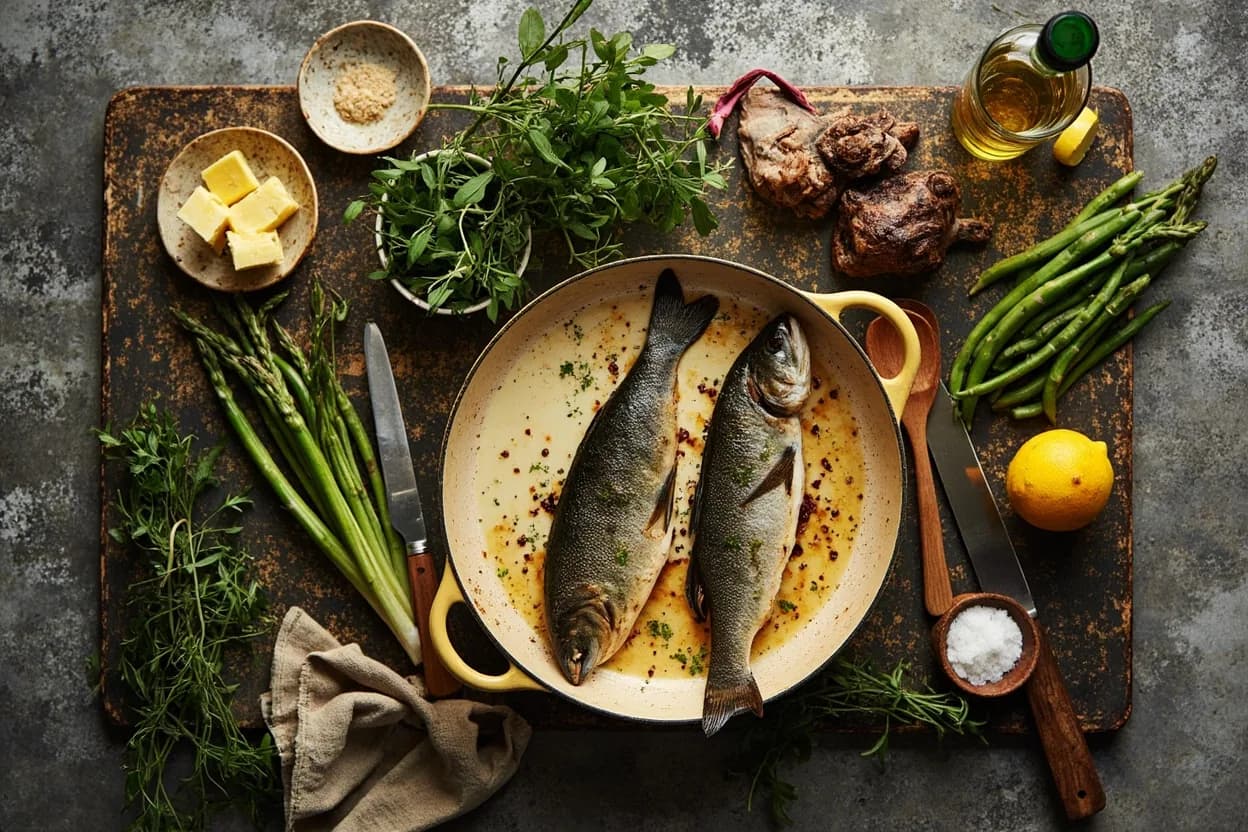
Nouvelle Cuisine was a deliberate, polemical reform of classical French haute cuisine announced by food critics Henri Gault and Christian Millau in a 1973 manifesto ('Vive la Nouvelle Cuisine Française') and embodied by a generation of chefs including Paul Bocuse, Michel Guérard, the Troisgros brothers, Alain Chapel, and Roger Vergé. Its ten commandments included: abandon unnecessary complication; shorten cooking times (vegetables crunchy, fish barely set); use only fresh, seasonal produce; embrace regional products; eliminate rich sauces (Espagnole, béchamel); ignore dietetic constraints not wisely; no marinating or hanging of game; eliminate rich desserts; invent new dishes constantly; use new equipment (Bocuse adopted the Moulinex food processor, Guérard explored steam). The practical result was plate-sauces built from vegetable purées, reductions, and vinaigrettes rather than roux; portions that looked small; and an architectural sensibility in plating that treated the white plate as negative space.
The flavour base
Vegetable and herb purées, court-bouillons, and natural cooking juices replace stock-thickened mother sauces. Vinaigrettes and lemon brighten rather than cream and butter weigh down. The beurre blanc — a Muscadet-shallot-butter emulsion without flour — became the movement's emblematic 'clean' sauce.
Pantry staples
Key ingredients
Signature techniques
Signature dishes
Nouvelle Cuisine on the table

At the table
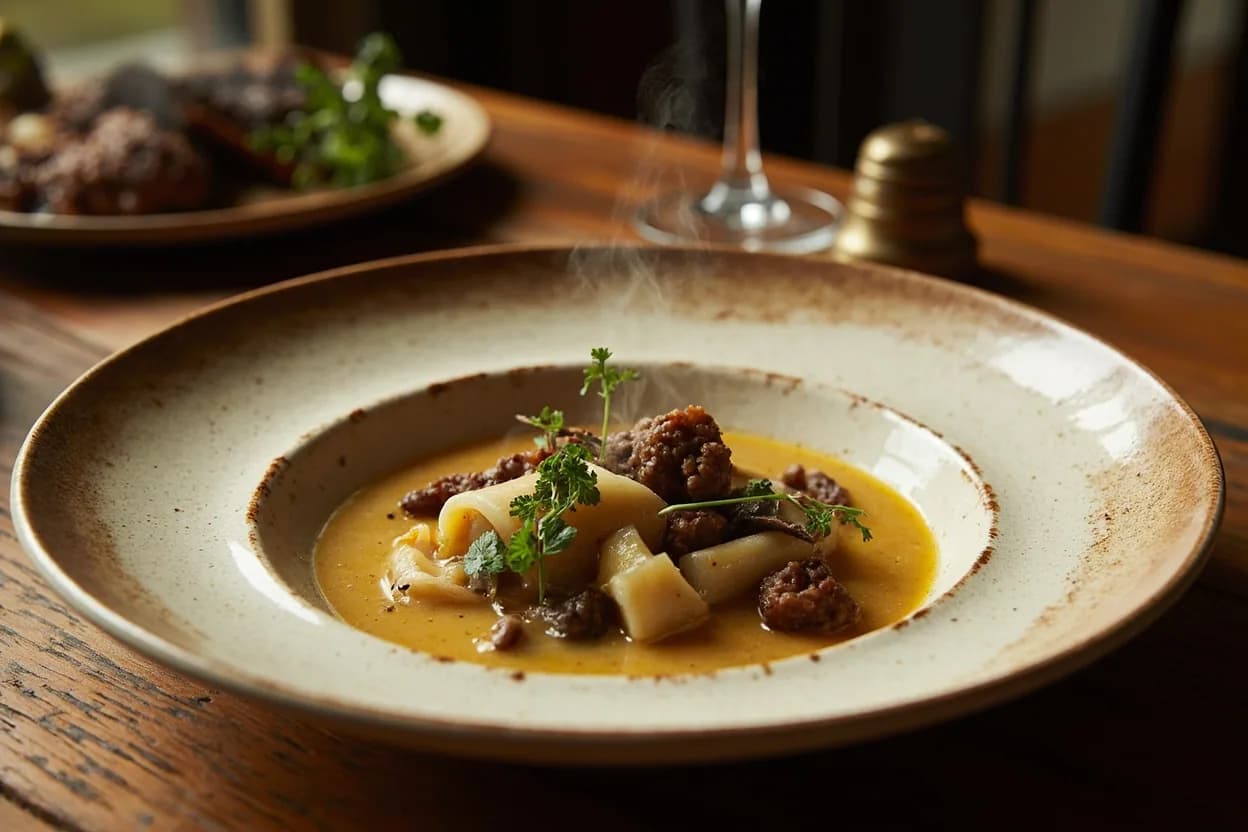
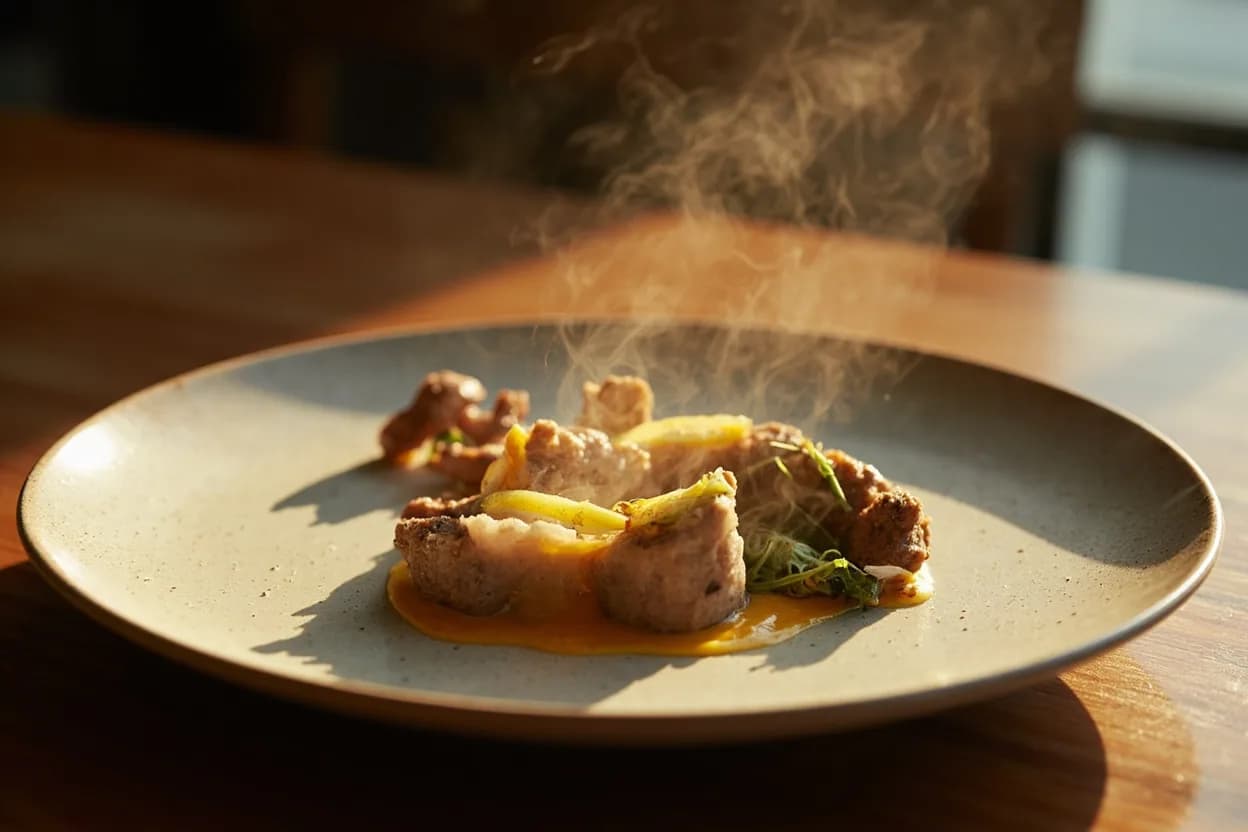
The nouvelle cuisine restaurant meal retained the formal multi-course structure of haute cuisine but compressed it: fewer courses, smaller portions, lighter progression. The diner could eat a full menu without the leaden aftermath of a classical dinner. Wine remained central but the fashion shifted toward lighter Burgundies and Loire whites that matched the brighter flavors. The minimally garnished plate — protein precisely centered, sauce spooned around rather than over — became the default visual language of fine dining worldwide.
History & context
The movement crystallized around a cluster of chefs in Lyon and the Rhône-Alpes region who had trained under Fernand Point at La Pyramide in Vienne — Point himself was the bridge figure who insisted on butter freshness and product quality inside a classical framework. His students radicalized his intuitions. In 1973 Gault and Millau's ten commandments gave the movement a name and a manifesto. The chefs were photographed together for a 1975 cover of L'Express, cementing their identity as a group rather than individual eccentrics. By the late 1970s the movement was global: it influenced American New American Cuisine (Alice Waters, Jeremiah Tower), Italian Nuova Cucina, and Japanese kaiseki's fine-dining evolution. Its excesses — ludicrously small portions, arbitrary architectural constructions, fashion over flavor — became self-parody by the mid-1980s. The backlash in France produced the bistronomy movement (accessible bistro cooking by trained chefs) and ultimately the terroir-rooted naturalism of contemporary French cooking.
Regional variations
- Lyonnaise center
Bocuse, Troisgros (Roanne), Chapel (Mionnay) — the movement's heartland, rooted in product quality of the Rhône-Alpes.
- Cuisine Minceur (Guérard)
Michel Guérard's spa variant at Eugénie-les-Bains applied nouvelle principles to diet cooking, eliminating butter without sacrificing flavor through herb stocks and vegetable emulsions.
- Côte d'Azur
Roger Vergé at Mougins added Provençal olive oil, tomato, and herb generosity to the nouvelle palette, creating a sunnier southern sub-current.
Related cuisines
The tradition nouvelle cuisine explicitly rebelled against, while retaining its luxury-ingredient context and formal service.
The technique base that nouvelle chefs had all mastered before reforming it.
- New American Cuisine
Alice Waters and California cuisine drew directly on nouvelle's seasonal, product-first ethic.
Canonical recipes
The dishes that define Nouvelle Cuisine, documented in the Canon.
References
- 1.Vive la Nouvelle Cuisine Française — Henri Gault & Christian Millau (Le Nouveau Guide, 1973)
- 2.La Nouvelle Cuisine — Répertoire des recettes — Michel Guérard (1976)
- 3.On Food and Cooking — Harold McGee (2004)
- 4.The Perfectionist: Life and Death in Haute Cuisine — Rudolph Chelminski (2005)
Confidence: high
Notes
The VGE truffle soup
Bocuse's 'soupe aux truffes noires V.G.E.' — a domed puff-pastry lid sealing black truffles in consommé, created for French President Valéry Giscard d'Estaing when Bocuse received the Légion d'Honneur in 1975 — became the emblem of a movement caught between anti-establishment rhetoric and the political establishment's table. It is still on the menu at his Collonges restaurant unchanged.