Western Europe
Haute Cuisine
Also: Grande Cuisine, High Cuisine, Cuisine Gastronomique
The pinnacle of French restaurant cooking — precision technique, luxury ingredients, and theatric presentation — that has defined the global imagination of fine dining since Carême.
Haute cuisine is the tradition of elite French cookery practiced at the level of the grand restaurant: Michelin-starred establishments, palace hotels, and the tables of heads of state. It is distinguished from ordinary French cooking by the use of luxury ingredients (truffles, foie gras, caviar, ortolan historically), a fanatical commitment to technical perfection, and presentation conceived as visual composition. Where classical French cooking is a codified system of technique, haute cuisine is its most demanding application — a context where a sauce may take three days to produce and a single garnish is positioned with tweezers. The category runs from Carême's monumental pièces montées through Escoffier's Savoy kitchens, to Bocuse and the Troigros brothers' innovations, to the molecular experiments of the early 2000s and the return to naturalism in contemporary three-star cooking.
The flavour base
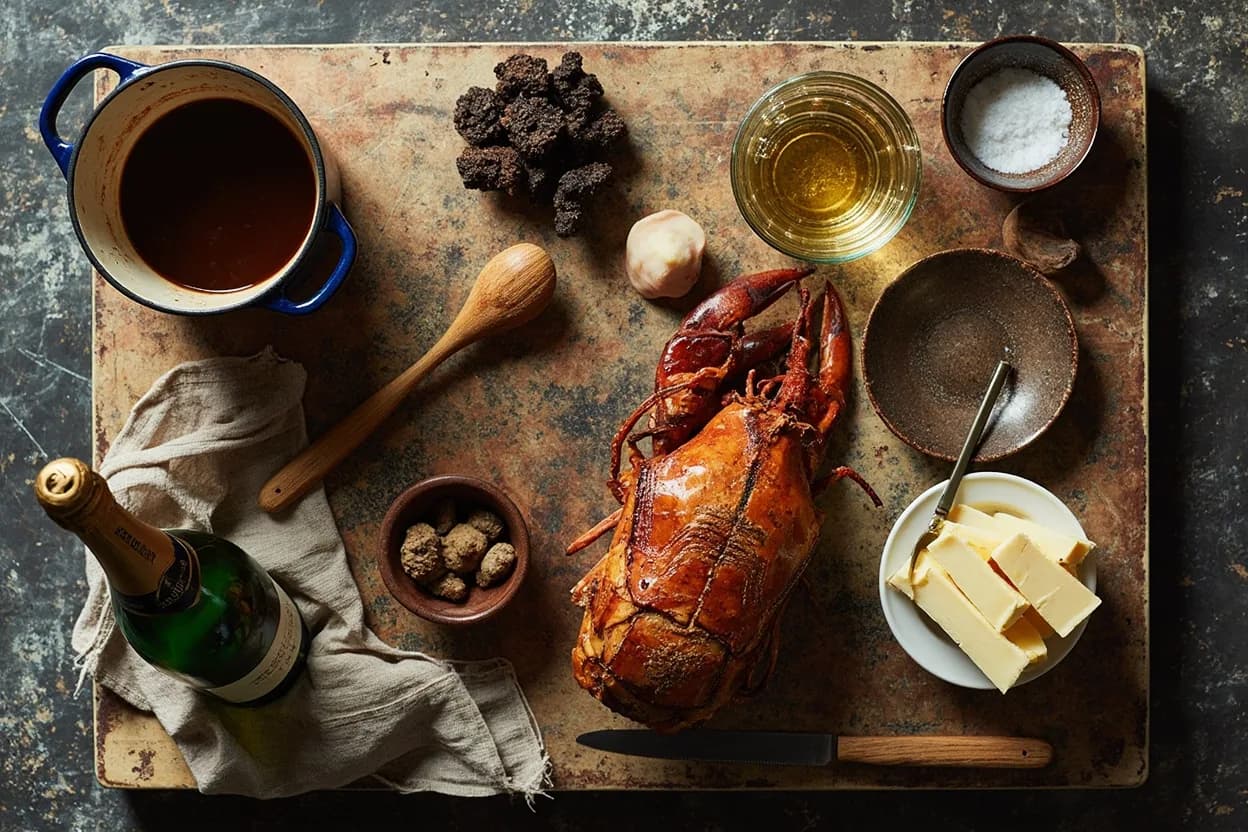
Ultra-reduced veal and poultry stocks (glace de viande, demi-glace) provide the concentrated foundation. Butter — in extraordinary quantities, in forms from beurre blanc to beurre composé — is the primary enricher and emulsifier. Truffles provide the defining luxury aromatic, shaved at table or incorporated into sauces. Wine and Cognac reductions amplify depth.
Pantry staples
Key ingredients
Signature techniques
Signature dishes
Haute Cuisine on the table
At the table
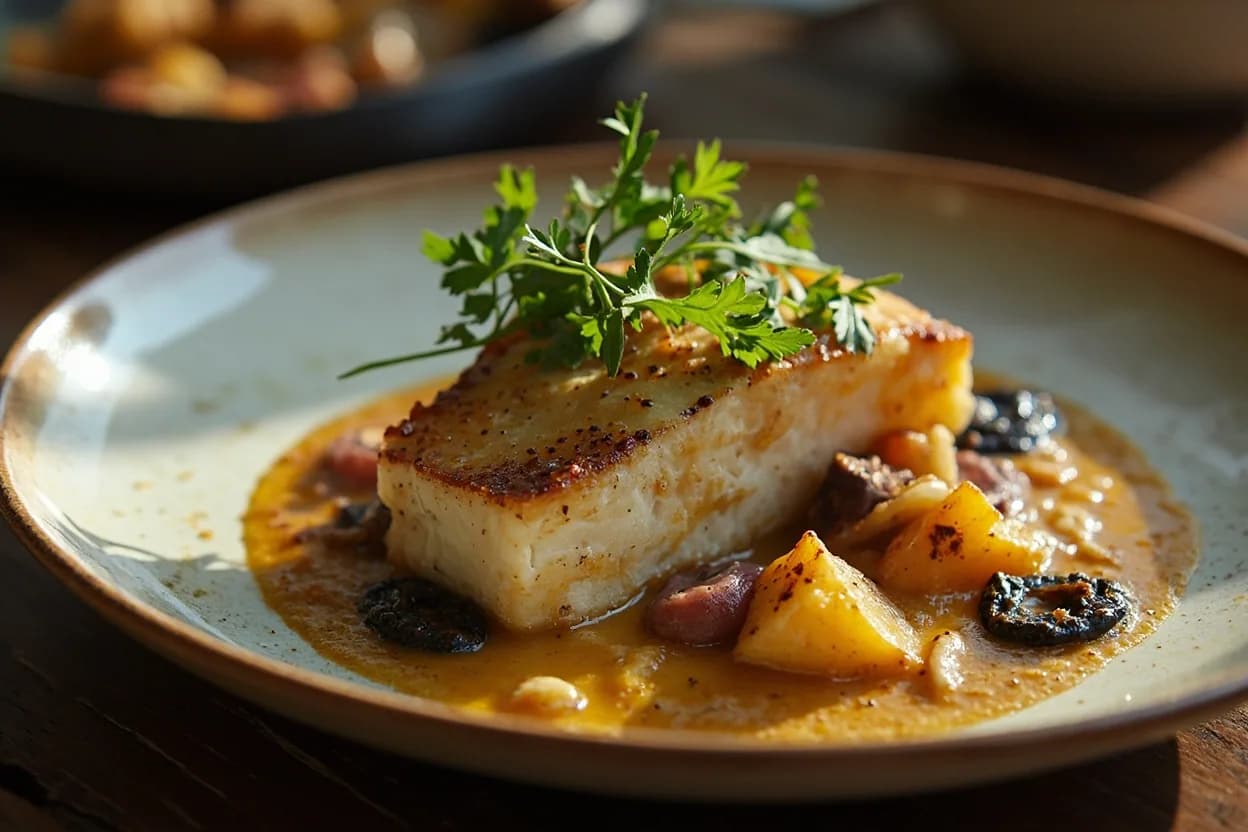
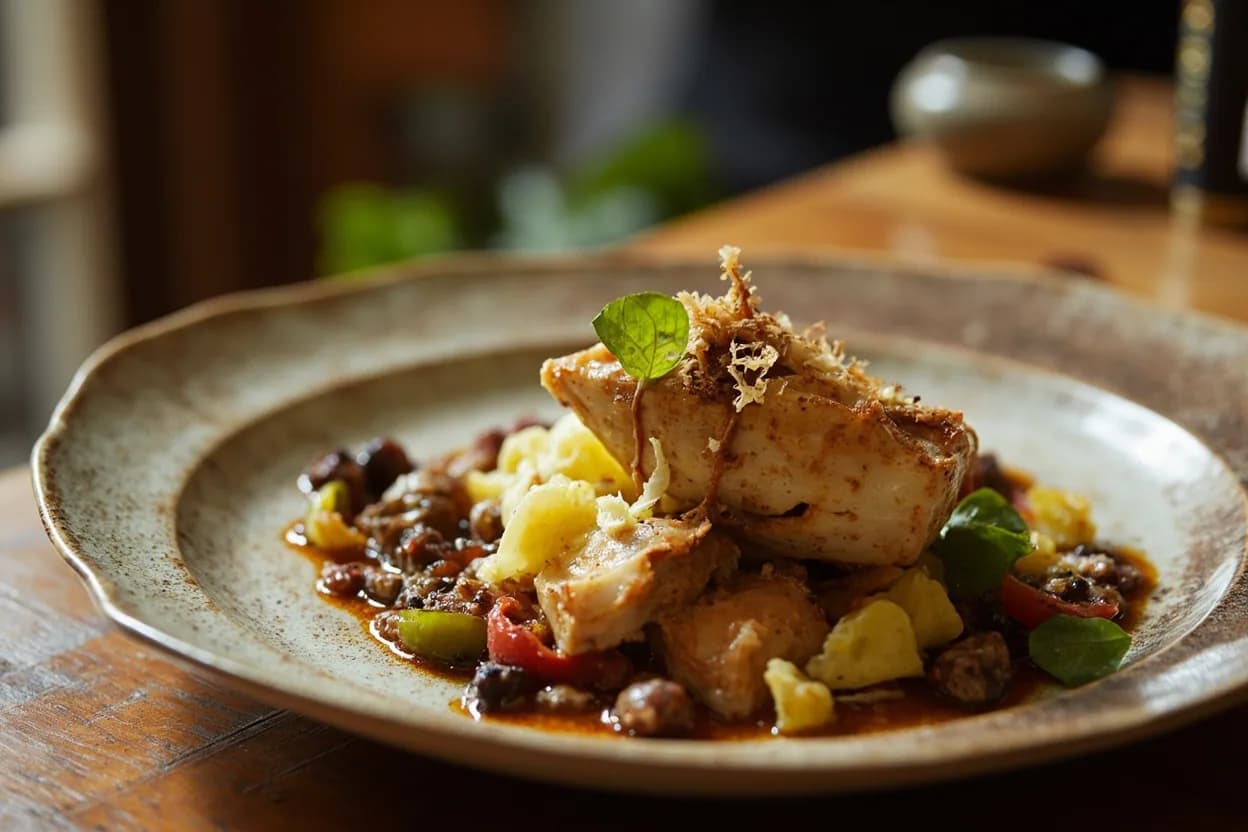
The haute cuisine meal is typically eight to fourteen courses, each arriving as a composed plate with the protein, sauce, and garnish in precise arrangement. Amuse-bouches open; mignardises close. Wine pairings are course-by-course. The pace is orchestrated — courses have named roles (amuse, entrée froide, poisson, viande, fromage, pré-dessert, dessert) and timing is choreographed between kitchen brigades and a maître d'. The diner is a passive recipient of a narrative the kitchen controls.
History & context
Marie-Antoine Carême, working for Talleyrand, Tsar Alexander I, and the Prince Regent, established the concept of cooking as high art in the early 19th century — his sugar sculptures and architectural centerpieces were political statements. His four-volume L'Art de la Cuisine Française codified the grande cuisine sauces and the classical French meal structure. Escoffier, working the Savoy and Ritz kitchens 1890–1920, rationalized Carême's baroque complexity for the emerging grand hotel trade and invented many dishes (Pêche Melba, Poire Belle Hélène) as theatrical celebrity tributes. After WWII, the Michelin Guide's star system made haute cuisine legible to the bourgeoisie, and the Guide became the arbiter of who counted. The Nouvelle Cuisine generation (Bocuse, Guérard, Troigros, Chapel) challenged Escoffier's flour-thickened orthodoxy in the 1970s but retained the luxury-ingredient frame. By the 1990s, Ferran Adrià (elBulli) and Heston Blumenthal (The Fat Duck) pushed technique into food science, earning the label 'molecular gastronomy.' Contemporary three-star cooking has since retreated from theatrical science toward terroir-rooted minimalism, but the defining marks — impeccable sourcing, invisible labor, orchestrated service — remain unchanged.
Regional variations
- Lyonnaise haute cuisine
Paul Bocuse's tradition at Collonges-au-Mont-d'Or preserves a more robust, product-driven interpretation versus Parisian luxury refinement.
- Contemporary Nordic inflection
Some French three-star kitchens now incorporate fermentation and foraging influences borrowed from New Nordic but recast in classical service form.
Related cuisines
Haute cuisine is the fullest and most demanding application of classical French technique.
A reform movement that emerged from within haute cuisine to challenge its sauce-heavy orthodoxy.
- New Nordic
The 21st-century movement that most directly contested haute cuisine's hegemony over fine-dining vocabulary.
Canonical recipes
The dishes that define Haute Cuisine, documented in the Canon.
References
- 1.L'Art de la Cuisine Française — Marie-Antoine Carême (1833)
- 2.Ma Cuisine — Auguste Escoffier (1934)
- 3.The Whole Beast: Nose to Tail Eating — Fergus Henderson (2004)
- 4.Larousse Gastronomique (2009 edition)
- 5.Life, on the Line — Grant Achatz & Nick Kokonas (2011)
Confidence: high
Notes
The Michelin star as economic structure
Three-star restaurants in France frequently operate at a loss or marginal profit on food alone; the business model depends on affiliated products (cookbooks, branded items, consulting), tourism spending in the surrounding region, and in several cases direct state or municipal subsidy as cultural institutions. The stars are as much political economy as culinary judgment.