Southern Europe
Sardinian
Also: Cucina Sarda, Cuisine of Sardinia, Sarda
An island apart — ancient shepherd food, amber bottarga, paper-thin bread, and a wine culture older than Rome.
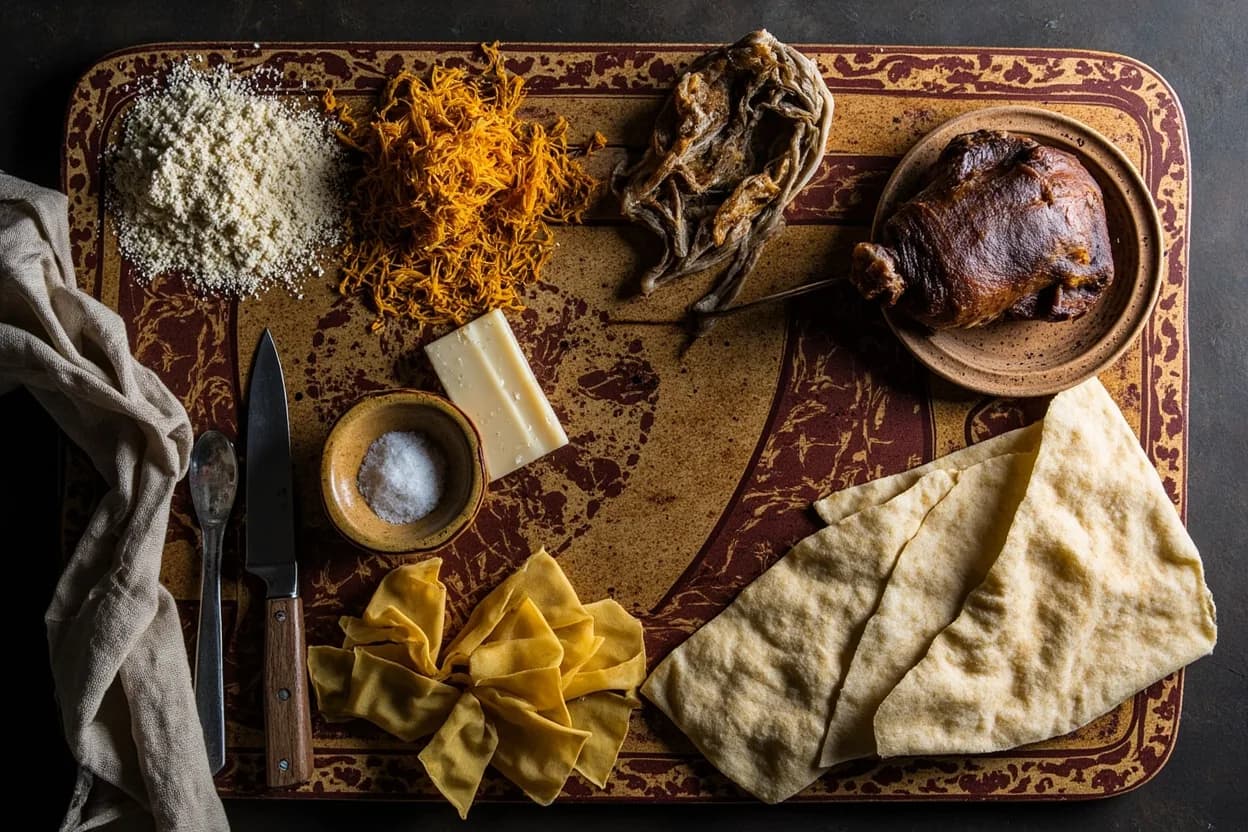
Sardinian cuisine is arguably the most distinct regional cuisine in Italy — linguistically, historically, and gastronomically separate from the mainland. The island's interior was shaped by transhumant pastoralism: shepherds moving flocks between highland and coastal pastures, carrying dried bread, aged pecorino, and cured meats as provisions. This inland pastoral culture is the soul of Sardinian cooking — not the sea, despite being an island. The coast offers bottarga (cured mullet roe), sea urchin, and lobster (aragosta), but the true Sardinian kitchen is one of roasted suckling pig, hand-rolled pasta in ancient shapes (culurgiones, malloreddus, su filindeu), and a dairy culture centred on pecorino sardo and fresh ricotta. The cuisine predates Roman conquest and retains pre-Roman Nuragic cultural DNA.
The flavour base
Lard (rendered from the island's black pigs), saffron from Sardinia's own Campidano plain, and fresh myrtle (mirto) define the dominant aromatic base; bottarga brings concentrated umami on the coast.
Pantry staples
Key ingredients
Signature techniques
Signature dishes
Sardinian on the table
At the table
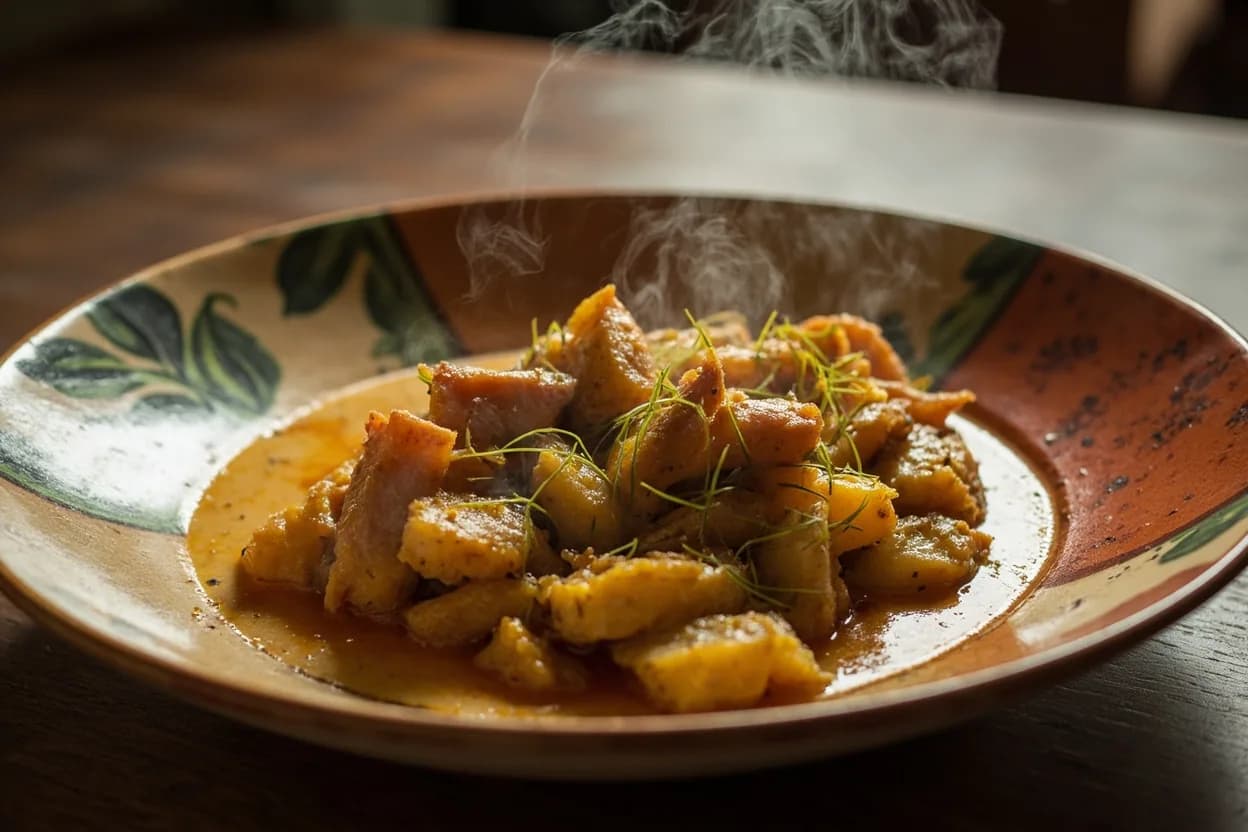
Traditional Sardinian meals in the interior are structured around meat and bread rather than pasta as the centrepiece — a reflection of the pastoral rather than agricultural economy. A feast (especially at village festivals or Sagre) begins with cold cuts and pecorino, moves to a pasta course (culurgiones or malloreddus), then the roasted whole suckling pig as the climax. Coastal meals invert this: seafood — raw sea urchin, bottarga, aragosta — take the starring roles. Cannonau is poured throughout; mirto liqueur closes the meal.
History & context
Sardinia's food culture stretches back to the Nuragic civilisation (c. 1800–250 BC), which left the island with a deeply self-sufficient pastoralist tradition. Phoenician, Carthaginian, Roman, Byzantine, Aragonese, and Savoyard rule all left traces but never fully absorbed the island's cultural core. The Aragonese brought saffron cultivation to the Campidano plain; Arab influence from the medieval period may explain the couscous-like fregola. Genoa's long commercial control of Alghero explains why the city still speaks Catalan. The shepherd culture that produced pane carasau (shelf-stable for months in the field) and aged pecorino sardo also correlates with Sardinia's 'Blue Zone' status — the highest concentration of male centenarians in the world — though the dietary connection is debated.
Regional variations
- Campidano (south)
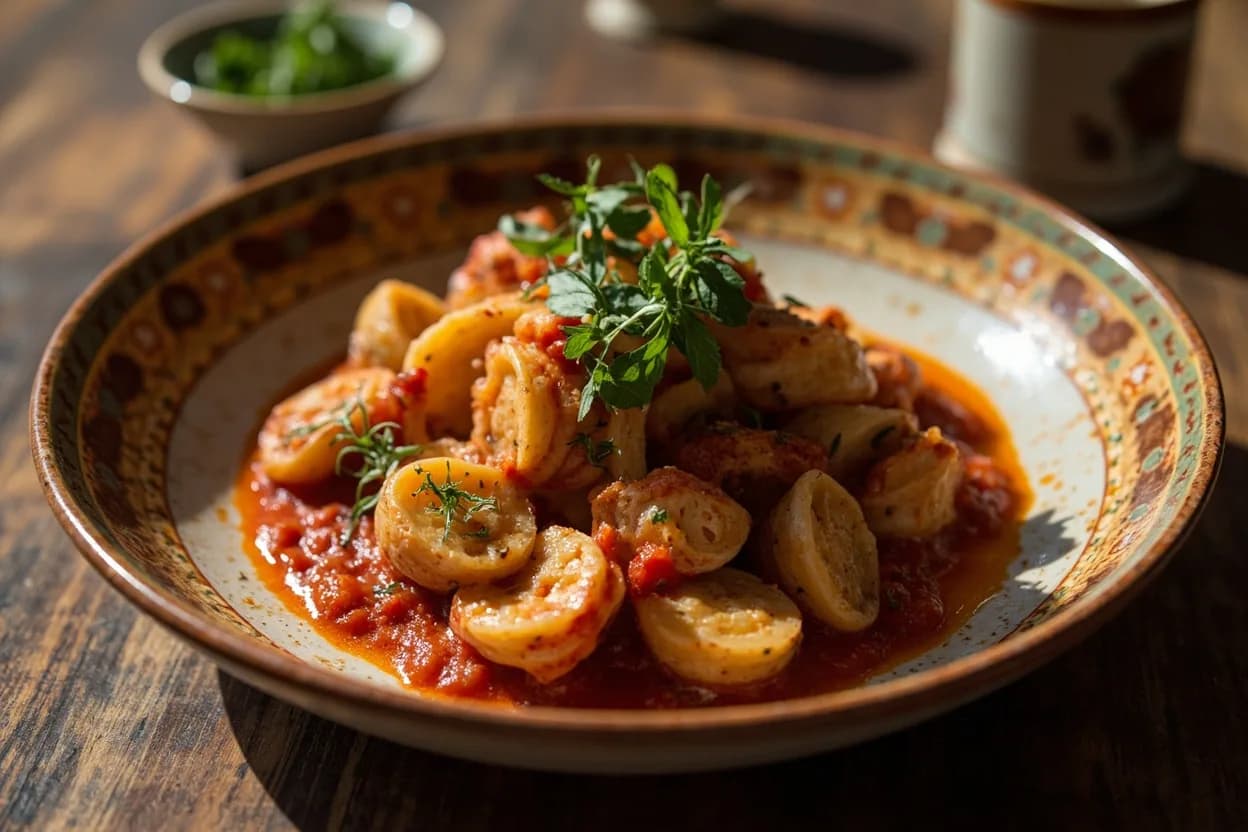
Sardinia's agricultural heartland; saffron is grown here; malloreddus alla campidanese with saffron and sausage is the coastal plain's signature dish; Cagliari brings Arab-influenced couscous-adjacent fregola.
- Barbagia (interior highlands)
The most ancient pastoral zone; porceddu reigns; aged Pecorino di Filiano and Fiore Sardo; su filindeu is made here in Nuoro; wild boar and lamb dominate.
- Gallura (north)
Cork oak country; zuppa gallurese (layered bread and cheese baked in broth) is the north's distinctive dish; aged Pecorino Romano was originally produced here; lobster from the coast.
- Alghero coast
Catalan-speaking enclave; aragosta alla catalana (spiny lobster with tomato and onion) is the iconic dish; Catalan culinary influences persist in preparation methods.
Related cuisines
- Corsican
Neighbouring island shares pastoral pork culture, charcuterie traditions, and a resistance to mainland cultural absorption; both have distinct ancient languages.
Centuries of Aragonese/Catalan rule left culinary traces in Alghero; the romesco-adjacent suquet de peix and lobster preparations show direct descent.
Arab influence visible in both cuisines — couscous (Sicily), fregola (Sardinia); both islands have ancient grain cultures and strong pecorino traditions.
References
- 1.Sardinia: Island of Giants (food chapters), various contributors, Touring Club Italiano
- 2.Gastronomy of Italy, Anna del Conte, Pavilion Books
- 3.The Food of Italy, Waverley Root, Vintage Books
- 4.Pasta Grannies: The Secrets of Italy's Nonne, Vicky Bennison, Hardie Grant
Confidence: high
Notes
Su filindeu
Su filindeu ('the threads of God') is considered one of the rarest pasta forms in the world. Made only in Nuoro, it involves stretching semolina dough into 256 progressively thinner threads by repeatedly folding and pulling over a round cushion, creating a net. It is served only twice a year, at the pilgrimage feast of San Francesco di Lula, in a broth of sheep meat and Pecorino. Only a handful of women still know the technique.
Cannonau and the Blue Zone
Cannonau (Grenache) is Sardinia's dominant red grape and one of the highest in polyphenols of any wine grape. Sardinia's Ogliastra province is one of the world's five 'Blue Zones' — areas with extraordinary longevity — and daily moderate Cannonau consumption is cited as a potential contributing factor. The wine's high tannin and antioxidant load distinguishes it from lighter Grenache expressions elsewhere.