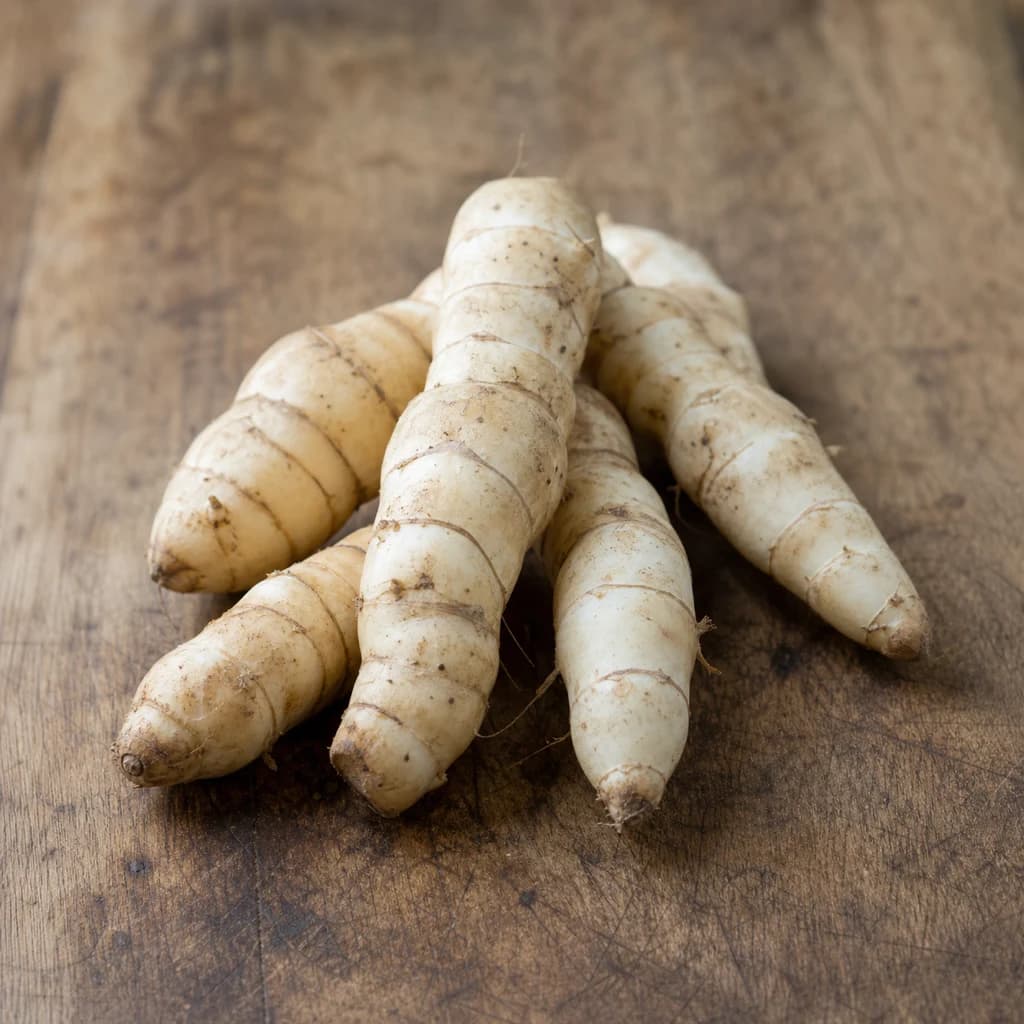
Natural form
Fresh arrowroot tubers showing their knobby, segmented ivory-white roots.
Shows the reader what raw arrowroot looks like in its intact harvested state, making the plant unmistakable.
Produce
Arrowroot
Starchy tropical tuber, boiled as a vegetable or dried into a clear thickening starch.
Arrowroot is a starchy tropical tuber that is boiled and eaten as a root vegetable in parts of Africa and the Caribbean, and is also processed into a fine, neutral thickening starch. As a starch it produces a clear, glossy sauce and sets at a lower temperature than cornstarch. The fresh root has a mild, slightly nutty flavor when cooked.
Arrowroot is a refined starch extracted from the rhizomes of Maranta arundinacea, a perennial plant native to the tropical Americas and Caribbean. The rhizomes are harvested 8–11 months after planting, washed, peeled, and dried into a fine white powder that is nearly 100% starch with no protein. In the 19th century, arrowroot was a major Caribbean export crop, particularly from Bermuda and St. Vincent—the name itself derives from the Carib people's practice of using the plant's juice to draw poison from arrow wounds. Fresh tubers carry a faint, pleasant earthy aroma that disappears entirely once dried.
Arrowroot's defining trait is the clear, glossy gel it produces when cooked, unlike flour or cornstarch which cloud liquids. This transparency makes it the thickener of choice when visual clarity matters—glazes, delicate sauces, and fruit fillings where you want to see the ingredients beneath. It thickens faster than most other starches, reaching viscosity around 147°F (63°C), but loses power above 185°F (85°C) and gels irreversibly if boiled. It also breaks down in acidic conditions below pH 4.5, making it unsuitable for long-simmered tomato sauces or lemon-heavy preparations. Arrowroot is valued in professional kitchens for quick hydration and rapid viscosity development—sauces come together faster when timed correctly, though this speed demands attention.
- Measured in
- g
- Storage
- Pantry
Types & varieties
The standard culinary starch; originates from the Caribbean and South America; the most refined and widely available form
Extracted from canna lily rhizomes; larger starch granules; used commercially but less refined than true arrowroot
From Curcuma species (often C. zedoaria); not a true Maranta; occasionally sold in its region of origin (India, Southeast Asia)
Thickening Mechanics
Arrowroot hydrates and thickens faster than other common starches. When added as a cold slurry to a hot liquid, it begins thickening around 147°F (63°C) and reaches full viscosity quickly. Unlike flour, which requires cooking to eliminate raw starch flavor, arrowroot's neutral taste means it can thicken without extended heat. The gel it forms is shear-thinning—it thins under stirring pressure but regains body when resting. This makes it useful for sauces that need to flow easily from a spoon but hold on the plate. The critical limitation is heat: sustained temperatures above 185°F (85°C) break the starch chains and thin the sauce irreversibly. Unlike cornstarch, which can be boiled and still hold, arrowroot must be added late and never boiled.
- Use roughly 2 teaspoons arrowroot to thicken 1 cup of liquid—equivalent to 1 tablespoon cornstarch or 1 tablespoon flour
- Always make a slurry: dissolve arrowroot in cold liquid first, then add to hot mixture
- Never add dry powder directly to hot liquid—it will clump instantly and refuse to hydrate
Working with Acid
Arrowroot's intolerance for acid is one of its most important practical limitations. Below pH 4.5, the starch molecules break down and lose thickening ability entirely. This rules out long-simmered tomato sauces, preparations with significant lemon or vinegar added early in cooking, and highly acidic fruit fillings that cook for extended periods. If you must use arrowroot in a mildly acidic mixture, add it as late as possible in the cooking process and expect to use slightly more than usual. Monitor viscosity carefully—once it thins from acid exposure, adding more arrowroot will not restore body. Citrus is the single most common failure point for arrowroot in home kitchens; respect this limitation.
- Never use arrowroot in a tomato sauce that simmers for 30 minutes or longer
- For lemon or lime glazes, add arrowroot at the very end and use sparingly
- Highly acidic tropical fruits like passion fruit require kudzu or tapioca instead
Common uses
Tips & pitfalls
- Always slurry first: dissolve arrowroot in cold liquid before adding to a hot mixture—never add dry powder directly to hot liquid, which causes clumping that no amount of stirring will fix
- Add arrowroot near the end of cooking; sustained high heat breaks the starch chains irreversibly and thins the sauce
- If your sauce thins after adding arrowroot, do not add more arrowroot to re-thicken—this compounds the problem; instead, remove from heat and stir vigorously, then plan to use lower heat or add earlier next time
- For a smoother, more stable texture in sauces, whisk in a small amount of neutral oil or fat after the arrowroot has thickened
- When using arrowroot in acidic liquids, add it as late as possible and expect to use slightly more; monitor viscosity carefully as the acid continues to work
- Arrowroot is not a direct substitute in recipes that call for flour as a roux base—roux requires the gelatinization of wheat starch plus the roux structure itself, not a pure starch powder
- Common mistake: using arrowroot for a dish that will be frozen and reheated—tapioca starch is far more freeze-thaw stable for casseroles, pot pies, and similar preparations
- Fresh arrowroot tubers can be boiled and eaten like potatoes; look for them in specialty Asian or Caribbean markets
Nutrition
Energy
272 kJ · per 100 g
Where the calories come from
Protein
4.2g
8% DV
Carbs
13.4g
5% DV
Fat
0.2g
0% DV
Fiber
1.3g
5% DV
Sodium
26mg
1% DV
Source · USDA FoodData Central · Arrowroot, raw
View on FDC →In the shops
Matched grocery products
 €0.72
€0.72Wheat Flour
BONPREU · kg · Bonpreu
 €0.72
€0.72Wheat Flour
Hacendado · 1 kg · Mercadona
 €1.45
€1.45GALLO Wheat Flour
GALLO · kg · Bonpreu
 €1.65
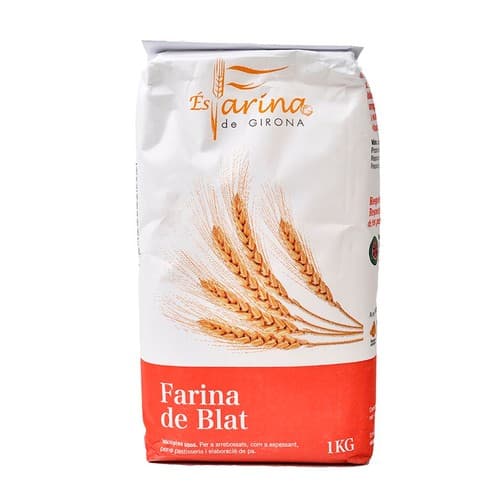
€1.65GIRONA Local Wheat Flour Km0
GIRONA · kg · Bonpreu
 €0.95
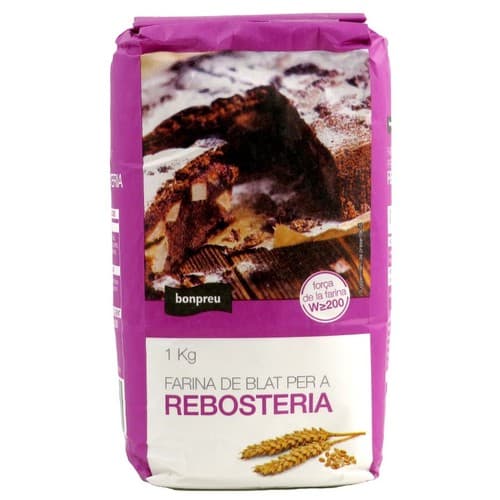
€0.95Wheat Flour for Pastry
BONPREU · kg · Bonpreu
 €1.20
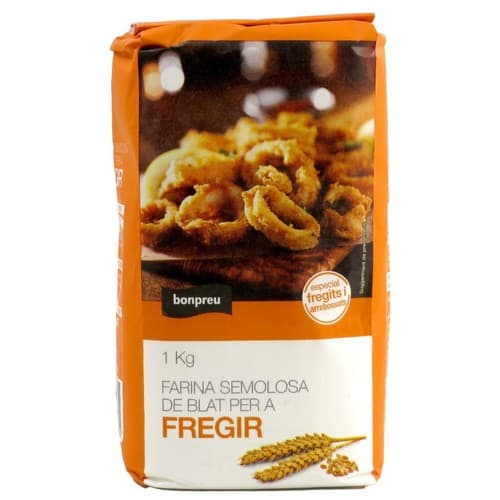
€1.20Wheat Flour for Frying
BONPREU · kg · Bonpreu
Good to know
- Origin
- Tropical Americas and Caribbean, now cultivated in Southeast Asia (Thailand, India, Indonesia, Philippines)
- Plant family
- Marantaceae
- Part used
- Rhizomes (underground stems), harvested 8–11 months after planting
- Form
- Fine white powder (most common); occasionally fresh whole tubers
- Flavor
- Neutral; adds no taste to dishes
- Color when cooked
- Clear and glossy; no cloudiness unlike flour or cornstarch
- Heat tolerance
- Thickens at 147°F (63°C); degrades above 185°F (85°C)
- pH sensitivity
- Breaks down below pH 4.5; avoid in acidic preparations like tomato sauce
- Freeze-thaw stability
- Poor; gels when frozen and thawed; not suitable for make-ahead frozen dishes
- Storage (powder)
- Indefinitely in an airtight container in a cool, dry, dark place
- Storage (fresh tuber)
- Refrigerate up to 1 week; wrap tightly to prevent drying
Substitutes
- Tapioca starch (tapioca flour) — Best all-around substitute; produces a slightly more elastic, chewier result; use 1:1 ratio; handles acidic ingredients and freezing better than arrowroot
- Potato starch — Good substitute; use 1:1 ratio; higher heat tolerance; adds a faint earthy note; clouds clear mixtures more than arrowroot
- Cornstarch — Widely available substitute; use equal amount; requires higher cooking temperature to thicken fully; produces an opaque result
- Kudzu starch (kuzu) — Japanese thickener derived from kudzu root; superior clarity and freeze-thaw stability; more expensive; use slightly less than arrowroot for equivalent thickness
- Sweet rice flour — Creates a sticky, cohesive texture rather than smooth; best in desserts and fillings where that character is desired; use slightly more than arrowroot
Pairs with
Also called
Nduma · Arrowroot Tuber
Appears in these dishes
Related
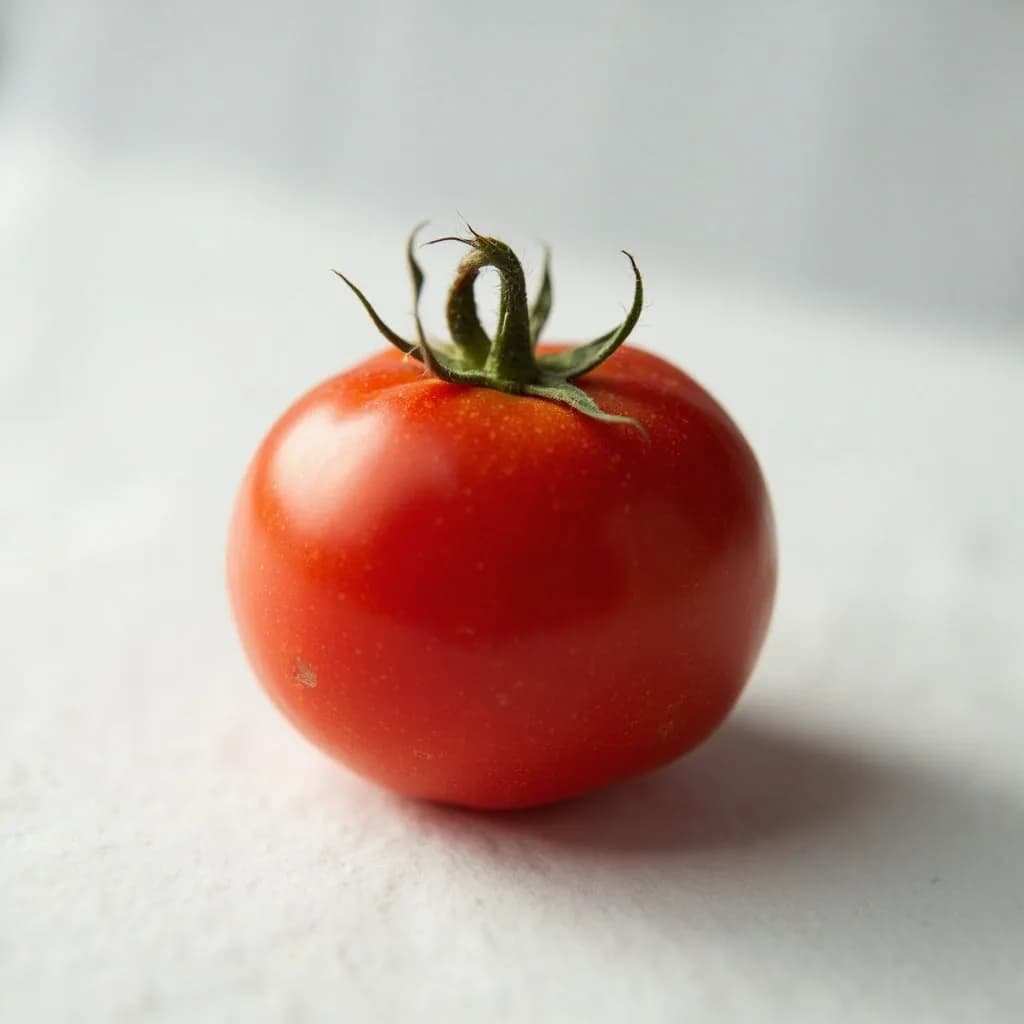
Tomato
Juicy, sun-sweet fruit for sauces, salads, and slow-cooked depth
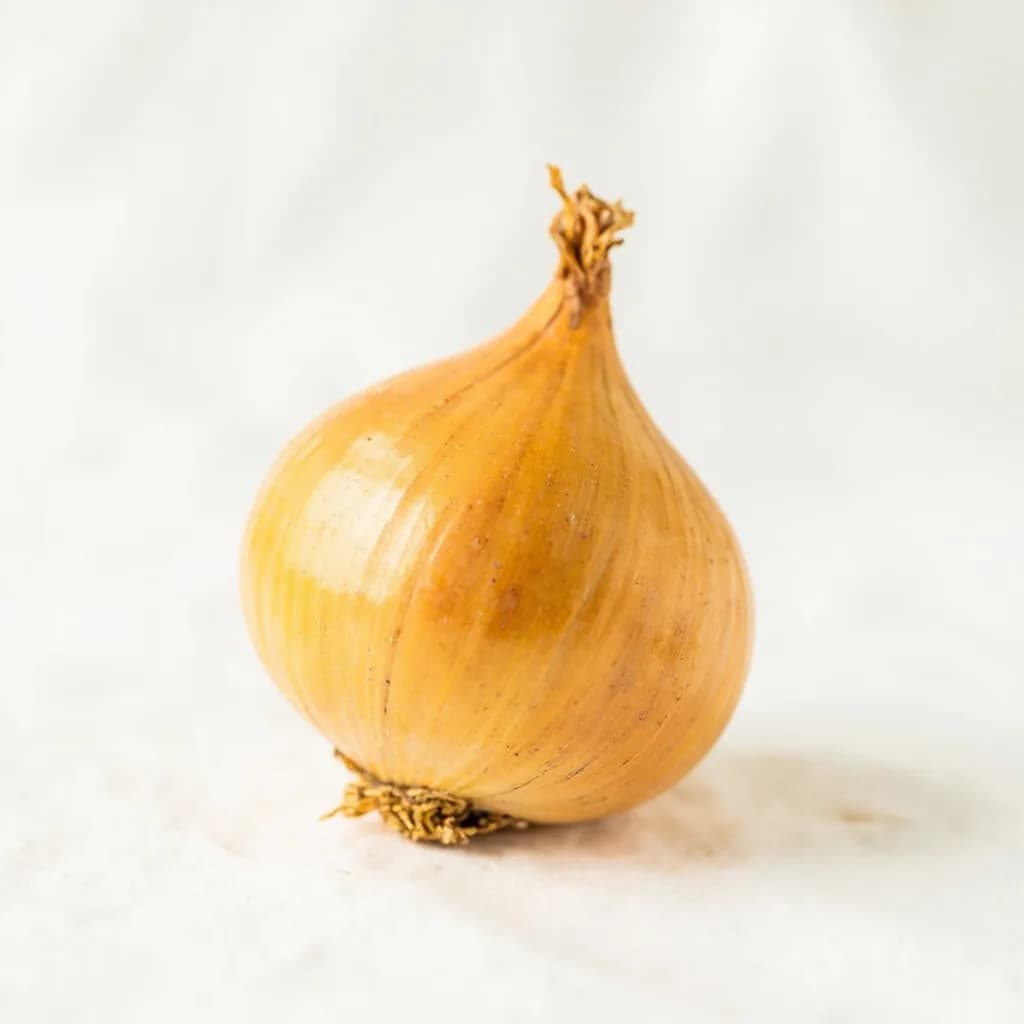
Yellow Onion
The aromatic backbone of soups, sofritos, and braises
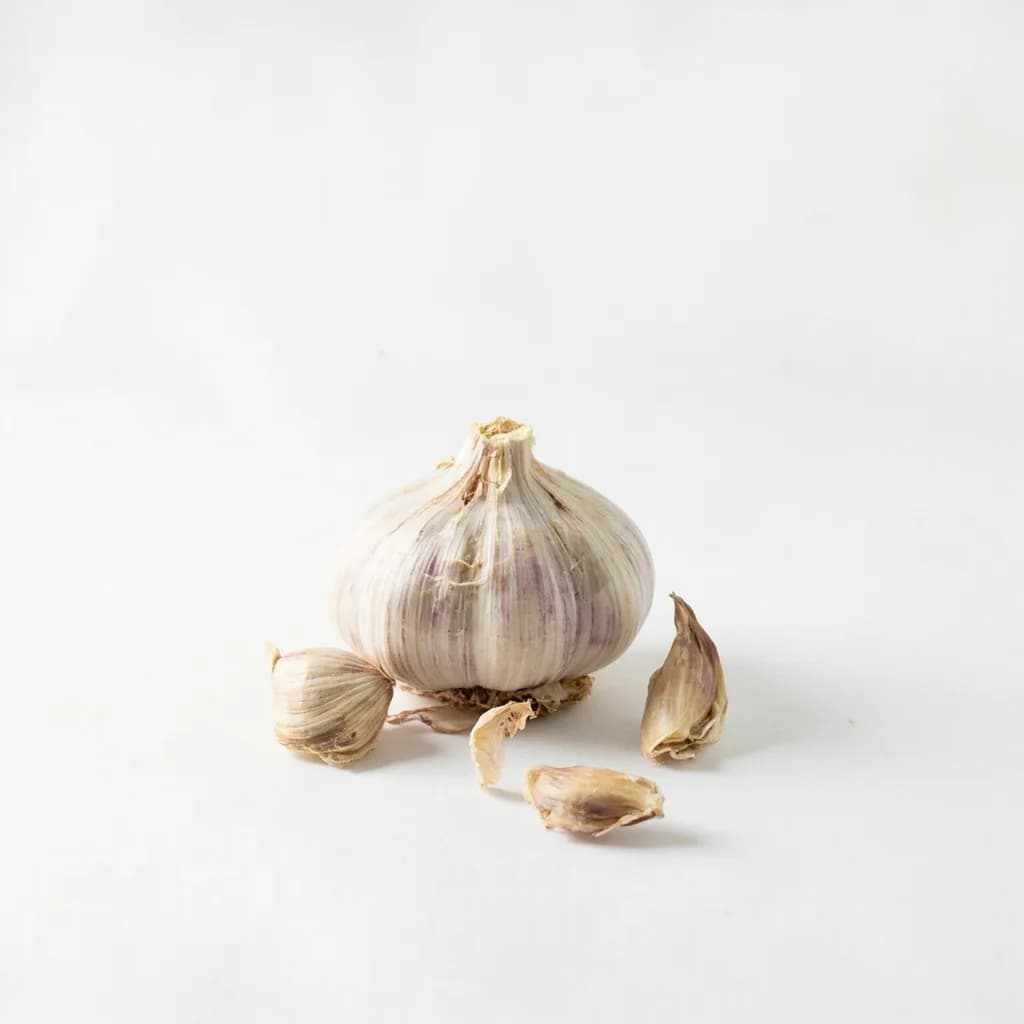
Garlic
Pungent cloves that perfume nearly every savory dish
Lemon
Bright, acidic citrus that wakes up almost any dish
Potato
Humble, hearty staple — roast, mash, fry, or boil
Carrot
Sweet, crunchy root — raw, roasted, or the base of a sofrito
Cucumber
Cool, crisp, and watery — for salads, pickles, and tzatziki

Lettuce
Crisp leaves for salads, wraps, and a fresh crunch