Baking
Tapioca Starch
Cassava-derived starch that thickens to a glossy, clear, stretchy gel; prized for chewy gluten-free bakes, boba, and bright fruit fillings that won't cloud.
Tapioca starch is the refined, near-pure starch washed and milled from the roots of cassava (Manihot esculenta), a woody South American tuber domesticated in the Amazon basin thousands of years ago and now grown across the tropics. The finished powder is exceptionally fine, bright white, and completely neutral in flavor, which is exactly why cooks reach for it: it thickens without imposing color, taste, or cloudiness. Its claim to fame in a working kitchen is the clarity and gloss of its gel — pie fillings, glazes, and dessert sauces set with tapioca catch the light rather than dulling it.
What sets it apart from cornstarch, the starch most cooks default to, is a combination of acid tolerance, freeze-thaw stability, and an unusually low gelatinization range of about 62–72 °C (144–162 °F). Lemon curd, tomato sauce, and mixed-berry fillings that would thin out a cornstarch gel hold their shape when thickened with tapioca, and they survive a stint in the freezer without weeping. For gluten-free bakers, the same gel provides the chewy, stretchy bite that rice and almond flours on their own cannot deliver — the chew in a Brazilian pão de queijo and the springiness in a homemade boba pearl are the same starch chemistry at work.
A small note on naming: in most markets, "tapioca starch" and "tapioca flour" are used interchangeably for the same product. The exception is cassava flour, which is the whole root dried and ground, fiber and all, and behaves more like a wheat flour than a starch. None of those should be confused with the gelatinized pearls, flakes, and pre-cooked instant varieties sold for puddings and pie work, which are the same starch reshaped rather than a different ingredient.
- Measured in
- g
- Storage
- Sealed Airtight In A Cool, Dry Pantry
Find it in
Suits
Types & varieties
Unmodified, finely milled starch; the standard thickening and gluten-free baking choice.
Physically or chemically altered for specific texture, freeze-thaw, or clarity needs; common in commercial fillings, sauces, and frozen foods.
Brazilian designation for unfermented cassava starch; mild flavor, used in lighter baked goods.
Fermented and sun-dried Brazilian starch; tangy aroma and explosive expansion when baked — the non-negotiable starch for pão de queijo.
Pre-gelled starch pressed into small spheres; needs soaking and long simmering; classic in tapioca pudding.
Pre-cooked and dried; hydrates in minutes; used as a pie thickener without pre-soaking.
Larger (typically 8–12 mm) pearls made from tapioca starch (sometimes with sweet potato), colored brown with sugar or caramel; the chewy pearls in bubble tea.
Tiny pearl-style tapioca that cooks in roughly 15 minutes; popular for bubble tea toppings.
Coarsely ground, irregular flakes; an old-school pie thickener.
How it behaves in the pan
Tapioca starch is a quick thickener with a forgiving window, but it behaves differently from cornstarch in three ways that matter at the stove. First, it gels at a relatively low temperature, so it begins to thicken almost as soon as a mixture comes to a simmer — a reason to add it later in cooking, when flavors have already developed. Second, the gel is elastic and clear rather than opaque and starchy, which is why lemon curd set with tapioca shows the yellow of the yolks rather than a milky haze. Third, the gel tolerates acid and sugar better than most starches, holding its body in lemon pie filling, passionfruit curd, and tomato sauce long after a cornstarch version has thinned.
- Slurry first, always: whisk the starch into an equal volume of cold water or other cool liquid before it ever meets heat. Adding the powder directly to a hot pot creates instant, stubborn lumps.
- Add near the end of cooking: a brief simmer is enough to fully activate the gel; prolonged boiling can thin the gel or make it stringy.
- A rubbery or ropy cooled sauce is fixable: whisk in a splash of cold liquid and reheat gently to relax the gel.
- For clear, glossy fruit fillings, combine the starch with sugar and a small amount of acid — the gel stays clear rather than clouding.
A short history of a global starch
Cassava was domesticated in the Amazon basin of Brazil long before European contact and became a calorie-dense staple across South America, sustaining populations through drought and poor soils. Portuguese traders carried the root to West Africa in the sixteenth and seventeenth centuries, where it was quickly adopted and became the foundation of dishes like Nigerian fufu and Ghanaian banku. From there it spread to Asia, and by the twentieth century tapioca starch was deeply embedded in the food cultures of India, Thailand, Indonesia, the Philippines, and Taiwan. Two specific transformations of the starch have shaped its modern identity: the fermented polvilho azedo of Minas Gerais, which gives pão de queijo its signature puff, and the black tapioca pearls of Taiwanese bubble tea, which turned a humble starch into a global café phenomenon from the 1990s onward.
Reading a label: native versus modified
Most home cooks use native (unmodified) tapioca starch without thinking about it. Industrial food producers, however, lean heavily on modified tapioca starches — physically or chemically altered versions that the EU labels with E-numbers in the E1400–E1450 range. Modified tapioca starches (E1440, E1442, E1422, and others) are engineered to give clearer gels, better freeze-thaw stability, or specific textures in frozen pies, commercial sauces, and instant fillings. A package of frozen berry pie filling or a jar of glossy pourable fruit glaze is almost certainly thickened with a modified starch. For home use, native starch is more than enough; knowing that modified versions exist helps when reading ingredient labels and understanding why commercial products hold up so well.
Common uses
Tips & pitfalls
- Always disperse in cold water (or other cool liquid) to make a slurry before adding to hot mixtures — adding the powder directly causes instant lumps that will not whisk out.
- Add near the end of cooking and bring just to a simmer; prolonged boiling can thin the gel out or make it stringy.
- Use roughly 2 tablespoons per cup of liquid for a medium-thick sauce; for pie fillings, 3–4 tablespoons per cup of fruit juice works.
- In gluten-free baking, do not replace wheat flour 1:1 with tapioca starch alone; pair with a protein-rich flour (chickpea, almond) and a structural flour (rice) for best texture — tapioca on its own is gummy and lacks body.
- For the crispiest fried crust, dredge food in tapioca starch straight from the bag — its low gelatinization temperature means it crisps up before the food inside overcooks.
- If a sauce turns rubbery or ropy after cooling, whisk in a splash of cold liquid and reheat gently to relax the gel rather than discarding it.
- When making boba at home, work the dough while still warm; tapioca starch sets fast and cold dough will crack as it is shaped.
- Store in a glass jar with a tight lid in a cool, dry cupboard — humidity is its worst enemy and turns the powder into a brick.
Nutrition
Nutrition
No USDA FoodData Central match for Tapioca Starch yet. We surface a per-100 g profile once a generic whole-food entry is matched and verified.
In the shops
Matched grocery products
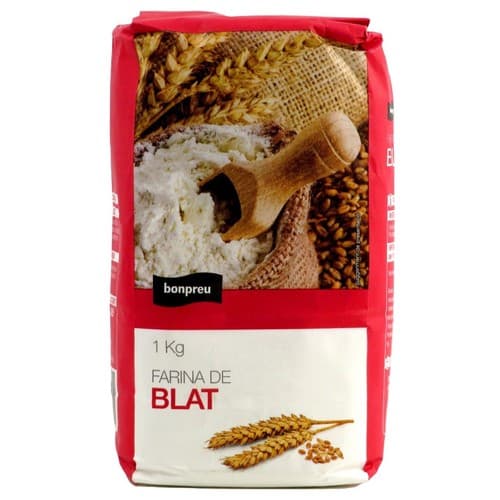 €0.72
€0.72Wheat Flour
BONPREU · kg · Bonpreu
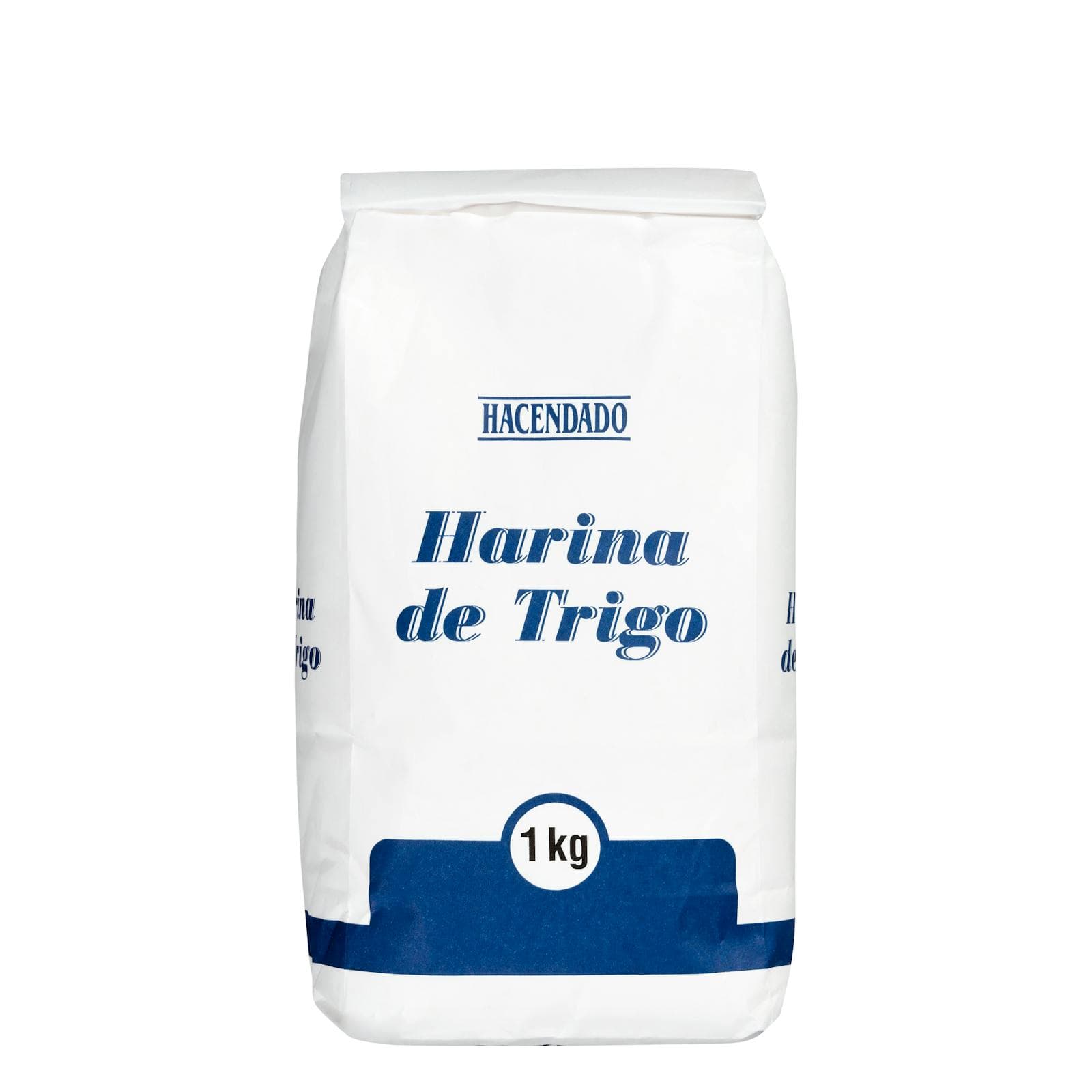 €0.72
€0.72Wheat Flour
Hacendado · 1 kg · Mercadona
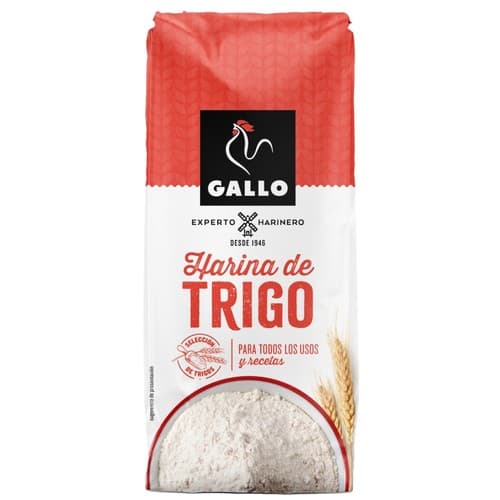 €1.45
€1.45GALLO Wheat Flour
GALLO · kg · Bonpreu
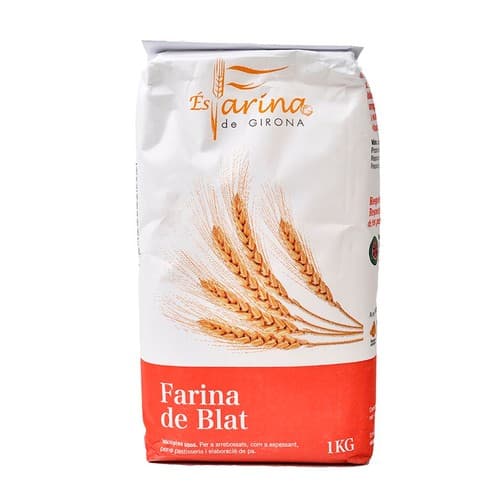 €1.65
€1.65GIRONA Local Wheat Flour Km0
GIRONA · kg · Bonpreu
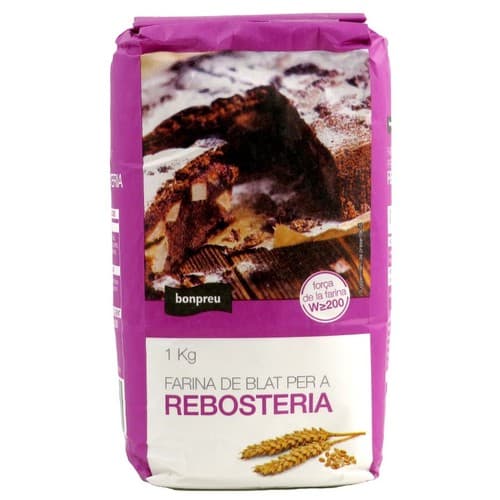 €0.95
€0.95Wheat Flour for Pastry
BONPREU · kg · Bonpreu
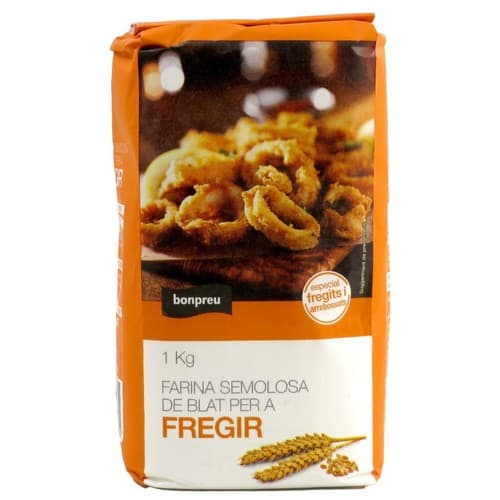 €1.20
€1.20Wheat Flour for Frying
BONPREU · kg · Bonpreu
Good to know
- Source
- Cassava root (Manihot esculenta)
- Composition
- Nearly pure starch; roughly 20% amylose and 80% amylopectin
- Gelatinization range
- Begins around 62–72 °C (144–162 °F), one of the lowest among common starches
- Thickening power
- Roughly equivalent to cornstarch per unit weight for sauces and pie fillings
- Acid stability
- Tolerates acidic ingredients (lemon, tomato, berries) far better than cornstarch
- Freeze-thaw stability
- High; gels do not weep or break down when frozen and thawed
- Allergen profile
- Naturally gluten-free, nut-free, grain-free, and allergen-friendly
- Storage
- Indefinite shelf life in an airtight container kept dry and cool; clumps readily in humidity
- Namesakes
- Same product as 'tapioca flour' in most markets; cassava flour is a different, whole-root product
Substitutes
- Cornstarch — Most direct swap for thickening (1:1 by volume), but the result is opaque and breaks down with acid or long cooking.
- Arrowroot starch — Also gives a clear, glossy finish; mixes more easily into dairy but yields a less elastic, more delicate gel.
- Potato starch — Similar clarity and gloss; somewhat heavier body; not as springy as tapioca.
- Cassava flour — Whole-root product, NOT a 1:1 substitute — contains fiber and behaves more like wheat flour; cannot replicate the clear gel.
- Modified waxy corn starch (e.g., ClearJel) — Best commercial substitute for pie fillings that must survive freezing and canning.
- Kuzu (kudzu) — Japanese starch that sets clear; works at lower concentrations, but is harder to find and more expensive.
- Sorghum or rice flour slurry — Workable for savory sauces when clarity does not matter; do not use for glossy dessert fillings.
Pairs with
Also called
tapioca flour · cassava starch