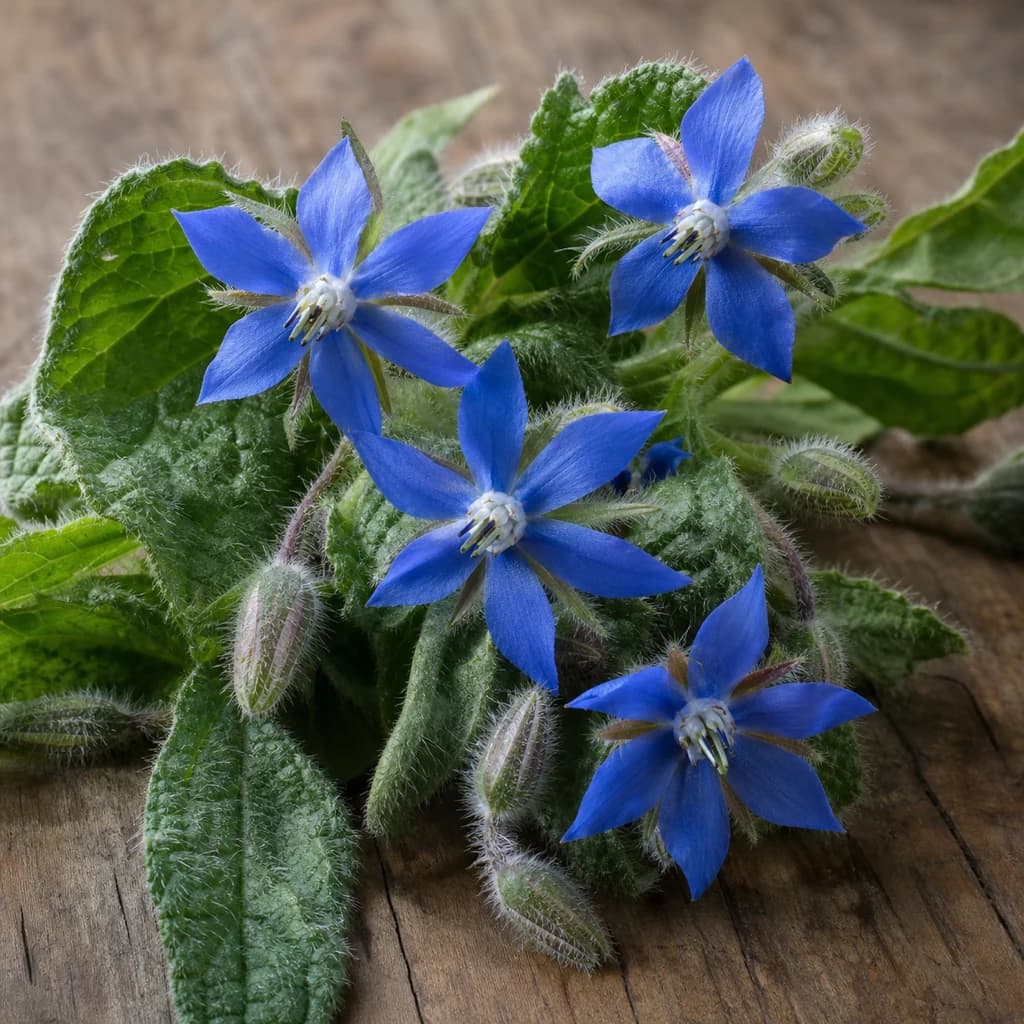
Natural form
Borage plant showing its characteristic bristly leaves and vivid blue star-shaped flowers.
Shows the whole plant in its natural state so readers recognize the distinctive fuzzy texture and flower color.
Herbs
Borage
Fuzzy herb with cucumber-flavored leaves and edible blue star flowers.
Borage (borragine) is a leafy herb with bristly leaves that taste distinctly of cucumber and vivid blue star-shaped edible flowers. The young leaves are cooked like greens or stuffed into Ligurian ravioli, while the flowers garnish salads, drinks, and desserts. It is a traditional Mediterranean herb used both raw and cooked.
Borage (Borago officinalis) is an annual herb from the Mediterranean that has naturalized across Europe and North America. Its most distinctive quality is the cucumber flavor that runs through every usable part of the plant — the young leaves taste like cucumber with mild lettuce undertones, while the star-shaped flowers carry a subtle cucumber sweetness with a faint honey edge. What sets borage apart from most culinary herbs is that its flowers are used as frequently as its leaves, making it a dual-purpose ingredient for both flavor and decoration. The plant grows 60–90 cm tall, producing an abundance of blue star flowers throughout summer and into fall, and it self-seeds readily in the garden. All aerial parts are covered in coarse, stiff hairs called trichomes that create a prickly mouthfeel when eating raw — this is the single most important practical consideration when cooking with borage, and it is easily managed with simple techniques.
- Measured in
- g
- Storage
- Fridge
Types & varieties
Standard culinary variety; blue star-shaped flowers are the most common in cooking.
White-flowered form; used identically to the blue variety, valued primarily for ornamental appeal on plates.
Variegated leaves; ornamental variety grown for aesthetics; leaves are technically edible but not typically harvested for kitchen use.
Managing the hairy texture
The trichomes covering borage create a prickly, irritating sensation in the mouth when eating raw leaves — this is borage's main culinary challenge and the reason many cooks avoid it. The solution is straightforward: either cook the leaves or treat them with acid. Blanching young leaves in boiling water for 30 seconds eliminates the prickly quality entirely and yields tender, cucumber-scented greens. For raw applications like salads, mix the leaves into a dressed salad and let it sit for 10–15 minutes — the vinegar or lemon juice in the dressing partially tenderizes the hairs. Alternatively, remove the stems before using leaves raw, as the stems are disproportionately fibrous and hairy compared to the leaf blades.
- Blanch leaves 30 seconds in boiling salted water, then shock in ice water
- Mix raw leaves into acidic dressings and rest 10–15 minutes before serving
- Always strip leaves from stems for raw use; stems are too fibrous
Growing and sourcing notes
Borage is one of the easiest herbs to grow and an excellent addition to any kitchen garden. Plant in full sun with good drainage; borage tolerates poor soil but will not thrive in waterlogged conditions. The plant attracts pollinators aggressively and is a proven companion plant that may deter tomato hornworm, making it valuable near vegetable beds. Harvest flowers regularly by pinching them off at the stem — this encourages continued flowering through the season well into fall. If growing from seed, scatter directly in the garden in early spring; borage resents transplanting due to its taproot. For market purchase, seek out farmers' markets or specialty grocers where the flowers can be sold on the stem; avoid wilted or browning flowers.
- Full sun, well-drained soil; tolerates poor soil
- Harvest flowers regularly to extend the flowering season
- Avoid transplanting — direct-sow only
- Seek flowers sold on stems; avoid pre-cut or wilted product
Common uses
Tips & pitfalls
- Always harvest young leaves — older leaves become tough, fibrous, and develop a stronger unpleasant prickly quality that even blanching may not fully remedy.
- Remove stems from leaves if serving raw; stems are too fibrous and their hairs more irritating than those on the leaf blades.
- To reduce the hairy mouthfeel in raw applications, blanch leaves for 30 seconds or mix into a dressed salad and let sit — the acid tenderizes the trichomes.
- Add leaves to cooked dishes in the last 1–2 minutes only; prolonged heat destroys the delicate cucumber flavor entirely.
- Pick flowers in the morning when fully open and petals are most turgid — they contain more moisture and hold their shape better on the plate.
- Use flowers the same day they are picked; they wilt and brown within hours at room temperature and cannot be revived.
- If growing borage, plant in full sun with good drainage; the plant tolerates poor soil but needs space for its taproot and good air circulation to prevent mildew.
Nutrition
Energy
88 kJ · per 100 g
Where the calories come from
Protein
1.8g
4% DV
Carbs
3.1g
1% DV
Fat
0.7g
1% DV
Sodium
80mg
3% DV
Source · USDA FoodData Central · Borage, raw
View on FDC →In the shops
Matched grocery products
No matched grocery products for Borage yet.
Good to know
- Botanical name
- Borago officinalis
- Family
- Boraginaceae
- Origin
- Mediterranean region (naturalized across Europe and North America)
- Plant type
- Annual herb; self-seeds readily
- Height
- 60–90 cm (2–3 feet)
- Harvest season
- Leaves: spring to early summer (young leaves only). Flowers: summer through fall.
- Flavor
- Leaves: fresh cucumber with mild lettuce-like notes. Flowers: subtle cucumber sweetness with faint honey edge.
- Texture
- All aerial parts covered in coarse, stiff hairs (trichomes); leaves become tender when cooked.
- Storage
- Leaves keep 1–2 days wrapped in damp paper towel in refrigerator. Flowers must be used the same day.
Substitutes
- Cucumber — For raw leaf applications; use finely minced young cucumber flesh. Lacks the herbal note but approximates the cool cucumber flavor and water content in salads and drinks.
- Young chard or spinach — For cooked applications; similar cooking time and volume reduction when wilted. Does not replicate the cucumber flavor but works as a neutral cooking green.
- Cornflowers (Centaurea cyanus) — For edible flower garnish; similar sky-blue color and visual appeal but no cucumber flavor; use when color is the priority.
- Nasturtium flowers — For garnish applications; provide vibrant color and visual drama but offer a peppery bite rather than cucumber sweetness.
Pairs with
Also called
Borragine · Borage · Starflower
Related

Basil
Sweet, fragrant leaves for pesto, pasta, and caprese

Parsley
Fresh, grassy herb for finishing nearly any savory dish

Cilantro
Bright, citrusy herb for salsas, curries, and tacos

Mint
Cool, fragrant herb for teas, salads, and desserts
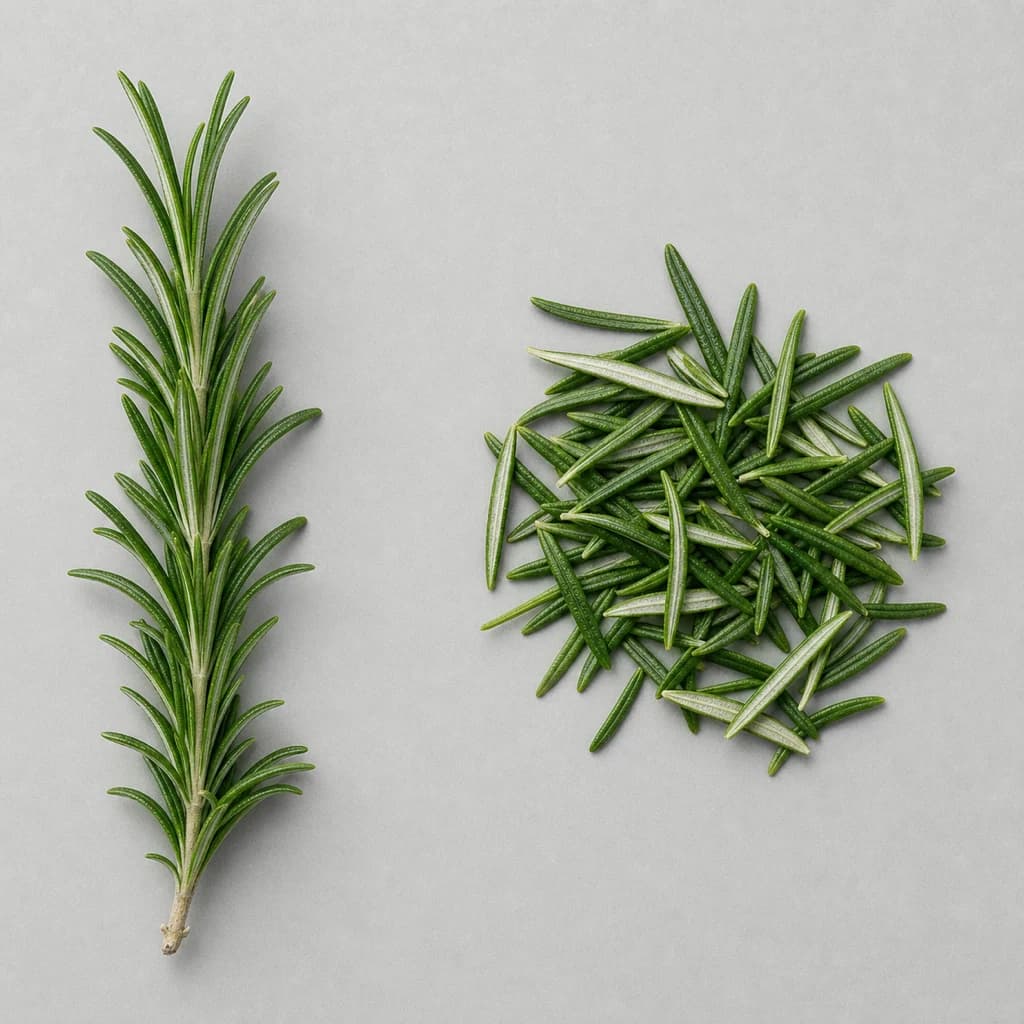
Rosemary
Piney, resinous herb for roasts, breads, and potatoes

Thyme
Earthy, floral herb for braises, roasts, and stocks

Sage
Savory, velvety herb for butter sauces and stuffings

Oregano
Pungent, peppery herb for tomato sauces and grilling