Proteins
Bratwurst
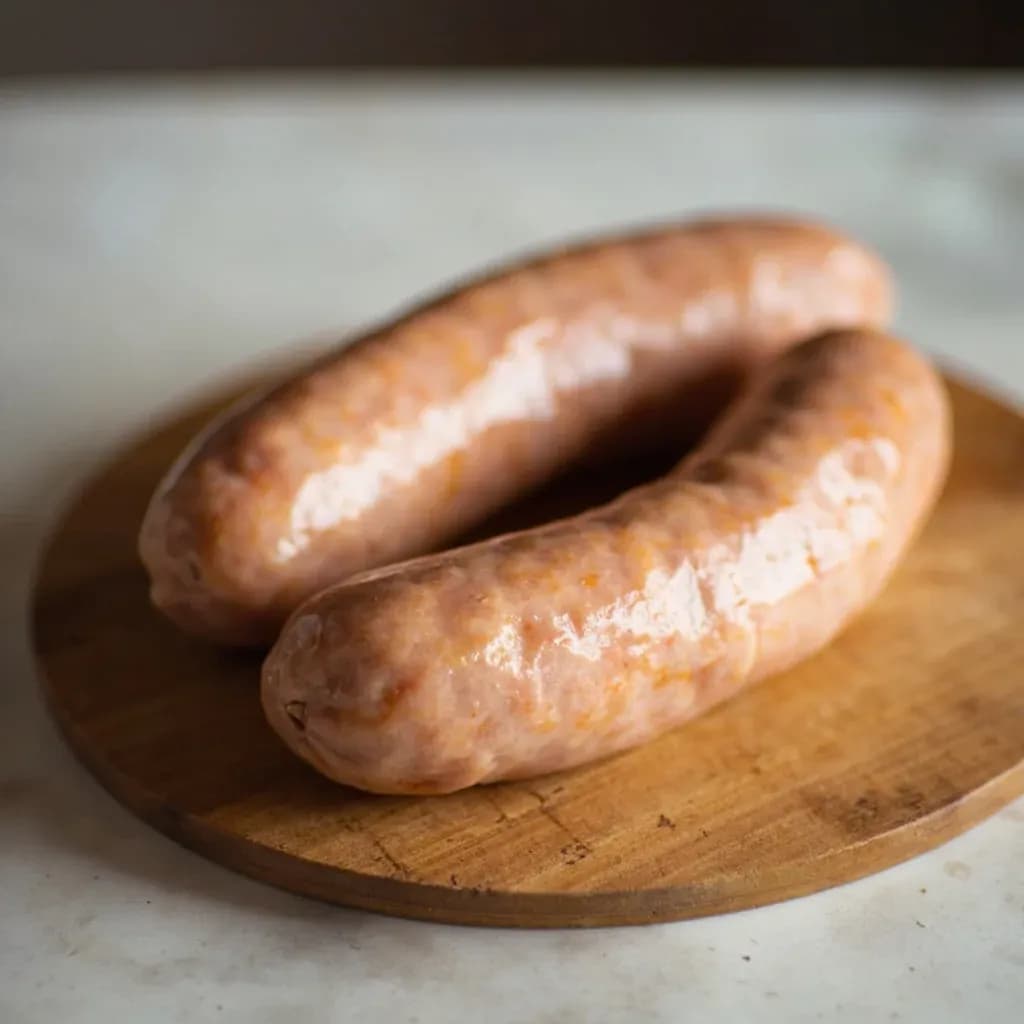
Fresh German pork (or pork-veal) sausage seasoned with nutmeg and marjoram, grilled or pan-fried.
Bratwurst is a fresh German sausage made from finely ground pork, sometimes with veal or beef, seasoned with spices such as nutmeg, ginger, caraway, and marjoram. It is most often grilled or pan-fried and served with mustard, sauerkraut, or in a crusty roll. Unlike cured sausages it must be cooked through, and its mild, savory flavor makes it a staple of German beer gardens and festivals.
Bratwurst is a fresh German pork sausage distinguished by its fine to medium grind and its signature seasoning blend of marjoram and nutmeg—the flavor compounds that separate it from other fresh sausages. Unlike cured or smoked sausages, bratwurst is sold raw and requires cooking, which means the casings remain intact and the interior relies on proper heat management to stay juicy. The name derives from Old High German brät (minced meat) and Wurst (sausage), and German food law under the Fleischverordnung sets a minimum meat content of approximately 70% pork, restricting the use of extenders in traditional production.
The bratwurst tradition is deeply rooted in Franconia, with Nuremberg's sausage-making documented in a municipal ordinance as early as 1313—a testament to its cultural significance that endures in modern Germany. The sausage behaves predictably under heat when handled correctly: the natural sheep or pork casing will split if exposed to excessive direct flame or rapid temperature shock, and piercing the casing with a fork allows fat and moisture to escape, resulting in a steamed, dry texture rather than a properly seared one. When cooked with care—either grilled over moderate coals, pan-fried, or parboiled in beer before finishing—bratwurst renders its fat internally, crisps the casing, and delivers the juicy, aromatic result the form is designed for.
Quality varies dramatically outside Germany. In the United States, grocery-store bratwurst ranges from acceptable to heavily extended products that bear little resemblance to the traditional profile. Seek out artisanal German butcher shops, specialty importers, or products with short ingredient lists (pork, salt, spices, marjoram, nutmeg) to experience what the form was designed to deliver. The Nuremberg variety holds Protected Geographical Indication (PGI) status under EU law, meaning only sausages produced in the region using specified methods can bear that name.
- Measured in
- piece
- Storage
- Fridge
Types & varieties
Small (7–9cm), thin, finely ground pork; traditionally grilled over pinecone fires; PGI protected; the most internationally recognized variety.
Longer (15–20cm), coarser grind than Nuremberg; traditionally smoked over beechwood; often eaten with mustard and bread without a bun.
Franconian regional style; slightly larger than Nuremberg; traditionally seasoned with liberal marjoram.
From Regensburg; slightly shorter and thicker; traditionally fried in a covered pan with onions.
From Coburg; similar size to Thuringian; traditionally cooked on a curved iron pan over beechwood charcoal.
From Kulmbach; coarser texture; unlike most bratwurst varieties, it is smoked before sale.
Traditional Cooking Methods
German bratwurst preparation follows two established paths, both producing distinct results. The first is direct grilling over moderate coals—the classic method for Nuremberg and Franconian styles—where the sausage cooks through as the casing browns and renders fat. The second is the parboil-then-grill method, particularly common with Thuringian varieties, where the sausage simmers in beer (traditionally German lager) for 8–10 minutes before a brief finish on the grill. This approach renders fat more thoroughly, ensures even cooking, and virtually eliminates burst casings.
Pan-frying is equally legitimate, especially for Regensburger-style or when onions are desired. Start with medium heat, cover the pan initially to allow the sausage's own fat to render, then uncover to develop color on the exterior. High heat or adding the sausage to a scorching pan will cause immediate casing splitting.
- Grilling: medium coals, not direct flame; 4–6 minutes per side for standard links
- Parboil-then-grill: simmer in beer 8–10 minutes, then grill 2–3 minutes to finish
- Pan-frying: medium heat, covered initially, uncovered to brown
Buying and Quality
German food law (Fleischverordnung) establishes that true bratwurst must contain at least 70% pork with no artificial extenders. In the United States, regulatory standards are absent, and products labeled bratwurst vary widely. The best indicator of quality is the ingredient list and texture: hand-tied links from German butcher shops (in the US or imported) will list pork, salt, and spices—nothing more. A mealy texture or excessive liquid in the package signals the presence of water or extenders. Seek out butcher shops, specialty grocers, or imported brands for the experience the form was designed to deliver.
- Look for short ingredient lists: pork, salt, spices, marjoram, nutmeg
- Avoid products with water, dextrose, or isolated proteins listed near the top
- Natural casings (sheep or pork intestine) provide better snap than collagen
Common uses
Tips & pitfalls
- Never prick bratwurst with a fork before cooking—the casing prevents fat and juices from escaping; piercing causes it to steam rather than sear and become dry.
- Bring refrigerated bratwurst to room temperature for 20–30 minutes before cooking for more even heat penetration throughout the sausage.
- Parboiling in beer (German lagers work best) for 8–10 minutes before grilling renders fat, ensures even cooking, and prevents burst casings on the grill.
- For pan-frying: use medium heat, cover the pan initially to render the sausage's fat, then uncover to brown the exterior properly.
- For grilling: medium coals are preferable to high heat; place over coals for browning, not direct flame contact—this is the most common cause of split casings.
- Allow cooked bratwurst to rest 2–3 minutes before serving to allow juices to redistribute throughout the interior.
- If using a bun, warm the roll briefly in the residual pan heat after cooking the sausage—it absorbs the rendered fat and improves the bread significantly.
- When pan-frying with onions (Zwiebelbratwurst), add onions after the sausage has rendered its fat; they will caramelize in the sausage fat rather than burning.
Nutrition
Energy
1351 kJ · per 100 g
Where the calories come from
Protein
14.3g
29% DV
Carbs
3g
1% DV
Fat
27.8g
36% DV
Fiber
0g
0% DV
Sugars
3g
of which
Sodium
1112mg
48% DV
Source · USDA FoodData Central · Bratwurst, pork, beef, link
View on FDC →In the shops
Matched grocery products
No matched grocery products for Bratwurst yet.
Good to know
- Origin
- Germany (Franconia/Nuremberg area); documented since 1313
- Primary Meat
- Pork or pork-veal blend
- Casings
- Natural sheep or pork intestine; occasionally collagen
- Key Seasonings
- Marjoram and nutmeg; regional variations may include cardamom, mace, lemon zest, or ginger
- Form
- Fresh sausage (not cured, not smoked)
- Storage
- Refrigerated; use within 1–3 days or freeze up to 3 months
- Typical Diameter
- 20–28mm; length varies by region (Nuremberg: 7–9cm; Thuringia: 15–20cm)
- EU Protection
- Nürnberger Rostbratwurst has PGI (Protected Geographical Indication) status
Substitutes
- Italian sweet or mild sausage — Similar pork-based fresh sausage; the seasoning profile differs (fennel instead of marjoram) but it works in most preparations, particularly grilling and pan-frying.
- Polish kielbasa (fresh, not smoked) — Coarser texture and different spice profile; acceptable for braising, grilling, and applications where the bratwurst will be sliced.
- Merguez — Lamb or beef sausage with chili and harissa; much spicier with a different flavor profile, but useful in salads, grain bowls, or grilled applications when you want heat.
- Chistorra — Spanish fresh pork sausage seasoned with garlic and pimentón; the texture is similar but it lacks marjoram and nutmeg; best used in applications where you control the seasoning.
Pairs with
Also called
German Sausage · Brat
Related

Egg
The kitchen's everything ingredient — bind, leaven, enrich, or fry
Chicken Breast
Lean, quick-cooking white meat for everyday dinners

Ground Beef
Versatile minced beef for burgers, ragù, tacos, and meatballs
Pork Loin
Lean, tender roasting cut that stays juicy with care
Salmon
Rich, rosy fish that roasts, grills, or cures beautifully

Egg White
Pure protein that whips to airy peaks for meringue and more

Egg Yolk
Rich, golden yolk for custards, mayonnaise, and pasta

Quail Egg
Tiny, speckled eggs for garnishing and elegant bites