Legumes & Beans
Canned Chickpea
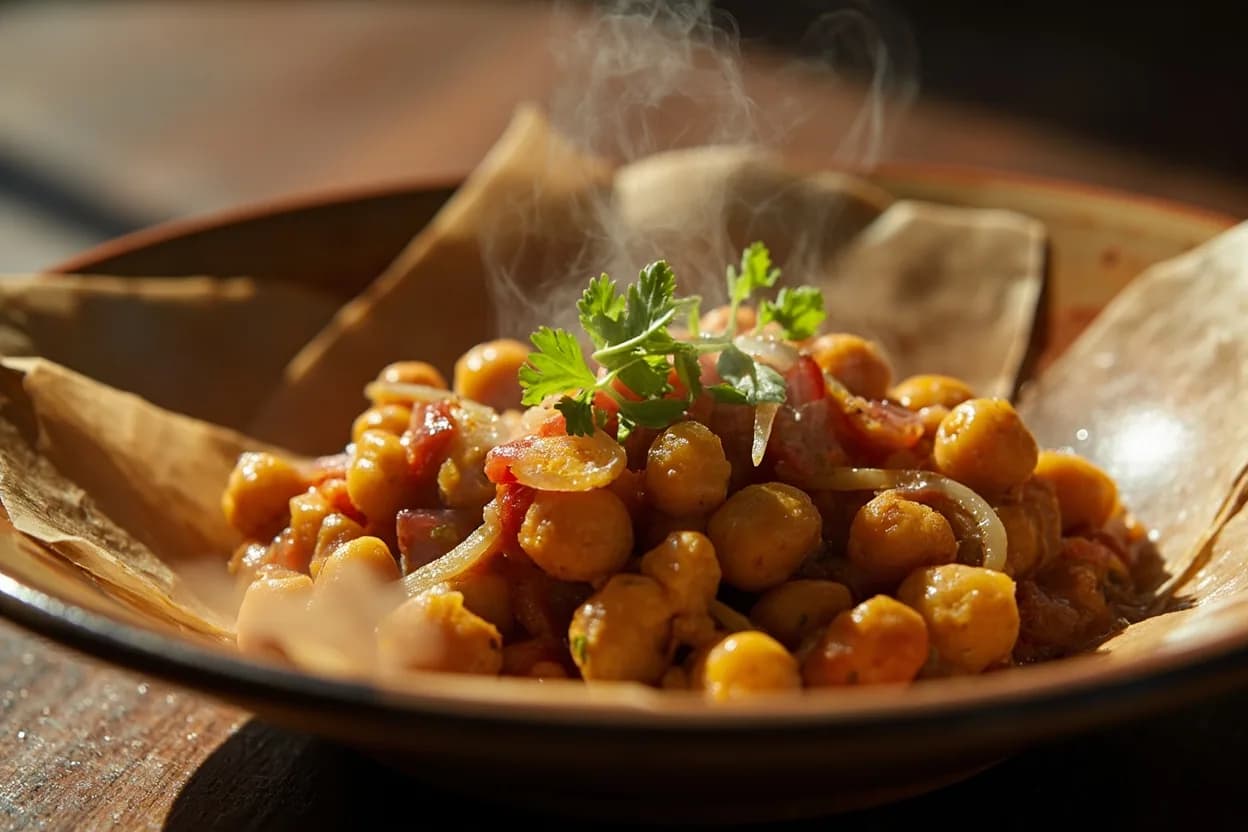
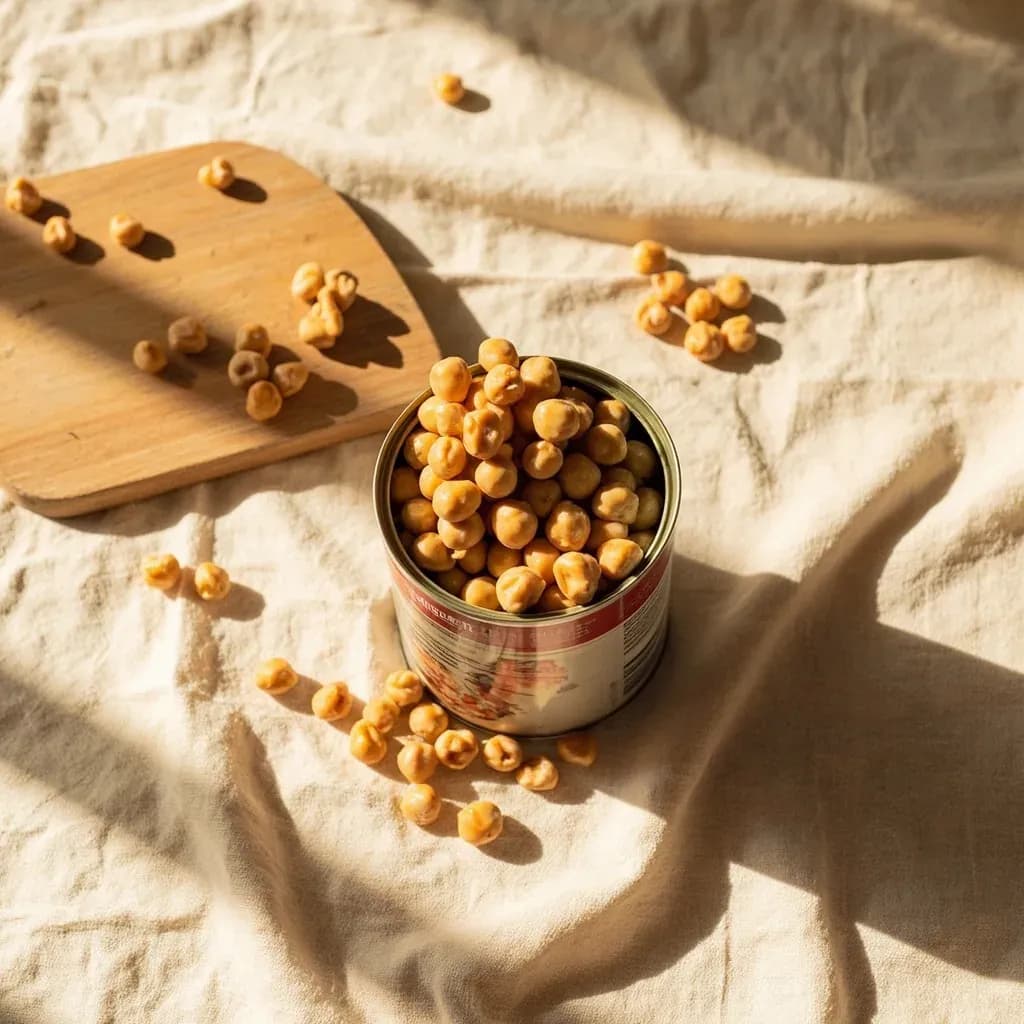
Pre-cooked chickpeas ready to drain and use, with starchy aquafaba in the can usable as an egg-white substitute; tender straight away for hummus, stews, and quick salads.
Canned chickpeas are dried chickpeas (Cicer arietinum) that have been industrially soaked, pressure-cooked, and sealed in water — usually with a little added salt — then heat-sterilized for shelf stability. They arrive in the kitchen fully tender, so the cook skips the overnight soak and 1-to-2-hour simmer that dried chickpeas demand, which is the whole reason they sit in nearly every well-stocked pantry. Inexpensive, nutritionally dense, and at home in Mediterranean, Middle Eastern, North African, and Indian cooking, they function as a building block rather than a finished ingredient.
Two kitchen decisions shape nearly every recipe. The first is whether to rinse: rinsing washes off the starchy can liquid and excess sodium, which is right for salads, roasting, and any dish where you want clean flavor and crisping; skipping the rinse keeps clinging starch that thickens hummus, soups, and braises, and preserves more flavor. The second is whether to save that can liquid — it is aquafaba, a viscous, protein-rich liquid that whips like egg white (about 3 tablespoons per "egg white") and emulsifies into vegan mayonnaise.
Out of the can the beans are tender enough to mash with a fork yet firm enough to hold their shape in a salad, and they absorb dressings and broths readily once warmed. They break down into mush if simmered longer than 20–30 minutes, the most common pitfall that turns a hummus or curry into baby food. Treat them as a pre-cooked ingredient and season with acid (lemon, tomato), fat (olive oil, tahini, ghee), and toasted spices after a brief reheat.
- Measured in
- g
- Storage
- Pantry
Find it in
Suits
Types & varieties
Standard supermarket can, ~300–500 mg sodium per 1/2 cup. Workhorse choice for most cooking.
Same chickpea, no added salt; preferred for low-sodium diets and for seasoning from scratch. Aquafaba is more neutral.
Certified-organic chickpeas, often in BPA-free cans or glass jars; modest price premium.
Visible product and often pricier; useful when can-lining BPA is a concern.
Pull-tab lid, otherwise standard contents; convenient for pantry prep without a can opener.
Smaller, nuttier cultivars (e.g., Spanish Pedrosillano, Italian ceci) sometimes sold canned in delis; more flavor, not a supermarket standard.
Working with canned chickpeas
Because the beans are already cooked, the goal is usually to warm, season, and texture them rather than to cook them. Most recipes need only 5–10 minutes of gentle simmering to take on the flavor of a broth or sauce. Treat them like a cooked ingredient and you will avoid the single most common mistake: turning them into a starchy puree by accident.
Aquafaba — the can liquid is an ingredient
The viscous liquid in the can is roughly 2–3% dissolved solids, mostly proteins and starches released from the chickpea during cooking. It behaves enough like egg white to whip into stable peaks and to emulsify oil-and-water mixtures, which is why vegan bakers keep a jar of it in the fridge. Strain it through a fine mesh sieve first if you want a clearer whip; a little residual chickpea solids actually help stabilize meringue.
- Whip 3 tablespoons (≈45 ml) per "egg white" with 1/4 tsp cream of tartar to soft or stiff peaks for meringues, pavlovas, and macarons.
- Emulsify about 3 tablespoons with 1 cup neutral oil, dripped slowly, for vegan mayonnaise.
- Replace a whole egg in cakes and pancakes at roughly 1/4 cup (4 tablespoons) per egg; use 3 tablespoons per egg white.
- Reduce on the stove to a syrup (about 1/4 its volume) to use as a glaze or vegan honey substitute.
- Refrigerate in a sealed jar up to 5 days, or freeze in ice-cube trays for months of ready use.
Rinse or don't?
Both choices are correct; they just serve different goals.
From can to specific dishes
How you handle the beans after opening changes with the dish:
- Hummus — don't rinse; the clinging starch helps body and creaminess. For the silkiest result, simmer the drained beans 10 minutes in fresh water with 1/2 teaspoon baking soda, then rinse and slip the skins off before blending.
- Salads and grain bowls — rinse well; the clean flavor lets dressings and herbs lead.
- Roasted chickpeas — drain, rinse, then pat thoroughly dry with a clean towel; surface moisture is what stops browning.
- Soups, stews, and curries — usually no rinse; the starchy liquid adds body, especially in pasta e ceci and chana masala.
Common uses
Tips & pitfalls
- Reserve the can liquid — it is aquafaba, a genuine egg-white substitute; never pour it down the drain unless you mean to.
- Drain through a fine mesh strainer; rinse when you want clean flavor (salads, roasting), skip the rinse when starch helps thicken (hummus, soups).
- Pat the beans thoroughly dry with a clean towel before roasting — surface moisture is the only thing that stops them from crisping in the oven.
- Do not simmer canned chickpeas longer than 20–30 minutes; they are already tender and will turn to mush in longer braises.
- Salt late — adding salt early to simmering chickpeas can toughen the skins and make the texture grainy.
- For ultra-creamy hummus, simmer drained chickpeas 10 minutes in fresh water with 1/2 teaspoon baking soda, then rinse and slip off the loose skins before blending.
- Choose no-salt-added cans whenever the recipe already includes soy sauce, anchovies, cured meats, or salty cheese; the dish will season itself.
- After opening, store drained chickpeas covered with a thin layer of fresh water in the fridge to keep them from drying out — change the water daily.
Nutrition
Energy
582 kJ · per 100 g
Where the calories come from
Protein
7.1g
14% DV
Carbs
22.5g
8% DV
Fat
2.8g
4% DV
Fiber
6.4g
23% DV
Sugars
4g
of which
Sodium
246mg
11% DV
Source · USDA FoodData Central · Chickpeas (garbanzo beans, bengal gram), mature seeds, canned, drained solids
View on FDC →In the shops
Matched grocery products
No matched grocery products for Canned Chickpea yet.
Good to know
- Also known as
- Garbanzo beans (canned); chick peas; ceci (Italian); pois chiches (French)
- Botanical name
- Cicer arietinum
- Standard can sizes
- 15 oz / 425 g (US); 400 g (EU/UK); 19 oz / 540 g (US large); 29 oz / 822 g (foodservice)
- Drained yield
- About 8.5 oz / 240 g (≈1.5 cups) from a 15 oz can
- Aquafaba
- About 1/2 to 3/4 cup (120–180 ml) per 15 oz can
- Sodium
- Regular: 300–500 mg per 1/2 cup drained; no-salt-added: under 25 mg
- Nutrition (per 1/2 cup drained)
- ≈110–130 kcal, 7–8 g protein, 5–6 g fiber, 2 g fat, 20–22 g carbohydrate
- Storage
- Sealed: 3–5 years past pack date. Opened, drained, refrigerated: 3–4 days; freeze up to 3 months
- Key nutrients
- Plant protein, dietary fiber, folate, iron, magnesium, phosphorus
Substitutes
- Cooked dried chickpeas — 1 cup dried yields roughly 3 cups cooked, or about 2 standard 15 oz cans; superior texture and flavor with far less sodium, but requires an overnight soak and 1–2 hours simmer (or pressure-cooker timing).
- Canned cannellini or navy beans — Mildest, softest swap; good in soups and salads but lacks the nutty depth needed for hummus or Indian curries.
- Canned butter beans / lima beans — Larger and softer; works in rustic stews and purees but is too delicate for hummus or chana masala.
- Canned lentils — Soft and quick in soups and dals; will not hold shape in salads or grain bowls.
- Canned great northern beans — Closest neutral stand-in for salads, but blander and less nutty than chickpeas.
- Shelled edamame — Different legume family, but a viable protein-and-fiber swap in grain bowls and salads.
Pairs with
Also called
canned garbanzo · tinned chickpeas · garbanzos en conserva · cigrons en conserva