
Natural form
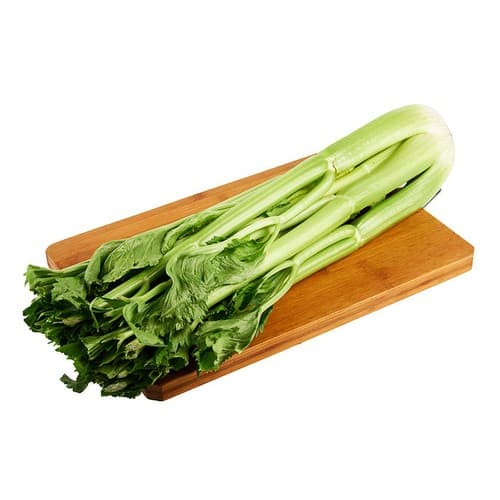
Chinese celery: thin hollow stalks and abundant leafy tops, harvested whole.
Shows the defining physical difference from Western celery — slender hollow stems and profuse leaves — so readers can identify it at a market.
Produce
Chinese Celery
Slender, intensely aromatic celery used as a herb-like flavoring in stir-fries and soups.
Chinese celery has thin, hollow stalks and abundant leaves with a much stronger, more peppery aroma than Western celery. It is used more as a herb than a vegetable, chopped into stir-fries, soups, and noodle dishes across East and Southeast Asia. Because of its potent flavor it is added in smaller amounts and often included leaves and all.
Chinese celery (Apium graveolens var. secalinum) is a slender, intensely aromatic plant that functions quite differently from its Western counterpart. While regular celery (Apium graveolens var. dulce) serves as a primary vegetable or crunch element, Chinese celery is used more like an herb—a finishing aromatic that delivers concentrated flavor in small amounts. The stalks are thin (5–10 mm), hollow, and more fibrous than Western celery, but the true powerhouse is the leaf: abundant, vibrant, and carrying the plant's most potent aroma.
In Chinese and Southeast Asian kitchens, the entire plant is used—stalks and leaves together. The flavor profile is distinctly bitter-salty and vegetal, with a fragrance that hits the nose immediately when cut. This intensity means a little goes a very long way. When a recipe calls for Chinese celery in a stir-fry or soup, it is almost always added at the very end, raw or barely cooked, precisely because the delicate fragrance evaporates quickly under heat.
The plant grows quickly to 30–50 cm and is harvested young, when both stalks and leaves remain tender enough to eat together. Its primary role is as an aromatic base and finishing herb—much like how flat-leaf parsley operates in Italian cooking. You will find it in stir-fries, soups, dumplings, noodle bowls, and poaching liquids, where it contributes brightness rather than bulk or texture.
- Measured in
- g
- Storage
- Fridge
Types & varieties
Standard variety; vibrant green leaves and slender green stalks with the strongest flavor
Stalks blanched naturally or by hilling soil around the stems; milder, more tender; common in markets when plants are covered while growing
Smaller, rounder leaves; particularly prized for its fragrance in Japanese cuisine; used in shōjin ryōri (temple cooking) and as a garnish for nimono
Stalks vs. Leaves: Knowing What to Use When
The stalks and leaves of Chinese celery serve different purposes. The thin, hollow stalks hold up reasonably well to brief cooking—30 to 60 seconds in a hot wok—and contribute a mild celery character with a pleasant bitterness. The leaves, however, are where the concentrated aroma lives. This is why recipes almost always call for adding leaves at the very end of cooking, or using them raw as a finishing garnish.
- Use stalks when you want the vegetable-like texture and a background celery note
- Use leaves for raw aromatic finishing power—a small pinch delivers significant fragrance
- When a recipe simply says 'Chinese celery,' it typically means the whole plant, both stalks and leaves included
- The tender inner heart is the most delicate; save it for raw applications where its fragility is an asset, not a liability
Chinese Celery vs. Regular Celery: A Fundamental Difference
These two vegetables share a name and a family, but they operate differently in the kitchen. Regular celery (Apium graveolens var. dulce) is a bulk ingredient—you might use several stalks to build a mirepoix or eat celery sticks with peanut butter. Chinese celery is an aromatic, used in quantities similar to herbs: a small handful, or just the leaves scattered at the end.
- Western celery: primary vegetable, mild crunch, needs cooking
- Chinese celery: finishing aromatic, intense fragrance, needs minimal heat
- When a recipe developed for Chinese celery uses regular celery instead, increase the quantity by 50% and add flat-leaf parsley leaves to approximate the aromatic punch
- Chinese celery roots are not typically used, unlike regular celery where the root (celeriac) is a distinct ingredient
Common uses
Tips & pitfalls
- Add the leaves in the last 30 seconds of cooking, or use them raw—they lose fragrance quickly and turn olive-brown if overcooked.
- The leaves carry the most concentrated flavor. Always use them; never discard them as you might with regular celery leaves.
- For stir-fries, briefly fry the stalks alone first (about 30 seconds), then add leaves and remove from heat immediately—the residual heat is enough.
- Raw leaves work beautifully as a finishing garnish. A small amount delivers significant aroma, so start with less than you think you need.
- When substituting for regular celery in Western recipes, use about half the quantity—the flavor is far more concentrated.
- Store Chinese celery stem-side down in a glass of water, like a bouquet, with leaves wrapped in a damp towel. This extends freshness by a day or two.
- If unavailable, the best substitute is regular celery stalks (use 1.5× the amount) with flat-leaf parsley leaves added for the missing aromatic intensity.
Nutrition
Energy
59 kJ · per 100 g
Where the calories come from
Protein
0.7g
1% DV
Carbs
3g
1% DV
Fat
0.2g
0% DV
Fiber
1.6g
6% DV
Sugars
1.3g
of which
Sodium
80mg
3% DV
Source · USDA FoodData Central · Celery, raw
View on FDC →In the shops
Matched grocery products
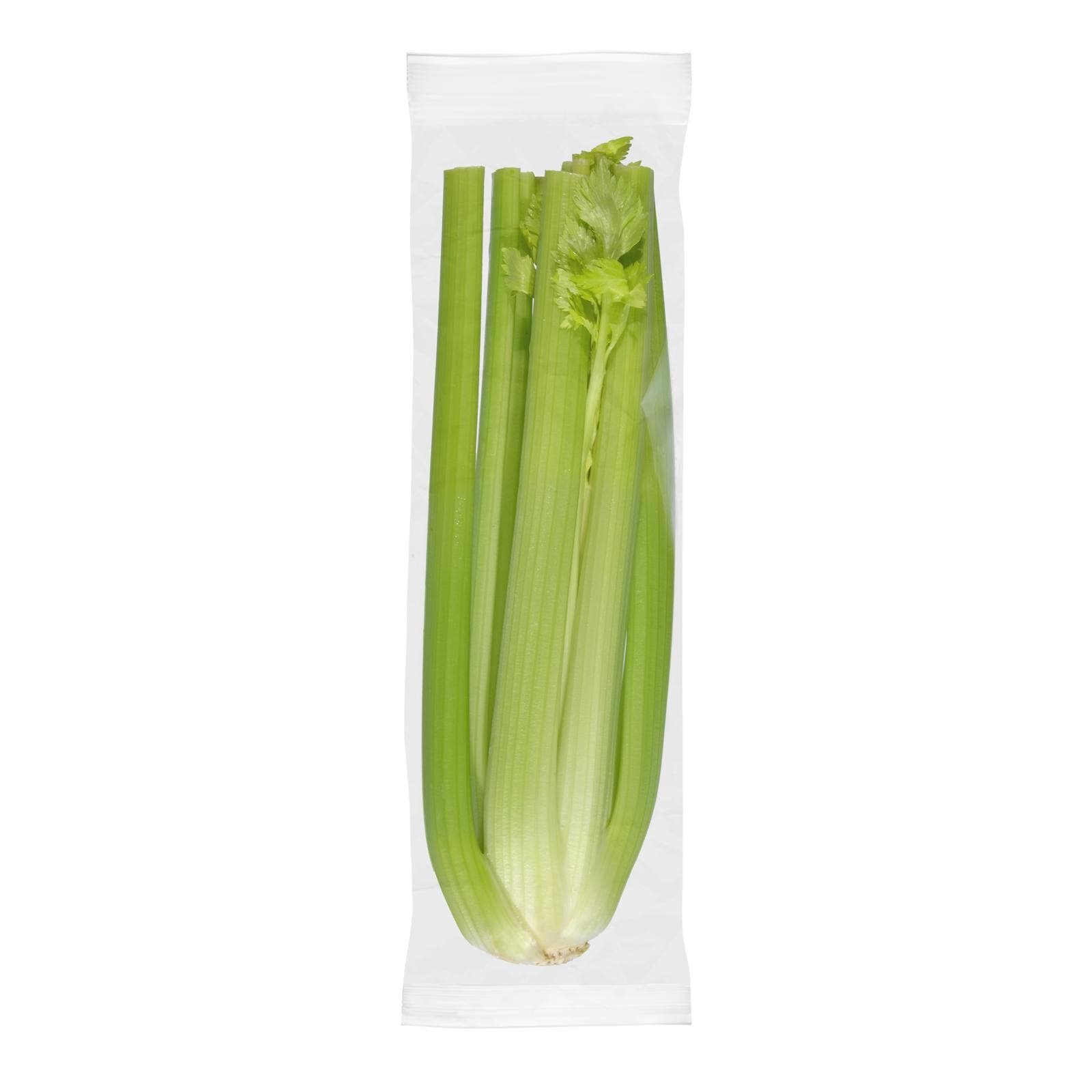 €1.32
€1.32Green Celery
660 g · Mercadona
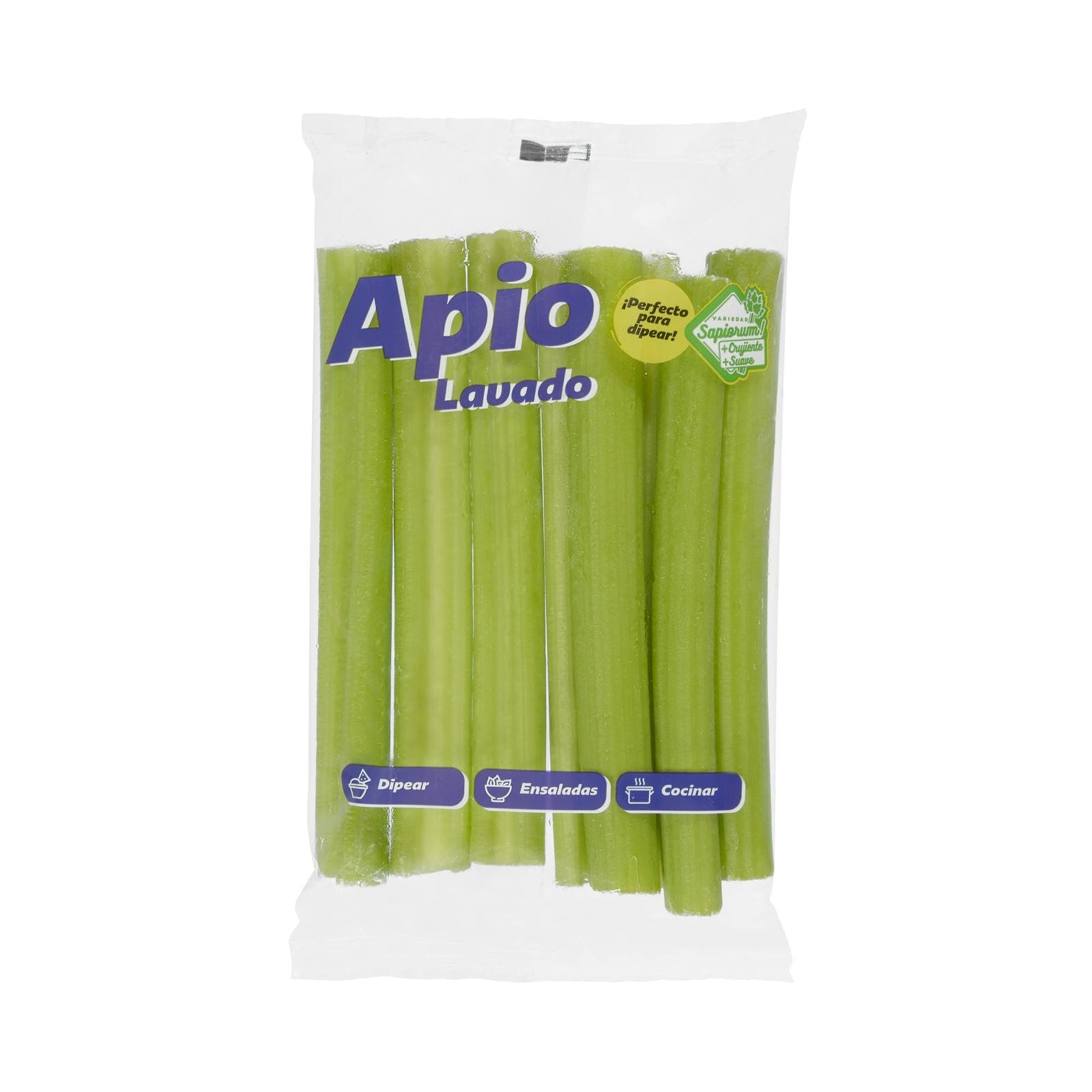 €1.15
€1.15Cut and Washed Celery
210 g · Mercadona
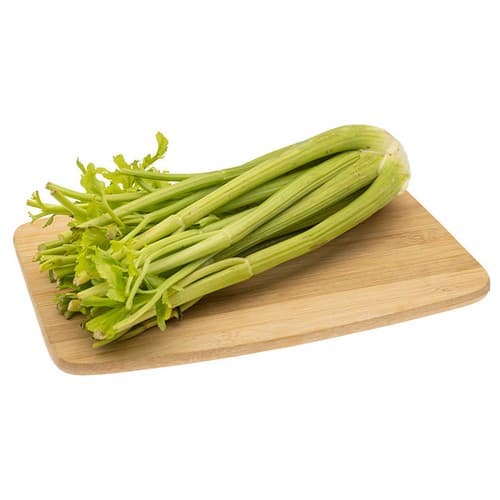 €2.19
€2.19Organic Celery in Bag
kg · Bonpreu
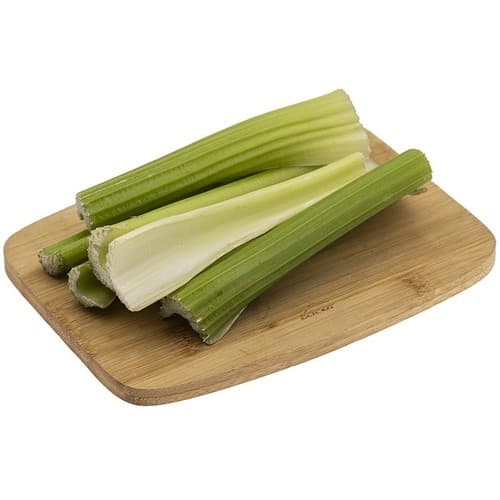 €1.15
€1.15Celery Sticks 200g bag
LA COLLITA · kg · Bonpreu
 €1.89
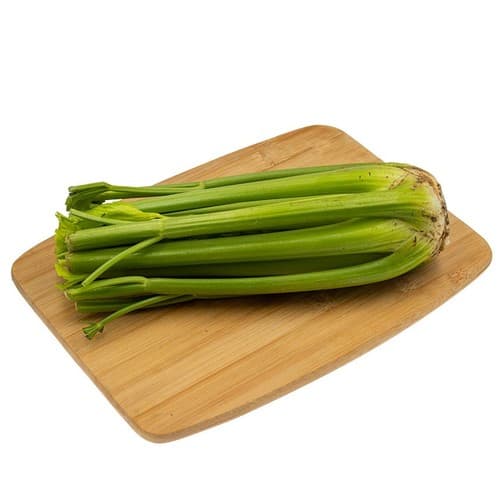
€1.89LA COLLITA Celery Km0 1 unit
LA COLLITA · kg · Bonpreu
 €1.95
€1.95Cut Celery Km0 in a 400g Bag
LA COLLITA · kg · Bonpreu
Good to know
- Scientific name
- Apium graveolens var. secalinum
- Origin
- China and Southeast Asia
- Primary growing regions
- Southern China, Vietnam (rau cần), Japan (seri), Philippines (kintsay)
- Season
- Year-round in warm climates; spring through fall in temperate zones
- Stalk width
- 5–10 mm (thinner than Western celery)
- Plant height
- 30–50 cm (entire plant harvested for use)
- Flavor
- Intensely aromatic, slightly bitter, saline; leaves are more potent than stalks
- Key distinction
- Thinner stalks, larger leaves, stronger aromatic punch; functions as a finishing herb, not a primary vegetable
- Storage
- Wrap in damp paper towel, store in perforated bag in crisper drawer; 3–5 days maximum
- Yield
- Nearly 100% usable—stalks and leaves both consumed
Substitutes
- Regular celery stalks — Milder flavor; use 1.5× the amount; add leaves from a bunch of flat-leaf parsley for the aromatic punch you are missing
- Celery leaves only (from regular celery) — Useful when you need only the leafy aromatic quality; discard the stems. Does not replicate the stalk texture, only the aromatic component
- Flat-leaf parsley — Closest raw aromatic substitute; different flavor but similar intensity and visual appearance. Use leaves only. Good for finishing, not for cooking.
Also called
Kintsai · Leaf Celery
Appears in these dishes
Related
Tomato
Juicy, sun-sweet fruit for sauces, salads, and slow-cooked depth
Yellow Onion
The aromatic backbone of soups, sofritos, and braises
Garlic
Pungent cloves that perfume nearly every savory dish
Lemon
Bright, acidic citrus that wakes up almost any dish
Potato
Humble, hearty staple — roast, mash, fry, or boil
Carrot
Sweet, crunchy root — raw, roasted, or the base of a sofrito
Cucumber
Cool, crisp, and watery — for salads, pickles, and tzatziki

Lettuce
Crisp leaves for salads, wraps, and a fresh crunch