Other
Collagen Peptides
Flavorless hydrolyzed collagen powder stirred into drinks and broths as a protein boost.
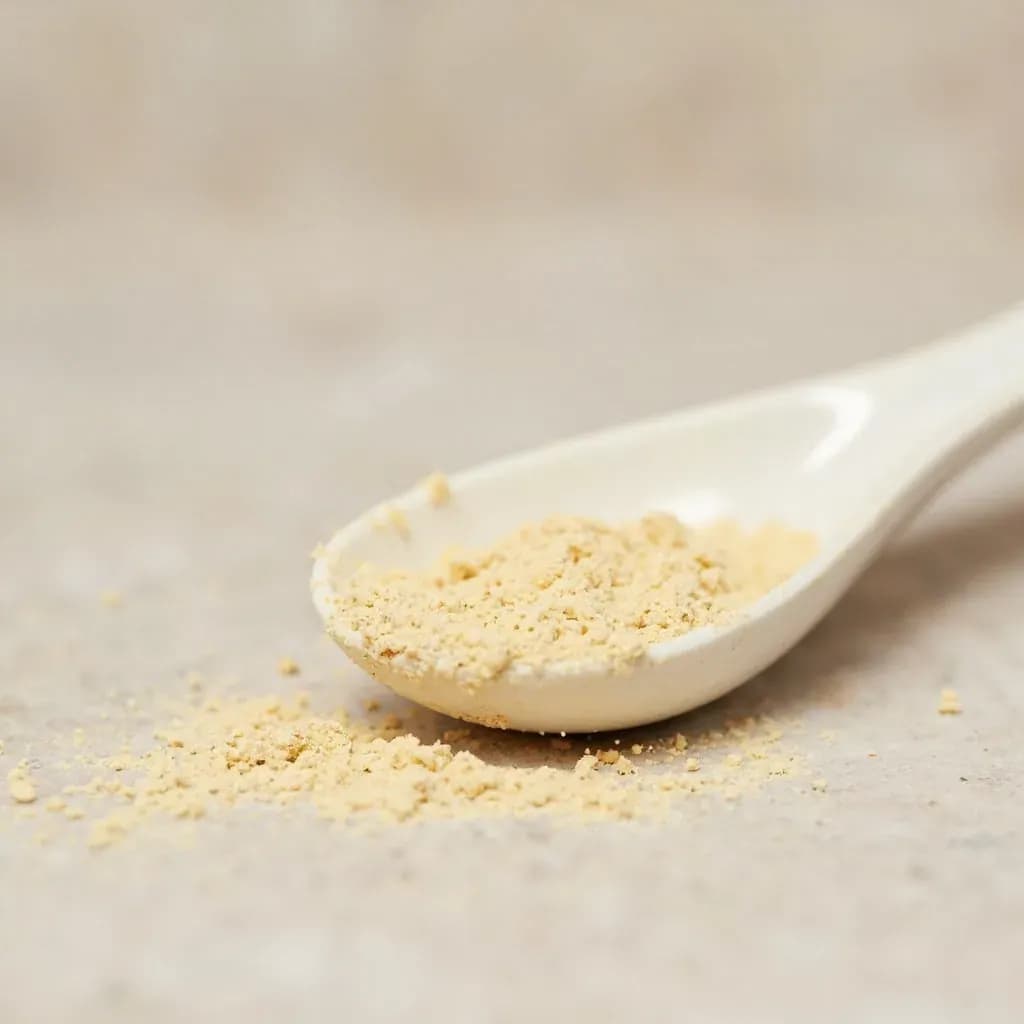
Collagen peptides are collagen protein broken down into small, hydrolyzed chains that dissolve easily in hot or cold liquids without gelling. Flavorless and odorless, the powder is stirred into coffee, smoothies, soups, and broths to add protein. It is sourced from bovine, marine, or porcine collagen and used as a dietary supplement rather than a structural ingredient.
Collagen peptides are hydrolyzed collagen—protein that has been enzymatically broken down into small, easily absorbed peptide chains. Unlike unflavored gelatin, which is derived from the same collagen but left unhydrolyzed, collagen peptides dissolve completely in both hot and cold liquids without gelling, thickening, or altering texture. This makes them uniquely versatile for boosting protein content in foods and beverages where you want invisibility: a scoop in your morning coffee leaves no trace of texture, grit, or flavor. The amino acid profile is distinctive—rich in glycine, proline, and hydroxyproline, but low in several essential amino acids found in complete proteins like whey or egg. This means collagen peptides excel at fortification rather than serving as a primary protein source. Their small molecular weight (2,000–5,000 Daltons) ensures rapid dissolution and high bioavailability. In the kitchen, their complete neutrality is both their greatest asset and their limitation: they cannot replicate the gelling power of gelatin in applications where texture matters.
- Measured in
- g
- Storage
- Pantry
Types & varieties
Most common; Types I and III collagen; typically from grass-fed hide; neutral-flavored and widely available
Type I collagen from fish skin or scales; smaller peptide size (1,000–3,000 Daltons); considered more bioavailable; marine flavor possible if not highly purified
From pig skin; less common in Western markets; Type I and III
Blends of bovine, marine, and/or chicken collagen for broader amino acid profile; often labeled as containing Types I, II, III, V, and X
Collagen Peptides vs. Gelatin
This distinction matters enormously in practice. Gelatin is unhydrolyzed collagen that forms a gel when cooled and thickens when heated—it's what makes panna cotta set, aspics hold their shape, and marshmallows spring back. Collagen peptides have been further broken down, so they remain liquid at any temperature. If a recipe depends on gelatin for texture, collagen peptides will not work as a substitute. Conversely, if you want to boost protein in a drink or broth without changing its consistency, collagen peptides are your tool. The confusion arises because both come from collagen and both are flavorless powders, but their culinary behaviors are fundamentally different.
- Gelatin: gels when cooled, thickens when heated, provides texture
- Collagen peptides: dissolve at any temperature, add protein without texture change
- Do not substitute collagen peptides in panna cotta, aspics, jelly, or marshmallow recipes
Common uses
Tips & pitfalls
- Always use a shaker bottle or blender when mixing into cold beverages—hand stirring leaves clumps that are difficult to dissolve afterward
- Add to liquids below 140°F (60°C) or at the end of cooking to preserve any heat-sensitive properties (research on this remains limited)
- For savory applications, start with 1–2 teaspoons per serving; for sweet drinks, you can use up to 1–2 tablespoons without detecting flavor
- Store in an airtight container away from moisture—collagen peptides are hygroscopic and will clump if exposed to humidity
- Choose smaller molecular weight (2,000–3,000 Daltons) for better solubility in cold drinks; larger sizes work fine in hot liquids
- If a recipe calls for unflavored gelatin as a thickener, do not substitute collagen peptides 1:1—they will not gel and will leave the recipe thin
- When adding to baked goods, account for the dry powder addition—the batter may be slightly thinner than expected
Nutrition
Nutrition
No USDA FoodData Central match for Collagen Peptides yet. We surface a per-100 g profile once a generic whole-food entry is matched and verified.
In the shops
Matched grocery products
No matched grocery products for Collagen Peptides yet.
Good to know
- Source
- Bovine hide, porcine skin, or marine (fish) connective tissue and scales
- Form
- Fine, water-soluble powder; hydrolyzed (enzymatically broken down) for better dissolution
- Flavor
- Completely neutral—tasteless and odorless
- Protein Content
- Typically 90–97% protein by weight
- Molecular Weight
- 2,000–5,000 Daltons (smaller than unflavored gelatin)
- Amino Acid Profile
- High in glycine, proline, and hydroxyproline; low in essential amino acids compared to complete proteins
- Solubility
- Dissolves readily in hot and cold liquids; does not gel like gelatin
- Storage
- Cool, dry place; sealed container; 18–24 month shelf life
- Common Certifications
- Grass-fed (bovine), wild-caught (marine), Kosher, Halal; many are gluten-free and dairy-free
Substitutes
- Unflavored Gelatin — For gelling applications only; 1:1 substitution works for texture but not for neutral protein fortification in drinks
- Vital Wheat Gluten — For protein boosting in baked goods; adds structure and a distinctly wheaty flavor, not neutral
- Pea Protein Powder — For neutral-tasting protein boost; does not dissolve as smoothly; distinct amino acid profile with more essential amino acids
- Bone Broth (reduced) — For savory applications; adds collagen plus flavor, minerals, and savoriness
Pairs with
Also called
collagen powder · hydrolyzed collagen · collagen hydrolysate
Related
Plant Protein Powder
Concentrated pea, rice or soy protein powder blended into shakes, doughs and baked goods.
Textured Vegetable Protein (TVP)
Dehydrated soy-flour granules rehydrated as a ground-meat substitute in chili and tacos.
Chicken Stock
Savory simmered-chicken broth that forms the liquid base of soups, sauces, and braises.
Vegetable Stock
Light vegetable-simmered broth used as a meat-free cooking base.
Beef Stock
Deep, roasted-bone beef broth that underpins hearty sauces and stews.
Fish Stock
Delicate stock simmered from fish bones for seafood soups and sauces.