Other
Plant Protein Powder
Concentrated pea, rice or soy protein powder blended into shakes, doughs and baked goods.
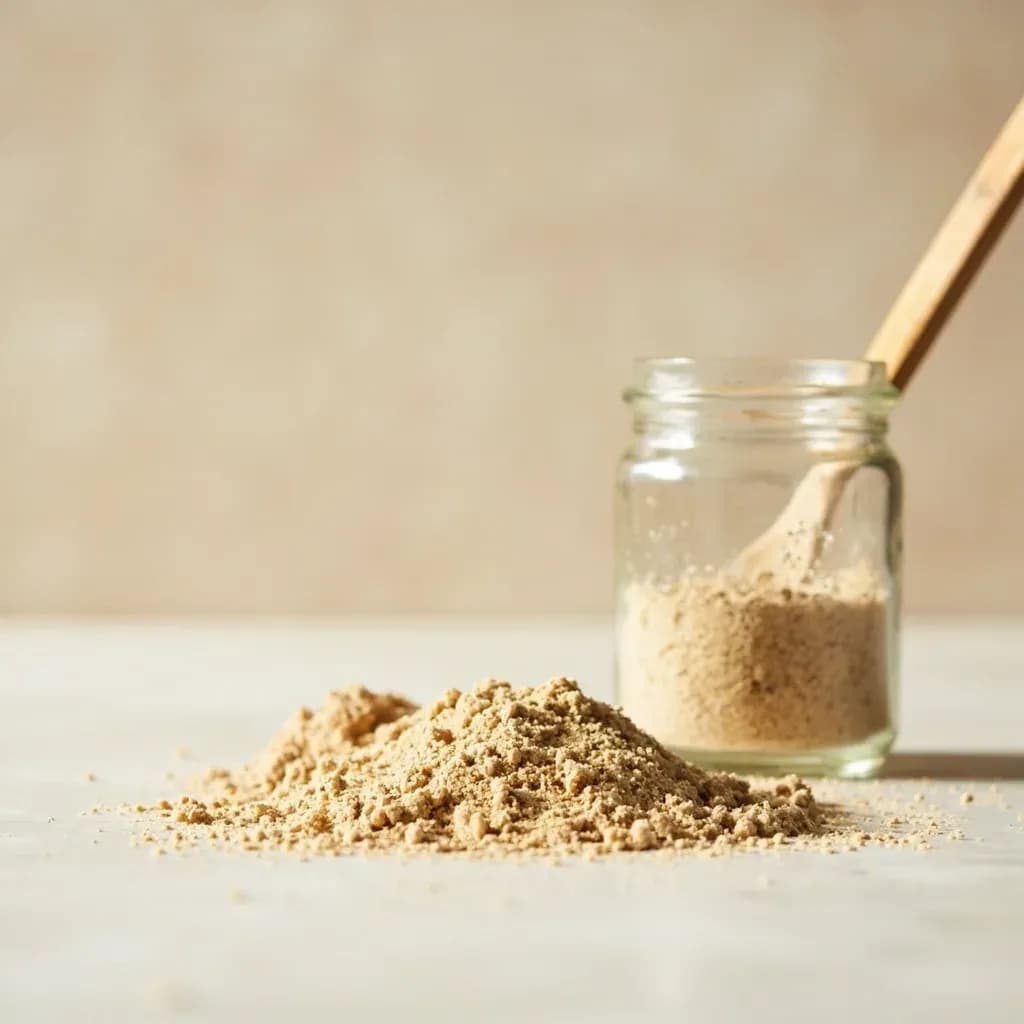
Plant protein powder is a dried, milled protein isolate or concentrate made from peas, brown rice, soy or a blend, used as a vegan protein supplement. Cooks stir it into smoothies, oats, energy balls and protein-enriched baked goods. Pea and rice proteins are often combined to round out the amino-acid profile.
Plant protein powder is what you get when you take legumes, seeds, or grains, strip out most of the starch, fat, and fiber, and mill what's left into a fine, dry powder. The result runs 60–95% protein by weight, with the balance made up of small amounts of carbohydrate, fiber, ash, and—depending on how thoroughly it has been defatted—a little residual fat. It is, in practice, an industrial extract more than a whole food: a pantry ingredient designed to be added in small amounts to recipes that need a protein boost without dramatically changing flavor or texture.
How it behaves in the kitchen depends almost entirely on its water absorption. Plant proteins are hygroscopic, meaning they grab and hold liquid aggressively—more like a fiber or a starch than like a refined flour. That quality is useful for binding veggie burgers, thickening purées, and stabilizing smoothies, but it can also dry out a cake, tighten a cookie's crumb, or make a pancake rubbery if you overdo it. The other behavior worth knowing is solubility: soy and pea isolates dissolve almost completely in water; rice protein is noticeably grittier; hemp, pumpkin, and other seed proteins can feel sandy on the tongue.
Nutritionally, a single plant source is rarely a complete protein—pea is low in methionine, rice is low in lysine—which is why blends (pea + rice especially) have become the workhorse of the category. Soy and quinoa are the notable exceptions, both offering a full essential amino acid spectrum on their own. For most home cooks, the practical use is simple: a scoop in a smoothie, a few tablespoons in a banana bread to stretch the protein, or a binder in a lentil-walnut loaf. Almost every variety is mild enough to disappear into a cooked dish, provided you choose an unflavored, unsweetened version.
- Measured in
- g
- Storage
- Pantry
Allergens
Types & varieties
Most common modern plant protein. Mildly earthy flavor, good emulsification, ~80–85% protein in isolate form.
Light, slightly grainy, mild flavor. Usually paired with pea to round out amino acids.
The original commercial plant protein (developed in the 1950s). Complete amino acid profile, neutral taste, very fine texture.
Coarser, greenish, nutty. Lower protein concentration (~50%) with healthy omega-3 fat content.
Dark green, earthy, slightly bitter. Naturally rich in iron, magnesium, and zinc.
Made from defatted sunflower seeds. Pale, mild, allergen-friendly option.
Increasingly used as a soy alternative; mild flavor, good solubility.
Earthy and tannic; more common in whole-food powders than isolates.
Bean-forward flavor, sometimes used in hummus-style applications and snack bars.
Complete amino acid profile; more expensive and less common as an isolate.
Smooth, nutty, complete amino acid profile; premium-priced, often South American sourced.
The dominant commercial pairing; formulated to give a complete amino acid spectrum at moderate cost.
Choosing a Plant Protein Powder
The shelves are crowded, and the differences between products matter more than the marketing suggests. Here's what to look at before you buy.
- Concentrate vs. isolate: Isolates are higher in protein and lower in carbs and fat, with a cleaner flavor. Concentrates retain more of the source's natural taste and fiber, which can be a feature or a flaw depending on the recipe.
- Single source vs. blend: For shakes and everyday use, a pea-rice blend is the most versatile. If you want the most complete amino acid profile from one ingredient, soy or quinoa are the safest bets.
- Unflavored vs. flavored: Reserve vanilla, chocolate, and fruit-flavored powders for shakes and yogurt bowls. In baked goods, soups, and savory dishes they will clash with herbs, garlic, and warm spices.
- Clean labels: Watch for added gums (xanthan, guar), artificial or 'natural' sweeteners (stevia, monk fruit, sucralose), and thickeners. A short ingredient list—usually just the protein and maybe a small amount of lecithin or sunflower lecithin for solubility—is a good sign.
- Allergen and cross-contamination notes: Soy is a top-eight allergen; rice, oat, and quinoa products should be certified gluten-free if that is a concern.
Baking with Plant Protein Powder
Protein powder is a supplement to flour, not a replacement for it. Treat it the way you would treat a fiber or a starch: small additions, extra liquid, and respect for the leavening you already have.
- Use it at 10–20% of the total flour weight. Above 25%, the crumb gets tough, dry, and gummy because the protein has no gluten to develop and absorbs too much water.
- Add 1–2 tablespoons of extra liquid per tablespoon of protein powder to compensate for its water-binding.
- Whisk the powder into a small amount of cold liquid to make a smooth slurry before folding it into a batter; this prevents the dry pockets that survive mixing.
- Keep your existing leavening (baking powder, baking soda, eggs, whipped aquafaba). Protein powder contributes almost no lift on its own.
- Lower the oven temperature by 10–15 °C (about 25 °F) for long bakes. Very high heat (>200 °C/400 °F) held for a long time can push the Maillard reaction on plant proteins into bitter territory.
Common uses
Tips & pitfalls
- Whisk the powder into a small amount of cold liquid to make a slurry before adding it to a batter; dry pockets are nearly impossible to fix once they form.
- Replace no more than 20–25% of the total flour weight in a baked good—higher ratios give a tough, dry, gummy crumb.
- Add 1–2 tablespoons of extra liquid per tablespoon of protein powder; plant proteins absorb moisture aggressively and will pull it out of your batter if you don't.
- Reserve flavored and sweetened powders for shakes and yogurt bowls. In savory cooking they clash with garlic, herbs, and spices.
- Don't lean on protein powder as a leavener. It has no gluten and no starch structure, so keep the baking powder, eggs, or whipped aquafaba in the formula.
- Watch for hidden gums, sweeteners, and 'natural flavors' on the label. A clean ingredient list is just the protein, sometimes with a touch of lecithin.
- Build tolerance gradually. Twenty to thirty grams per serving is standard, but larger amounts can cause bloating and gas, especially with legume- and soy-based powders.
- Store opened bags in an airtight container with a desiccant packet or a folded paper towel tucked inside to absorb ambient moisture and prevent clumping.
Nutrition
Nutrition
No USDA FoodData Central match for Plant Protein Powder yet. We surface a per-100 g profile once a generic whole-food entry is matched and verified.
In the shops
Matched grocery products
No matched grocery products for Plant Protein Powder yet.
Good to know
- Protein content
- Concentrates typically 60–80% protein; isolates 85–95%; defatted flours 40–55%.
- Common sources
- Yellow pea, brown rice, soybean, hemp seed, pumpkin seed, sunflower seed, faba bean, lentil, chickpea, quinoa, sacha inchi.
- Amino acid profile
- Generally incomplete on their own. Pea is low in methionine; rice is low in lysine; together they form a complete protein. Soy and quinoa are complete.
- Typical serving
- 15–30 g (roughly 1–2 scoops) added to a recipe or shake.
- Flavor
- Mild and neutral (rice, soy isolate) to earthy, grassy, or beany (pea, hemp). Flavored and sweetened versions are widely available.
- Solubility
- Soy and pea isolates dissolve well in water; rice protein tends to be grittier; hemp and seed proteins are the coarsest.
- Texture impact in baking
- Strong water-binding; can dry out baked goods and tighten the crumb if used in large amounts.
- Shelf life
- 12–24 months unopened in a cool, dry place; 6–12 months after opening if kept dry and sealed.
Substitutes
- Whey protein isolate — Direct swap in shakes and many baking applications if dairy is acceptable; superior solubility and browning.
- Egg white protein — 1:1 substitute in baking with cleaner flavor than whey; adds structure from real egg proteins.
- Casein protein — Slow-digesting dairy protein; works in baked goods but produces a denser, less tender crumb.
- Nut flours (almond, hazelnut) — Whole-food alternative; lower protein concentration but adds fat and flavor. Roughly 3 tablespoons nut flour ≈ 1 tablespoon protein powder in protein terms.
- Seed meals (hemp hearts, pumpkin seed meal) — Coarser, nuttier; good in bars, smoothies, and crusts where texture is welcome.
- Silken tofu (puréed) — Adds similar protein density to smoothies and creamy recipes; works as a binder in vegan baking.
- Flax or chia egg — Not a protein source, but a binding substitute when you are removing the protein powder for structure only.
- Cricket protein powder — Animal-source alternative; complete amino acids and neutral flavor, if entomophagy is acceptable.
Pairs with
Also called
pea protein powder · rice protein powder · pea/rice protein · vegan protein powder
Related
Textured Vegetable Protein (TVP)
Dehydrated soy-flour granules rehydrated as a ground-meat substitute in chili and tacos.
Collagen Peptides
Flavorless hydrolyzed collagen powder stirred into drinks and broths as a protein boost.
Chicken Stock
Savory simmered-chicken broth that forms the liquid base of soups, sauces, and braises.
Vegetable Stock
Light vegetable-simmered broth used as a meat-free cooking base.
Beef Stock
Deep, roasted-bone beef broth that underpins hearty sauces and stews.
Fish Stock
Delicate stock simmered from fish bones for seafood soups and sauces.