Proteins
Soy Protein Isolate (TVP)
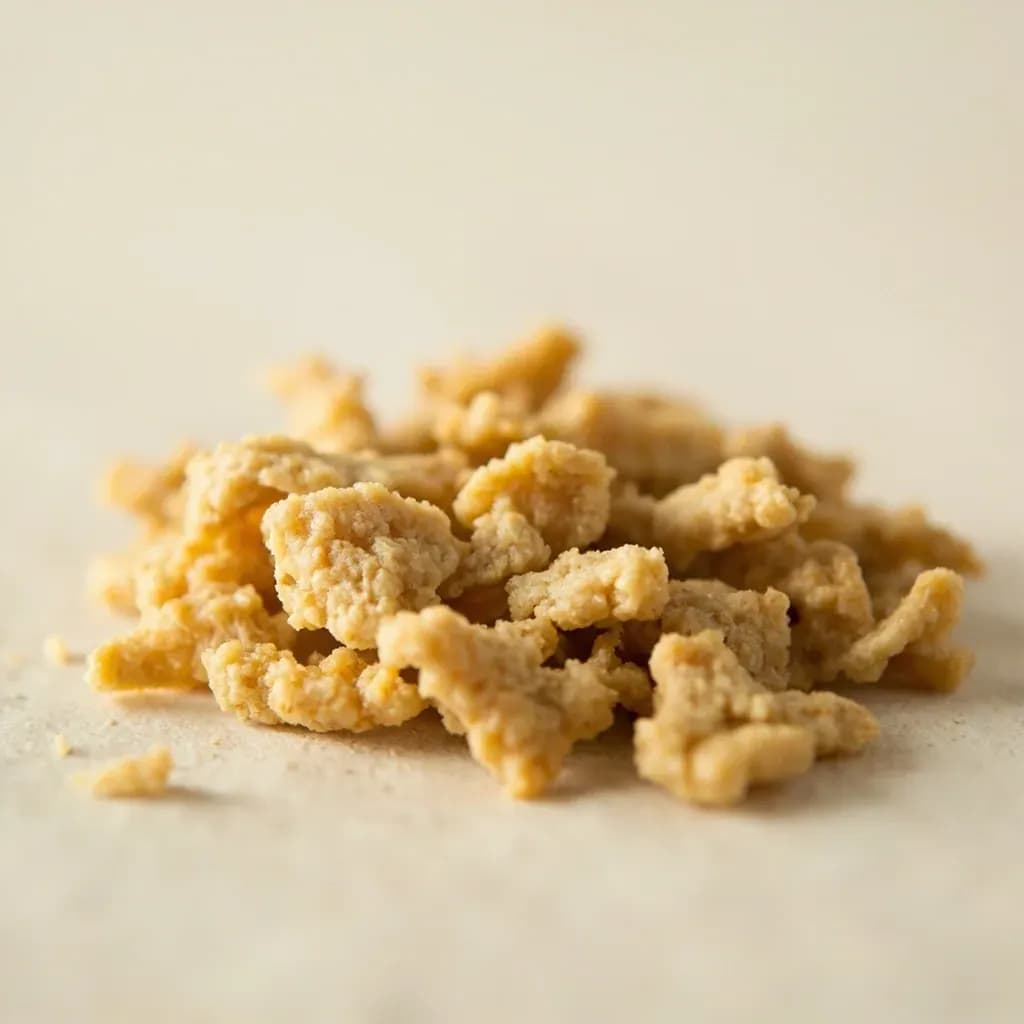
Defatted soy protein, often textured (TVP), used as a meat substitute.
Soy protein isolate is a highly refined, defatted soy product that is nearly pure protein, often extruded into textured vegetable protein (TVP) chunks or granules. Rehydrated, it mimics ground or shredded meat in chilis, tacos, and stews, soaking up seasoning readily. It is a low-cost, shelf-stable plant protein widely used in vegetarian cooking.
TVP starts as defatted soy flour—the by-product remaining after soybean oil is extracted. Through extrusion texturization, this flour is forced through dies under high temperature and pressure, causing the proteins to unfold and reconfigure into fibrous, layered structures that closely simulate the texture of ground or chunked meat. The result is a remarkably versatile ingredient that absorbs flavors readily while contributing substantial protein at minimal cost.
What makes TVP genuinely valuable in the kitchen is its chameleon-like adaptability. Small granules and chunks behave like ground meat in tacos, chili, and Bolognese sauce; larger pieces stand in for muscle cuts in stir-fries, stews, and fajitas. Because it is defatted, it contains negligible fat yet delivers 50–80% protein depending on the form. It is shelf-stable for over a year when kept cool and dry, making it one of the most practical plant proteins to keep stocked.
The key to working with TVP is understanding that it is a vehicle, not a destination. Dried and unseasoned, it tastes vaguely beany and flat. Properly rehydrated in flavorful liquid, briefly toasted in fat, and finished with bold seasonings, it becomes convincingly meaty. Most of the disappointing TVP dishes home cooks encounter result from weak seasoning or mushy, over-rehydrated texture—problems that are entirely avoidable with proper technique.
- Measured in
- g
- Storage
- Pantry
Allergens
Types & varieties
Versatile; simulates ground meat texture in tacos, chili, Bolognese, and sloppy joes
Simulates whole-muscle cuts; used in stews, stroganoff, curries, and fajitas
Thinner texture; suitable for fish-like applications or fine crumb coatings
Finest texture; blends seamlessly into burgers, meatloaf, meatballs, and sausages for extended bulk
70–80% protein; the most common cooking-grade form; good chew and texture
90%+ protein; used in nutrition bars and fitness supplements; not textured for home cooking
TVP vs. Soy Protein Isolate: What You Are Actually Buying
These terms are often used interchangeably in marketing, but they describe different products with different kitchen applications. TVP (textured vegetable protein) is made from defatted soy flour that has been texturized through extrusion into chunks, strips, or granules suitable for cooking. Soy protein isolate is a highly purified, powdered protein extract—90%+ protein by weight—used primarily in processed foods, nutrition supplements, infant formula, and industrial applications.
Most cooking-grade textured protein sold in bulk bags and health-food stores is technically textured soy protein concentrate or textured defatted soy flour, not isolate. The distinction matters for protein percentage and appropriate use. Always check the ingredient list: 'soy protein isolate' appears in nutrition bars and fitness supplements; 'textured soy protein' or 'TVP' appears in bulk bags for cooking. If you are buying isolate in powder form expecting it to behave like TVP chunks, you will be disappointed.
Rehydrating and Cooking TVP
The single most important step in working with TVP is proper rehydration. Pour hot liquid over the TVP in a bowl—about 1.5 to 2 times the weight of TVP—and let it stand for 10–20 minutes until no dry specks remain. The liquid should be flavorful: vegetable broth, mushroom broth, or whatever liquid the recipe calls for. Plain water is a wasted opportunity.
After draining (do not squeeze unless you want a chewier, more meat-like result), add the rehydrated TVP to a hot pan with fat and cook until lightly browned before incorporating it into sauces or finished dishes. This browning step—often skipped—makes the difference between a convincing meat-like texture and a pasty, one-dimensional substitute.
- Toast dry TVP briefly in a dry skillet before rehydrating to deepen flavor and reduce beany taste
- Rehydrate in broth, not water, for savory dishes
- Do not over-rehydrate—TVP should be moist, not dripping
- Pan-fry drained TVP in hot fat before adding to sauces
- Squeeze out excess liquid after rehydrating for a chewier, meatier texture
- Store dry TVP in the freezer to prevent rancidity and extend shelf life
Common uses
Tips & pitfalls
- Toast dry TVP in a dry skillet for 2–3 minutes before rehydrating to deepen flavor and reduce the beany taste common in lesser-quality products.
- Rehydrate in flavorful liquid—vegetable broth, mushroom broth, or the cooking liquid called for in the recipe. Plain water is a wasted opportunity for savory preparations.
- Do not over-rehydrate; TVP should be moist but not dripping. Soggy, waterlogged TVP dilutes flavors and produces a mushy, unpleasant texture.
- After draining, add rehydrated TVP to hot fat (oil or butter) in a pan. This step is non-negotiable for good browning and flavor development.
- For a chewier, more convincingly meat-like texture, squeeze out excess liquid after rehydrating and pan-fry briefly before adding to sauce.
- Store dry TVP in the freezer to extend shelf life and prevent rancidity—fat oxidation is the primary spoilage concern with any defatted soy product.
- Measure by weight when possible; volumetric measurements vary widely between brands and particle sizes, leading to inconsistent results.
- Add seasonings early in cooking. TVP has no built-in flavor and relies entirely on the dish for taste—it will not taste like meat unless you make it taste like meat.
Nutrition
Energy
1402 kJ · per 100 g
Where the calories come from
Protein
88.3g
177% DV
Carbs
0g
0% DV
Fat
3.4g
4% DV
Fiber
0g
0% DV
Sugars
0g
of which
Sodium
1005mg
44% DV
Source · USDA FoodData Central · Soy protein isolate
View on FDC →In the shops
Matched grocery products
No matched grocery products for Soy Protein Isolate (TVP) yet.
Good to know
- Primary protein content
- 50–80% depending on form (TVP concentrate ~70%; soy flour ~50%)
- Raw material
- Defatted soy flour (by-product of soybean oil extraction)
- Processing method
- Extrusion texturization—high-temperature, high-pressure forcing through a die; wet or dry variants
- First commercial TVP
- 1960s, Archer Daniels Midland under the Adriance brand
- Rehydration ratio
- 1 part TVP to 1.5–2 parts liquid by weight
- Reconstitution time
- 10–20 minutes in hot liquid; longer in cold
- Shelf life (dry)
- 12–24 months in airtight container, away from heat and moisture
- Flavor profile
- Mildly beany when raw; neutral and absorbent when rehydrated
Substitutes
- Textured pea protein — Similar texture and neutral flavor; slightly grittier mouthfeel; 70–80% protein; good direct substitute in most applications
- Seitan — Wheat gluten; chewier and denser texture with more bite; not suitable for soy-free or gluten-free diets
- Cooked brown or green lentils (mashed or whole) — Mushier texture; better suited for loose fillings and tacos; adds fiber; lower fat than TVP
- Chickpeas (mashed) — Adds creaminess and binding; works in burgers, balls, and coatings; less chewy than TVP
- Portobello mushrooms (diced and browned) — Rich, meaty umami flavor; softer, more tender texture; excellent for tacos, burgers, and ragus
- King oyster mushrooms (shredded) — Exceptional meat-like texture and deep umami; more expensive and slower to prepare; outstanding when properly cooked
Pairs with
Also called
TVP · Soya Meat · Textured Vegetable Protein · Soy Mince · Soya Chunks
Related
Egg
The kitchen's everything ingredient — bind, leaven, enrich, or fry
Chicken Breast
Lean, quick-cooking white meat for everyday dinners

Ground Beef
Versatile minced beef for burgers, ragù, tacos, and meatballs
Pork Loin
Lean, tender roasting cut that stays juicy with care
Salmon
Rich, rosy fish that roasts, grills, or cures beautifully

Egg White
Pure protein that whips to airy peaks for meringue and more
Egg Yolk
Rich, golden yolk for custards, mayonnaise, and pasta

Quail Egg
Tiny, speckled eggs for garnishing and elegant bites