Produce
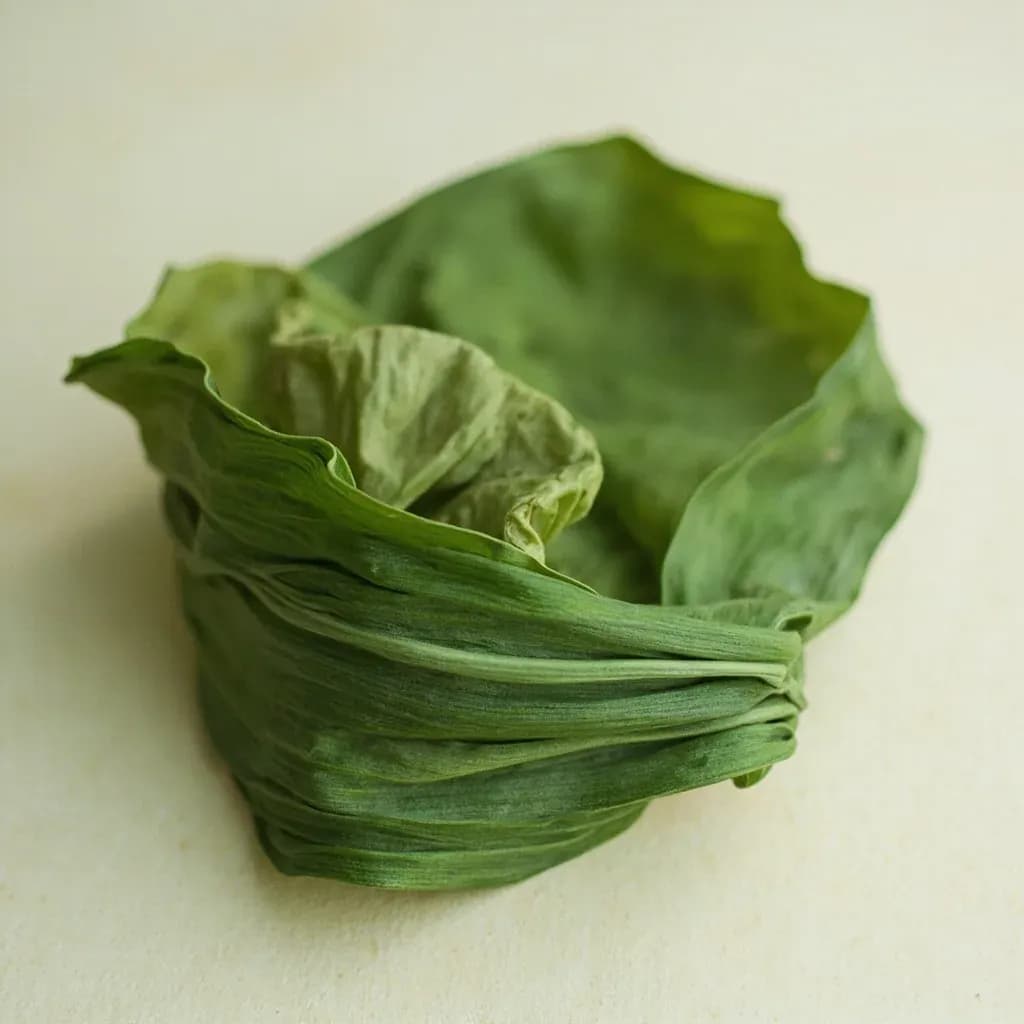
Dried Lotus Leaf
Large dried aquatic leaf used as a fragrant wrapper for steamed rice and meats.
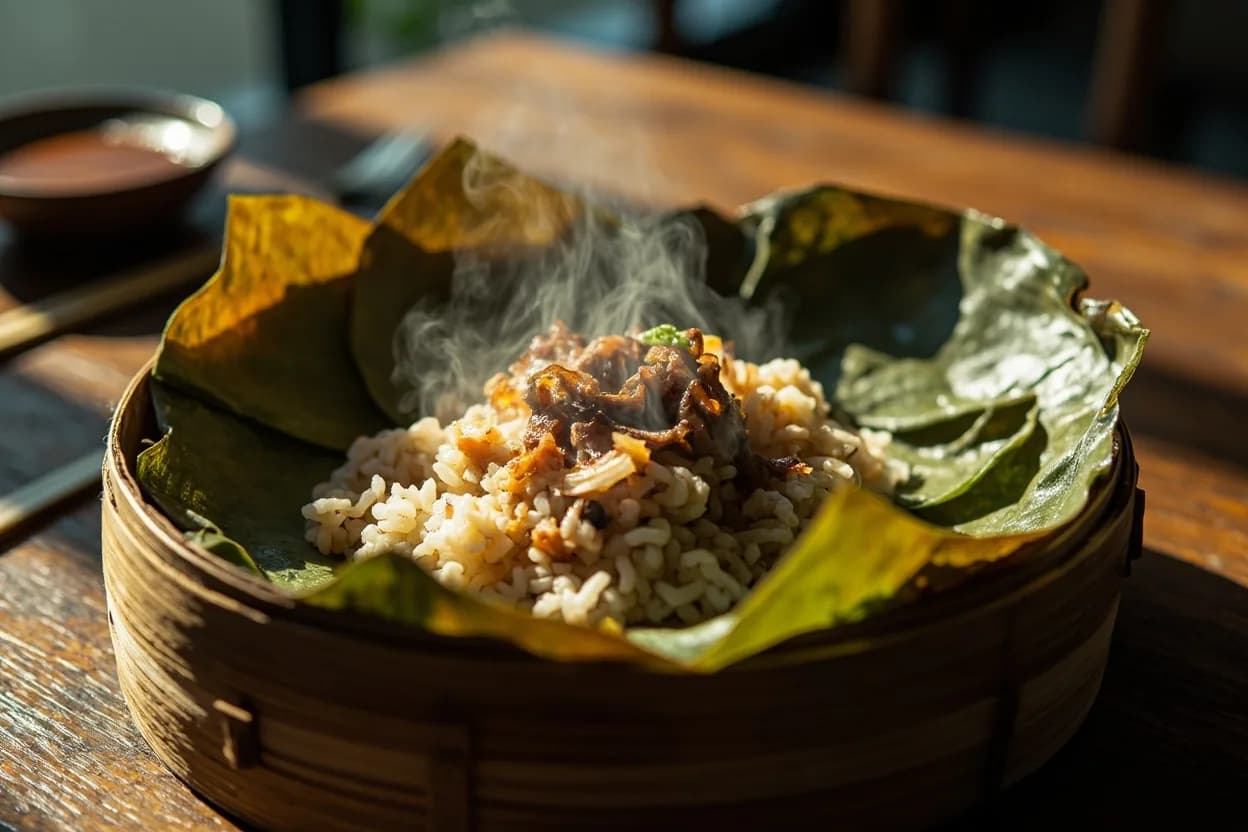
Dried lotus leaves are the broad, round leaves of the lotus plant, dried for storage and used as a natural wrapper in Chinese cooking. Soaked to soften, they enclose glutinous rice parcels (lo mai gai) and steamed meats, imparting a subtle tea-like, grassy aroma during cooking. The leaf itself is not eaten but flavors and holds its contents.
Dried lotus leaf is the mature foliage of Nelumbo nucifera, the sacred lotus, harvested at peak season and sun-dried to preserve its structure and subtle aroma. Unlike fresh leaves, which are too fragile for extended storage, dried leaves become pliable when rehydrated and serve as natural, single-use cookware—able to contain a filling, let steam penetrate, and impart a faint grassy, herbal character to whatever steams inside. The leaf's porous but watertight fiber structure is uniquely suited to this role: steam passes through readily while juices stay contained, and the leaf becomes flexible enough to form a secure parcel without tearing. In East and Southeast Asian cuisines, the leaf functions both as a cooking vehicle and a serving vessel, bringing a pale green tint and light earthy sweetness to rice dishes that no other wrapper can replicate. Its use predates refrigeration—lotus leaves were the original food-wrap for storage and transport in pre-industrial China, Vietnam, and Thailand. Today, dried lotus leaf remains essential in Cantonese dim sum, Teochew banquet cooking, Thai street food, and Vietnamese tet preparations. Quality dried leaves should be uniform in color (pale green to olive), free of mold, and have a faint fresh vegetal scent; yellowed or musty-smelling leaves indicate age or improper storage and will impart off-flavors during cooking.
- Measured in
- piece
- Storage
- Pantry
Types & varieties
Most common in markets; typically unsulfured, sun-dried, sold whole or in halves. Preferred grade has intact central stem and clean surface without dark spots.
Slightly thinner fiber; similar use in Thai steamed dishes and rice wrapped preparations. Often sold pre-cut into usable sections.
Convenience product sold hydrated and ready to use; shorter shelf life, must be refrigerated. Less commonly available than dried.
Selection and Storage
Quality dried lotus leaves should be uniform in color, ranging from pale green to olive, with a clean surface free of dark spots or mold. The presence of an intact central stem indicates proper harvesting technique and suggests the leaf wasn't damaged during drying. Always smell the leaves before purchasing or using—reject any with a musty, sour, or chemical odor, as this signals degradation or improper processing. Store dried leaves in an airtight container with a desiccant packet in a cool, dry place. Humidity is the primary enemy: it causes mold growth and accelerates quality deterioration. Under proper conditions, dried lotus leaves maintain their structural integrity and aromatic properties for 12–18 months. Before each use, inspect leaves for brittleness or discoloration, as even properly stored leaves can degrade over time.
Common uses
Tips & pitfalls
- Trim the central stem and any hard rib portions with scissors before soaking—this prevents puncturing when wrapping.
- Soak leaves with the underside (darker green) facing up; the smoother top side will contact the food.
- If leaves are brittle and crack during soaking, discard them; they won't form a seal and will fall apart during steaming.
- Do not skip the soak—even flexible-looking dried leaves need full hydration to become pliable enough for tight wrapping.
- Tie bundles with kitchen twine or butcher's string, not rubber bands, which can melt or snap under steam heat.
- Steam wrapped parcels over high heat for the full duration; opening the lid to check releases steam and extends cooking time.
- If using for lining a steamer, overlap edges by 2–3 cm to prevent rice or filling from falling through the basket holes.
- Store dried leaves with a desiccant packet; humidity is the primary cause of mold and quality deterioration.
Nutrition
Nutrition
No USDA FoodData Central match for Dried Lotus Leaf yet. We surface a per-100 g profile once a generic whole-food entry is matched and verified.
In the shops
Matched grocery products
No matched grocery products for Dried Lotus Leaf yet.
Good to know
- Scientific name
- Nelumbo nucifera (sacred lotus)
- Part used
- Mature leaves, harvested and sun-dried
- Typical diameter
- 25–40 cm (10–16 inches) when soaked and flattened
- Origin
- East and Southeast Asia; integral to Chinese, Vietnamese, Thai, and Japanese cuisines for centuries
- Flavor contribution
- Subtle grassy, herbal aroma; imparts light earthy sweetness to fillings
- Material
- Natural plant fiber; single-layer leaf tissue, central rib and radial veins visible when hydrated
- Shelf life
- 12–18 months when stored airtight in a cool, dry place away from humidity
- Rehydration time
- 30–60 minutes in room-temperature water, or 10–15 minutes in warm water
- Traditional equipment
- Steamer or wok with bamboo steaming rack
- Primary cuisine
- Cantonese, Teochew, Thai, Vietnamese
Substitutes
- Banana leaf — Thicker, more durable, and easier to find fresh in Southeast Asian markets; lacks lotus's subtle herbal note but performs the same wrapping function. Adjust cooking time slightly longer due to greater thickness.
- Corn husk — Better for smaller parcels; more brittle when rehydated; primarily used in Mexican and some Asian tamale-style preparations. Will not hold the same shape under heavy rice filling.
- Bamboo leaf — Narrower and less commonly dried for culinary use; some regional Chinese preparations use fresh bamboo leaves as wrapper. Not a true equivalent.
Pairs with
Also called
Lotus Leaf Wrapper
Appears in these dishes
Related
Tomato
Juicy, sun-sweet fruit for sauces, salads, and slow-cooked depth
Yellow Onion
The aromatic backbone of soups, sofritos, and braises
Garlic
Pungent cloves that perfume nearly every savory dish
Lemon
Bright, acidic citrus that wakes up almost any dish
Potato
Humble, hearty staple — roast, mash, fry, or boil
Carrot
Sweet, crunchy root — raw, roasted, or the base of a sofrito
Cucumber
Cool, crisp, and watery — for salads, pickles, and tzatziki

Lettuce
Crisp leaves for salads, wraps, and a fresh crunch