Proteins
Droewors
South African dried, spiced sausage snacked on like a slim biltong.
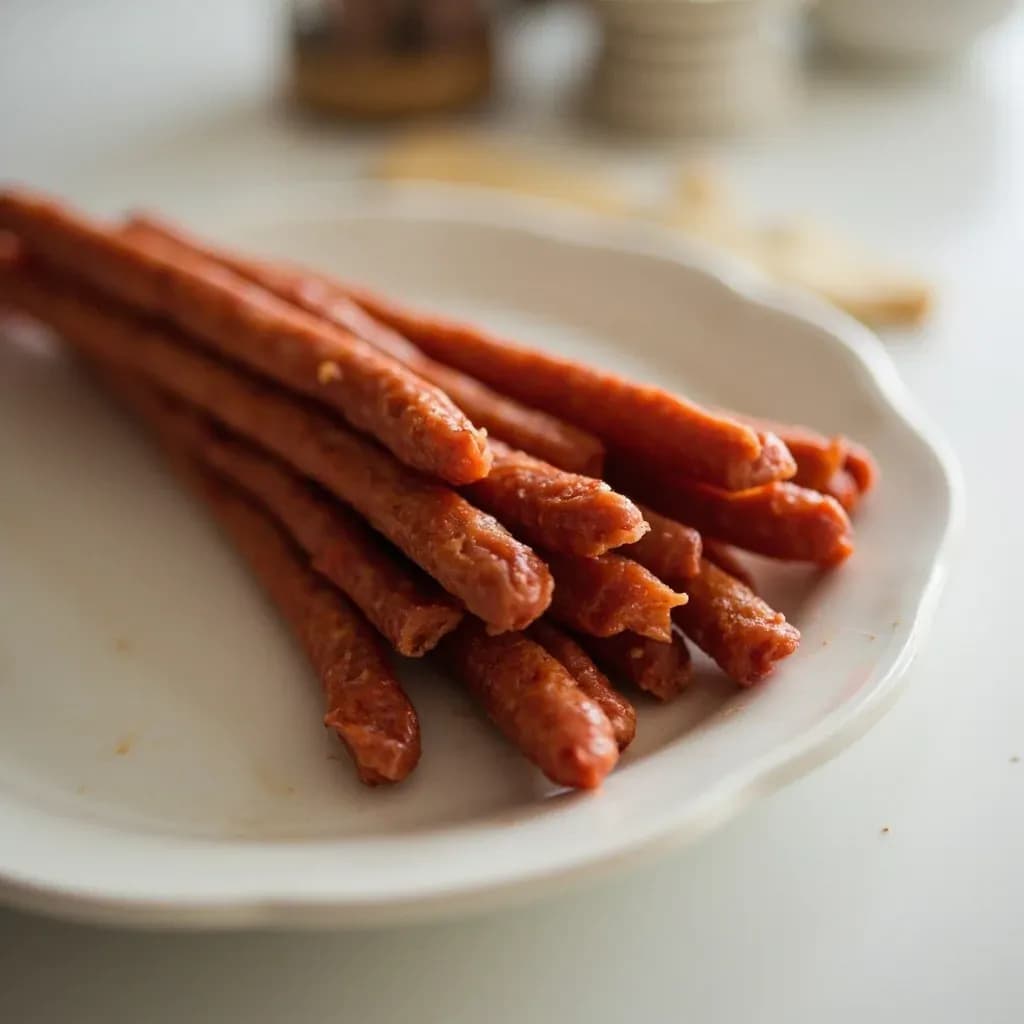
Droewors is a South African dried sausage, essentially a thin, air-dried version of boerewors seasoned with coriander, vinegar, and spices. It dries quickly into a snackable, chewy stick eaten like biltong. Its coriander-forward spicing is its signature.
Droewors is a traditional South African dried sausage, developed during the Cape Colonial era (17th–18th centuries) alongside biltong as a practical method of preserving meat without refrigeration. Unlike the flat strips of biltong, droewors is stuffed into narrow natural or collagen casings, creating a convenient, portable sausage that air-dries over several days to weeks until firm and shelf-stable. The name derives from the Afrikaans 'droë wors,' meaning 'dry sausage.' What distinguishes droewors from other dried sausages is the extremely fine mincing of the meat—far finer than fresh sausage—and the characteristic spice profile dominated by freshly ground coriander, which gives these sausages their distinctive bright, citrusy aroma. The result is a firm, chewy, intensely flavored dried sausage that serves as both a high-protein snack and a versatile culinary ingredient.
- Measured in
- g
- Storage
- Pantry
Types & varieties
The standard variety; uses 90%+ lean beef with the traditional coriander-forward spice blend; most widely available
Made with wild game (kudu, springbok, eland, wildebeest); leaner with a distinctly gamier flavor; considered a delicacy
Contains additional chili powder or flakes; labeled 'hot' or 'gespuis' in Afrikaans for those who want heat
Coated or blended with extra cracked black pepper; adds sharp, pungent bite that cuts through the coriander
Lightly cold-smoked over wood chips during the drying process; subtle smoky dimension without cooking the meat
Less common; uses minced lamb for a richer, fattier profile; more indulgent than the lean standard beef
Making Droewors at Home
Producing authentic droewors requires patience and attention to hygiene throughout the process. The meat selection is critical—source the leanest ground beef you can find, ideally 90% lean or higher, and have your butcher grind it through a fine 3mm plate, or do it yourself at home with a meat grinder. The fine mincing is non-negotiable; it creates the dense, cohesive texture that distinguishes droewors from coarse-ground fresh sausages. Once ground, incorporate the spices (with precise measured curing salt), mix thoroughly but quickly, then stuff immediately into pre-soaked casings. Tie into lengths of 15–20 cm for manageable pieces.
- Use a 3mm grinding plate for the meat; 8mm is too coarse and will produce a crumbly, mealy texture
- Prague powder #2 (curing salt) is essential at 2g per kg of meat—never skip it for extended drying safety
- Tie sausages into coils or individual links of 15–20 cm; too-long pieces sag and dry unevenly
- Check each sausage for air pockets before hanging; squeeze gently as you work to reveal trapped air bubbles
Storage and Shelf Life
Properly dried droewors keeps for weeks at room temperature in a cool, dry cupboard, stored in a paper bag or breathable container. The paper allows residual moisture to escape without trapping it against the sausage. For extended storage of several months, vacuum-sealing after thorough drying significantly extends shelf life. Refrigeration is not required but accelerates staling; freezing changes the texture unfavorably and is best avoided. Inspect stored droewors regularly—light surface mold can be trimmed away, but heavy mold indicates insufficient initial drying or moisture exposure and the sausage should be discarded.
- Store in paper bags or breathable containers, never sealed plastic, in a cool (under 20°C) dark cupboard
- Vacuum-sealing extends shelf life to several months after thorough drying
- Do not refrigerate—cold temperatures accelerate staling and flavor loss
- Light surface mold is cosmetic; trim generously and proceed; heavy mold means discard
Common uses
Tips & pitfalls
- The meat must be minced extremely fine—use a 3mm grinding plate, never a coarse 8mm plate; coarse mince produces a mealy, crumbly texture rather than a cohesive dried sausage
- Use lean beef at 90% lean or higher; excess fat goes rancid during air-drying, ruining the sausage and creating a health hazard
- Coriander is the defining spice—always use freshly ground coriander seed toasted briefly in a dry pan before grinding for the brightest, most authentic flavor
- Add a precise amount of curing salt (Prague powder #2 at roughly 2g per kg of meat); insufficient curing salt during the extended drying period risks bacterial growth, particularly dangerous in a low-acid dried sausage
- Soak natural casings thoroughly in room-temperature water for at least 30 minutes before stuffing to prevent tearing; work slowly and steadily to avoid air pockets that create weak spots
- Hang sausages in a cool (10–15°C), dry space with consistent low humidity and good airflow for 3–7 days until they feel firm and slightly stiff throughout, with no soft centers
- Never rush drying in an oven or dehydrator set too warm; this causes case hardening (a hard exterior trapping moisture inside), leading to spoilage despite the surface appearing done
- Store finished droewors in a paper bag or breathable container in a cool cupboard; plastic bags trap moisture and promote mold growth
- Game droewors dry slightly faster than beef varieties due to their extreme leanness; check them daily during the final drying days
- A common mistake is skipping the curing salt entirely—do not substitute table salt, as it provides no protection against botulism risk in the drying environment
- If mold appears, assess it first: light white or gray surface mold is normal and can be trimmed away; any colored mold (green, black, fuzzy) or musty odor indicates spoilage and the sausage should be discarded
Nutrition
Energy
649 kJ · per 100 g
Where the calories come from
Protein
18.8g
38% DV
Carbs
0.5g
0% DV
Fat
8.1g
10% DV
Fiber
0g
0% DV
Sugars
0g
of which
Sodium
593mg
26% DV
Source · USDA FoodData Central · approx. Sausage, turkey, fresh, raw
View on FDC →In the shops
Matched grocery products
No matched grocery products for Droewors yet.
Good to know
- Origin
- South Africa, Cape Colonial era (17th–18th centuries)
- Primary Meat
- Very finely minced beef; game varieties use kudu, springbok, eland, or wildebeest
- Typical Spices
- Ground coriander (dominant), black pepper, cloves, nutmeg, allspice; optional chili for heat
- Casing
- Natural sheep/goat intestine or collagen; 1–2 cm diameter (pencil-thickness)
- Processing
- Fine mincing, spice blending, curing salt, stuffing, air-drying 3–7 days
- Texture
- Firm, dry, chewy; darker exterior, lighter interior when sliced
- Ready-to-Eat
- Yes; traditionally eaten raw as a snack, not cooked
- Shelf Life
- Weeks to months when dried and stored cool and dry
Substitutes
- Beef Biltong — While not a sausage, thinly sliced beef biltong provides the same spiced, dried beef experience with similar shelf life and uses; the texture differs (flat strips vs. cylindrical) but the flavor profile overlaps considerably
- Jerky — American beef jerky offers comparable dried protein portability; however, it lacks the coriander-forward spice profile and usually has a different sugar-based cure
- Chorizo Seco — Spanish hard-cured chorizo shares the dried sausage form and high-protein snack role; it is smoked and paprika-dominant rather than coriander-dominant, making it a flavor substitute rather than an authentic one
- Saucisson Sec — French dried sausage works similarly as a charcuterie component; the flavor profile is quite different (garlic and wine-based rather than coriander), but it fulfills the same culinary roles
Pairs with
Also called
Dry Wors · Dried Sausage
Related

Egg
The kitchen's everything ingredient — bind, leaven, enrich, or fry

Chicken Breast
Lean, quick-cooking white meat for everyday dinners

Ground Beef
Versatile minced beef for burgers, ragù, tacos, and meatballs

Pork Loin
Lean, tender roasting cut that stays juicy with care

Salmon
Rich, rosy fish that roasts, grills, or cures beautifully

Egg White
Pure protein that whips to airy peaks for meringue and more

Egg Yolk
Rich, golden yolk for custards, mayonnaise, and pasta

Quail Egg
Tiny, speckled eggs for garnishing and elegant bites