Produce
Dulse
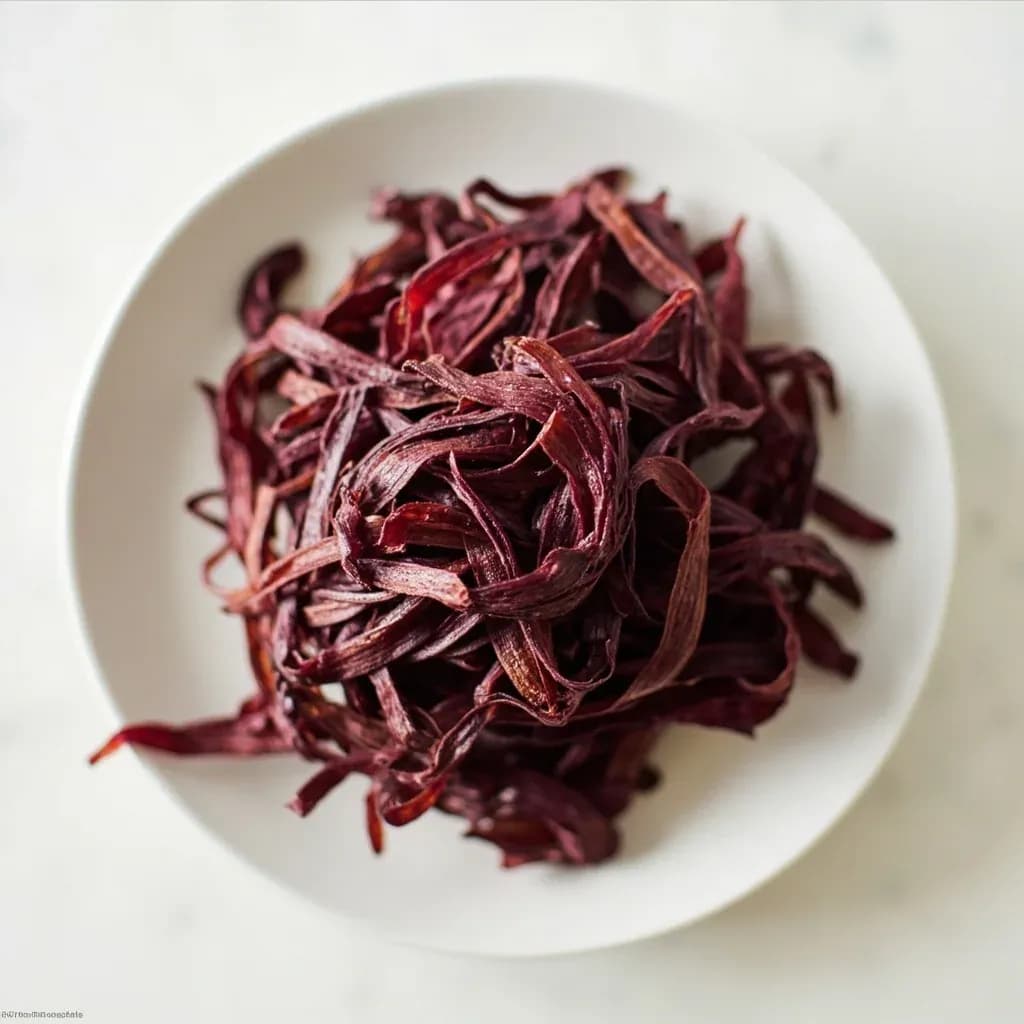
Reddish edible seaweed eaten dried as a savory snack or flake; tastes faintly of bacon when fried.
Dulse is a soft, reddish-purple edible seaweed harvested in the cold North Atlantic, eaten dried as a chewy snack or ground into salty, mineral-rich flakes. It is sprinkled over soups, salads, and breads, and stirred into stocks for a savory, oceanic depth. When pan-fried it crisps up and develops a smoky, bacon-like flavor.
Dulse (Palmaria palmata) is a red algae harvested from intertidal rocks along the North Atlantic and Pacific coasts, with major commercial production in Atlantic Canada, Iceland, Norway, and Ireland. Prized for centuries in coastal communities, this seaweed dries to a deep reddish-brown and develops an intense savory, umami-rich character. Its flat, leafy fronds are sold whole, flaked, or ground, and occasionally cold-smoked for added depth.
What sets dulse apart from other edible seaweeds is the remarkable transformation it undergoes when fried. The natural drying process creates compounds—including betaine and free amino acids—that produce a distinctly bacony, slightly smoky flavor without any added seasoning. This makes dulse uniquely versatile: it works as a standalone snack, a crispy garnish, a seasoning agent, or a rehydrated ingredient in cooked dishes. Its high protein content (15–25% by dry weight) and status as one of the few plant sources of bioavailable B12 make it especially valuable for plant-based cooking.
Dulse behaves differently depending on form and preparation. Dried whole leaves rehydrate in about 20 minutes to a tender, slightly chewy texture suitable for soups and stews. Flakes and ground dulse disperse readily into dressings, batters, and finished dishes. When fried crisply in a dry pan, the leaves take on a bacon-like texture that crumbles beautifully over breakfast plates, salads, and grain bowls.
- Measured in
- g
- Storage
- Pantry
Types & varieties
Harvested from North Atlantic waters; the most common commercial source; slightly sweeter profile
From Pacific Northwest waters; tends toward a more robust, mineral-forward flavor
Cold-smoked over wood; adds hickory or applewood notes; excellent as a finishing seasoning
Common uses
Tips & pitfalls
- Fry dulse in a hot, dry skillet (no oil) for 1–2 minutes per side to develop its characteristic bacony flavor and crispy texture; watch carefully as it can burn quickly
- Use sparingly at first—dulse is intensely savory and a little goes a long way
- Do not overcook when adding to soups or stews; add in the last 5–10 minutes to preserve color and nutrients
- To make dulse salt, grind dried dulse fine and mix with flaky sea salt; excellent finishing salt for eggs, roasted vegetables, or avocado
- Rehydrate only what you need; excess rehydrated dulse does not keep well (1–2 days in refrigerator)
- Check sodium content if watching salt intake; some commercial products add salt during drying
- Common mistake: using too much dulse, which overwhelms dishes with an overpowering seaweed taste
- Common mistake: not storing properly—exposure to humidity causes dulse to clump and lose crispness
Nutrition
Nutrition
No USDA FoodData Central match for Dulse yet. We surface a per-100 g profile once a generic whole-food entry is matched and verified.
In the shops
Matched grocery products
No matched grocery products for Dulse yet.
Good to know
- Scientific name
- Palmaria palmata
- Origin
- North Atlantic and Pacific coasts; commercially harvested in Canada, Iceland, Norway, Ireland, and Maine
- Harvest season
- Spring through fall; hand-harvested from intertidal rocks
- Appearance
- Flat, leafy red-to-purple fronds; turns dark reddish-brown when dried
- Flavor
- Savory, briny, umami-rich; develops bacony, slightly smoky notes when fried crisply
- Form
- Sold dried in whole leaf, flaked, or ground form; also available smoked
- Nutrition highlights
- High in potassium, iron, iodine, B vitamins (especially B12), and protein (15–25% dry weight)
- Yield
- Dried dulse rehydrates to roughly 3–4 times its dry volume
- Storage
- Keep in airtight container in cool, dark, dry place; 6–12 months shelf life; protect from moisture to prevent clumping
- Equipment
- No special equipment required; optional: dry skillet for frying, spice grinder for powder
Substitutes
- Nori — Milder, less intense seaweed flavor; best for sushi or as a garnish rather than for bacony-fried applications
- Kelp granules — Dried and ground kelp; more mineral-forward and less distinctly bacony; good for umami seasoning
- Wakame — Softer texture when rehydrated; more subtle flavor; suitable for soups and salads but not for crispy-fry applications
Also called
Dulse Flakes · Dillisk
Related
Tomato
Juicy, sun-sweet fruit for sauces, salads, and slow-cooked depth
Yellow Onion
The aromatic backbone of soups, sofritos, and braises
Garlic
Pungent cloves that perfume nearly every savory dish
Lemon
Bright, acidic citrus that wakes up almost any dish
Potato
Humble, hearty staple — roast, mash, fry, or boil
Carrot
Sweet, crunchy root — raw, roasted, or the base of a sofrito
Cucumber
Cool, crisp, and watery — for salads, pickles, and tzatziki

Lettuce
Crisp leaves for salads, wraps, and a fresh crunch