Natural form
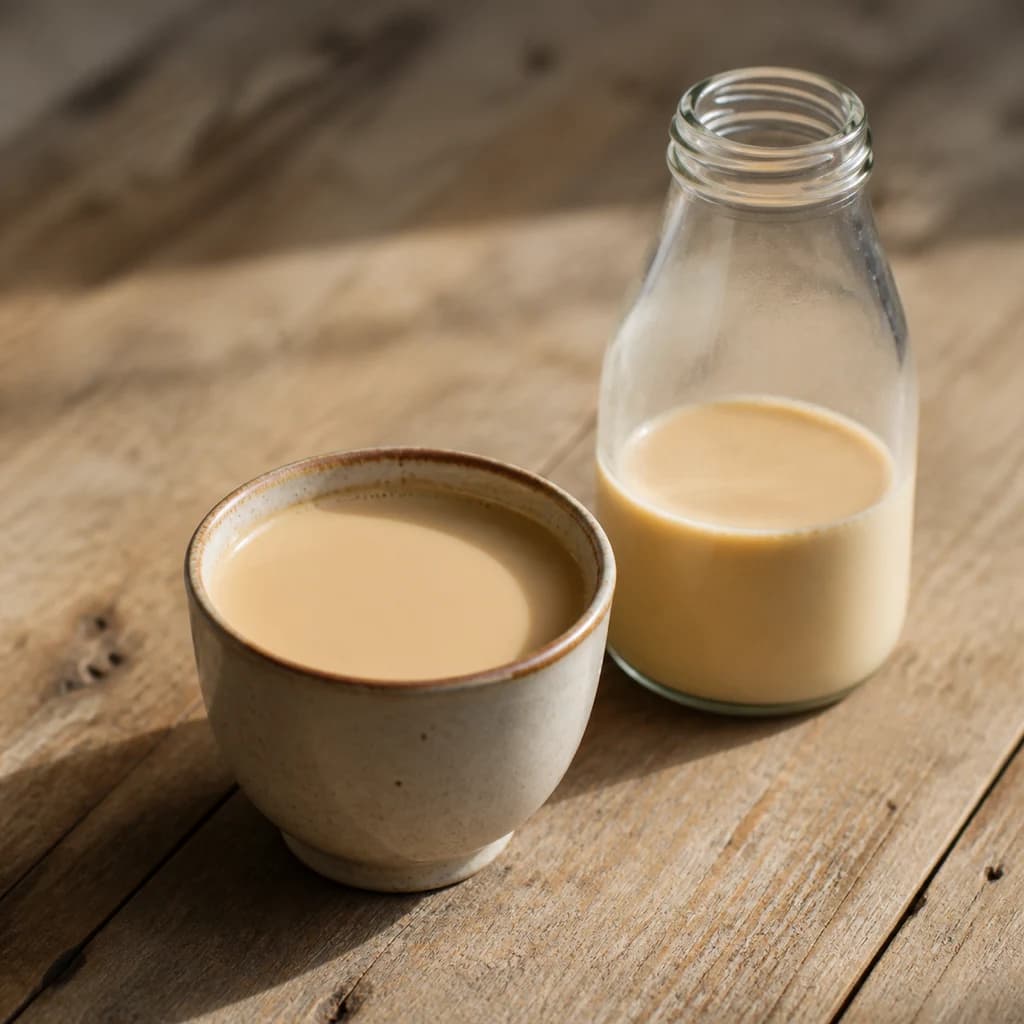
Ryazhenka poured into a traditional ceramic cup, showing its warm caramel color.
Shows the drink's defining caramel hue and creamy texture — the most immediate recognition cue distinguishing it from white kefir or yogurt.
Dairy & Eggs
Ryazhenka (Fermented Baked Milk)
Creamy Eastern European cultured drink made from baked milk, with a caramel-tinged tang.
Ryazhenka is a Slavic fermented dairy drink made by culturing baked milk, which gives it a warm caramel color and a mild, nutty-sweet flavor on top of its yogurt-like tang. It is drunk on its own, poured over grains, or used as a base for batters and marinades. Slow oven-baking of the milk before fermentation is what sets it apart from ordinary kefir or yogurt.
Ryazhenka is a cultured dairy drink from Russia and Ukraine distinguished by its two-stage production: milk is baked slowly at low temperature until it develops a deep caramelized flavor, then fermented with yogurt bacteria until it reaches a pleasant tang. The baking step, typically 8–12 hours at 80–100°C (176–212°F), triggers Maillard browning that gives ryazhenka its characteristic cream-to-tan color and sets it apart from all other fermented milks. The result is pourable but creamy, coating a spoon lightly, with a flavor that balances sweet caramel against bright cultured acidity.
The dual process of baking and fermenting cannot be improvised by adding caramel to regular fermented milk; the Maillard compounds formed during baking integrate with the bacterial fermentation to create a uniquely layered taste. In Russia and Ukraine, authentic ryazhenka culture is often passed between households like sourdough starter, and each regional culture produces subtly different flavor profiles. Commercially produced ryazhenka is widely available in Eastern European stores but is generally considered milder and less complex than homemade versions baked in ceramic pots.
Ryazhenka falls between unbaked cultured drinks like kefir and thick yogurt in consistency. The acidity (pH 3.8–4.2) is pronounced enough to tenderize proteins and brighten sauces, yet the caramel undertones keep it approachable as a stand-alone beverage. Understanding this balance is key to using ryazhenka well in both traditional and contemporary cooking.
- Measured in
- ml
- Storage
- Fridge
Allergens
Types & varieties
Traditional homemade version; richer and often baked longer for deeper caramelization and more complex flavor
Commercial production; standardized texture and tang, most common in stores, generally milder than homemade
Regional Ukrainian name; indicates a cream-topped variety with higher fat content
Common uses
Tips & pitfalls
- Always cool baked milk to 38–42°C (100–108°F) before adding culture—too hot kills the bacteria, too cold prevents fermentation
- The long baking step is non-negotiable; rushing it produces flat, unbaked flavor. The low-and-slow process develops genuine caramelization you cannot fake
- Do not stir ryazhenka during baking—the skin that forms naturally traps steam and creates the characteristic browned top layer essential to flavor development
- Strain the baked milk through cheesecloth to remove the skin and any scorched bits before fermenting for a cleaner texture
- Use a clean glass or ceramic vessel for fermentation, not metal, which can react with the acidity and affect flavor
- Once fermented, chill immediately and consume within 10 days—ryazhenka continues to develop acidity even under refrigeration
- If the result is too thin, it likely fermented at too-low temperature or not long enough; properly fermented ryazhenka should coat a spoon lightly
Nutrition
Energy
452 kJ · per 100 g
Where the calories come from
Protein
6g
12% DV
Carbs
5.4g
2% DV
Fat
7g
9% DV
Fiber
0g
0% DV
Sodium
44mg
2% DV
Source · USDA FoodData Central · approx. Milk, sheep, fluid
View on FDC →In the shops
Matched grocery products
No matched grocery products for Ryazhenka (Fermented Baked Milk) yet.
Good to know
- Origin
- Russia and Ukraine, traditional production dating back centuries
- Type
- Cultured fermented dairy drink
- Primary Culture
- Lactobacillus delbrueckii subsp. bulgaricus and Streptococcus thermophilus (yogurt bacteria)
- Baking Temperature
- 80–100°C (176–212°F) for 8–12 hours
- Fermentation Time
- 6–10 hours at 38–42°C (100–108°F)
- Fat Content
- Typically 1–3.2%; whole-milk versions available
- Color
- Caramelized cream to light tan from Maillard browning
- Shelf Life
- 5–10 days refrigerated at 4°C (39°F)
- Acidity (pH)
- 3.8–4.2
- Consistency
- Pourable; thinner than thick yogurt, thicker than kefir
Substitutes
- Baked milk (pechenoye moloko) + live yogurt — Combine store-bought baked milk with live yogurt to approximate the flavor, though the result will lack the integrated depth of true ryazhenka
- Kefir — Similar tang and drinkable consistency but without the caramelized baked notes; add a splash of caramel syrup to approximate the flavor profile
- Ayran — Correctly tangy and refreshing but made from regular yogurt, not baked milk; lacks the signature caramel depth entirely
Pairs with
Also called
Ryazhenka · Fermented Baked Milk
Related

Whole Milk
Rich, full-fat milk for drinking, coffee, sauces, and baking
Butter
Golden fat for searing, baking, and finishing a sauce
Yogurt
Tangy, creamy culture for breakfast, sauces, and marinades
Cheddar Cheese
Sharp, melty cheese for sandwiches, gratins, and grating
Skim Milk
Fat-free milk for lighter drinking, coffee, and cooking
Heavy Cream
Rich cream that whips, enriches sauces, and sets ganache

Sour Cream
Tangy, thick cream for dolloping, baking, and dips
Mozzarella
Soft, milky cheese that melts into stretchy pizza pulls