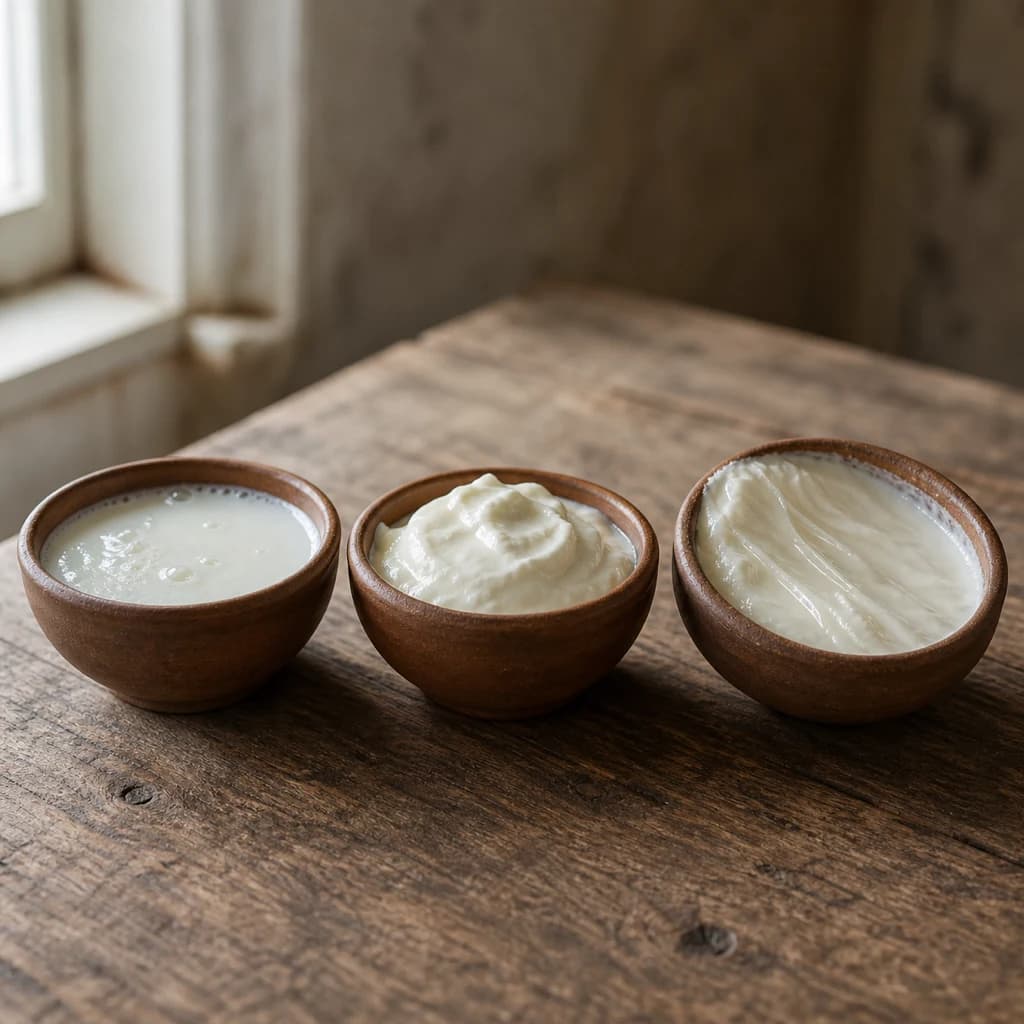
Varieties
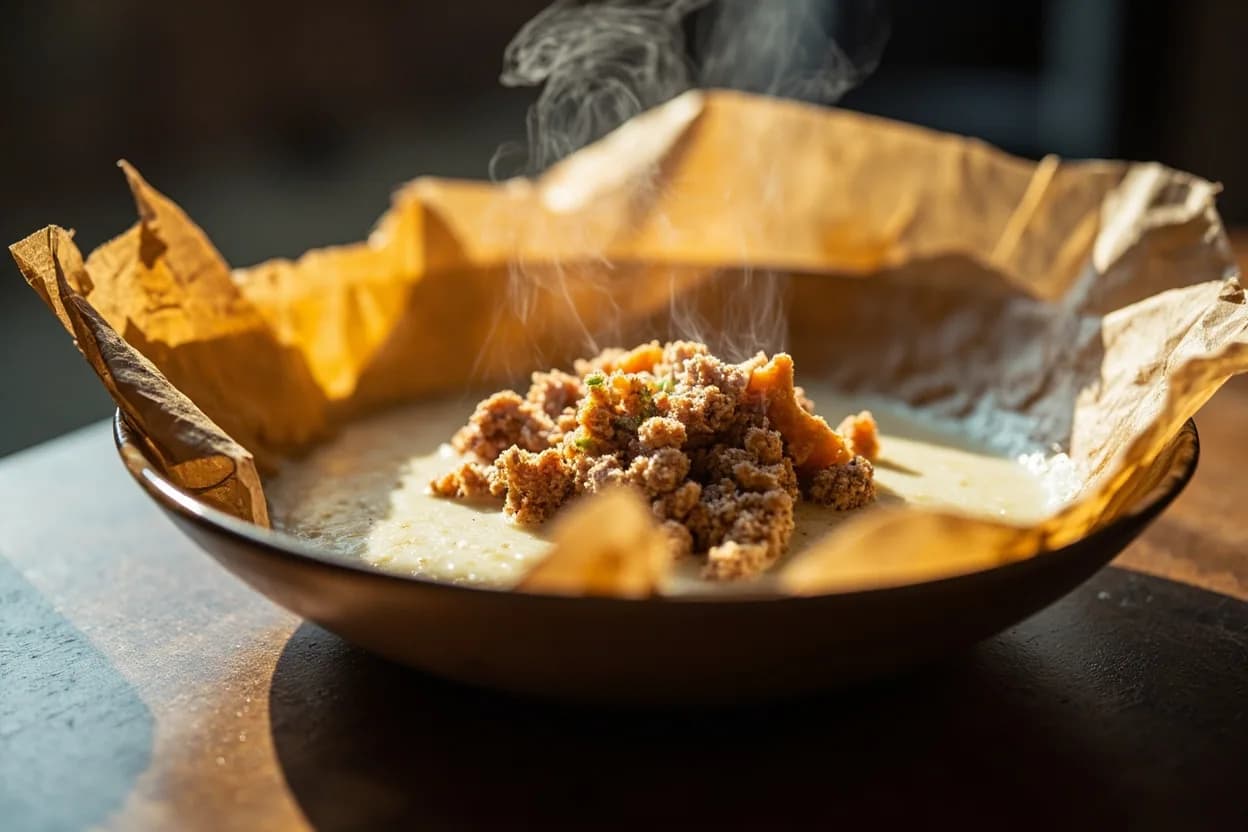
Three regional fermented milks — kefir, matsoni, and viili — side by side in ceramic bowls.
Shows the family diversity at a glance: readers see distinct textures and consistencies across three real cultural variants.
Dairy & Eggs
Fermented Milk
Cultured soured milk drinks (kefir, matsoni, viili) — tangy, probiotic, sipped or cooked across many cultures.
Fermented milk covers a family of cultured dairy drinks made by souring milk with bacteria or yeast, including kefir, matsoni, viili, and katyk. They are tangy and slightly thick, valued for probiotics and used as drinks, marinade bases, or breakfast staples. Each region's culture gives a distinct flavor and texture.
Fermented milk is a broad family of cultured dairy products unified by a single transformation: beneficial bacteria convert milk sugar (lactose) into lactic acid, lowering the pH and giving these products their characteristic tang while simultaneously preserving them. This acidification thickens the milk, creates complex sour flavors, and generates varying textures depending on the specific cultures used and fermentation conditions. The process is ancient and cross-cultural, emerging independently across the Caucasus, Middle East, Scandinavia, Central Asia, and South Asia, each region developing distinct products suited to their local ingredients and tastes.
Unlike fresh milk, fermented varieties are inherently stable because the acidic environment inhibits spoilage organisms. The fermentation also improves digestibility for lactose-intolerant individuals, as the bacteria have already broken down much of the lactose. Kefir and kumis introduce yeast alongside bacteria, creating light carbonation and trace alcohol; viili develops a ropy, viscous texture from exopolysaccharide-producing bacteria. Understanding these distinct cultures helps you choose the right fermented milk for your purpose, whether you want the drinkable tang of ayran, the thick spreadability of labneh, or the baking-friendly acidity of cultured buttermilk.
Commercial fermented milks are typically pasteurized after culturing, which kills live bacteria. Look for labels stating "live and active cultures" if you want the probiotic benefit. Traditional and homemade versions retain live cultures, but they require consistent refrigeration (36–40°F / 2–4°C) and have a shorter shelf life of about one to three weeks.
- Measured in
- ml
- Storage
- Fridge
Allergens
Types & varieties
Thin, pourable, mildly effervescent; cultured with distinctive yogurt-like grains; originated in the North Caucasus mountains
Thick and creamy from the Georgia/Armenia region; distinct aroma; historically valued as a stable food for travel
Finnish fermented milk with ropy, viscous texture; surface mold (Geotrichum) forms thin white layer; mildly tangy
Swedish cultured milk; thinner than viili; slightly sour; traditional Nordic breakfast staple
Turkish yogurt drink made with yogurt, water, and salt; highly refreshing; served cold with grilled meats
Strained yogurt; thick and spreadable; mixed with olive oil, herbs, or spices; common in Lebanon, Syria, Jordan
Icelandic fermented milk; technically a fresh cheese but used as strained yogurt; very thick, high protein, mild flavor
Fermented mare's milk; effervescent, slightly alcoholic (up to 2%); traditional Central Asian nomad beverage
Traditional Indonesian fermented milk from water buffalo; wrapped in bamboo tubes; extremely sour and thick
Low-fat cultured milk; thinner than yogurt; tangy; used in baking for leavening reaction with baking soda
Indian yogurt drink; sweet (with mango) or salty (with cumin, mint); blended with ice
Common uses
Tips & pitfalls
- Never boil fermented milk or cook it at high heat for extended periods — this kills beneficial bacteria and causes the proteins to curdle; add to hot dishes off the heat or at the end of cooking
- Use fermented milk as a 1:1 substitute for regular milk in most baking recipes to add tang and improve tenderness in quick breads and cakes
- For marinating meat, allow at least 30 minutes; the acid begins tenderizing immediately but will not over-tenderize the way citrus can
- Always stir store-bought plain yogurt or kefir before measuring — separation is natural, with whey pooling on top
- Homemade fermented milk will be thinner and more variable in flavor than commercial versions; starter culture quality directly determines consistency
- Greek yogurt and skyr work as baking substitutes for fermented milk, but expect slightly different moisture content — adjust liquid ratios accordingly
- Strain yogurt through cheesecloth overnight in the refrigerator to make labneh — a firmer, spreadable product that keeps longer
- If fermentation smells intensely foul rather than pleasantly tangy, or if you see mold beyond surface liquid, discard it immediately
Nutrition
Energy
180 kJ · per 100 g
Where the calories come from
Protein
3.8g
8% DV
Carbs
4.8g
2% DV
Fat
1g
1% DV
Fiber
0g
0% DV
Sugars
4.6g
of which
Sodium
40mg
2% DV
Source · USDA FoodData Central · Kefir, lowfat, plain, LIFEWAY
View on FDC →In the shops
Matched grocery products
No matched grocery products for Fermented Milk yet.
Good to know
- Origin
- Caucasus region (kefir, matsoni); Middle East and Central Asia (yogurt); Scandinavia (viili, filmjölk); Central Asia (kumis)
- Primary Cultures
- Lactic acid bacteria (Lactobacillus species); kefir and kumis include yeasts that produce carbonation and trace alcohol
- Flavor Profile
- Tangy, sour, acidic; intensity varies by fermentation duration and specific culture used
- Texture Range
- Thin and pourable (kefir, ayran) to thick and spreadable (labneh, skyr) to viscous and ropy (viili)
- pH Range
- 3.5–4.5 — highly acidic, which inhibits harmful bacteria and tenderizes proteins
- Shelf Life
- Refrigerated: 7–21 days for commercial; 3–7 days for homemade; discard if intensely foul or visibly moldy
- Storage Temperature
- 36–40°F (2–4°C); temperatures above 40°F accelerate spoilage
- Heat Sensitivity
- Live cultures destroyed above 140°F (60°C); prolonged heat causes curdling
Substitutes
- Plain full-fat yogurt — Best all-purpose substitute; similar tang and texture for sauces, baking, marinades, and dips
- Greek yogurt — Thicker than fermented milk; thin with water or milk for drinking uses; excellent for dips and spreads
- Sour cream — Tangier and richer; substitute in baked goods and sauces; thin slightly with milk for more fluid applications
- Cultured buttermilk — Similar acidity; thinner consistency; works in baking and as a marinade base
- Freeze-dried kefir powder — Reconstitute with milk; maintains probiotic content; useful for emergency substitution when fresh is unavailable
- Coconut milk yogurt — Dairy-free alternative; similar tang from fermentation; different nutritional profile and slightly sweeter taste
Pairs with
Also called
Raib · Katyk · Matsoni · Kefir · Cultured Milk · Viili · Gappal
Appears in these dishes
Related

Whole Milk
Rich, full-fat milk for drinking, coffee, sauces, and baking
Butter
Golden fat for searing, baking, and finishing a sauce
Yogurt
Tangy, creamy culture for breakfast, sauces, and marinades
Cheddar Cheese
Sharp, melty cheese for sandwiches, gratins, and grating
Skim Milk
Fat-free milk for lighter drinking, coffee, and cooking
Heavy Cream
Rich cream that whips, enriches sauces, and sets ganache

Sour Cream
Tangy, thick cream for dolloping, baking, and dips
Mozzarella
Soft, milky cheese that melts into stretchy pizza pulls