Proteins
Fruit Bat
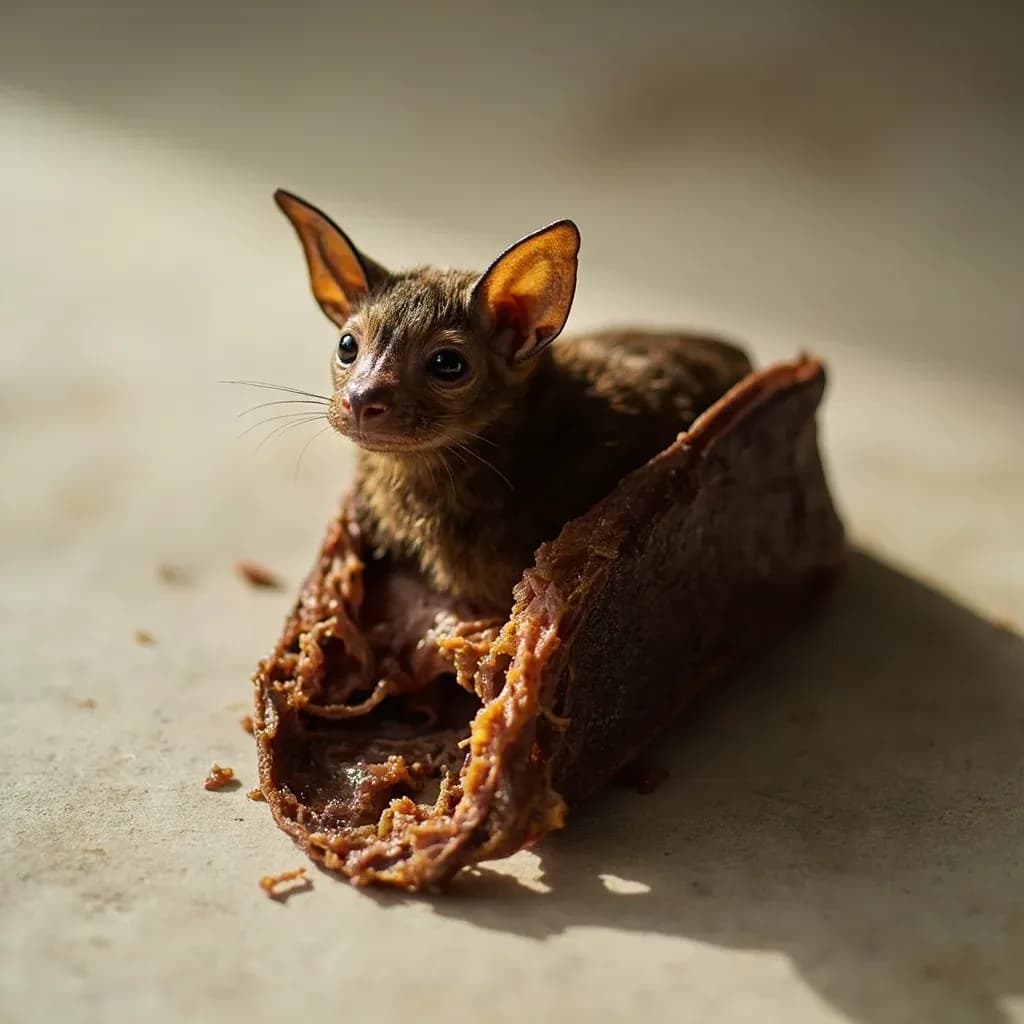
Large fruit-eating bat cooked as bushmeat in soups and stews.
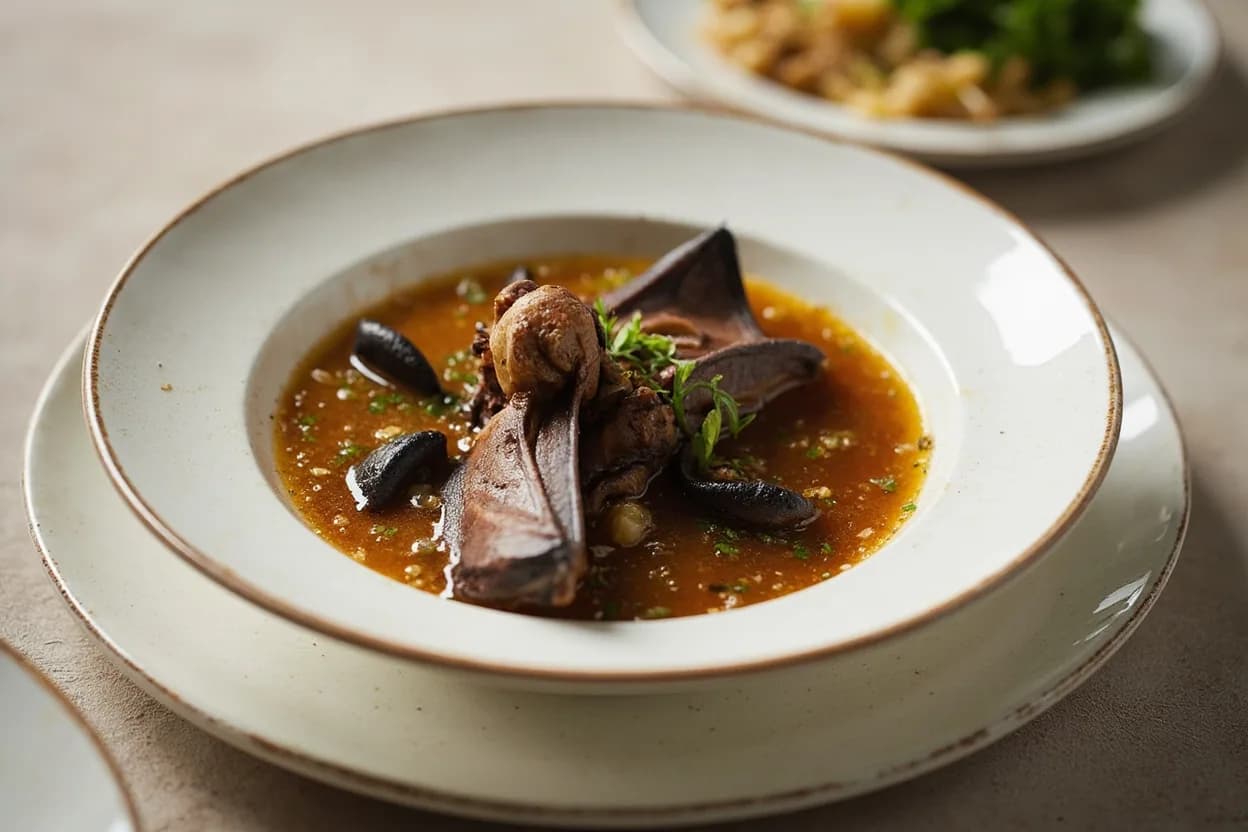
The fruit bat is a large bat hunted as bushmeat in parts of the Pacific, Southeast Asia, and Africa. It is most often stewed or made into soup with strong aromatics, as in Palauan fruit bat soup where the whole animal is simmered. Its dark meat is gamey and tough, suited to long cooking.
Fruit bat—commonly called flying fox or fox bat—is a large, fruit-eating megabat whose meat is prepared as bushmeat across the Pacific Islands, Southeast Asia, and parts of Africa. The meat is dark red and lean, with a pronounced gamey flavor often compared to rabbit or dark turkey. Its texture holds up well to long, moist cooking methods, absorbing surrounding flavors while maintaining integrity in the pot. Fruit bat has been a traditional protein source for centuries in island communities, valued for its availability and the rich, distinctive character it lends to coconut-based dishes. The two primary species consumed are Pteropus (flying foxes) across the Pacific, and Rousettus aegyptiacus (Egyptian fruit bat) in African and Middle Eastern regions.
As a cooking ingredient, fruit bat behaves similarly to other lean wild game: its low fat content means it can dry out quickly if overcooked, and its strong flavor benefits from extended marinating and slow, wet cooking. The meat is always cleaned thoroughly—fur removed by torch or open flame, internal organs discarded—and typically simmered for 45 to 60 minutes minimum to ensure safety. Coconut milk is the most traditional cooking medium, softening the gaminess while providing moisture. The lean texture also makes it well-suited to stewing with starchy root vegetables, which thicken and enrich the cooking liquid.
Working with fruit bat requires serious attention to sourcing and safety. Many Pteropus species are protected or threatened, and regulations on harvest and sale vary dramatically by jurisdiction. Beyond conservation concerns, bats can harbor zoonotic pathogens including Nipah and Hendra viruses, making trusted sourcing from licensed suppliers who test for disease absolutely essential. These are not overstated risks—they have caused documented outbreaks in Southeast Asia. When sourced responsibly and cooked properly, fruit bat represents a culturally significant ingredient with a flavor profile unavailable elsewhere, but it demands respect and diligence from the cook.
- Measured in
- piece
- Storage
- Fridge
Types & varieties
Most commonly consumed species in Pacific Islands; larger body size yields more meat per animal
Consumed in parts of Africa and Middle East; smaller than flying foxes, requires adjusted cooking times
Cultural Context and Significance
Fruit bat consumption is deeply rooted in Pacific Island and some Asian and African food traditions. In Guam, the Mariana Islands, Samoa, Fiji, Tonga, and Vanuatu, bat—especially flying fox—is considered a delicacy and a connection to ancestral foodways. Dishes like Guam's red bat stew, prepared with coconut milk, taro, and local aromatics, are served at celebrations and hold ceremonial importance. In parts of Africa and the Middle East, Egyptian fruit bat appears in traditional preparations that vary by region. Understanding this cultural context is important: for the communities that practice this tradition, fruit bat is not exotic or taboo—it is a cherished local ingredient with generations of culinary knowledge behind it. Respect for these traditions means approaching the ingredient with the same seriousness you would any other protein, not as novelty.
Safety and Sourcing
This section is not optional reading. Bats are reservoir hosts for several zoonotic pathogens, including Nipah virus (which has caused deadly outbreaks traced to fruit bat consumption in Southeast Asia) and Hendra virus. These risks are real and documented. The only acceptable approach is sourcing from trusted, licensed suppliers who follow established safety protocols and disease testing. Never consume wild-harvested fruit bat without verifying it was legally taken from a disease-screened population. When you purchase, ask about testing and origin. If the supplier cannot provide clear answers, walk away. This is not a case where reasonable risk-taking is acceptable—the consequences of getting it wrong extend beyond the individual diner.
- Purchase only from licensed, reputable suppliers with documented safety protocols
- Verify the species is legal to consume in your jurisdiction
- Ask about disease testing, particularly for Nipah and Hendra viruses
- Never attempt to prepare a bat you have found dead or harvested yourself without expert guidance
Preparation Fundamentals
Proper preparation transforms a potentially dangerous ingredient into a safe, delicious one. The process begins with fur removal: hold the cleaned bat over a culinary torch or singe over an open gas flame until all fur is burned away, turning continuously to avoid scorching the skin. Once singed, rinse thoroughly under cold water, removing any remaining singed fur with your hands or a soft brush.
Next comes butchering. Using a sharp boning knife, remove the wings at the joint—they contribute minimal meat. Open the cavity and remove all internal organs; these are not used in traditional cooking and should be discarded. Wash the cavity multiple times with cold running water, inside and out. Some cooks soak the whole carcass in salted cold water for 30 minutes to further reduce gamey flavor and any residual blood.
Score the meat deeply with a knife, penetrating to the bone in several places. This allows marinade to penetrate the lean flesh. Marinate for a minimum of two hours—overnight is better—in an acid such as citrus juice or vinegar cut with oil, seasoned with aromatics. The acid begins to tenderize and the gamey notes mellow noticeably with time.
Cooking must be thorough. A low simmer of 45 to 60 minutes minimum is the starting point; larger specimens or whole preparations may require longer. The meat should never be consumed rare or even medium-rare. Reaching 165°F (74°C) internal temperature is non-negotiable for safety. Coconut milk-based liquids are ideal cooking mediums because they provide moisture, fat (which the lean meat lacks), and the traditional flavor profile these preparations demand.
- Singe all fur before any other prep step—do this outdoors or in a well-ventilated area
- Remove wings and all internal organs completely; wash cavity multiple times
- Score deeply for marinade penetration; marinate minimum 2 hours, overnight preferred
- Simmer in coconut milk at low heat 45–60+ minutes to minimum 165°F/74°C
Common uses
Tips & pitfalls
- Purchase only from trusted, licensed suppliers who can confirm disease testing—never from uncertain sources
- Wear disposable gloves when handling raw meat and wash hands thoroughly with soap for at least 20 seconds afterward
- Singe fur completely before any other prep; missing patches lead to unpleasant texture in the finished dish
- Remove all internal organs and wash the cavity multiple times—this is non-negotiable for hygiene
- Score deeply and marinate at least 2 hours to mellow the gamey flavor; skipping this step results in harsh, overwhelming taste
- Do not rush the simmer—high heat will toughen the lean meat; low, gentle heat is essential for tenderness
- Coconut milk is the traditional cooking liquid and serves a practical purpose beyond flavor: the fat tenderizes and moistens the lean meat
- Never serve rare or medium-rare; fruit bat must reach 165°F/74°C minimum internally—this is not optional
- If using wild-harvested bats, verify they were legally taken from a disease-tested population; this is a safety essential, not a courtesy
- Do not substitute leaner cooking liquids for coconut milk—the fat content is functionally necessary for moisture in this lean meat
Nutrition
Nutrition
No USDA FoodData Central match for Fruit Bat yet. We surface a per-100 g profile once a generic whole-food entry is matched and verified.
In the shops
Matched grocery products
No matched grocery products for Fruit Bat yet.
Good to know
- Common Names
- Flying fox, fruit bat, mega-bat, fox bat
- Primary Species Eaten
- Pteropus (various), Rousettus aegyptiacus (Egyptian fruit bat)
- Meat Color
- Dark red, lean, similar to wild rabbit or dark turkey leg
- Flavor Profile
- Gamey, rich, darker than poultry; traditional preparations with marinades and coconut milk moderate the intense notes
- Typical Cooking Time
- 45–60 minutes minimum simmer; longer for larger cuts or whole preparation
- Minimum Internal Temperature
- 165°F / 74°C (essential for safety)
- Storage
- Cook same day as purchase; frozen wrapped airtight up to 3 months
- Conservation Status
- Many Pteropus species are protected or threatened; verify legal sourcing
Substitutes
- Rabbit — Most similar texture and leanness; milder game flavor makes it more forgiving for cooks unfamiliar with wild game
- Dark chicken (thighs or legs) — Best domestic substitute; use the same long, moist cooking methods to develop comparable richness
- Wild turkey or pheasant — Comparable gamey depth and dark meat character; adjust cooking time by bird size
Pairs with
Also called
Flying Fox · Megabat
Appears in these dishes
Related
Egg
The kitchen's everything ingredient — bind, leaven, enrich, or fry
Chicken Breast
Lean, quick-cooking white meat for everyday dinners

Ground Beef
Versatile minced beef for burgers, ragù, tacos, and meatballs
Pork Loin
Lean, tender roasting cut that stays juicy with care
Salmon
Rich, rosy fish that roasts, grills, or cures beautifully

Egg White
Pure protein that whips to airy peaks for meringue and more

Egg Yolk
Rich, golden yolk for custards, mayonnaise, and pasta

Quail Egg
Tiny, speckled eggs for garnishing and elegant bites