Proteins
Flying Fox (Fruit Bat)
Large fruit bat eaten as game meat in parts of Asia and the Pacific.
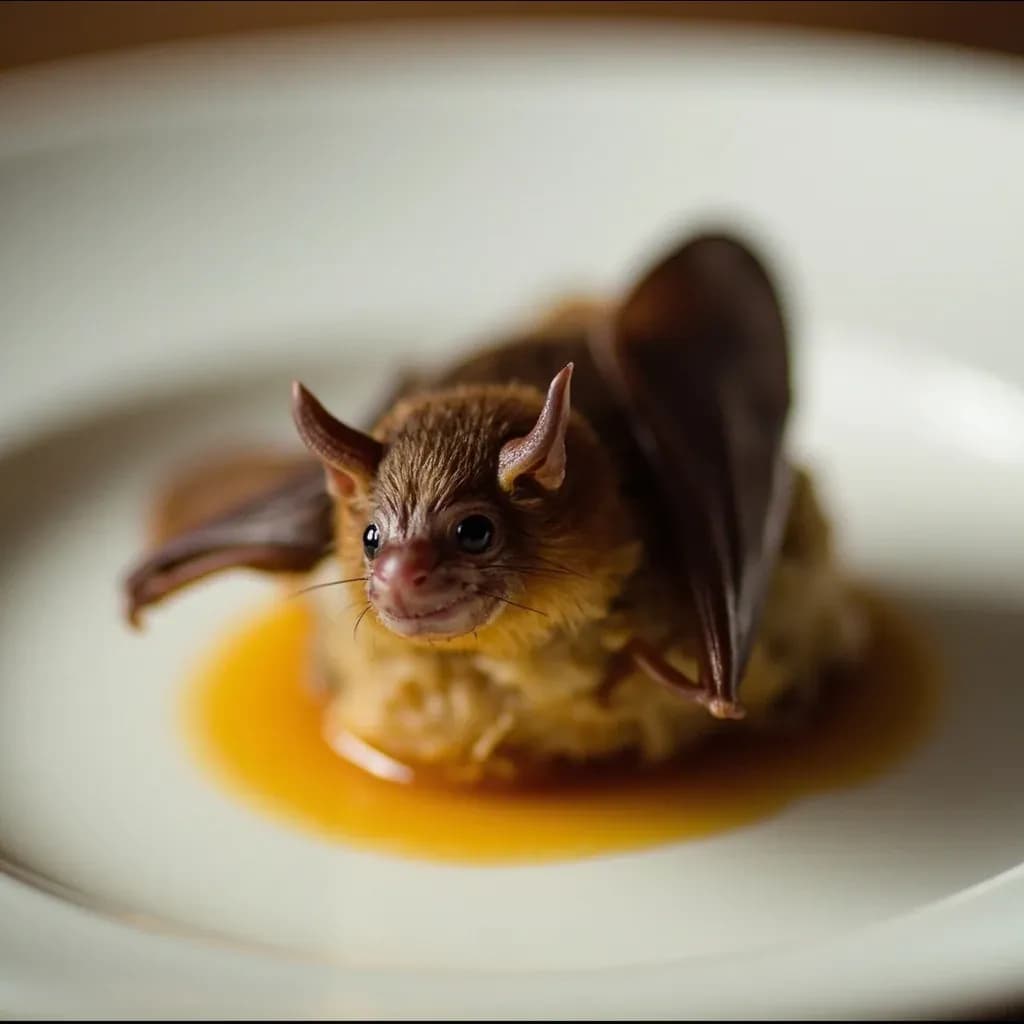
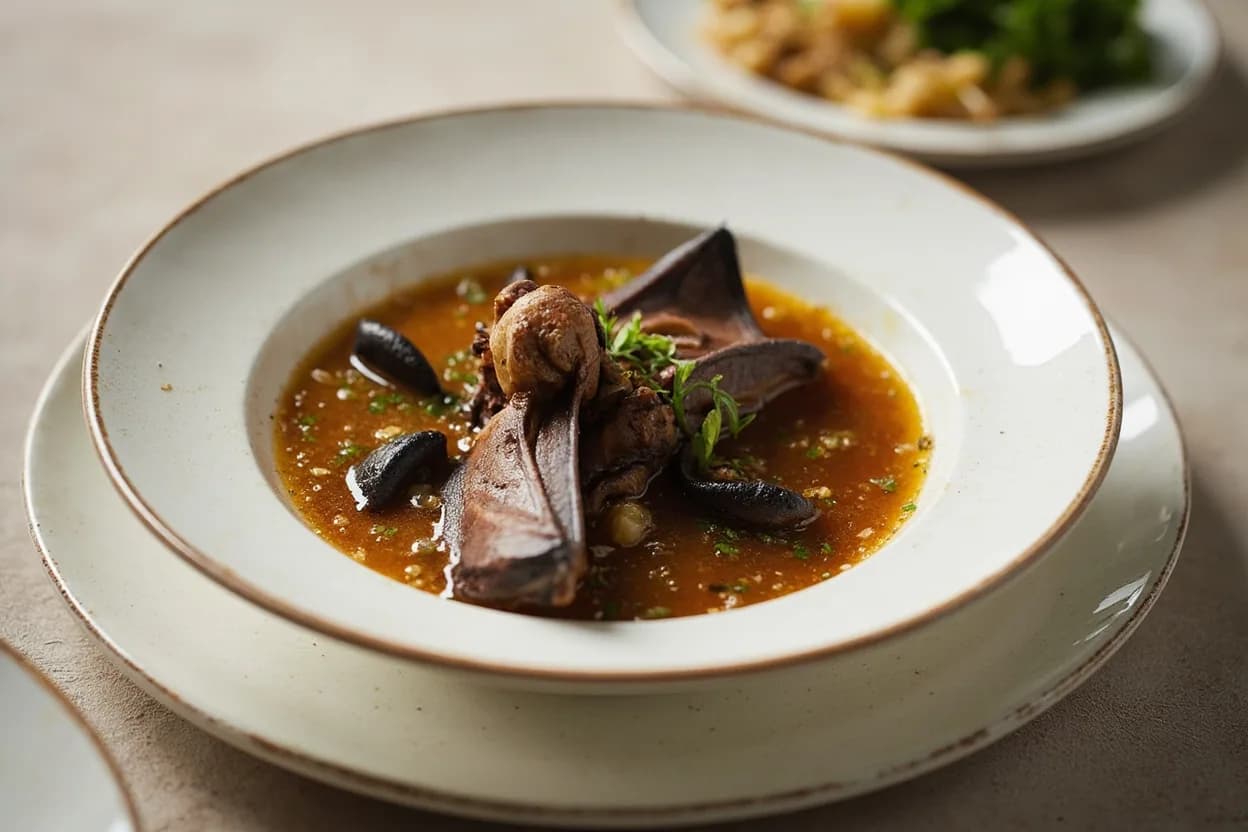
The flying fox is a large fruit bat hunted as bushmeat in parts of Southeast Asia, the Pacific, and Indian Ocean islands. It is typically stewed or curried with strong spices, as in Palauan fruit bat soup, where the whole animal is cooked. Its meat is gamey and dark.
Flying fox designates several species of large fruit bats (family Pteropodidae) that have been consumed as game meat across the Pacific Islands, Southeast Asia, Madagascar, and parts of Africa for centuries. The meat is dark, lean, and richly flavored—its taste sits between wild rabbit and duck, with a pronounced gamey character that demands bold seasoning and confident technique. In island communities of Guam, Samoa, Fiji, Palau, and Vanuatu, flying fox was a reliable protein source in environments where domestic livestock was difficult to maintain, and traditional preparations reflect that practicality: slow-simmered in coconut milk, roasted over coals, or transformed into hearty soups with starchy tubers and aromatics. The meat itself is nutritionally dense, offering high-quality protein and iron, but its profile has shifted dramatically in modern times—several Pacific species are now endangered or legally protected, and harvesting them is prohibited in jurisdictions like Guam and the Northern Mariana Islands. Any chef or cook considering this ingredient must navigate both culinary ambition and serious ethical and legal obligations around species identification and sourcing.
- Measured in
- piece
- Storage
- Fridge
Types & varieties
Was a traditional food in Guam and Northern Mariana Islands; now heavily protected due to severe population decline and listed as threatened under the U.S. Endangered Species Act—harvesting is illegal
Traditionally eaten in Samoa and nearby Pacific islands; populations have declined but not to the degree of the Marianas species
Heavily hunted for bushmeat across West and Central Africa; a major protein source in rural communities despite conservation concerns
Consumed in parts of South and Southeast Asia; wide geographic range means traditional consumption varies by local practice and access
Multiple cave-dwelling fruit bat species are taken for meat in Madagascar and Southeast Asian nations; species identification can be difficult and regulation inconsistent
Sourcing and the Ethical Imperative
Before any culinary consideration, cooks must confront a hard reality: flying fox populations have collapsed across much of their range due to overhunting, habitat destruction, and mass die-offs from extreme weather and disease. The Marianas flying fox in Guam is listed as threatened under the Endangered Species Act, making it illegal to hunt, sell, or possess in the United States. Similar protections exist in other Pacific jurisdictions. Purchasing flying fox meat means verifying species, origin, and legal compliance—wild-harvested bats from unregulated sources may inadvertently support illegal wildlife trade and can carry zoonotic pathogens. For chefs operating in regulated markets, reputable specialty suppliers who certify legal sourcing and species identification are the only acceptable avenue. The culinary case for this ingredient must not override the conservation case against it.
- Verify legal status in your jurisdiction before sourcing
- Request species identification documentation from any supplier
- Avoid wild-harvested bats from regions with endangered resident populations
- Consider that supporting demand—even for non-endangered species—can drive broader market pressure on vulnerable populations
Cleaning and Preparation
Proper cleaning is non-negotiable. Flying fox meat must be thoroughly cleaned before cooking: remove all innards, glands, and the digestive tract entirely, as these harbor parasites and pathogens that can survive into the finished dish. The wings are composed primarily of cartilage and membrane and are typically removed and discarded rather than eaten. After evisceration, fully drain the blood. The cleaned meat should then be soaked in salted water or a weak vinegar solution for 30–60 minutes—this draws out residual blood, reduces the gamey odor, and helps eliminate surface contaminants. After soaking, rinse thoroughly under running water and pat dry before seasoning.
- Remove innards and glands completely—do not rely on cooking to eliminate contamination
- Soak 30–60 minutes in salted water or 1–2% vinegar solution after cleaning
- Drain and rinse thoroughly; pat dry before cooking
- Wings are inedible cartilage—remove before cooking, not at the table
Understanding the Gamey Flavor
The assertive, gamey flavor of flying fox meat is its defining characteristic—and its greatest culinary challenge. Unlike mild poultry or pork, this meat carries the deep, musky intensity of wild game, concentrated in the fat and connective tissues. Traditional preparations across all cultures that consume flying fox address this directly: heavy aromatics, acid, fat, and long cooking times are universal strategies. The gamey flavor is not a defect to eliminate but a flavor to respect and channel. When handled well, it yields a deeply savory, almost primal taste that pairs with rich coconut milk, fiery chiles, and earthy root vegetables. When handled poorly—under-seasoned, under-cooked, or prepared without aromatics—the result is both unpalatable and risky.
- Gamey flavor is inherent, not a flaw—lean into bold seasoning
- Strong aromatics are not optional; they are structural to the dish
- Coconut cream tenderizes the meat and rounds sharp gamey edges during long cooking
- Do not attempt mild preparations; they will fail
Common uses
Tips & pitfalls
- Thorough cleaning is essential—remove all innards and glands completely, as they contain parasites and pathogens that cooking alone cannot eliminate
- Soak cleaned bat meat in salted water or a weak vinegar solution for 30–60 minutes to reduce gamey flavor and residual blood before cooking
- Always cook to well-done—no exceptions; fruit bats can carry zoonotic diseases including viral pathogens transmissible to humans
- Strong aromatics are non-negotiable—ginger, lemongrass, garlic, and chili are the traditional flavor architects across Pacific and Southeast Asian preparations
- Young bats (pups) are preferred in some cultures for a reason: they are noticeably more tender and milder in flavor than adults
- The wings are cartilage and inedible—remove them before cooking, not as a plating decision at the table
- Coconut cream or milk serves double duty: it tenderizes the meat during long, slow cooking and mellows the assertive gamey notes into something cohesive and rich
- If sourcing legally, purchase only from reputable suppliers who can verify species identification and legal harvest status—wild-harvested flying foxes from protected regions may represent illegal wildlife trade
Nutrition
Nutrition
No USDA FoodData Central match for Flying Fox (Fruit Bat) yet. We surface a per-100 g profile once a generic whole-food entry is matched and verified.
In the shops
Matched grocery products
No matched grocery products for Flying Fox (Fruit Bat) yet.
Good to know
- Type
- Wild mammal (order Chiroptera, family Pteropodidae)
- Flavor Profile
- Rich, assertive gamey taste; texture comparable to rabbit or lean duck breast when properly cooked
- Primary Culinary Regions
- Pacific Islands (Guam, Samoa, Fiji, Palau, Vanuatu), Southeast Asia, Indonesia, Madagascar, West and Central Africa
- Yield
- Approximately 40–50% edible meat by weight after thorough cleaning and wing removal
- Cooking Time
- Minimum 30–45 minutes at a full simmer for stews; 40–60 minutes for roasting at moderate heat
- Shelf Life
- Use within 1–2 days fresh; freeze immediately if not cooking same day
- Legal Status
- Several species are protected or endangered; some Pacific flying fox species are illegal to harvest (e.g., Marianas flying fox listed as threatened under the U.S. Endangered Species Act)
- Seasonality
- Often hunted during cooler dry seasons when other food is scarce; availability varies by region
Substitutes
- Wild rabbit — Closest substitute in flavor and lean texture; cook with bold aromatics and long braising to approximate the traditional flying fox profile
- Venison — Lean, gamey red meat with comparable intensity; suited to stews, braises, and bold seasoning applications
- Wild boar — Richer and fattier than flying fox; adjust cooking times downward as the meat is denser and holds together differently
- Pheasant — Game bird with a similar level of gamey character; cook thoroughly to eliminate any pathogen risk and pair with assertive seasoning
Pairs with
Also called
Fruit Bat · Megabat
Appears in these dishes
Related
Egg
The kitchen's everything ingredient — bind, leaven, enrich, or fry
Chicken Breast
Lean, quick-cooking white meat for everyday dinners

Ground Beef
Versatile minced beef for burgers, ragù, tacos, and meatballs
Pork Loin
Lean, tender roasting cut that stays juicy with care
Salmon
Rich, rosy fish that roasts, grills, or cures beautifully

Egg White
Pure protein that whips to airy peaks for meringue and more

Egg Yolk
Rich, golden yolk for custards, mayonnaise, and pasta

Quail Egg
Tiny, speckled eggs for garnishing and elegant bites