Natural form
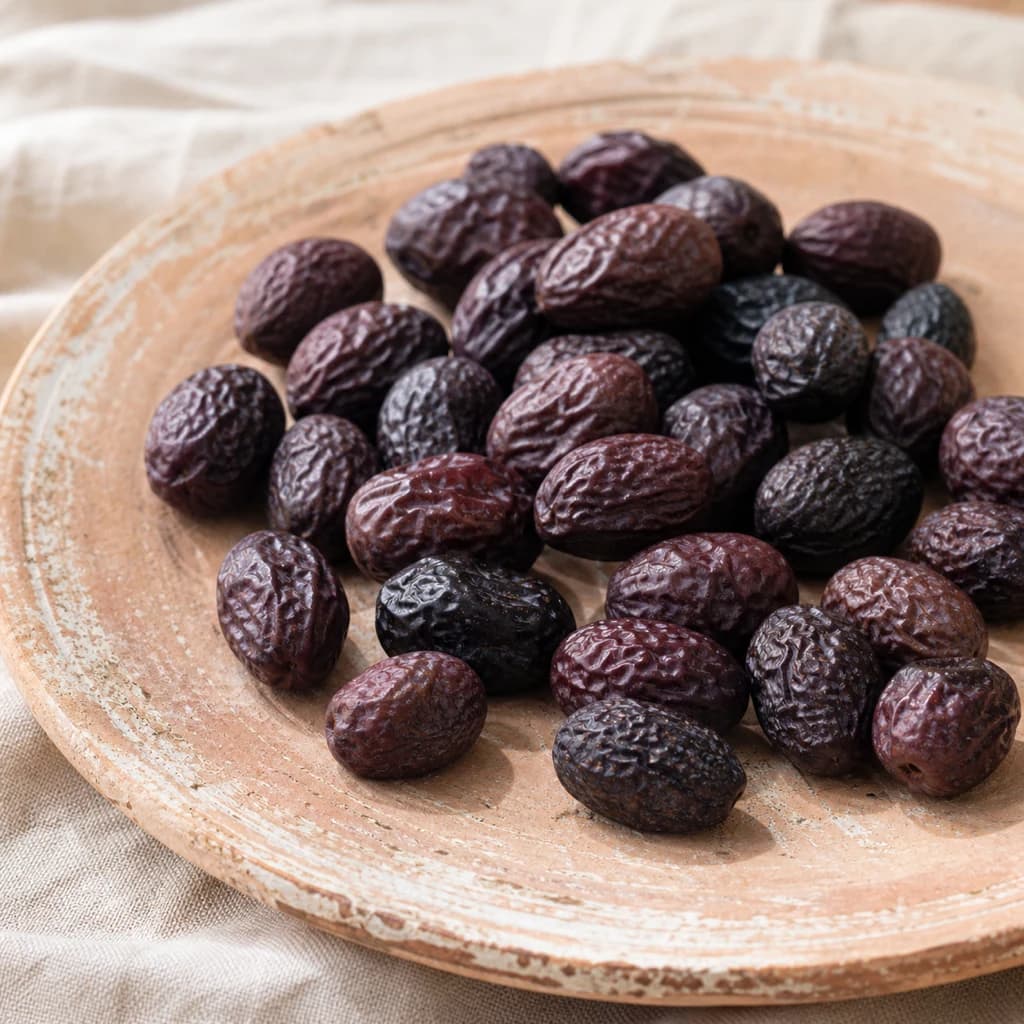
Whole Gaeta olives: small, wrinkled, dark purple-black, dry-cured and ready to eat.
Shows the defining physical appearance — size, wrinkled skin, deep purple-black color — that distinguishes Gaeta olives from other varieties.
Produce
Gaeta Olive
Small, wrinkled dark Italian olive with a tart, salty-fruity flavor for antipasti and pasta.
Gaeta olives are small dark purple-black olives from the Lazio region of Italy, typically dry-cured or brine-cured to a wrinkled, tender state. They have a mild, tart, fruity flavor with a faint bitterness and are used in antipasti, puttanesca sauce, and baked into focaccia. Their soft flesh separates easily from the pit.
Gaeta olives are a small, wrinkled olive from the Tyrrhenian coast of Lazio, Italy—grown around the towns of Gaeta and Itri and cured primarily from the Itrana cultivar. They are among the most characterful Italian table olives: dark purple-black when ripe, with a deeply wrinkled skin that signals prolonged curing and concentrated flavor. Unlike the mild, buttery olives common in American groceries, Gaetas carry genuine intensity—tart, fruity, and slightly bitter beneath a pronounced saltiness, with a meaty bite that holds its own in robust dishes. The curing method defines the final olive: dry-cured in coarse salt (salamoia) yields the most assertively salty and intense specimens, while those cured in brine and submerged in olive oil emerge softer and more supple. A third preparation, pickled in vinegar, brings a sharp tang useful for antipasti platters. Gaetas are an artisan product; they do not travel well and their quality depends on proper cure and fresh, grassy-fruity smell beneath the brine. In the kitchen they function as a seasoning more than a garnish—added early to long-simmered sauces or late to preserve texture, they give depth to everything from Roman pasta dishes to braised meats.
- Measured in
- g
- Storage
- Fridge
Types & varieties
Dry-cured in coarse salt using the traditional method; intensely salty and concentrated, requires brief rinsing before use
Cured in brine then submerged in olive oil; milder, more supple texture, fruitier notes come forward
Pickled in vinegar; tangier and brighter, common on antipasti platters and in salads
Buying and Storing Gaeta Olives
True Gaeta olives arrive in glass jars or tins submerged in brine or olive oil—they are not sold vacuum-sealed in plastic tubs. Specialty Italian grocers and import shops carry the best selections. When purchasing, open the jar and smell: a properly cured Gaeta smells grassy and faintly fruity beneath the salt; any musty, fermented, or vinegary off-note indicates spoilage or age. The olives should be plump beneath their wrinkles; if they feel hard and papery, they have over-dried and lost their fruit. After opening, keep them fully submerged in their liquid at all times—exposed olives oxidize and spoil quickly. Refrigeration slows deterioration and extends opened shelf life to 2–3 weeks.
- Buy from specialty importers or Italian grocers, not mainstream grocery chains
- Inspect for a grassy-fruity smell beneath brine; reject any musty or fermented scent
- Press gently—plump, yielding olives retain moisture; hard, papery ones are over-dried
- Always keep olives submerged after opening; surface exposure causes rapid spoilage
Understanding the Itrana Cultivar
Gaeta olives are made exclusively from the Itrana (sometimes called Gaetana) cultivar grown along a narrow stretch of the Tyrrhenian coast between Gaeta and Itri in Lazio. This same cultivar, harvested green and large, is sold as Table Itrana—do not confuse the two. Only the small, wrinkled, late-harvest fruit cured in the Gaeta style carries the regional name and the concentrated flavor that defines the olive. The Itrana tree thrives in the limestone-rich coastal soil and Mediterranean climate of southern Lazio, which contributes to the olive's mineral intensity and complex polyphenol profile. When sourced true, the Itrana cultivar is the distinguishing marker of authentic Gaeta olives—other cultivars may be cured in similar styles but lack the same flavor architecture.
- Itrana is the sole cultivar for true Gaeta curing; Table Itrana sold green is a different product
- Coastal Lazio limestone soil gives authentic Gaetas their mineral intensity
- The small, wrinkled, late-harvest fruit is what defines the Gaeta cure
Common uses
Tips & pitfalls
- Rinse briefly under cold water before using dry-cured Gaetas in salads or pasta—the cure adds heavy seasoning you may not want dominating a dish
- Add Gaetas to sauces in the last 5–10 minutes of cooking; overcooking turns them mushy and erases their texture contrast
- To pit a Gaeta, lay it flat on a cutting board, press firmly with the flat side of a chef's knife, then twist—the small pit releases cleanly
- For a classic Roman bar snack, thread a whole pitted Gaeta with an anchovy fillet and a sliver of orange rind on a toothpick
- Warn diners when serving sauces with unpitted Gaetas—tradition calls for it, but a surprise pit bite ruins a dish
- Select olives that are plump beneath the wrinkles; fully shriveled, hard specimens are over-dried and lack fruit
- Discard any olives with a musty or excessively fermented smell—they have passed their peak
- Store opened jars with a thin layer of olive oil on top to create a seal against air exposure
Nutrition
Energy
983 kJ · per 100 g
Where the calories come from
Protein
11.8g
24% DV
Carbs
9.2g
3% DV
Fat
16.5g
21% DV
Fiber
0g
0% DV
Sugars
0g
of which
Sodium
964mg
42% DV
Source · USDA FoodData Central · approx. Olive loaf, pork
View on FDC →In the shops
Matched grocery products
No matched grocery products for Gaeta Olive yet.
Good to know
- Origin
- Gaeta, Lazio region, Italy (Itrana cultivar)
- Color
- Dark purple-black when ripe; deeply wrinkled skin
- Size
- Small to medium, 1.5–2.5 cm
- Cure Methods
- Dry-cured in salt (salamoia), brine-cured in oil, or pickled in vinegar
- Harvest Season
- October to December
- Flavor Profile
- Tart, fruity, slightly bitter, salty; meaty, dense texture
- Shelf Life
- 12–18 months sealed; 2–3 weeks refrigerated after opening
- Storage
- Keep submerged in original brine or olive oil; refrigerate after opening
Substitutes
- Kalamata olives — Greek; similar meaty texture and brine intensity, but sweeter and less bitter—good swap in pasta sauces and salads
- Nicoise olives — French Riviera variety; comparable size and complexity, slightly less tart—interchangeable for antipasti or salads
- Taggiasca olives — Ligurian Italian variety; milder, buttery, and less briny—use where you want gentle fruit rather than intensity
- Amfissa olives — Greek central variety; good brine-cured option with similar wrinkled texture and mineral notes, widely available
Related
Tomato
Juicy, sun-sweet fruit for sauces, salads, and slow-cooked depth
Yellow Onion
The aromatic backbone of soups, sofritos, and braises
Garlic
Pungent cloves that perfume nearly every savory dish

Lemon
Bright, acidic citrus that wakes up almost any dish
Potato
Humble, hearty staple — roast, mash, fry, or boil
Carrot
Sweet, crunchy root — raw, roasted, or the base of a sofrito
Cucumber
Cool, crisp, and watery — for salads, pickles, and tzatziki

Lettuce
Crisp leaves for salads, wraps, and a fresh crunch